Azin Asro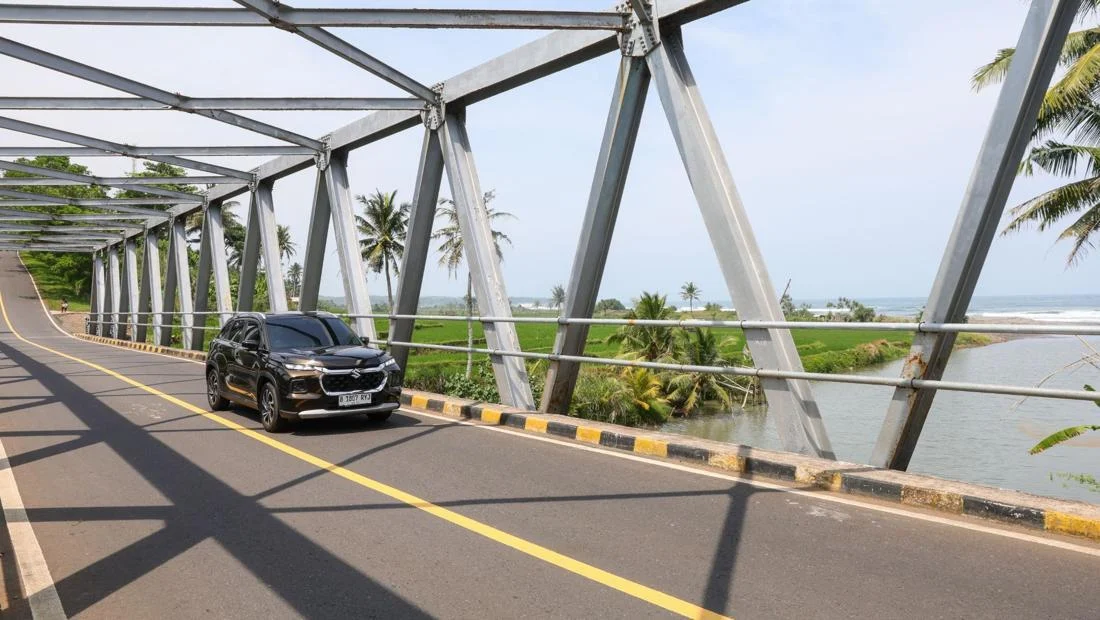
The landscape of the Indonesian automotive market is undergoing a significant transformation as consumer priorities shift from purely aesthetic considerations to a more holistic evaluation of long-term value. In an era where the Sport Utility Vehicle (SUV) segment is increasingly crowded with high-tech offerings and aggressive styling, a new paradigm of "functional luxury" is emerging. Buyers are now meticulously weighing fuel efficiency, routine maintenance expenditures, and projected resale value against the initial purchase price. Amidst this competitive environment, the Suzuki Grand Vitara has positioned itself as a pragmatic yet sophisticated contender, emphasizing relevant technology and operational economy over superfluous gadgets.
The resurgence of the Grand Vitara nameplate in Indonesia represents more than just the return of a legendary brand; it signals a strategic move by Suzuki to capture a demographic that values reliability and "total cost of ownership" (TCO). By integrating mild-hybrid technology and focusing on the features that drivers utilize in their daily commutes, Suzuki aims to provide a balanced ownership experience that remains sustainable over a five-to-ten-year cycle.
A Strategic Shift in the SUV Market Dynamics
For decades, the SUV segment was defined by ruggedness and off-road capability. However, the modern urban driver in metropolitan areas like Jakarta requires a vehicle that can navigate congested city streets while remaining capable of handling weekend excursions to the mountainous regions of West Java. The current market trend shows that while consumers are attracted to the "SUV look," their actual usage patterns are predominantly urban and suburban.
Manufacturers have responded by loading vehicles with an array of Advanced Driver Assistance Systems (ADAS) and digital interfaces. While impressive on a showroom floor, the practical utility of some of these features in stop-and-go traffic is often debated. Suzuki’s approach with the Grand Vitara deviates from this trend by prioritizing "relevant innovation." This philosophy focuses on features that directly impact driver fatigue, thermal comfort, and fuel consumption—the three pillars of daily satisfaction for the Indonesian motorist.
Technical Analysis: The Smart Hybrid Vehicle by Suzuki (SHVS)
At the heart of the Grand Vitara’s value proposition is the Smart Hybrid Vehicle by Suzuki (SHVS) system. Unlike full hybrid systems that require large, heavy batteries and complex power-split transmissions, the SHVS is a mild-hybrid architecture designed for simplicity and weight efficiency. It utilizes an Integrated Starter Generator (ISG) coupled with a dedicated Lithium-Ion battery.
The ISG serves a dual purpose: it acts as an alternator to charge the battery during deceleration (regenerative braking) and provides a power assist to the engine during high-load situations, such as pulling away from a standstill or overtaking. This system is particularly effective in Jakarta’s "stop-start" traffic, where the engine auto-stop feature can significantly reduce idling fuel consumption. Because the system is unobtrusive, it requires zero adaptation from the driver, maintaining a familiar internal combustion engine (ICE) driving feel while reaping the benefits of electrification.
Chronology of the Long-Distance Efficiency Test
To validate the real-world efficacy of the SHVS system and the overall comfort of the vehicle, a comprehensive long-distance test was conducted covering a diverse range of terrains. The route spanned from the sea-level urban sprawl of Jakarta to the high-altitude tea plantations of Ciwidey, eventually descending to the rugged coastline of Pantai Jayanti in West Java.
Phase 1: The Urban Jungle and Highway Cruising
The journey commenced in the dense traffic of Jakarta, where the Grand Vitara’s Auto Hold and Electric Parking Brake (EPB) features were put to the test. These systems alleviate the physical strain on the driver’s leg during prolonged periods of stationary traffic. As the vehicle transitioned onto the Tol Purbaleunyi, the aerodynamic efficiency and engine refinement were observed at sustained highway speeds.
Phase 2: The Ascent to Ciwidey
The climb toward Ciwidey presented a different challenge: steep gradients and hairpin turns. This segment tested the torque-assist capabilities of the ISG. Despite the demanding elevation changes, the vehicle maintained a steady power delivery without the excessive engine strain often associated with smaller-displacement naturally aspirated engines. The ventilated seats became a crucial comfort factor here, as the humidity of the tropical climate often makes leather upholstery uncomfortable during long stints behind the wheel.
Phase 3: The Descent to Pantai Jayanti
The final leg of the journey involved descending toward the southern coast. This provided ample opportunity for the SHVS system to recover energy through regenerative braking. By the time the vehicle reached Pantai Jayanti, the onboard computer recorded a fuel consumption figure of 18.3 kilometers per liter. This result is particularly noteworthy given the "mixed-cycle" nature of the drive, which included idling, high-speed cruising, and heavy mountain climbing—conditions that typically degrade fuel economy significantly.
Interior Ergonomics and Functional Features
The interior of the Suzuki Grand Vitara is designed with a focus on "usability over complexity." One of the standout features highlighted during the long-distance test was the panoramic sunroof. Beyond its aesthetic appeal, the sunroof provides a sense of spatial openness, reducing the "claustrophobic" feeling that can occur in compact SUVs during long journeys.
Furthermore, the inclusion of ventilated seats addresses a specific pain point for drivers in Southeast Asia. By circulating cool air through the seat cushions and backrests, the system prevents perspiration and enhances driver alertness. This is a feature often reserved for luxury vehicles in higher price brackets, making its inclusion in the Grand Vitara a significant value add.
The dashboard layout remains intuitive, utilizing physical buttons for essential climate control functions. This design choice is increasingly praised by safety experts, as it allows drivers to make adjustments by feel rather than diverting their eyes to a touchscreen menu while driving.
Economic Impact: Analyzing the Cost of Ownership
Perhaps the most compelling data point for prospective buyers is the projected maintenance cost. Suzuki Indomobil Sales (SIS) has provided estimates indicating that the total cost of periodic maintenance for the Grand Vitara up to 100,000 kilometers—or approximately five years of ownership—is roughly Rp 11 million.
When broken down, this equates to approximately Rp 2.2 million per year, or less than Rp 200,000 per month. This affordability is achieved through a combination of Suzuki’s robust engineering, which minimizes the need for unscheduled repairs, and a localized supply chain for common service parts. In a market where some competitors’ service costs can escalate quickly after the initial "free service" period expires, the Grand Vitara’s predictable maintenance schedule offers significant peace of mind.
Furthermore, the 18.3 km/L fuel efficiency directly translates to lower monthly operating expenses. For a driver covering 20,000 kilometers per year, the savings compared to a vehicle averaging 12 km/L can amount to millions of Rupiah annually, effectively subsidizing the cost of the vehicle’s insurance or annual registration tax (STNK).
Industry Analysis and Market Implications
The success of the Grand Vitara’s positioning reflects a broader maturation of the Indonesian automotive consumer. Industry analysts suggest that as the "first-time car buyer" demographic evolves into "repeat buyers," there is a heightened awareness of the hidden costs of car ownership.
"We are seeing a trend where ‘flashy’ features are losing their luster if they are not backed by reliability and low running costs," says a veteran automotive market analyst. "Suzuki has identified a ‘sweet spot’ in the market. They are not trying to compete in the high-end luxury tech race, but rather in the high-end reliability and efficiency race. For the middle-class professional or the small family, the math simply works in favor of the Grand Vitara."
The widespread network of Suzuki dealerships and service centers across the Indonesian archipelago also plays a vital role. For buyers outside of major metropolitan areas, the availability of parts and trained technicians is a decisive factor. Suzuki’s long-standing presence in Indonesia ensures that even as the Grand Vitara incorporates hybrid technology, the infrastructure to support it is already in place.
Future Outlook: The Role of Mild-Hybrids in the Green Transition
The Grand Vitara also serves as a bridge to a more electrified future. The Indonesian government has been aggressive in promoting Electric Vehicles (EVs) through various incentives. However, for many consumers, the transition to a Full Battery Electric Vehicle (BEV) is hindered by high initial costs and concerns regarding charging infrastructure.
Mild-hybrid vehicles like the Grand Vitara offer a "middle ground." They allow consumers to contribute to reduced carbon emissions and enjoy better fuel economy without the "range anxiety" or the need for home charging stations. As Indonesia continues to develop its green mobility roadmap, SHVS technology represents a scalable solution that can be deployed immediately across a wide range of vehicle segments.
Conclusion: A Package Difficult to Ignore
In summary, the Suzuki Grand Vitara does not aim to be the most radical or technologically aggressive SUV on the market. Instead, it aims to be the most sensible. By focusing on a high-efficiency powertrain, a comfortable and ergonomically sound interior, and an industry-leading maintenance cost structure, it addresses the actual needs of the modern driver.
The test results from the Jakarta-Ciwidey-Pantai Jayanti route serve as a practical demonstration of these strengths. An SUV that can deliver 18.3 km/L while providing a premium cabin experience and maintaining a low service price point creates a compelling narrative for value-conscious buyers. As the competition continues to innovate in the digital space, Suzuki’s focus on the fundamentals of ownership may well be the strategy that secures long-term loyalty in the Indonesian market. For the consumer standing in a showroom today, the Grand Vitara represents a balanced investment that prioritizes the reality of the road over the promises of the brochure.