Bambang Pamungkas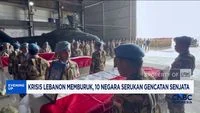
Jakarta, CNBC Indonesia – A coalition of ten nations, including Canada, the United Kingdom, Australia, and Japan, has issued a forceful joint condemnation following the tragic killing of United Nations peacekeepers in Lebanon. The international community, reeling from the incident, has urgently called for an immediate cessation of hostilities as the already volatile conflict in the broader region continues to deteriorate. The condemnation, articulated in a joint statement, underscores growing global alarm over the escalating violence and its direct threat to international stability and humanitarian efforts. The incident, which occurred in the preceding days, has reignited critical discussions about the safety and mandate of UN peacekeeping forces operating in high-risk environments and the urgent need for diplomatic intervention to prevent further bloodshed. This grave development was a focal point of discussion on CNBC Indonesia’s "Evening Up" program on Wednesday, April 15, 2026, reflecting the serious concern it has generated across international news desks.
The Tragic Incident and Immediate Aftermath
While specific details surrounding the attack remain under investigation, preliminary reports indicate that several peacekeepers, serving under the United Nations Interim Force in Lebanon (UNIFIL), were killed during an engagement in southern Lebanon. The incident is believed to have taken place amidst intensified clashes between various armed factions operating within the contested border zones. The precise circumstances, including the identities of the perpetrators and the exact location, are being meticulously pieced together by UN officials and Lebanese authorities. The loss of life among peacekeepers, who are deployed to maintain stability and protect civilians, represents a severe breach of international law and a direct challenge to the principles of peacekeeping. Flags at UN headquarters and at various UNIFIL positions were reportedly lowered to half-mast in solemn remembrance of the fallen, as the global body mourned the sacrifice of its personnel. This event marks a stark reminder of the extreme dangers faced by those dedicated to upholding peace in some of the world’s most perilous regions.
International Outcry and Joint Diplomatic Pressure
The joint statement, delivered by representatives from Canada, the United Kingdom, Australia, Japan, and reportedly joined by Germany, France, Italy, New Zealand, Sweden, and the United States, represents a significant diplomatic push. These nations collectively expressed their profound shock and sorrow at the killings, extending their deepest condolences to the families of the victims and to the nations contributing troops to UNIFIL. Beyond expressing grief, the statement unequivocally condemned the attack as a flagrant violation of the status of UN peacekeepers, who operate under a strict mandate of neutrality and impartiality. The core demand from these influential global actors is an immediate and unconditional halt to all forms of aggression and military activity in the region. Their collective voice amplifies the urgent need for all parties to the conflict to respect international humanitarian law, ensure the safety of peacekeepers and humanitarian workers, and engage in constructive dialogue towards a lasting ceasefire. The unity displayed by these diverse nations signals a shared apprehension regarding the potential for wider regional destabilization if the current trajectory of violence is not reversed.
UNIFIL’s Mandate and Enduring Challenges
The United Nations Interim Force in Lebanon (UNIFIL) was established by the UN Security Council resolutions 425 and 426 on March 19, 1978, following an Israeli invasion of Lebanon. Its primary mandate was to confirm the withdrawal of Israeli forces from southern Lebanon, restore international peace and security, and assist the Government of Lebanon in re-establishing its effective authority in the area. Over the decades, UNIFIL’s role has evolved, particularly after the 2006 Lebanon War, when its mandate was expanded under Resolution 1701. This resolution tasked UNIFIL with monitoring the cessation of hostilities, accompanying and supporting the Lebanese Armed Forces (LAF) as they deploy throughout southern Lebanon, and assisting in the establishment of a demilitarized zone free of any armed personnel, assets, and weapons other than those of the Government of Lebanon and UNIFIL.
Despite its critical role, UNIFIL has consistently operated in a highly complex and often hostile environment. Its peacekeepers frequently face challenges ranging from maintaining delicate ceasefires between heavily armed factions to navigating political sensitivities and ensuring freedom of movement in areas controlled by various non-state actors. Incidents targeting UNIFIL personnel, while condemned, are unfortunately not unprecedented. Historically, peacekeepers have been caught in crossfire, subjected to intimidation, or directly attacked by elements seeking to disrupt their mission or assert dominance in contested territories. The current incident tragically highlights the persistent dangers inherent in their operations and the precarious balance they strive to maintain. The effectiveness of UNIFIL is intrinsically linked to the political will of all parties to respect its mandate and refrain from actions that jeopardize its personnel and objectives.
Escalating Regional Tensions: A Deeper Look
The call for an "immediate cessation of hostilities" is rooted in a palpable sense of alarm over a discernible increase in regional instability preceding the peacekeeper killings. Over the past months, the Middle East has witnessed a worrying surge in cross-border skirmishes, drone attacks, and rhetoric between various state and non-state actors. This includes heightened tensions along the Israeli-Lebanese border, where skirmishes between Israeli forces and Hezbollah have become more frequent and intense. Beyond this immediate flashpoint, the broader regional landscape is characterized by proxy conflicts, ongoing humanitarian crises, and a proliferation of sophisticated weaponry. Analysts point to a confluence of factors contributing to this deterioration, including geopolitical rivalries, economic pressures exacerbating social unrest, and a perceived vacuum in effective diplomatic leadership. The killing of UN peacekeepers is not an isolated event but rather a symptom of a much larger and rapidly worsening security paradigm, threatening to engulf more areas in conflict and potentially draw in regional and international powers. The intricate web of alliances and rivalries makes any escalation incredibly difficult to contain, underscoring the urgency of the international community’s pleas for de-escalation.
Statements from Global Leaders and Organizations
The gravity of the situation prompted swift reactions from several key international figures and organizations. UN Secretary-General António Guterres issued a statement expressing profound shock and sorrow, condemning the attack in the strongest possible terms. He reiterated that attacks against UN peacekeepers are unacceptable and may constitute war crimes under international law, urging a thorough investigation and calling for the perpetrators to be held accountable. "Our peacekeepers serve with courage and dedication, often in the most dangerous conditions, to bring stability and protect vulnerable populations," Guterres stated. "Their sacrifice must not be in vain, and their safety must be paramount."
The UN Security Council (UNSC) also convened an emergency session to address the crisis. In a unanimously adopted resolution, the UNSC reiterated its full support for UNIFIL and condemned the heinous attack, emphasizing the need for all parties to respect the Blue Line and adhere to Resolution 1701. The resolution called upon all member states to exert their influence to de-escalate the situation and ensure the protection of UN personnel.
Leaders from the condemning nations echoed these sentiments. Canadian Prime Minister Justin Trudeau emphasized Canada’s unwavering commitment to multilateralism and the protection of peacekeepers, stating, "Canada stands in solidarity with the United Nations and calls on all parties to exercise restraint and uphold their obligations under international law." UK Foreign Secretary David Cameron stated, "The United Kingdom condemns this despicable act of violence. Those who target peacekeepers undermine global efforts for peace and must face justice. We urge an immediate halt to hostilities and a return to diplomacy." Australian Prime Minister Anthony Albanese and Japanese Prime Minister Fumio Kishida also released statements underscoring their nations’ commitment to international peace and security and condemning attacks on UN personnel. These synchronized statements reflect a coordinated diplomatic effort to underscore the severity of the situation and pressure all actors towards de-escalation.
The Human Cost: Peacekeeper Casualties and Risks
The killing of UN peacekeepers serves as a grim reminder of the profound human cost of conflict and the inherent dangers faced by individuals who volunteer for these critical missions. Since its inception, UN peacekeeping has seen over 4,200 fatalities, with hundreds occurring in the Middle East. While UNIFIL has generally been a less deadly mission compared to others in Africa, it has still endured significant losses. Each casualty represents not just a statistic, but a life dedicated to service, a family left grieving, and a community deprived of a peacemaker. Peacekeepers are often lightly armed, relying on their blue helmets and the UN flag for protection, a symbol of their neutrality. However, in environments saturated with armed groups and rapidly shifting front lines, these symbols can be tragically insufficient. The nature of modern conflicts, often characterized by asymmetric warfare, the presence of non-state actors, and a blurring of combatant lines, exacerbates these risks. The rules of engagement for peacekeepers are designed to be defensive, focusing on self-defense and the protection of civilians, which can place them at a disadvantage when confronted by aggressive, well-armed factions. The psychological toll on surviving peacekeepers and the challenges of recruitment for such perilous missions are also significant considerations for the future of peacekeeping.
Implications for Peacekeeping Operations and Regional Stability
The incident carries significant implications for the future of UNIFIL and broader peacekeeping operations globally. Firstly, it raises critical questions about force protection and the resources allocated to ensure the safety of peacekeepers in increasingly hostile zones. There may be calls for enhanced protective measures, improved intelligence gathering, and clearer rules of engagement. Secondly, such attacks can severely impact troop morale and the willingness of contributing nations to deploy their personnel to high-risk areas. If the perception grows that peacekeepers are being deliberately targeted without adequate protection or accountability, it could jeopardize the future viability of missions vital for global security.
For regional stability, the implications are equally dire. The killing of peacekeepers, especially in a region as volatile as the Middle East, signals a dangerous escalation that could further destabilize an already fragile equilibrium. It risks undermining the credibility of international monitoring mechanisms and could embolden factions seeking to disrupt peace efforts. The incident could also complicate future diplomatic initiatives, making it harder for mediators to gain trust and facilitate dialogue among deeply entrenched adversaries. Without a robust and respected peacekeeping presence, the likelihood of uncontrolled escalation in localized conflicts dramatically increases, posing a severe threat to civilian populations and potentially triggering wider regional conflagrations. The continued presence of UNIFIL is crucial for maintaining the delicate balance along the Blue Line and preventing minor incidents from spiraling into full-scale conflict.
Diplomatic Efforts and the Path Forward
In the wake of this tragic event, diplomatic efforts are expected to intensify significantly. The joint statement by ten nations is likely just the beginning of a concerted push to de-escalate tensions and re-engage all parties in constructive dialogue. Key diplomatic channels, including the UN, regional organizations, and bilateral engagements, will be leveraged to exert pressure for a ceasefire and a return to the negotiating table. The immediate focus will be on ensuring accountability for the peacekeeper killings, which is paramount for upholding the rule of law and deterring future attacks.
Beyond immediate de-escalation, the international community faces the arduous task of addressing the root causes of the "worsening conflict" in the region. This involves tackling geopolitical rivalries, supporting economic recovery in affected areas, and fostering inclusive governance. A comprehensive approach, combining robust peacekeeping with sustained diplomatic engagement and humanitarian assistance, will be essential. The effectiveness of these efforts will largely depend on the willingness of all regional actors to prioritize peace over conflict and to respect the sovereignty and territorial integrity of all nations. The international community, through organizations like the UN, must remain steadfast in its commitment to supporting Lebanon’s stability and protecting those who bravely serve in the pursuit of peace.
Conclusion
The killing of UN peacekeepers in Lebanon represents a stark and tragic indicator of the rapidly deteriorating security situation in the Middle East. The unified condemnation from ten prominent nations underscores the global recognition of the severity of this crisis and the urgent need for a collective response. As UNIFIL continues its vital, albeit dangerous, mission, the international community is faced with the imperative to not only mourn the fallen but also to redouble its efforts to halt the escalating hostilities, ensure accountability for such heinous acts, and chart a sustainable path towards peace and stability in a region perpetually on the brink. The upcoming days will be critical in determining whether diplomatic pressure can succeed in reversing the current dangerous trend and safeguarding the lives of those dedicated to maintaining peace.