Nila Kartika Wati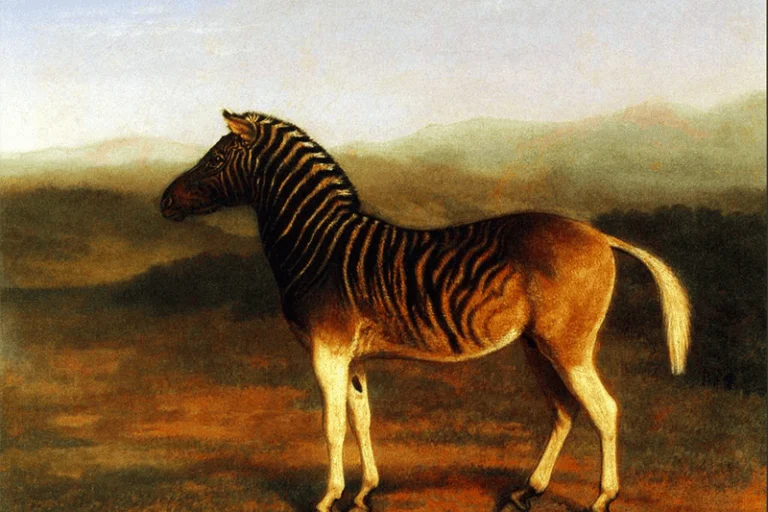
In the vast, sun-drenched expanses of the South African Karoo, the late 19th century witnessed the quiet disappearance of one of nature’s most enigmatic creatures. While today’s travelers might marvel at the diverse herds of zebras roaming the plains, a visitor prior to the 1880s would have encountered a beast that seemed to defy classification: the quagga (Equus quagga quagga). This large herbivore, with its striking mahogany-brown coat and a pattern of stripes that abruptly vanished halfway down its body, occupied a unique niche in the African ecosystem. Its extinction was not merely a loss of biodiversity but a catalyst for a century-long scientific journey that would eventually lead to the birth of ancient DNA analysis and a controversial movement to "resurrect" the species through selective breeding.
The Visual Enigma: A Zebra in Transition
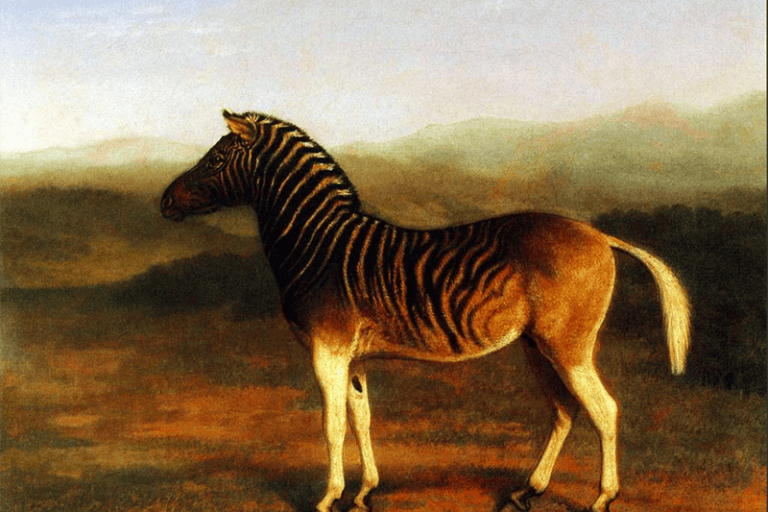
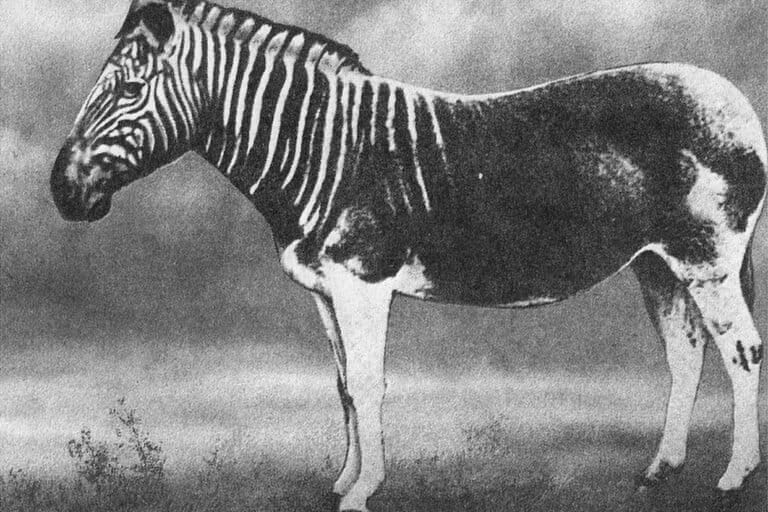
To the casual observer of the 1800s, the quagga appeared to be a biological bridge between a horse and a zebra. Its most defining characteristic was its peculiar coat pattern. Unlike the plains zebra, which is adorned with bold black and white stripes across its entire torso and legs, the quagga’s stripes were concentrated primarily on its head and neck. These markings were often a deep chocolate brown rather than black, set against a creamy or light tan background.
As one moved from the shoulders toward the hindquarters, the stripes began to fade and thin, eventually giving way to a solid, elegant chestnut or "bay" color on the rear and flanks. Its underbelly and legs were typically unstriped and white. This unique aesthetic led early European naturalists to debate whether the quagga was a distinct species of horse or a variant of the zebra. This visual confusion would persist for over a century, until the advent of molecular biology finally settled the score.
The Path to Oblivion: A History of Human Conflict
The quagga was once incredibly numerous, particularly in the Karoo region and the southern parts of the Cape Province in South Africa. Its habitat overlapped with several other equid species, including the plains zebra (Equus quagga), Burchell’s zebra (Equus quagga antiquorum), and the Hartmann’s mountain zebra (Equus zebra hartmannae). However, the arrival of European settlers in the 19th century signaled the beginning of the end for the quagga.
The quagga’s extinction was driven by a combination of commercial exploitation and agricultural expansion. Settlers hunted the animal relentlessly for its hide, which was prized for its durability, and its meat, which was used to feed farm laborers. Perhaps more devastatingly, quaggas were viewed as a nuisance by Dutch and British farmers. As the agricultural sector expanded, quaggas were seen as competitors for the limited grazing land needed for sheep and cattle. Systematic culling programs were implemented to clear the plains of these "pests."
The timeline of their decline was tragically swift. By the 1850s, quaggas had been largely eradicated from the Cape. The last wild populations in the Orange Free State were hunted to extinction by the late 1870s. On August 12, 1883, the very last known individual—a female that had lived in captivity for years—died at the Artis Royal Zoo in Amsterdam. Because the world was not yet attuned to the concept of global extinction, her death passed with little fanfare; it was only years later, when researchers realized no more quaggas could be found anywhere on Earth, that the gravity of the loss became clear.
A Scientific Turning Point: The Birth of Paleogenetics
Though the quagga was physically gone, it left behind a handful of skins, skulls, and bones in museums across Europe. For over a hundred years, these specimens were simply historical curiosities. However, in 1984, the quagga became a pioneer in a field that would change science forever: molecular biology.
A team of researchers at the University of California, Berkeley, led by Russell Higuchi and Allan Wilson, managed to extract fragments of DNA from a piece of dried muscle tissue from a quagga skin housed in the Mainz Museum. This was a revolutionary moment—the first time DNA had ever been successfully sequenced from an extinct animal.
The results of this study were groundbreaking. By comparing the quagga’s genetic code with that of living zebras, the researchers proved that the quagga was not a separate species of horse, as many 18th-century naturalists had suspected. Instead, it was a southern subspecies of the plains zebra. Further analysis suggested that the quagga had diverged from other plains zebra populations approximately 140,000 to 290,000 years ago, likely during a glacial period when environmental shifts isolated certain herds in the southern tip of Africa. This discovery laid the foundation for the entire field of ancient DNA research, paving the way for the eventual sequencing of Neanderthal and woolly mammoth genomes.
The Quagga Project: Attempting a Biological Resurrection
The realization that the quagga was a subspecies of the plains zebra rather than a distinct species sparked a bold idea in the mind of German-born taxidermist Reinhold Rau. If the quagga was merely a color variant of the plains zebra, Rau reasoned, then the genes responsible for its unique appearance must still exist within the living zebra population, albeit in a diluted or "dormant" state.
In 1987, the Quagga Project was formed in South Africa with the goal of bringing the animal back through a process known as "back-breeding." By selectively breeding plains zebras that displayed quagga-like traits—such as reduced striping on the hindquarters or a brownish base color—the project aimed to concentrate these genes over successive generations until a horse was produced that was visually indistinguishable from the extinct quagga.
Over the past four decades, the project has seen remarkable progress. Based at various sites including the Groote Schuur Estate and several private reserves, the project has produced several generations of zebras. The latest individuals, often referred to as "Rau Quaggas," exhibit strikingly reduced striping and the characteristic brownish hue of their ancestors. To the untrained eye, these animals are nearly identical to the specimens seen in 19th-century photographs.
Ethical Debates and Scientific Skepticism
Despite the visual success of the Quagga Project, it remains a subject of intense debate within the scientific community. Critics argue that the project is essentially an exercise in "cosmetic" conservation. Because the breeding focuses solely on outward appearance (phenotype), there is no guarantee that the "Rau Quaggas" possess the same behavioral traits, physiological adaptations, or the full genetic makeup (genotype) of the original quagga.
Opponents of the project frequently raise the following points:
- Taxonomic Authenticity: Some biologists argue that calling these animals "quaggas" is misleading. They are, in essence, plains zebras that have been bred to look like quaggas. This raises the question of whether a subspecies is defined solely by its stripes or by a more complex suite of evolutionary adaptations that cannot be recreated through simple breeding.
- Resource Allocation: Conservationists often debate whether the funding and land used for the Quagga Project would be better spent protecting species that are currently on the brink of extinction, such as the black rhino or the African wild dog. They argue that "bringing back" a version of an extinct animal is a luxury the planet cannot afford during a modern extinction crisis.
- The "Lazarus Effect": There is a concern that the perceived success of de-extinction projects might lead to a sense of complacency. If the public believes that science can simply "re-create" lost species, there may be less urgency to protect those that are still living.
Proponents of the project, however, view it as a form of "restorative ecology." They argue that by reintroducing quagga-like zebras into the Karoo, they are filling an ecological vacancy and righting a historical wrong. They maintain that because the quagga was a subspecies, the project is not "creating" something new, but rather concentrating existing genetic material that was nearly lost.
Chronology of the Quagga’s Journey
To understand the scope of the quagga’s story, one must look at the timeline of its transition from a common sight to a scientific miracle:
- 1785: The quagga is first described by Dutch naturalist Pieter Boddaert, who classifies it as a distinct species.
- 1800s (Early): Massive herds are documented across the Cape and Karoo regions.
- 1850s: Rapid decline due to overhunting by settlers and competition with livestock.
- 1858: A quagga is brought to the London Zoo, where it is photographed—providing some of the only visual evidence of the living animal.
- 1878: The last wild quagga is believed to have been shot.
- 1883: The last captive quagga dies in Amsterdam, marking the official extinction of the subspecies.
- 1984: Russell Higuchi and his team publish the first-ever ancient DNA sequence using quagga tissue.
- 1987: Reinhold Rau officially launches the Quagga Project in South Africa.
- 2005: The project produces "Henry," a foal considered one of the most quagga-like individuals to date, showing significant stripe reduction.
- Present Day: Several herds of "Rau Quaggas" reside in South African reserves, serving as both a tourist attraction and a subject of ongoing genetic study.
Broader Implications for Modern Science
The story of the quagga serves as a foundational case study for the burgeoning field of de-extinction. Today, scientists are exploring far more complex methods—including CRISPR gene editing and cloning—to potentially bring back species like the woolly mammoth or the passenger pigeon. The quagga project represents the "low-tech" ancestor of these efforts, demonstrating that even through traditional breeding, humans can manipulate the genetic trajectory of a lineage.
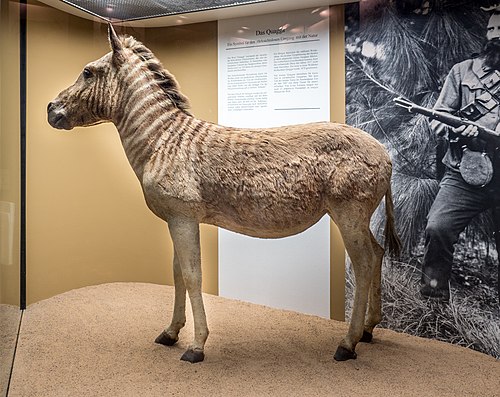
Furthermore, the quagga’s history highlights the importance of museum collections. Without the 23 preserved skins and various skeletal remains held in global institutions, the DNA breakthrough of 1984 would have been impossible. These specimens act as biological time capsules, allowing modern technology to answer questions that were unanswerable at the time the animals were alive.
Conclusion: A Symbol of Human Impact and Hope
The quagga remains a powerful symbol of the duality of human nature. Its extinction was a result of short-sightedness, greed, and a lack of ecological understanding. Yet, its "afterlife" in the halls of science represents the height of human curiosity and our desire to rectify past mistakes.
Whether the "Rau Quaggas" roaming the South African plains today are "true" quaggas or merely convincing lookalikes is a question that may never be fully settled. However, their presence serves as a living reminder of the permanence of extinction and the extraordinary lengths to which science will go to bridge the gap between the lost past and the technological future. As these animals continue to graze in the Karoo, they stand as a testament to the fact that while a species can be erased from the earth, its genetic legacy and its impact on the human imagination can endure for centuries.