Nila Kartika Wati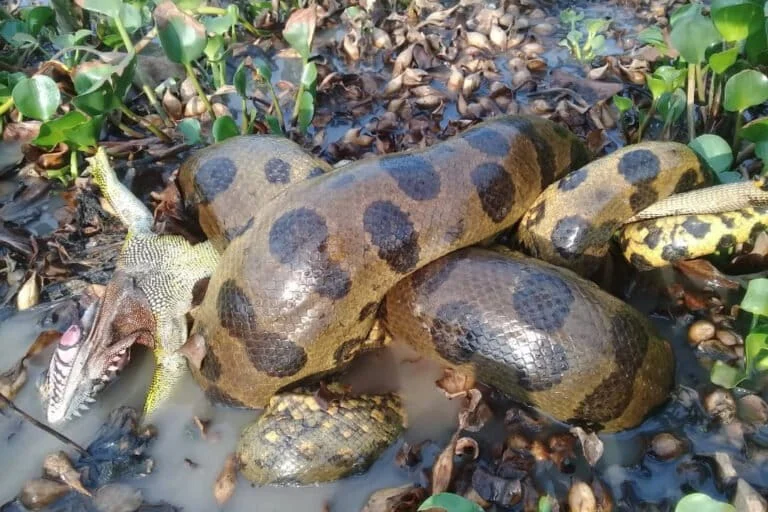
For centuries, the dimensions of the world’s largest snakes have been shrouded in folklore, blurred photographs, and hyperbole that often expands with each retelling. From the jungles of Southeast Asia to the river basins of the Amazon, stories of gargantuan reptiles have fueled human fascination, yet for the scientific community, such tales remain anecdotal. In the realm of herpetology, credibility rests entirely upon empirical measurement, verified by independent witnesses, and supported by rigorous documentation. Under this stringent standard, the list of truly record-breaking serpents is far shorter than popular culture might suggest, with two species consistently emerging as the undisputed titans: the reticulated python (Malayopython reticulatus) of Southeast Asia, holding the title for length, and the green anaconda (Eunectes murinus) of South America, reigning as the undisputed master of mass.
The Rise of Ibu Baron: A New Benchmark for Length
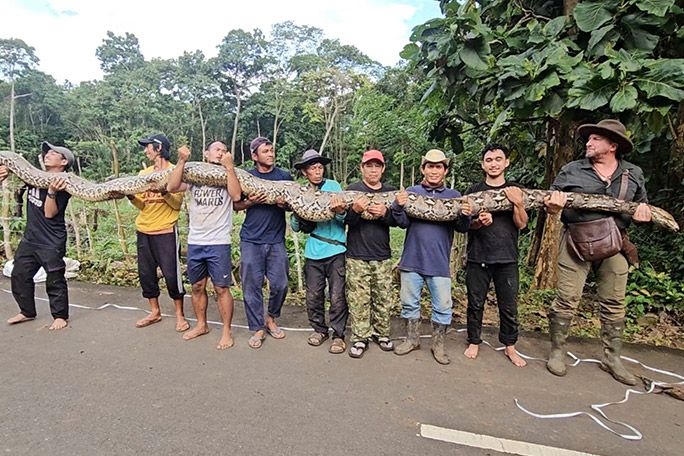
The landscape of reptilian records shifted significantly in early 2026 when Guinness World Records officially verified a reticulated python named "Ibu Baron" as the longest wild snake ever recorded. Discovered in the Maros Regency of South Sulawesi, Indonesia, in late 2025, the specimen was subjected to a formal measurement on January 18, 2026. The findings were definitive: the snake measured 7.22 meters (approximately 23.7 feet) from snout to tail tip, with a recorded weight of 96.5 kilograms (212.7 pounds) in an empty-stomach state.
This measurement was not merely a local curiosity; it was a watershed moment for herpetological records. The verification process, overseen by experts, provided a rare opportunity to analyze a specimen of such magnitude without the interference of common biases found in previous reports. When placed against field data regarding green anacondas, the comparison reveals a striking biological reality: while the python holds a clear advantage in length, the weight disparity between the two species is surprisingly narrow. Large anacondas studied in the field in Venezuela have been measured at lengths roughly two meters shorter than Ibu Baron, yet they often match the python’s mass, highlighting the distinct physiological strategies employed by these two apex predators.
Chronology of Records: From Kalimantan to Maros
Before the emergence of Ibu Baron, the scientific community’s gold standard for reticulated pythons was a specimen documented in 2005. That discovery, reported by sun bear researcher Gabriella Fredriksson in the Raffles Bulletin of Zoology, involved a female python measuring 6.95 meters (22.8 feet) and weighing 59 kilograms (130 pounds). The context of that discovery was particularly notable; the snake had consumed an adult female sun bear that was being tracked via a radio collar. The survival of the signal from within the snake provided a unique, unintended method of verification that added a layer of scientific weight to the claim.
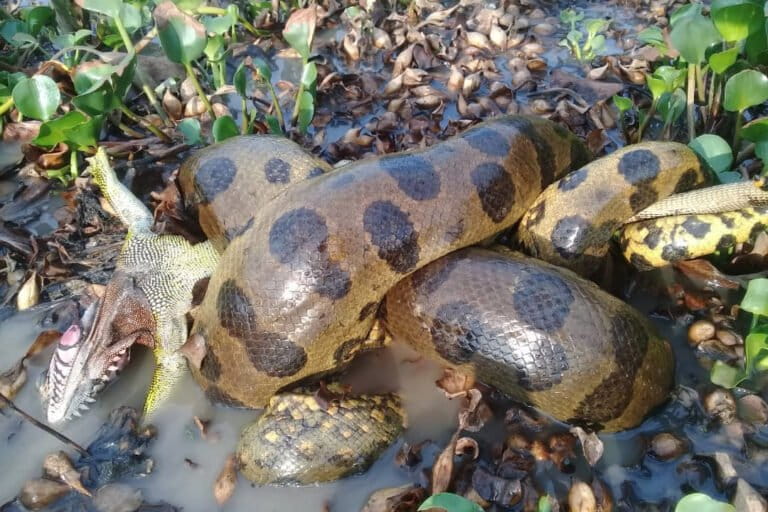
The comparison between the 2005 Kalimantan specimen and the 2026 Maros record illustrates the nuance of reptilian growth. Ibu Baron is only 27 centimeters longer than her predecessor, yet she weighs 37.5 kilograms more. This significant difference in mass, despite similar lengths, underscores the importance of nutritional status, physiological health, and the specific life stage of the animal at the time of measurement.
The Methodology of Measurement and Physical Constraints
The verification of Ibu Baron was a complex logistical undertaking. Snake handler Diaz Nugraha and nature photographer Radu Frentiu performed the measurements without anesthesia to ensure the safety of the animal. Because the snake’s muscles remained active and its body was not fully straightened, experts at Guinness World Records have suggested that the specimen’s true, fully extended length could be as high as 7.9 meters. However, since formal measurement protocols prohibit the use of sedatives unless for medical necessity, the official recorded length remains the conservative 7.22 meters.
This size is a profound anomaly. Typical adult reticulated pythons usually range between 3 and 5.8 meters. The survival of such an exceptionally large specimen is often a matter of geography and human intervention. As Frentiu noted, individuals that deviate this far from the norm often face significant threats once their location becomes known to local human populations. The preservation of Ibu Baron is credited to local conservationist Budi Purwanto, who ensured the snake’s protection and evacuation. As of mid-2026, the snake remained under the care of conservation officials, serving as a vital subject for ongoing studies into the upper limits of reptilian growth.
Anacondas and the Evolution of Taxonomical Data
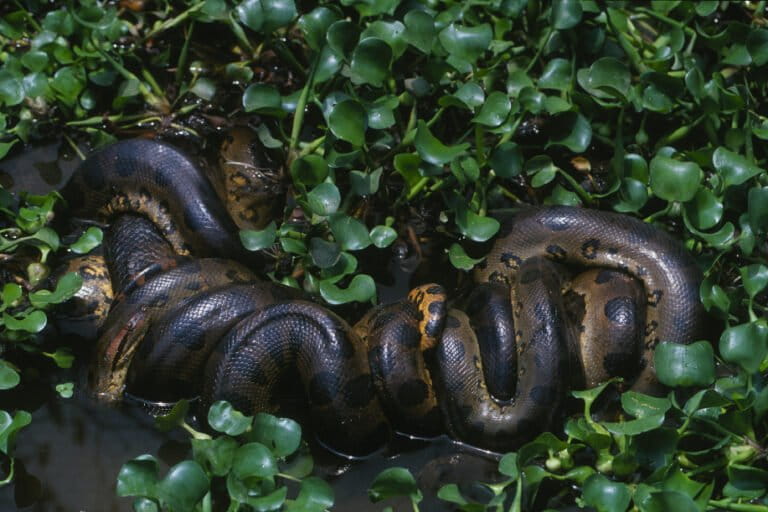
To contextualize Ibu Baron’s record, one must look toward the work of Dr. Jesús A. Rivas, whose extensive field research in the Llanos wetlands of Venezuela has provided the most reliable dataset for green anacondas. Over decades, Rivas has captured and measured hundreds of individuals. His data consistently refutes the sensationalized claims often seen in popular media, where anacondas are frequently described as weighing over 200 kilograms.
According to Rivas, the largest female in his study measured 5.21 meters (17.1 feet) and weighed 97.5 kilograms (215 pounds). While this is a formidable size, it is a far cry from the unverified monster stories of the past. The data also reveals a clear sexual dimorphism, with male anacondas rarely exceeding 10 kilograms, a trait common among many large snake species where the female must be significantly larger to accommodate eggs.
The comparison between the 5.21-meter anaconda and the 7.22-meter Ibu Baron highlights a fundamental divergence in evolutionary morphology. The anaconda is a heavy-bodied, semi-aquatic predator, whereas the reticulated python is a terrestrial-focused constrictor. The anaconda’s density—roughly 18.7 kilograms per meter compared to the python’s 13.4 kilograms per meter—reflects its aquatic lifestyle, where the buoyancy of water allows for a much thicker, heavier body structure that would be difficult to sustain on land.
Taxonomical Shifts and the Future of Discovery
The scientific understanding of these giants is currently in flux due to recent genetic research. In 2024, a study published in the journal Diversity by Rivas and Dr. Bryan Fry of the University of Queensland proposed that the green anaconda is not a single species. Through DNA analysis, they identified a 5.5 percent difference in mitochondrial DNA between populations in the northern and southern parts of South America, suggesting they diverged approximately 10 million years ago.
The researchers proposed the name Eunectes akayima for the northern population, which includes the Venezuelan and Ecuadorian specimens. While an expedition in the Amazon region of Ecuador recorded a 6.3-meter female, placing it closer to the python in length, the classification remains a subject of intense academic debate. Several research groups have contested the naming, citing procedural issues in the description of the new species. Regardless of the nomenclature, the data underscores a consistent trend: the reticulated python remains the world’s longest, while the anaconda represents the peak of reptilian mass.
Implications for Conservation and Science
The verification of Ibu Baron and the ongoing studies of the Eunectes genus carry significant implications for wildlife conservation. For many years, the lack of verified data led to a "black hole" in public perception, where misinformation hindered serious scientific discussion. By establishing rigorous, peer-reviewed standards for measurement, the global scientific community can better track the health and population stability of these apex predators.
Furthermore, these large snakes serve as crucial indicators of ecosystem health. Their presence in a habitat signifies a robust prey base and an environment capable of sustaining high-level predators. The transition from myth to measurement allows for better policy-making, as conservationists can now advocate for the protection of these species based on documented biological importance rather than local folklore.
As Frentiu and other field experts have emphasized, the records set today are likely not the absolute ceiling for these species. In the vast, unexplored swaths of the tropical rainforests in Southeast Asia and South America, it is entirely possible that larger individuals exist. The challenge for the coming years will be to continue the standard of documentation established by the Ibu Baron case, ensuring that as more "giants" are discovered, they are met with the tools of modern science rather than the lens of exaggerated storytelling.
The story of Ibu Baron serves as a reminder that nature often exceeds our expectations, but only when we take the time to measure it accurately. The pursuit of these records is not merely a quest for prestige; it is a vital effort to map the physical boundaries of the natural world, ensuring that the true kings of the jungle remain protected for generations of study to come.