
 Nila Kartika Wati
The coastal landscape of Banda Aceh is undergoing a profound and irreversible transformation, leaving traditional livelihoods in decline and disrupting ancient migratory pathways for global shorebird populations. For 73-year-old Zakaria, a fisherman who has spent over two decades navigating the waters of Tibang, the evidence of this shift is found in his empty nets. What was once a thriving ecosystem of mangroves, mudflats, and tidal creeks has been rapidly consumed by urban expansion, road infrastructure, and commercial development. This environmental degradation, driven by both anthropogenic pressure and the broader impacts of climate change, serves as a grim indicator of the diminishing health of Sumatra’s northern coastline.
A Legacy of Change: The Erosion of Traditional Livelihoods
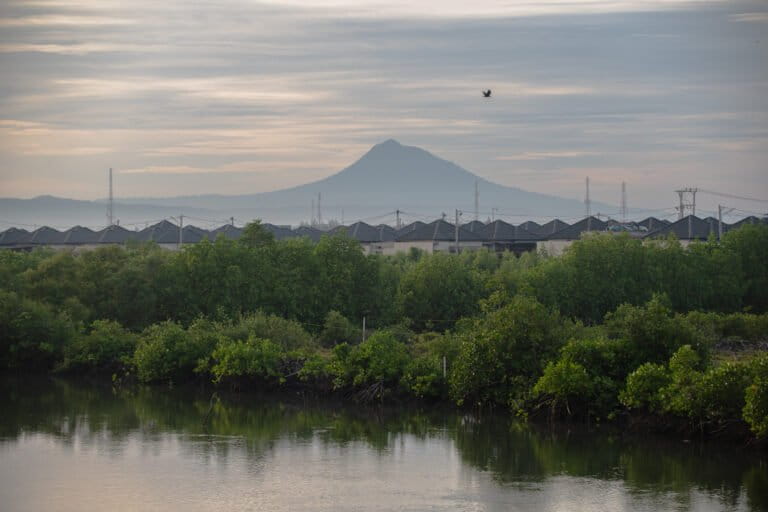
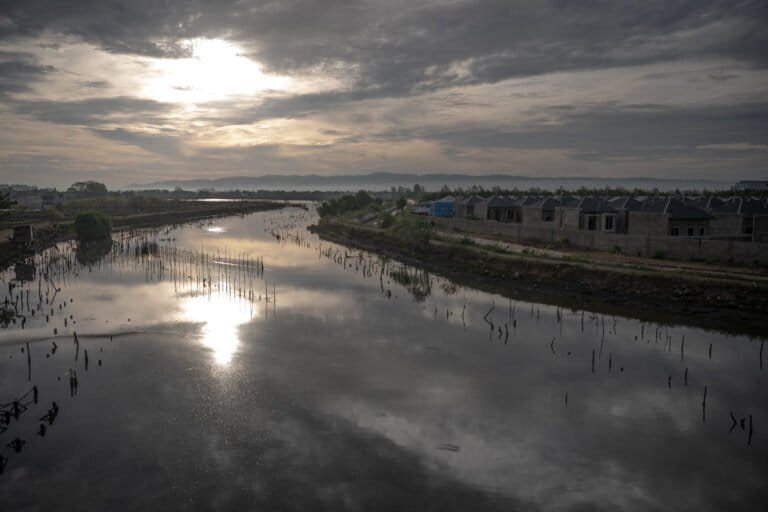
Zakaria’s daily routine in Tibang offers a localized lens into a regional crisis. Where he once harvested an abundance of fish, he now pulls his nets from turbid waters with minimal yield. His testimony is echoed by many in the community who have witnessed the systematic encroachment of concrete into the intertidal zones. Over the past decade, the coastal fringe—historically characterized by dense mangrove belts and productive mudflats—has been repurposed to accommodate the rising demand for housing and economic infrastructure.
The impact is not merely visual; it is functional. The loss of mangrove forests, which serve as essential nursery grounds for juvenile fish and crustaceans, has led to a collapse in local fish stocks. Furthermore, traditional oyster farming, a staple of the local economy in the Tibang estuary, has seen a steady decline in productivity. As the mudflats are paved or polluted, the natural filtration systems of the estuary are compromised, forcing many long-term residents to abandon their traditional practices. The once-vibrant auditory landscape, filled with the calls of migratory birds, has been replaced by the persistent, mechanical hum of urban traffic.

The East Asian-Australasian Flyway: A Global Connection
The environmental tragedy occurring in Banda Aceh has consequences that extend far beyond the Indonesian archipelago. The eastern coast of Aceh, spanning from Aceh Tamiang to Banda Aceh, represents a critical node in the East Asian-Australasian Flyway (EAAF). This global migratory route is one of the most vital pathways for shorebirds traveling between their breeding grounds in the Arctic—including Siberia and northern Asia—and their non-breeding destinations in Southeast Asia and Oceania.
According to Heri Tarmizi, a researcher specializing in migratory birds, the geography of Aceh is indispensable. "Banda Aceh and Aceh Besar are situated at the northern tip of Sumatra, making them essential stopover points," Tarmizi explains. These mudflats provide the necessary fuel for these birds to survive their arduous journey. During low tide, the nutrient-rich mud becomes a feeding ground where birds forage for marine worms and small crustaceans to build up the fat reserves required for their transcontinental flights.
The physiological toll of habitat loss is severe. Migratory birds rely on a highly precise "biological clock." If they cannot secure sufficient caloric intake at these transit points, they may lack the energy to complete their flight, often resulting in mortality mid-migration. Historically, areas like Lampulo were considered "paradise" for these species. However, following the intensive land reclamation for the Lampulo Fish Auction Center (TPI) and other industrial developments, the diversity and population density of these birds have plummeted. Records indicate that where thousands of birds once gathered, only a few hundred remain, representing a mere fraction of the original biodiversity.
Chronology of Degradation: A Decade of Rapid Urbanization
The decline of the Aceh coastline has been documented through several distinct phases over the last twenty years:
- 2004–2010 (Post-Tsunami Recovery): Initial reconstruction efforts focused on rapid infrastructure development to restore connectivity and housing. While essential, some projects inadvertently encroached upon sensitive wetlands and mangrove buffer zones.
- 2011–2016 (Urban Expansion): Increased population density in Banda Aceh led to the conversion of secondary coastal wetlands into residential complexes and commercial zones. The loss of green space began to accelerate during this period.
- 2017–2022 (Systemic Decline): The compounding effects of climate change, including rising sea levels and altered tidal patterns, began to intersect with human activity. Observations of bird population declines shifted from anecdotal to statistically significant.
- 2023–Present (Ecological Alert): Environmental experts have categorized the current state of the coast as "severely degraded." The disruption of migratory cycles, with birds arriving later or in smaller numbers, has become a recurring annual phenomenon.
Data-Driven Implications and Scientific Analysis
The shift in migratory patterns is not merely a matter of fewer birds; it is an early warning system for climate change. Heri Tarmizi notes that certain species are now arriving weeks later than their historical averages, with some lingering in Aceh until June, long after they should have returned to northern breeding grounds. This temporal shift suggests a massive disruption in the environmental cues that govern migration.
Furthermore, climate change is affecting the food web at the microscopic level. Increased sea surface temperatures are altering the composition of the mudflats. The availability of polychaetes (marine worms), a primary source of protein for shorebirds, is diminishing due to thermal stress on the benthic environment. This "bottom-up" pressure forces birds to spend more time foraging, increasing their susceptibility to exhaustion and predation.
Insyafrizal, Head of the Functional Division for Marine and Fisheries Resource Conservation in Aceh, acknowledges that the degradation is widespread. "Banda Aceh shows the most prominent signs because the rate of urban growth is significantly higher than in other regencies," he states. The loss of the natural "buffer zone"—the mangroves—has also left the city more vulnerable to coastal erosion and storm surges, creating a feedback loop where environmental damage necessitates more hard-infrastructure, which in turn causes further environmental damage.
Official Responses and Mitigation Strategies
The provincial government of Aceh has begun to implement policies aimed at reversing this trend, though experts remain cautious about the long-term efficacy of these measures. Key initiatives include:
- Mangrove Park Development: At the Lampulo port area, a portion of the land has been designated as a ‘Mangrove Park.’ This is intended to restore local habitat and provide a sanctuary for both aquatic life and migratory species.
- Restoration Programs: The Department of Marine Affairs and Fisheries is currently conducting mangrove rehabilitation projects across several regencies, including Aceh Besar, Leupung, Aceh Jaya, Aceh Tamiang, and Simeulue.
- Zoning Revision: Authorities are currently reviewing spatial planning and land-use regulations to ensure that future development does not infringe upon critical ecological zones.
- Green Infrastructure: There is a renewed focus on expanding urban green spaces (RTH) in coastal districts to act as natural filtration systems and carbon sinks.
However, the challenge remains significant. Balancing the socio-economic needs of a growing population with the rigid requirements of ecosystem preservation requires a fundamental shift in how urban development is conceptualized. As Insyafrizal notes, the predictability of the climate is gone. With the traditional six-month seasonal cycles now erratic, the margin for error in managing coastal ecosystems is razor-thin.
The Broader Impact: A Global Responsibility
The disappearance of shorebirds from the coast of Banda Aceh is a local manifestation of a global extinction crisis. Shorebirds are among the most vulnerable of all avian groups to climate change because they rely on a chain of sites that must all be in good condition. If one link in the chain—such as the Aceh coastline—is broken, the entire migratory population suffers.
The narrative of Zakaria and the silent mudflats of Tibang is a microcosm of a larger, systemic failure to account for ecological services in economic planning. While the government’s efforts at reforestation and zoning are necessary steps, they represent a race against time. The future of the East Asian-Australasian Flyway, and the health of the coastal communities that rely on these ecosystems, depends on whether stakeholders can transform these coastal spaces from mere "development sites" back into functional, living landscapes. Without immediate and sustained intervention, the quiet that has settled over the mudflats of Banda Aceh may become the permanent silence of a lost natural heritage.









