Nila Kartika Wati
The Archdiocese of Ende, led by the Commission for Justice, Peace, and Integrity, has officially initiated a judicial review at the Supreme Court of Indonesia, challenging the legal status of Flores as a "Geothermal Island" and the validity of several ministerial decrees governing geothermal work areas (WKP). Registered under case number 43 P/HUM/2026 on September 4, 2026, the legal action marks a significant escalation in the ongoing tension between the government’s energy transition agenda and the socio-ecological concerns of local communities.
At the heart of the legal dispute are three specific decrees issued by the Ministry of Energy and Mineral Resources (ESDM). These include the 2012 decree on the Sokoria Geothermal Working Area, the 2011 decree regarding the Mataloko Geothermal Working Area, and the controversial 2017 decree that designated the entire island of Flores as a primary hub for geothermal energy development. The Archdiocese, represented by legal counsel Azas Tigor Nainggolan, argues that these policies were enacted without sufficient transparency, environmental scrutiny, or meaningful public consultation, effectively sidelining the rights and livelihoods of the island’s indigenous and agrarian populations.
The Legal Grounds for Challenge
The Archdiocese of Ende’s legal team has structured their challenge around three primary pillars of administrative and constitutional law. First, the petitioners allege a systemic lack of transparency. Despite repeated requests for documentation, the Ministry of ESDM has reportedly failed to provide full access to the comprehensive decrees. Residents and stakeholders have been forced to rely on fragmented information gathered from public tender announcements, which the petitioners claim undermines the principle of informed public participation.
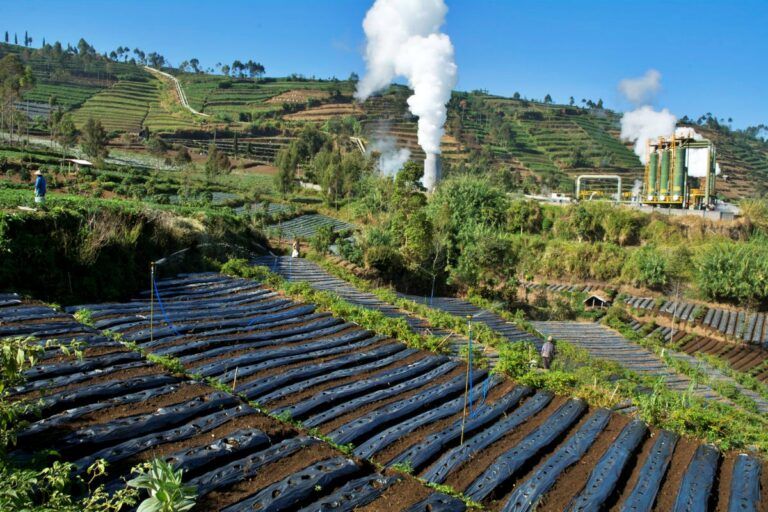
The second pillar centers on the absence of "meaningful public participation." Under Law No. 32 of 2009 regarding Environmental Protection and Management, the state is mandated to involve affected communities in decision-making processes that alter their landscape. The plaintiffs contend that the government’s interpretation of "consultation" has been merely performative, consisting of formal notifications rather than a genuine exchange of information regarding the long-term social and ecological risks associated with large-scale industrial drilling.
Thirdly, the petitioners highlight the lack of a comprehensive and transparent Environmental Impact Assessment (Amdal). Given the unique topographical and hydrological characteristics of Flores—a region defined by its volcanic mountain ranges, essential water recharge zones, and delicate forest ecosystems—the Archdiocese argues that the government has failed to adopt the "precautionary principle." This principle is critical in a region where seasonal drought is common and local communities rely almost exclusively on natural water sources for agriculture, livestock, and household survival.
A Chronology of Escalating Tensions
The friction between the state’s geothermal ambitions and local resistance has been building for years. The following timeline outlines the key developments leading to the current Supreme Court case:
- 2011–2012: The Ministry of ESDM issues decrees defining the Mataloko and Sokoria geothermal working areas, setting the stage for industrial exploration.
- 2017: The Ministry officially designates Flores as a "Geothermal Island" to fast-track its national energy transition goals, aiming to tap into nearly 1,000 megawatts of potential energy.
- February 23, 2026: The Archdiocese of Ende formally submits an initial administrative objection to the Directorate General of New and Renewable Energy and Energy Conservation (EBTKE), demanding transparency regarding the project’s environmental impact.
- April 28, 2026: A second administrative objection is filed following the ministry’s failure to provide the requested documentation, prompting the decision to move the case to the judiciary.
- September 4, 2026: The formal petition for judicial review is filed with the Supreme Court.
- October 8, 2026: A coalition of civil society organizations, including the Legal Aid Foundation of Indonesia (YLBHI), submits an amicus curiae (friend of the court) brief to support the Archdiocese, underscoring the potential for human rights violations and environmental degradation.
The Socio-Ecological Risk Assessment
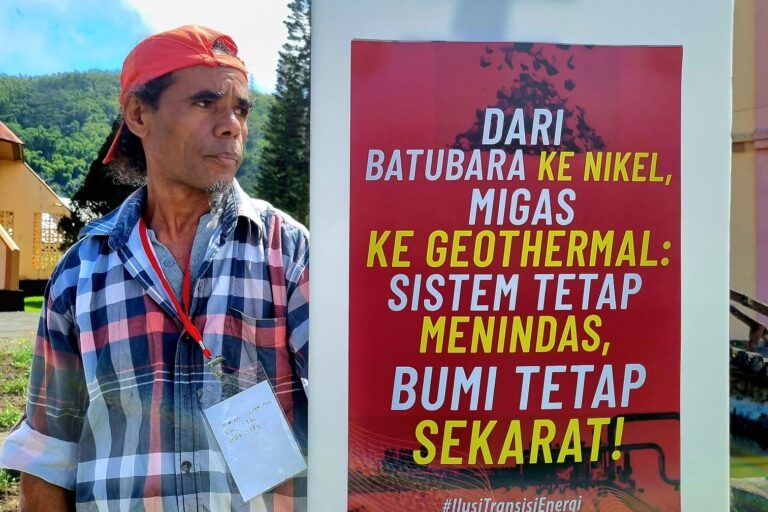
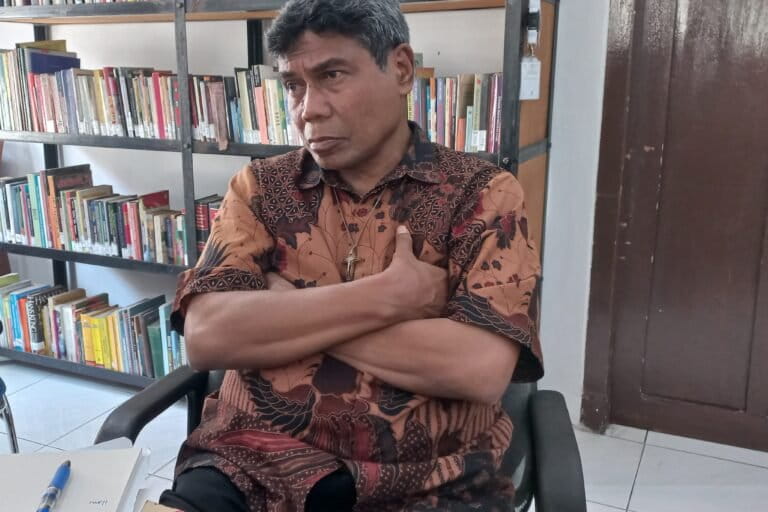
The Archdiocese of Ende, under the leadership of Archbishop Paulus Budi Kleden, has been vocal about the incompatibility of large-scale geothermal projects with the rugged, agrarian landscape of Flores. The Archbishop has expressed deep concerns that geothermal operations, which are often located in close proximity to residential and agricultural land, will result in the permanent dispossession of farmers.
Water security is perhaps the most pressing concern. Geothermal drilling is notoriously water-intensive. According to research from the U.S. Department of Energy, a single geothermal well can require between 42 million and 55 million liters of water during the drilling phase alone. In a region where water scarcity is already a chronic issue, residents fear that the industrial use of these resources will cripple local agricultural production.
Furthermore, the experience of the Mataloko community serves as a grim warning for many locals. Residents have reported instances of hot mud eruptions and water contamination following the commencement of geothermal activities. Despite these complaints, operators have frequently classified these occurrences as "natural disasters" rather than consequences of industrial activity, leaving the affected communities without compensation or effective mitigation.
Official Responses and the "Amicus Curiae" Intervention
The legal challenge has garnered significant support from national advocacy groups. During the submission of the amicus curiae brief in October, Edy Kurniawan of YLBHI stated that the state’s drive for "clean energy" cannot serve as a "blank check" to bypass human rights protections. The coalition argues that the state’s obligation to conduct a proper energy transition must be balanced against the right of local populations to manage their own territories and resources.
Faizal Ratuela of the Indonesian Forum for the Environment (WALHI) emphasized that the government’s policy ignores the geographical realities of the region. The Nusa Tenggara Timur (NTT) Regional Medium-Term Development Plan (RPJMD) for 2024–2029 explicitly notes the province’s vulnerability to earthquakes, volcanic eruptions, and drought. Critics argue that forcing high-risk industrial projects into a region already prone to natural disasters is a recipe for a compounded ecological crisis.
Renie Aryandani of Trend Asia, an organization focusing on sustainable energy, pointed out that the "renewable" label does not automatically equate to a "just" project. She noted that the current development model relies on centralizing energy resources while shifting the environmental, social, and economic costs onto remote islands.
Broader Implications for Indonesia’s Energy Policy
The case before the Supreme Court is a bellwether for Indonesia’s broader energy transition strategy. As the country seeks to phase out coal and move toward renewable sources, the government has increasingly identified geothermal energy as a cornerstone of its "Green Economy." However, the resistance in Flores illustrates a fundamental gap between top-down development policies and the grassroots reality of community-based resource management.
If the Supreme Court rules in favor of the Archdiocese, it could set a critical legal precedent requiring the government to conduct more rigorous public consultations and environmental impact studies for all future renewable energy projects. Conversely, a rejection of the petition could signal a continued prioritization of national industrial goals over localized environmental and social safeguards.
For now, the people of Flores, supported by the Church and environmental advocates, remain steadfast in their demand for a development model that respects the integrity of their land, the availability of their water, and their fundamental right to participate in the decisions that shape their future. As the legal proceedings unfold, the nation is watching to see how the judiciary will balance the urgent need for national energy infrastructure with the rights of those who live on the front lines of the climate crisis. The case, ultimately, forces a national conversation: at what cost is "clean energy" produced, and who bears the burden when the earth is disturbed?