Nila Kartika Wati
As the tide recedes along the jagged coastline of Mimika, Papua Tengah, a daily ritual of survival and stewardship unfolds. For the women of Kampung Atuka—Mama Paulina, Balbina, Oda, and Karolina—the vast expanse of the mangrove forest is not merely a landscape, but a lifeline. Armed with noken bags and specialized iron hooks, these women navigate the labyrinthine roots of the mangrove ecosystem in pursuit of karaka, or mud crab. This practice, deeply rooted in the cultural fabric of the region, serves as the primary economic engine for their households while simultaneously highlighting the precarious balance between traditional livelihoods, global export demands, and the urgent need for environmental conservation.
The pursuit of karaka is a delicate operation. It requires keen observation, patience, and a deep understanding of the mangrove environment. As Paulina notes, the process is fraught with risk. "We cannot simply reach into the holes with our bare hands; it is too dangerous," she explains, gesturing toward the hidden crevices where the crustaceans reside. The technique involves tracking the subtle imprints left in the mud and utilizing a long, wooden-handled iron rod to extract the crabs without inflicting physical trauma. In the trade of mud crabs, value is strictly tied to physical integrity; any damage to the claws or carapace significantly diminishes the market price, turning a successful catch into a negligible profit.
The Socio-Economic Backbone of Atuka
For the women of Atuka, the mangrove harvest is a multifaceted necessity. Beyond the high-value mud crab, these women gather a variety of marine life, including bivalves, snails, and tambelo, to sustain their families. The consistency of this income is subject to the whims of the tides and the natural cycle of the ecosystem. On a productive day during low tide, a single gatherer might collect up to 20 crabs. Conversely, poor conditions may yield as few as four.
Balbina, a veteran of these tidal forests, recounts that a successful day can result in earnings of up to Rp500,000. For her and her peers, this income is not disposable; it is the fundamental currency for education and nutrition. "Every single day, I think of these children—their pocket money, their school fees. That is why we do this every day," she says. This daily labor underscores a broader socio-economic reality in Papua Tengah: the household economy is heavily reliant on the informal extraction of natural resources, where the gap between subsistence and commercial success is bridged entirely by the physical labor of women.
Market Dynamics and the Export Chain
Despite their vital role, the women of Atuka remain at the periphery of the global supply chain. They often operate in a cycle of dependency, dictated by limited market intelligence and predatory logistical arrangements. Many local fishers are bound by agreements with middlemen who provide the fuel necessary for their motorized perahu boats. In exchange, the fishers are contractually obligated to sell their entire catch to these specific collectors at prices that are often non-negotiable.
This reliance on fuel is a major vulnerability. When fuel costs rise or supplies are disrupted, the women are forced to abandon their boats and walk for hours, wading through mud and water to reach the prime crabbing grounds. This physical toll is compounded by their lack of access to broader market data, leaving them vulnerable to the price volatility of the international trade.
The scale of this industry is significant. According to data from the Balai Karantina (Quarantine Agency), the export volume of mud crabs from Papua Tengah between January and June 2026 reached approximately 661.8 metric tons. These crabs move through a complex distribution network, primarily channeled through major logistics hubs in Makassar and Jakarta before entering the international market. The fact that such a massive tonnage originates from the labor of local fishers—who remain largely isolated from the final retail value of their product—highlights a critical disconnect in the regional economic structure.
The Mangrove Ecosystem: A Natural Capital
The productivity of Atuka is inextricably linked to the health of its mangrove forests. A comprehensive mapping project conducted by the local community in collaboration with the NGO Blue Forest has revealed that the Atuka mangrove area spans an impressive 7,281.72 hectares, hosting at least 28 distinct species of "true" mangroves. This biodiversity supports two primary commercial species of mud crab: Scylla olivacea and Scylla serrata.
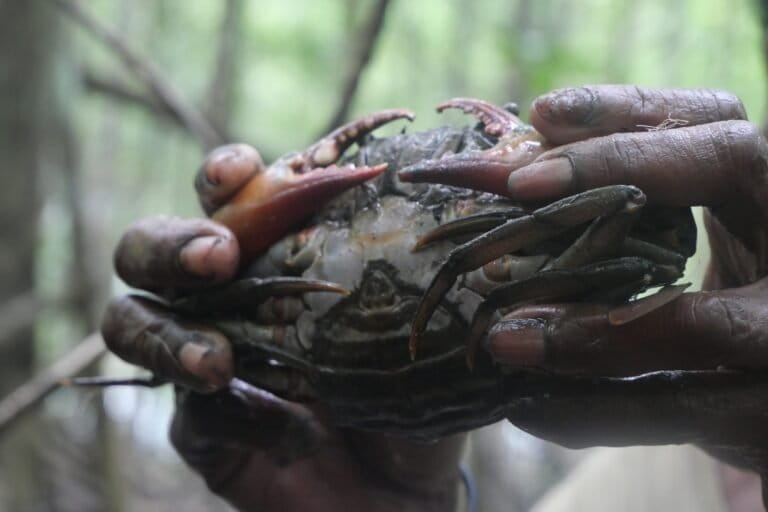
The ecological role of these crabs is often overlooked. Through their burrowing activity, the crabs facilitate the oxygenation of the mangrove soil, which is essential for the health of the root systems. Rofin Daton, the Blue Forest coordinator for the Mimika-Asmat region, emphasizes that the preservation of this ecosystem is a direct result of indigenous stewardship. "This healthy mangrove forest—from the past until now, who has guarded it? The community," Daton asserts. The sustainability of the crab population is not managed through state-led regulations, but through centuries of traditional knowledge passed down through generations.
Chronology of Stewardship and Future Outlook
The preservation efforts in Atuka are not reactive; they are proactive. Amatus Tamaweyau, a prominent community leader, points to long-standing customary laws that prohibit the indiscriminate felling of mangrove trees. These traditional regulations have evolved to include modern restoration techniques.
A pivotal moment occurred in 2014, when the community initiated a massive reforestation program led by Tamaweyau. This project focused on planting thousands of seedlings on islands formed by natural sedimentation processes. Today, those efforts have matured into thriving mangrove belts that serve as both carbon sinks and nurseries for the mud crabs. This success has emboldened the community to seek the restoration of other degraded or vacant coastal zones.
The response from official state bodies reflects a growing awareness of this synergy. Anton Panji Mahendra, Head of the Balai Karantina of Papua Tengah, notes that the regulation of the crab industry must be balanced with the protection of local knowledge. "It is essential that the people who guard these forests are the ones who truly enjoy the benefits," Mahendra stated, acknowledging that the future of the industry depends on the continued prosperity of the women who harvest the resource.
Analysis: Implications for Sustainable Development
The situation in Kampung Atuka presents a microcosm of the challenges facing Indonesia’s blue economy. While the government promotes the export of high-value marine commodities to boost national GDP, the primary producers—the women of Atuka—remain trapped in a cycle of logistical dependence and limited bargaining power.
If the goal of the regional government is to modernize the mud crab industry, policy interventions must shift from purely administrative oversight to infrastructural support. This includes:
- Direct Market Access: Facilitating cooperative-led sales that bypass exploitative middleman agreements, allowing fishers to retain a larger portion of the export price.
- Sustainable Infrastructure: Investing in energy-efficient transport or localized cold-storage facilities that reduce the reliance on fuel-heavy, daily trips.
- Community-Led Conservation Incentives: Formalizing the land-rights and stewardship roles of local communities, ensuring that they receive direct compensation for the ecosystem services provided by the mangroves they protect.
The case of the Atuka women demonstrates that ecological health and economic output are not mutually exclusive. In fact, they are deeply interdependent. As the demand for mud crabs continues to rise in international markets, the role of the Atuka community as both producers and guardians of the mangrove becomes increasingly critical. Without a concerted effort to integrate these women into the formal economy while respecting their traditional land-management practices, the sustainability of both the forest and the industry remains at risk.
Ultimately, the women of Atuka continue their work not because they are unaware of the market complexities, but because they are the stewards of a system that has sustained them for generations. Whether the state chooses to empower these individuals through equitable policy or continues to treat them as mere laborers in an extractive chain will determine the long-term viability of Papua Tengah’s most valuable, and most vulnerable, natural resource. The path forward requires a transition from the exploitation of the mangrove to the elevation of its guardians.