
 Nila Kartika Wati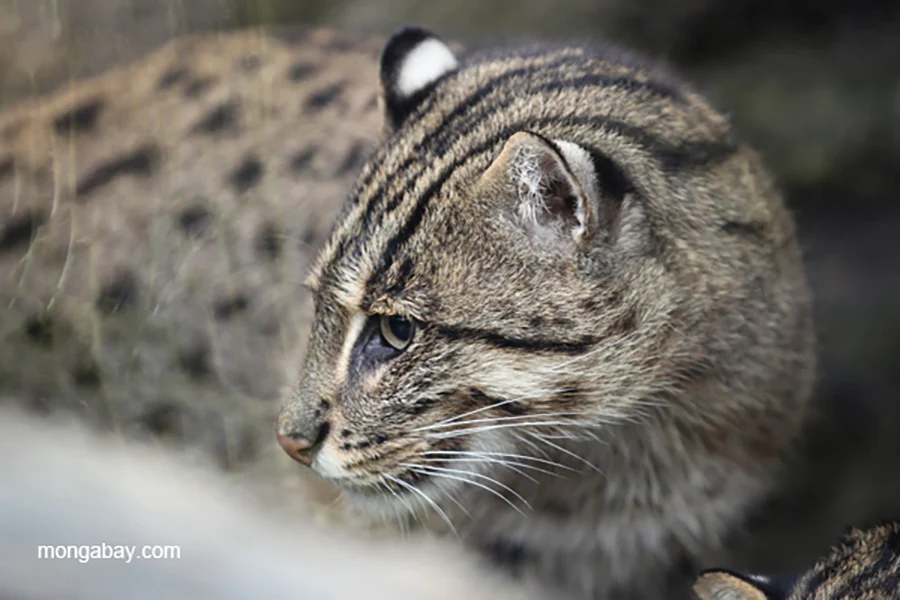
In the deepest, most inaccessible reaches of the world’s forests, a group of elusive predators moves with lethal, silent precision. While the global conservation narrative has long been dominated by the charismatic presence of tigers, lions, and leopards, the forest floor is governed by a diverse assembly of smaller, lesser-known feline species. These creatures—ranging from the mysterious bay cat of Borneo to the newly identified tilcayo in Bolivia—play an essential, yet frequently overlooked, role in maintaining the delicate balance of their ecosystems. By controlling populations of small mammals, reptiles, and insects, these feline sentinels serve as vital indicators of forest health, acting as the silent architects of biodiversity that often go unnoticed until a breakthrough in modern science forces them into the spotlight.
The recent identification of a new feline species in the Yungas forests of Bolivia serves as a stark reminder of how little is known about the planet’s smaller carnivores. For over a century, the scientific community operated under the assumption that the "tiger cats" of South America belonged to a single, albeit varied, group. However, a landmark study published in the journal Current Biology on September 17, 2026, shattered this consensus. By utilizing advanced phylogenomics and "museomics"—the extraction and analysis of DNA from century-old museum specimens—researchers have finally unveiled Leopardus tilcayo, or the tilcayo cat, as a distinct evolutionary lineage.
A Century of Misidentification
The discovery of Leopardus tilcayo is the first of its kind in over a hundred years. The last feline species to be formally described was the Uruguayan savannah cat in 1923. The reason for this long delay lies in the phenomenon of "cryptic species." In evolutionary biology, cryptic species are those that appear nearly identical to the human eye, possessing similar physical stature and coat patterns, yet remain genetically isolated and distinct.
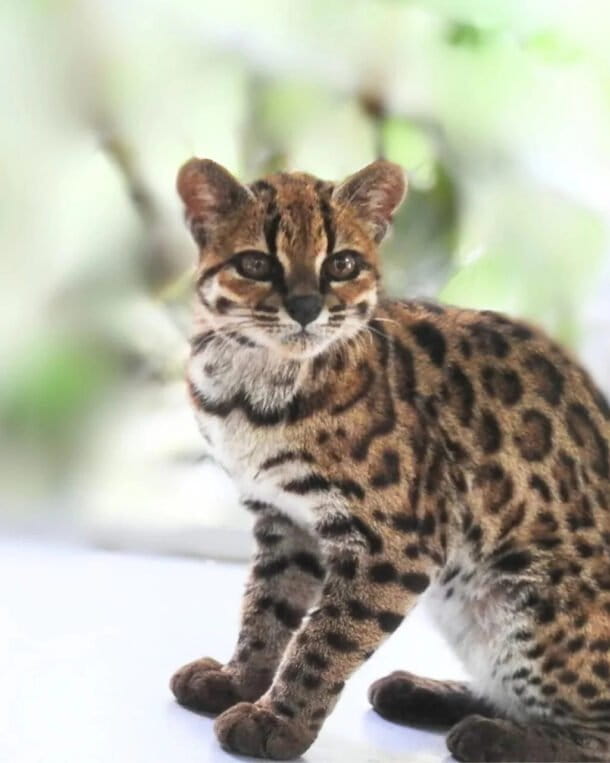
For decades, the tiger cat complex—a group of small felines characterized by their rosetted, spotted, or striped coats—was treated as a monolithic entity. The recent research, led by Jonas Lescroart of the University of Antwerp, involved the analysis of 38 complete genomes from across South America, including samples from Bolivia, Peru, Brazil, Colombia, Suriname, Guyana, Venezuela, and Costa Rica. The results revealed that what was once categorized as a single species is, in fact, a complex of five distinct species that have evolved along separate lines for millions of years.
According to the study, the most significant divergence within the tiger cat group occurred approximately 2.34 million years ago. The tilcayo cat specifically separated from its closest relatives roughly 1.43 million years ago. This discovery suggests that the evolutionary history of these predators is far more convoluted than previously imagined, marked by ancient inter-species hybridization—or introgression—that has left distinct genetic signatures in their DNA.
The Indonesian Context: Ghosts in the Rainforest
While the scientific community celebrates the breakthrough in South America, the jungles of Indonesia continue to hold their own mysteries. Among the most enigmatic is the Bornean bay cat (Pardofelis badia). Often referred to by researchers as the "ghost of the forest," this species remained undocumented by science for over two decades, leading to fears that it might have vanished entirely.
The narrative changed significantly in 2023 when new footage of the cat emerged, and again in August 2026, when motion-activated camera traps in the Kayan Mentarang National Park (TNKM) in North Kalimantan captured clear images of the predator carrying prey. Jefrey Frihardian Gumilar, a lead ecosystem controller at the national park, identified the prey as a Tupaia dorsalis, or striped treeshrew.

"The documentation of the bay cat is a critical milestone for our understanding of Borneo’s biodiversity," says Gumilar. "While we know they target rodents and small mammals, the lack of data regarding their gestation periods, lifespan, and specific population densities remains a major hurdle for conservation efforts. Despite being recognized by science for over a century, we are only now beginning to scratch the surface of their behavioral ecology."
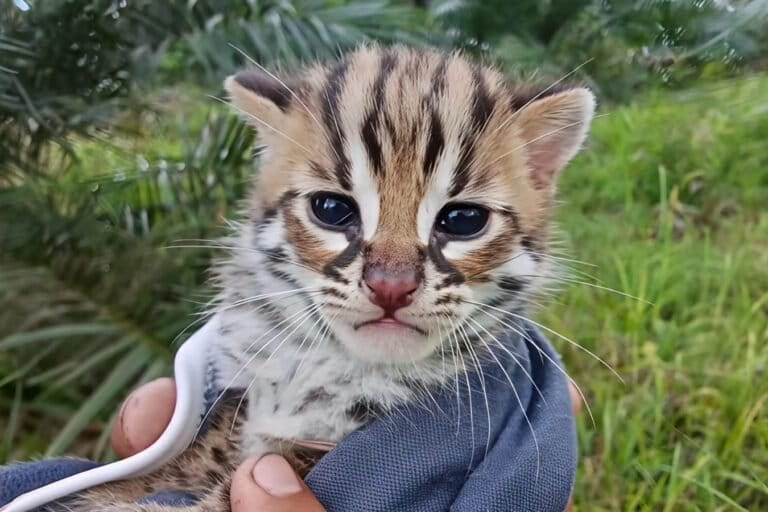
The bay cat’s sibling in obscurity is the leopard cat, or kucing kuwuk (Prionailurus bengalensis). With a range spanning Sumatra, Java, Kalimantan, Sulawesi, and Bali, the leopard cat is a vital regulator of rodent populations. Despite its wide distribution, it remains a "forgotten" predator, frequently losing its habitat to agriculture and suffering from human-wildlife conflict. Conservationists argue that the failure to prioritize these small cats in regional policies is a strategic error; by protecting them, we are effectively protecting the integrity of the entire food web.
The Role of Technology in Modern Conservation
The transition from morphological classification (observing physical traits) to genomic analysis represents a paradigm shift in wildlife biology. The use of museomics—the application of genomic technology to preserved museum specimens—has been the "missing link" for researchers attempting to bridge the gap between historical records and contemporary reality.
By comparing the DNA of the 2026 specimens with historical samples, researchers like Lescroart were able to prove that Leopardus tilcayo had been hidden in plain sight, misidentified as a sub-population of other known tiger cats. This technique has massive implications for Indonesian wildlife. Experts suggest that the same "cryptic" categorization might apply to the leopard cats and bay cats currently roaming the archipelago. If a century of taxonomic assumptions can be overturned in the Andes, there is a high probability that the feline diversity in the tropical forests of Southeast Asia is currently underestimated.
Ecological Implications and Future Challenges
The small cat family, which includes species weighing as little as 1.4 kilograms, performs essential ecological services. They act as "mesopredators," preventing the overpopulation of smaller herbivores and grain-eating rodents that can decimate agricultural yields and forest saplings. However, they face a triad of existential threats: habitat fragmentation, illegal poaching, and the lack of scientific interest.
In the case of the tilcayo cat, conservationists have taken a culturally sensitive approach by adopting the local name used by the people of the Yungas region for the species’ scientific name. This highlights the importance of integrating indigenous knowledge with Western scientific methodologies. Without the input of local communities who share the land with these elusive predators, researchers would struggle to pinpoint where to place camera traps or how to interpret behavior.
The case of the tilcayo individual found in the Senda Verde Wildlife Sanctuary—an animal previously held as an illegal pet—underscores the dangers posed to these species. As humans continue to encroach upon the fringes of undisturbed forests, the frequency of contact between small wild cats and domestic populations increases, raising the risk of disease transmission and further habitat loss.
A Call for Integrated Conservation Strategies
The findings in Current Biology and the recent visual confirmations in Kalimantan provide a roadmap for the future of conservation. There is an urgent need to transition from "charismatic megafauna" focused policies—which prioritize tigers and leopards—to a more inclusive framework that values the role of all predators, regardless of size.
- Increased Funding for Genetic Surveys: Governments and international NGOs must allocate resources for comprehensive genomic mapping of small feline populations, particularly in high-biodiversity hotspots like the Indonesian archipelago and the Amazon basin.
- Community-Based Monitoring: The role of local inhabitants in identifying, protecting, and reporting the presence of these cats is irreplaceable. Conservation programs should provide training and incentives for local communities to monitor and protect the forest corridors used by these species.
- Habitat Connectivity: Because many of these small cats are solitary and require large territories, the preservation of contiguous forest corridors is paramount. Fragmentation isolates small populations, leading to reduced genetic diversity and increased susceptibility to extinction.
As the 2026 research indicates, the forests are not static; they are evolving, and so must our approach to documenting them. The "ghosts" of the forest—the bay cats, the leopard cats, and the tilcayo cats—are not merely minor actors in the drama of the wilderness. They are the primary regulators of the forest floor, and their survival is intrinsically linked to the health of the entire planetary ecosystem.
The revelation that a new species of cat could remain hidden for over 100 years serves as a humbling reminder of the limits of human knowledge. It underscores that in the dense, silent shade of the canopy, there is still much to discover. If we are to safeguard the future of these small, elusive hunters, we must start by recognizing that every species—no matter how small or hidden—is a vital piece of a complex puzzle that we are only just beginning to assemble. The pursuit of these secrets is not just a scientific endeavor; it is a fundamental responsibility to the biodiversity that sustains our world.









