Nila Kartika Wati
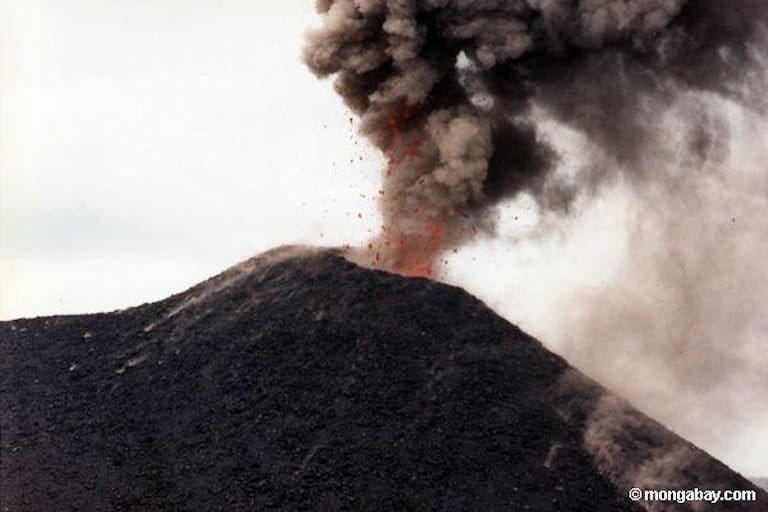
The Sunda Strait is once again on high alert as the volatile Anak Krakatau volcano has entered a sustained period of eruptive activity, casting a shadow over the coastal communities of Banten and Lampung. Following a significant sequence of eruptions between October 5 and October 9, 2026—climaxing in 26 separate explosive events on the final day—the volcano has reaffirmed its status as one of Indonesia’s most unpredictable geological threats. This latest unrest, which follows an initial resumption of activity on September 5, 2026, marks a somber anniversary for the region, recalling the devastating 2018 eruption that triggered a lethal tsunami.
A Chronology of the 2026 Unrest
The current eruptive cycle began in early September, ending a period of relative quiescence. On September 5, 2026, the volcano exhibited its first significant eruption in eight years. The event was not merely a localized geological curiosity; it sent plumes of volcanic ash across the Sunda Strait, impacting air quality and daily life in parts of Banten, Lampung, and the Greater Jakarta metropolitan area.
The situation grew more complex on September 7, 2026. Data from the National Research and Innovation Agency (BRIN) identified an anomalous rise in sea levels surrounding the volcanic complex. This phenomenon coincided with a distressing maritime incident: the disappearance of the fast boat KM Arupadatu I, which was carrying five journalists and three crew members on a mission to document the volcanic activity.
Semeidi Husrin, a researcher at BRIN’s Geological Disaster Research Center, confirmed that sensor data indicated a powerful water level anomaly during the afternoon of September 7. While this anomaly was less pronounced at Pulau Sebesi, it was strong enough to warrant scientific concern. Analysts noted that the water level failed to follow the expected tidal patterns, suggesting a subterranean or seafloor displacement, although conclusive evidence remains elusive due to the inherent dangers of the site and the limitations of existing sensor infrastructure.
Technical Challenges and Equipment Failure
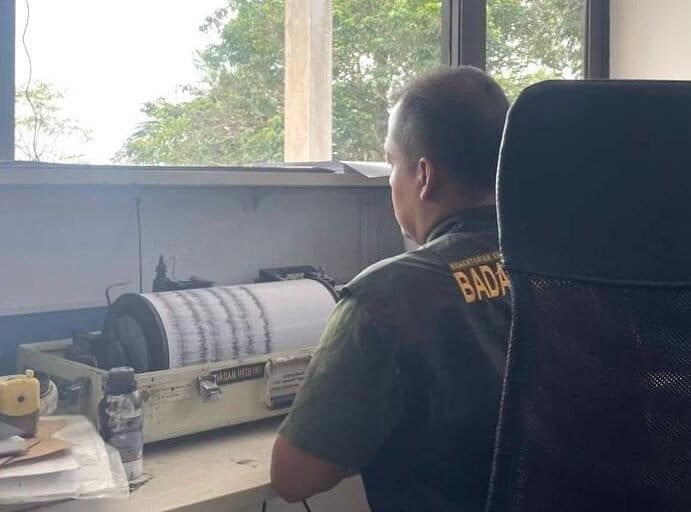
The ability of the Center for Volcanology and Geological Hazard Mitigation (PVMBG) to monitor the volcano has been severely hampered by both the eruptive forces and human-related interference. Siti Sumilah Rita Susilawati, head of the PVMBG, acknowledged that while multi-station monitoring methods remain active, the equipment has suffered significant degradation.
The integrity of the surveillance network was further compromised by an act of theft and vandalism. On September 27, during a routine inspection, the Geological Agency discovered that eight batteries—essential for storing solar-generated power for the LAVA93 monitoring station—had been stolen. Furthermore, 11 solar panels at the site were damaged. This loss of infrastructure has resulted in significant gaps in data transmission, forcing geologists to rely on secondary, less granular sources of information while awaiting a safer window for repairs.
"Safety remains our primary priority," Susilawati stated. "We cannot conduct comprehensive field repairs while the volcano remains in a state of high activity and maritime conditions are unstable. However, we are exploring alternative configurations to ensure that our evaluation of the volcano’s activity remains as robust as possible despite these setbacks."
Shifts in Volcanic Status
In response to a recorded decrease in volcanic intensity through September 20, the Geological Agency officially downgraded the alert level of Anak Krakatau from Level III (Siaga/Watch) to Level II (Waspada/Advisory) at 18:30 WIB on September 21. Lana Saria, Head of the Geological Agency at the Ministry of Energy and Mineral Resources (KESDM), noted that the reduction in status was backed by seismic data showing a shift toward "low frequency" earthquakes and a transition from active inflation to deflationary patterns.
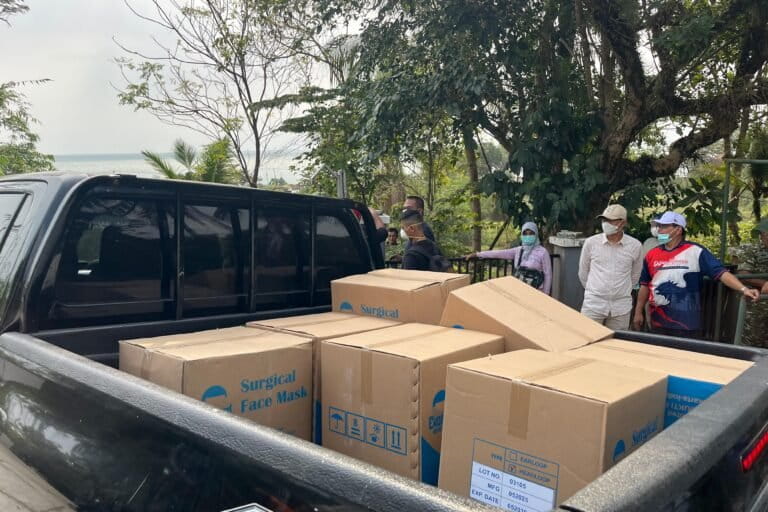
Despite the downgrade, a two-kilometer exclusion zone remains strictly enforced. Residents in coastal areas of Banten and Lampung are cautioned to remain vigilant regarding potential incandescent rock ejections and persistent ashfall. Local Disaster Management Agencies (BPBD) continue to advise that while daily life can resume, community members must remain prepared to evacuate should conditions deteriorate rapidly.
The Human Element: Beyond Technology in Disaster Management
The persistent threat of Anak Krakatau has reignited the national debate regarding the efficacy of disaster preparedness. Trinirmalaningrum, Director of the Skala Indonesia Foundation, argues that Indonesia’s disaster management framework often suffers from an over-reliance on technical documentation and hardware, failing to translate those systems into actionable community behavior.
"We have excellent systems for monitoring, mapping, and warning," says Trinirmalaningrum. "However, there is a persistent gap between the issuance of a warning and the community’s ability to act upon it. We often find that while a village knows the volcano is at ‘Waspada’ status, the residents do not necessarily know the exact logistical steps—what to pack, where to gather, and who is responsible for the elderly or the disabled."

The transition from a passive recipient of government aid to an active participant in one’s own safety is the cornerstone of effective disaster risk reduction. Trinirmalaningrum highlights that community-led initiatives—such as those found in Hitu and Amahi, Maluku, where residents have independently established elevated evacuation routes and food caches—serve as a model for the rest of the country.
Multi-Sectoral Preparedness and Strategic Training
For local governments, the current volcanic unrest serves as a stress test for inter-agency coordination. Effective preparedness requires that departments beyond the BPBD—such as Health, Education, and Social Services—have clearly defined roles in a crisis.
Experts recommend the increased use of "tabletop exercises" (TTX) to simulate various eruption scenarios. These exercises allow officials to test the efficacy of contingency plans before a crisis occurs, identifying bottlenecks in communication or resource allocation.
"When the volcano is erupting and the ash is falling, the time for learning has passed," Trinirmalaningrum emphasizes. "The investment in the human capital—training, drills, and the creation of a ‘culture of preparedness’—is far more critical than the investment in sensors alone. If a sensor detects an anomaly but the community does not know how to respond, the technology has failed."
Future Implications and Conclusion
The geological history of the Krakatau caldera is one of cyclical, violent change. The 2026 activity serves as a stark reminder that the Sunda Strait remains a high-risk zone for seismic and volcanic activity. As the government works to restore monitoring infrastructure and evaluate the long-term patterns of the current eruption, the emphasis must remain on the integration of scientific data with local community knowledge.
The vulnerability of monitoring equipment to both natural disaster and human theft highlights the logistical fragility of observing such an active geological feature. Moving forward, the Geological Agency is tasked with the dual challenge of hardening its physical monitoring network and improving the communication protocols that keep the public informed.
The resilience of the coastal communities will ultimately be determined not by the strength of the volcano, but by the strength of the systems—and the people—that surround it. As Indonesia continues to navigate the risks posed by its position on the Ring of Fire, the lessons learned from the 2026 Anak Krakatau activity must be distilled into a more responsive, community-centric, and technically secure disaster management strategy. The objective is clear: to ensure that when the next eruption inevitably occurs, the population is not only warned but prepared to act decisively to save lives.