Lina Irawan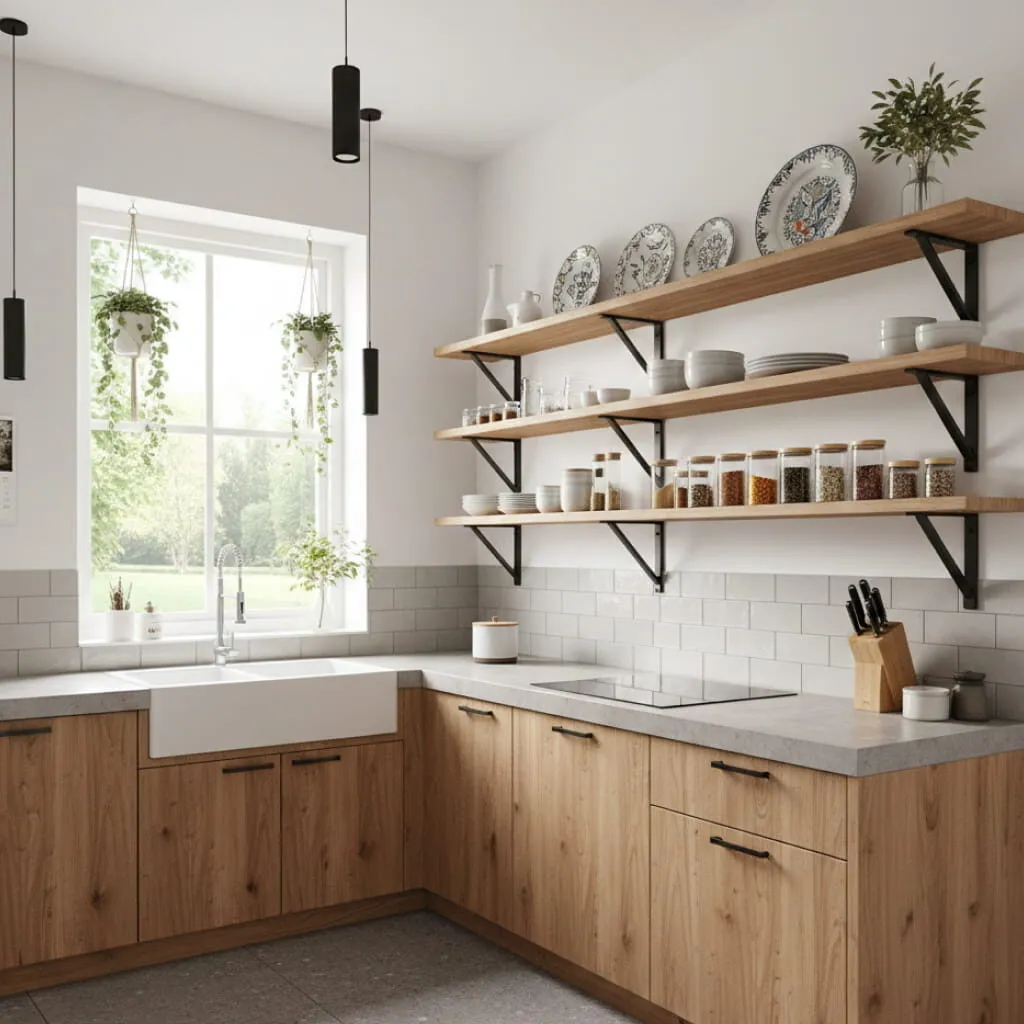
The traditional kitchen, often characterized by extensive closed cabinetry both above and below countertops, is undergoing a significant re-evaluation. A growing trend, championed by design authorities such as InteriorDesign.ID, advocates for a minimalist kitchen approach that largely dispenses with these conventional cabinet systems. Instead, it promotes the use of open storage solutions like wall-mounted shelves (ambalan) or cast concrete countertops, fundamentally altering both the aesthetics and functionality of the culinary space. This shift is not merely a design whim; it represents a pragmatic response to escalating renovation costs, the desire for more expansive living areas, and a broader embrace of a truly minimalist lifestyle.
The Paradigm Shift: Rethinking the Traditional Kitchen Structure
For decades, the ideal kitchen was synonymous with an unbroken expanse of matching cabinets, designed to conceal culinary clutter and provide ample storage. However, this established norm is increasingly being challenged by contemporary homeowners and design experts alike. The allure of the closed cabinet system, while offering a tidy facade, often masks a less efficient reality. Within these hidden compartments, forgotten utensils, expired pantry items, and seldom-used appliances frequently accumulate, leading to wasted space and an often-unnecessary accumulation of goods. This phenomenon underscores a critical flaw in the traditional approach: excessive storage capacity can inadvertently foster consumerism, tempting individuals to acquire items simply because there is an available space to store them.

The minimalist kitchen, devoid of conventional cabinetry, directly counteracts this tendency. By intentionally limiting storage space and making all items visible, it compels occupants to be more judicious about what they own and keep. This selective approach ensures that only regularly used and aesthetically pleasing items remain, fostering an environment of intentionality and efficiency. The shift is particularly pertinent in an era where urban living often dictates smaller residential footprints, making every square inch of space critically valuable.
Economic and Spatial Advantages of Open Kitchen Concepts
One of the most compelling arguments for adopting a cabinet-free kitchen design is its profound economic benefit. Custom-built kitchen cabinets, especially those fabricated from high-quality materials and finishes, represent a substantial portion of any kitchen renovation budget. Industry analyses frequently indicate that cabinetry alone can account for 30-40% of the total cost of a kitchen remodel. By eliminating or significantly reducing these expenses, homeowners can redirect substantial funds towards other critical elements, such as premium appliances (e.g., energy-efficient refrigerators, high-performance induction cooktops), durable countertop materials, or enhanced lighting solutions. The cost of constructing simple open shelves or a basic concrete counter with a ceramic finish is demonstrably lower, often by millions of rupiahs (or equivalent local currency), and requires a significantly shorter installation timeline. For instance, a basic 3-meter concrete countertop with ceramic finish might cost between Rp 3 million and Rp 5 million, while three rows of open shelving could add another Rp 1.5 million to Rp 2.5 million. This contrasts sharply with the Rp 18 million or more required for a full 3-meter custom cabinet set, representing a potential saving of over Rp 10 million.
Beyond the financial savings, the absence of bulky upper cabinets dramatically transforms the spatial perception of a kitchen. Traditional overhead units can often make a small kitchen feel cramped and oppressive, casting shadows and visually constricting the area. When these cabinets are removed, the wall space is exposed, allowing for an unobstructed line of sight. This visual openness creates an immediate sense of greater volume and airiness. Natural light from windows or artificial illumination can spread more freely, reflecting off walls and surfaces, further enhancing the perception of a larger, brighter space than its actual dimensions suggest. This benefit is invaluable in compact apartments or homes where maximizing perceived space is a primary design objective.

The Minimalist Lifestyle Imperative
Choosing a kitchen without closed cabinets is more than just an aesthetic or financial decision; it’s an invitation to embrace a truly minimalist lifestyle. With every item openly displayed, there is an inherent pressure to maintain order and cleanliness. This constant visibility serves as a natural deterrent against clutter and overconsumption. Homeowners are subtly encouraged to regularly declutter, ensuring that only essential, frequently used, and visually appealing items find a place in their kitchen. This active curation of kitchen items aligns with broader minimalist principles, which advocate for living with less to reduce stress, simplify daily routines, and foster a greater appreciation for possessions.
However, this design choice comes with its own set of responsibilities. The "everything in its place" mantra becomes non-negotiable. Dirty dishes cannot be hidden behind cabinet doors, nor can a messy collection of mismatched containers be tucked away from view. For individuals accustomed to delaying tidiness, this concept may initially present a challenge, demanding a shift in daily habits and a commitment to immediate organization.
Navigating the Challenges: Maintenance and Practicality

While the advantages are clear, the open kitchen concept is not without its challenges, primarily concerning cleanliness and maintenance. Without the protective barrier of cabinet doors, all stored items – from plates and glasses to spice jars and cooking oils – are exposed to the open air. This exposure makes them susceptible to dust accumulation and, more significantly, to airborne grease and cooking vapors, particularly when frying or sautéing. These airborne particles can settle on surfaces, mixing with dust to form a sticky film that is difficult to clean if left unattended.
To mitigate these issues, the installation of a high-capacity cooker hood (range hood) is not merely recommended but essential. A powerful extraction system can effectively draw out smoke, steam, and grease, preventing them from settling on open shelves and items. Furthermore, a rigorous and consistent cleaning routine becomes paramount. Regular wiping of exposed surfaces, including shelves and the items displayed on them, is necessary to prevent the build-up of grime and maintain the kitchen’s pristine appearance. Homeowners must be prepared for more frequent, albeit often quicker, cleaning tasks compared to a traditional kitchen where items are largely protected.
Tailoring Design to Daily Habits and Household Needs
The decision to forego traditional cabinetry should not be based solely on current trends but must be carefully aligned with the household’s daily routines and culinary habits. For individuals or small families who rarely engage in heavy cooking, a cabinet-free kitchen presents few practical obstacles. A modest collection of plates, glasses, and a few essential cooking tools can be elegantly displayed on open shelves, contributing to a relaxed and uncluttered aesthetic.

Conversely, a large family that prepares elaborate meals daily, utilizing a wide array of pots, pans, and bulk ingredients, might find a fully open kitchen impractical. Storing oversized items like pressure cookers, large woks, or extensive pantry staples on open shelves could quickly lead to a cluttered and disorganized appearance, resembling a storage room rather than a functional kitchen. In such scenarios, a hybrid approach, incorporating a discreet, enclosed pantry or a few base cabinets for bulkier items, might be a more sustainable solution. Interior designers consistently advise clients to conduct an honest assessment of their cooking frequency, the volume of their kitchenware, and their overall lifestyle before committing to a fully open kitchen design.
Alternative Storage Solutions Beyond Conventional Cabinets
Discarding traditional cabinets does not imply a chaotic, floor-strewn kitchen. Instead, it encourages creativity and the adoption of diverse, often more budget-friendly, storage alternatives that can be seamlessly integrated with various interior design themes.
-
Open Shelving (Ambalan): These simple, floating shelves, typically made from wood, laminate, or even metal, are mounted directly onto the wall using discreet brackets. They impart an airy, casual feel to the kitchen, perfect for displaying curated collections of plates, mugs, small decorative plants, or frequently used spices. The key to their aesthetic success lies in thoughtful arrangement: avoid overfilling them, allowing negative space to enhance visual appeal and prevent a cluttered look. This minimalist approach transforms everyday items into decorative elements.

-
Pegboards: Once relegated to workshops, pegboards have found a stylish niche in modern kitchens, particularly as a backsplash alternative. These perforated panels, often made of wood or metal, can be customized with various hooks, small shelves, and baskets. They offer unparalleled flexibility, allowing homeowners to hang frequently used utensils, cutting boards, or even small pots and pans. The adjustable nature of the pegs means the storage configuration can be easily changed to accommodate new items or evolving needs, making them highly adaptable and functional.
-
Concrete Countertops with Curtains: For a rustic or farmhouse aesthetic, concrete (or cast cement) countertops are an excellent choice. They are exceptionally durable, impervious to pests like termites and rodents, and resistant to moisture. The space beneath these counters, traditionally fitted with cabinet doors, can be left open and concealed with fabric curtains. This solution offers hidden storage for larger pots, pans, or bulkier items while adding a soft, textured element to the kitchen’s design. Curtains are also practical: easily removed, washed, and rehung, making maintenance straightforward.
-
Mobile Kitchen Carts (Trolleys): Versatile and practical, kitchen carts on wheels offer flexible storage and additional workspace. The top surface can serve as an extra prep area, while shelves or drawers below can hold spices, cooking oils, or fresh produce. Their mobility allows them to be easily moved to different areas of the kitchen as needed, or tucked away in a corner when not in use, maintaining clear pathways and a spacious feel. They are particularly beneficial in smaller kitchens where fixed counters are limited.
Strategic Design for Aesthetic and Functionality

The success of an open kitchen hinges on meticulous planning and disciplined execution to ensure it remains both functional and visually appealing. The fine line between "artfully curated" and "overwhelmingly messy" is often determined by a few key design strategies:
-
Uniform Containers and Storage: A heterogeneous collection of food packaging, spice jars, and plastic containers can quickly create visual chaos. Decanting staples like flour, sugar, pasta, and spices into uniform, airtight containers – ideally made of glass or plain ceramic – instantly elevates the kitchen’s aesthetic. Labeling these containers with minimalist text labels further enhances organization and sophistication, transforming ordinary pantry items into decorative features.
-
Harmonized Color Palette for Utensils and Cookware: Since kitchen tools are constantly on display, their color and style significantly influence the overall visual harmony. Opting for a cohesive color palette for pots, pans, and utensils – such as stainless steel, black, white, or natural wood tones – creates a calm and sophisticated look. If a pop of color is desired, it should be introduced sparingly, perhaps through a single statement piece like a vibrant teapot or a colorful bowl, to maintain balance and avoid visual clutter.
-
Task Lighting Beneath Shelves: The absence of upper cabinets provides an opportunity to integrate effective task lighting. Concealed LED strip lights installed beneath open shelves cast a focused, shadow-free illumination directly onto the countertop below. This not only enhances visibility for food preparation tasks but also adds depth and warmth to the kitchen space. Warm white light (around 2700-3000K) can create an inviting ambiance and highlight the textures of the wall or backsplash.

-
Impactful Backsplash Design: With no cabinet boxes to obstruct the view, the kitchen backsplash becomes a prominent design feature. This expanse of wall offers a canvas for creative expression. Homeowners can choose from a wide array of materials and patterns, such as classic subway tiles, intricate mosaics, textured cement finishes, or even patterned wallpaper protected by a clear acrylic panel. A distinctive backsplash can draw the eye, serving as a focal point that diverts attention from the practical items on the shelves, while also being easy to clean if made from smooth, non-porous materials like glazed ceramic or glass.
Financial Impact: A Detailed Cost Comparison
The financial savings associated with a cabinet-free kitchen are often a primary motivator for its adoption. To illustrate, let’s consider a standard 3-meter kitchen:
-
Traditional Kitchen Set: A custom-built kitchen set, including both upper and lower cabinets made from multiplex with HPL (High-Pressure Laminate) finish, typically costs around Rp 3 million per linear meter. For a 3-meter kitchen, this would amount to Rp 18 million (Rp 3 million/meter x 3 meters for upper + Rp 3 million/meter x 3 meters for lower). This figure often excludes the cost of the countertop material (e.g., granite) and backsplash tiling.

-
Minimalist Open Kitchen:
- Concrete Countertop: A 3-meter concrete countertop, including ceramic finishing, would generally require material and labor costs ranging from Rp 3 million to Rp 5 million.
- Open Shelving: Three rows of wall-mounted shelves (ambalan) with supporting brackets could cost approximately Rp 1.5 million to Rp 2.5 million, depending on material quality and length.
- Curtain Skirting (Optional): If opting for a curtain to conceal the under-counter space, an additional Rp 300,000 to Rp 500,000 might be allocated for fabric and hardware.
Combining these elements, the total budget for a minimalist open kitchen setup could range from approximately Rp 4.8 million to Rp 8 million. This represents a potential saving of Rp 10 million to Rp 13 million compared to a traditional kitchen set. This significant saving can then be wisely invested in high-quality appliances, an efficient cooker hood, or a curated collection of aesthetically pleasing and durable kitchenware and uniform storage containers.
Long-Term Maintenance and Lifestyle Integration
Maintaining a cabinet-free kitchen requires a fundamental shift in daily habits. While it demands routine cleaning, the duration of these tasks is often shorter, as there are no cluttered cabinets to delve into. The focus shifts to wiping down exposed surfaces regularly. Establishing a post-cooking routine – immediately cleaning countertops and the lowest shelves with an anti-grease cleaner – is essential for long-term tidiness.

- Routine Cleaning of Display Items: Spice jars, decorative items, and even recipe books displayed on open shelves will accumulate cooking vapors and dust. These items should be periodically cleaned, perhaps monthly or bi-monthly. For spice jars, contents can be temporarily transferred, the jars washed, thoroughly dried, and refilled. Other decorative elements can be dusted weekly with a microfiber cloth.
- Ensuring Optimal Air Circulation: Adequate ventilation is crucial to minimize grease and odors from settling on surfaces. Always open windows and doors when cooking, especially when frying or boiling. For kitchens located centrally within a home, lacking direct external window access, installing a sufficiently powerful exhaust fan in the ceiling or wall is imperative to ensure continuous air exchange.
The decision to move away from conventional kitchen sets addresses dual contemporary concerns: the high cost of renovation and the growing desire to curb unnecessary accumulation of goods. This approach not only results in a more spacious and budget-friendly kitchen but also fosters a disciplined and intentional approach to daily living. However, this commitment comes with the understanding that immediate tidiness and consistent maintenance are non-negotiable. A thorough self-assessment of one’s cleaning habits and lifestyle preferences is therefore crucial before embarking on this transformative kitchen redesign.