Nila Kartika Wati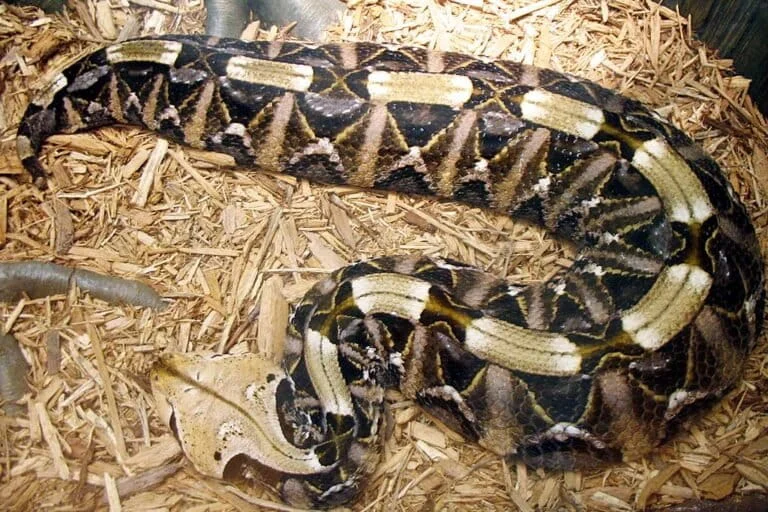
Deep within the humid, leaf-strewn corridors of sub-Saharan Africa’s tropical rainforests, a masterclass in evolutionary biological engineering lies in wait. The Gaboon viper, scientifically known as Bitis gabonica, represents one of nature’s most formidable intersections of stealth, size, and chemical sophistication. As an apex predator of the forest floor, this serpent plays a critical role in maintaining the delicate equilibrium of the ecosystem, acting as a natural regulator for various prey populations. However, beyond its reputation as a lethal hunter, the Gaboon viper has become a subject of intense scientific scrutiny, offering potential breakthroughs in cardiovascular medicine through the very toxins that define its lethality.
The Gaboon viper is a creature of superlatives. It holds the undisputed record for the longest fangs of any venomous snake, with individual teeth reaching up to 5 centimeters (approximately 2 inches) in length. Furthermore, it is among the heaviest vipers on the planet, with mature specimens frequently exceeding 10 kilograms in weight. This massive bulk is not merely for show; it provides the physical stability required for the snake’s unique "strike and hold" hunting strategy, a departure from the "strike and release" method employed by most other viperid species.
Evolutionary Adaptation and the Art of Disruptive Camouflage
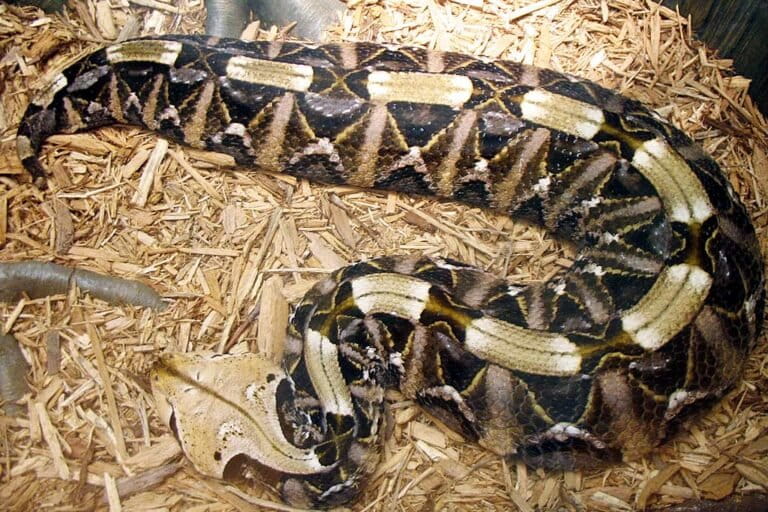
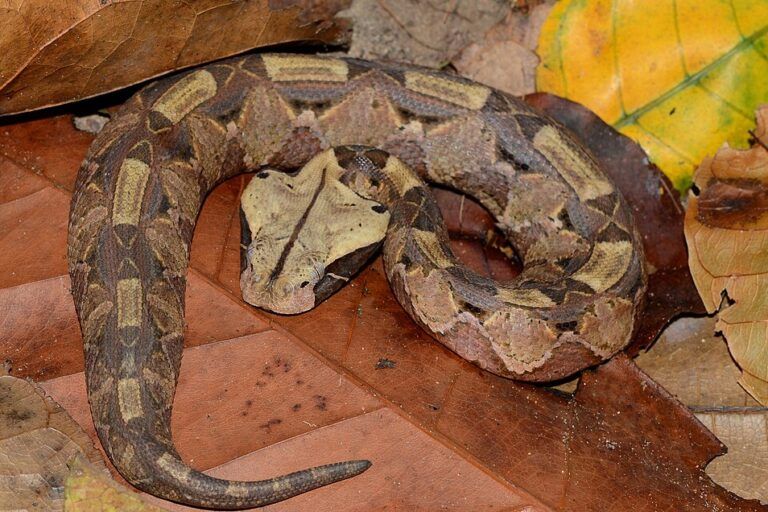
The survival of Bitis gabonica is predicated on its ability to remain invisible. The forest floor is a chaotic mosaic of decaying organic matter, shadows, and dappled sunlight. To thrive in this environment, the Gaboon viper has evolved what biologists term "disruptive camouflage." Its skin is adorned with a complex, interlocking geometric pattern of rectangles and triangles in shades of buff, purple, brown, and sandy yellow. This pattern serves a specific purpose: it breaks up the recognizable outline of the snake’s body, making it nearly impossible for the human eye—or the eye of a wary rodent—to distinguish the animal from the surrounding leaf litter.
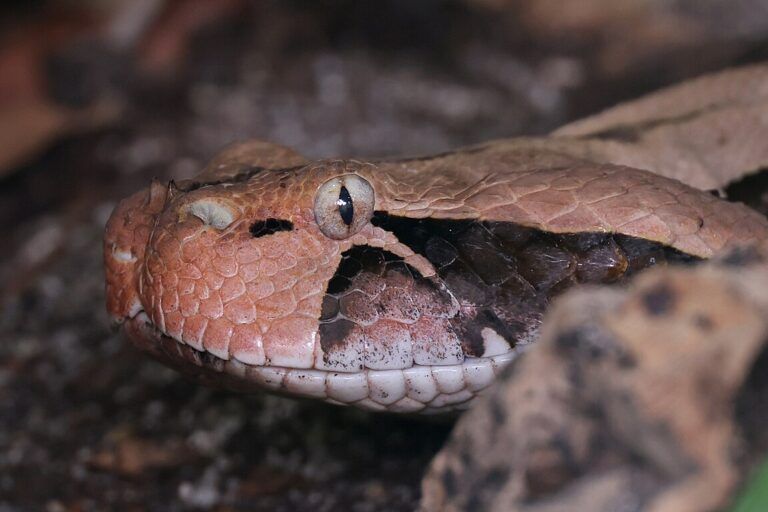
The snake’s head further enhances this deception. Broad, flat, and distinctly triangular, the head mimics a fallen, dried leaf. It even features a dark central line that perfectly replicates the midrib of a leaf. This morphological camouflage allows the viper to remain motionless for weeks at a time in a single location, a strategy known as "ambush predation." By minimizing movement, the Gaboon viper conserves vast amounts of energy, a necessity for a heavy-bodied animal with a relatively slow metabolic rate. When a prey item finally wanders within range, the viper’s strike is one of the fastest in the animal kingdom, delivered with a precision that leaves little room for escape.
The Biomechanics of a Record-Breaking Strike
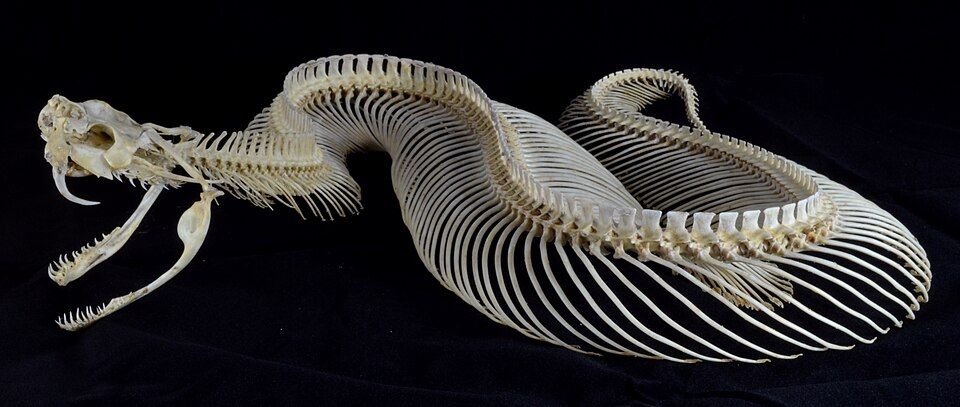
While many vipers bite and immediately retreat to avoid injury from a struggling victim, the Gaboon viper utilizes its massive weight to pin its prey. Its 5-centimeter fangs are not just weapons; they are sophisticated hypodermic delivery systems capable of penetrating deep into the muscle tissue of mammals. Because the fangs are so long, they are hinged, folding back against the roof of the mouth when the jaws are closed.
When the viper strikes, these fangs swing forward to inject a massive volume of venom. Data suggests that Bitis gabonica can produce a venom yield of over 2 grams (dry weight) in a single milking—one of the highest yields of any snake. This "overkill" strategy ensures that even if the venom’s chemical components work slowly, the sheer volume and the depth of the injection will incapacitate the prey almost instantly. This deep-tissue delivery bypasses superficial defenses and ensures the venom enters the circulatory system with maximum efficiency.
Venomics: Deciphering the 12-Component Lethal Cocktail
The true complexity of the Gaboon viper lies in its biochemistry. Modern research, specifically the field of "venomics," has allowed scientists to peel back the layers of this serpent’s toxic arsenal. A landmark study titled Snake Venomics of Bitis Gabonica revealed that the venom is not a single poison but a sophisticated "cocktail" containing at least 12 distinct groups of proteins and enzymes.
These components generally fall into two categories of physiological attack. The first group consists of cytotoxic enzymes, such as proteases, which act like biological solvents. They begin the process of digestion even before the prey is swallowed, breaking down skin, muscle, and connective tissue at the site of the bite. The second, and more lethal, group attacks the hemotoxic system. These toxins disrupt the blood’s ability to clot while simultaneously damaging the integrity of blood vessels. This leads to massive internal hemorrhaging and a catastrophic drop in blood pressure, eventually resulting in systemic organ failure and death for the prey.
From Toxin to Treatment: The Medical Frontier
In a remarkable twist of biological irony, the very substances that make the Gaboon viper a feared predator are being repurposed to save human lives. Within the lethal mixture of Bitis gabonica venom, researchers identified two specific protein dimers named bitisgabonin-1 and bitisgabonin-2. These molecules belong to a class of proteins called disintegrins.
In the wild, these disintegrins prevent the blood of the prey from clotting, ensuring the venom spreads rapidly. However, in a controlled medical environment, these proteins offer a blueprint for treating cardiovascular diseases. Bitisgabonin-1 and -2 have shown an extraordinary ability to prevent platelets from aggregating—the process that leads to the formation of dangerous blood clots.
Pharmacologists are currently investigating these proteins as a basis for new anti-platelet medications. The goal is to develop drugs that can prevent heart attacks and strokes—caused by blockages in the arteries—without the high risk of uncontrollable bleeding associated with current anticoagulants. By studying the molecular structure of the Gaboon viper’s venom, scientists hope to "fine-tune" these proteins into life-saving therapies, turning a forest-floor threat into a pharmaceutical asset.
Ecological Importance and the Trophic Cascade
Beyond the laboratory, the Gaboon viper is a linchpin of the African rainforest ecosystem. As a generalist predator, it consumes a wide variety of prey, including forest rats, birds, and even small forest antelopes known as duikers. By keeping rodent populations in check, the viper prevents "trophic cascades" where an overabundance of herbivores or seed-eaters would otherwise decimate the forest’s vegetation.
The presence of the Gaboon viper also serves as a check on zoonotic diseases. Rodents are frequent carriers of various pathogens that can jump to human populations. By maintaining a healthy balance in the rodent population, Bitis gabonica indirectly protects human health in regions where settlements border the forest. The removal of such a significant predator from the food chain would likely result in an explosion of rodent numbers, leading to agricultural damage and increased disease transmission.
Habitat Fragmentation and the Future of the Species
Despite its formidable defenses, the Gaboon viper is increasingly vulnerable to human activity. The primary threat is habitat fragmentation. As West and Central African nations expand their agricultural footprints—specifically for cocoa, rubber, and palm oil plantations—the primary rainforest is being carved into isolated patches.
For a snake that relies on the specific microclimate of the damp forest floor and the camouflage provided by natural leaf litter, the transition to monoculture plantations is often fatal. Plantations lack the structural diversity and moisture levels required for the Gaboon viper to hunt effectively. Furthermore, fragmentation isolates populations, leading to a decrease in genetic diversity. When populations cannot intermingle, they become more susceptible to disease and less able to adapt to the changing climate.
Environmentalists and herpetologists emphasize that the loss of the Gaboon viper would be more than just a loss for biodiversity; it would be a loss for medical science. Each population of vipers may have slight variations in their venom composition, potentially holding the keys to different medical discoveries that have yet to be uncovered.
Conclusion: Balancing Fear with Conservation
The Gaboon viper occupies a unique space in the human psyche—it is an object of both terror and fascination. While its bite is undeniably lethal and its physical presence intimidating, it is not an aggressive species. Most encounters between humans and Gaboon vipers occur because the snake’s camouflage is so effective that a person accidentally steps on it.
As we move forward into an era where the value of nature is increasingly measured by its potential for scientific contribution, the Gaboon viper stands as a testament to the hidden treasures within our planet’s "wild" places. Protecting the Gaboon viper and its habitat is not merely an act of wildlife preservation; it is an investment in the future of medicine and the stability of the tropical ecosystems that help regulate our global climate. The silent sovereign of the forest floor remains a vital, albeit dangerous, partner in the complex web of life on Earth.