Nila Kartika Wati
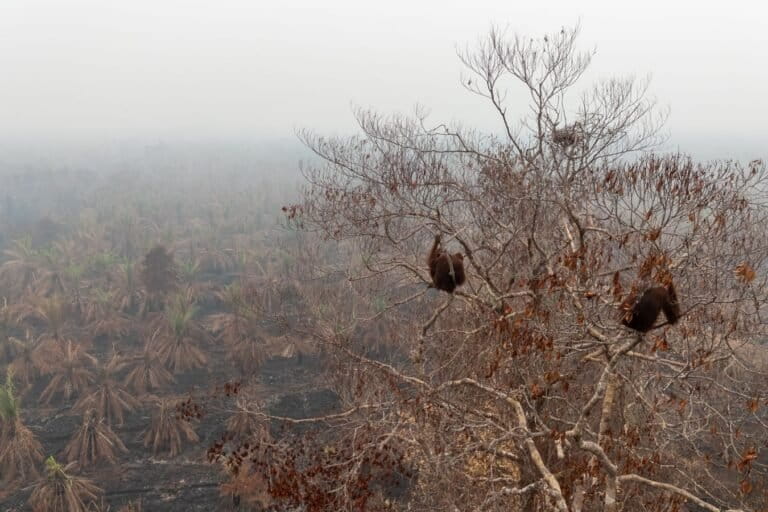
The verdant rainforests of Kalimantan, the ancestral home of the critically endangered Pongo pygmaeus, have been transformed into a dystopian landscape of ash and scorched timber. As forest and land fires continue to ravage the region, the survival of the Bornean orangutan has reached a precarious tipping point. Recent documentation from the front lines in Ketapang, West Kalimantan, reveals a harrowing reality: these intelligent primates are not merely losing their homes; they are succumbing to starvation, extreme dehydration, and the lingering, suffocating effects of smoke inhalation.
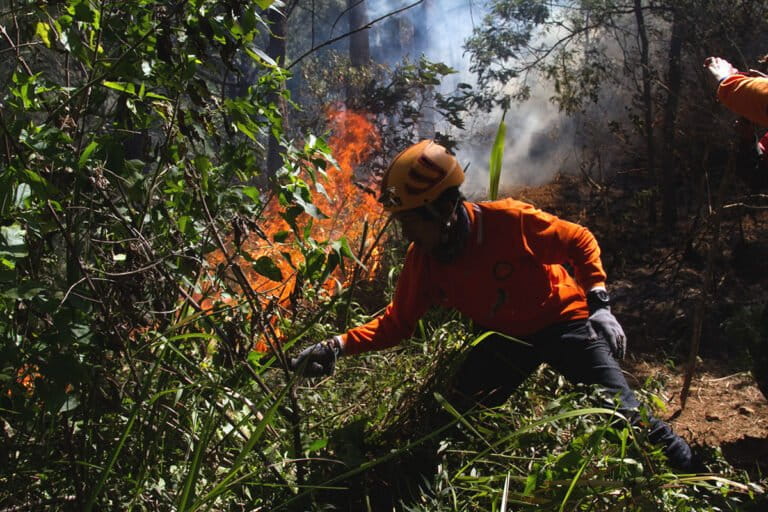
Independent photographer Victor Fidelis Sentosa, who spent seven days embedded with the rescue teams of the International Animal Rescue Indonesia (YIARI), described the scene as a literal battlefield. What was once a thriving ecosystem has been rendered into a skeletal wasteland, where the canopy has vanished and the soil remains smoldering long after the flames have been extinguished.
The Anatomy of a Rescue Mission
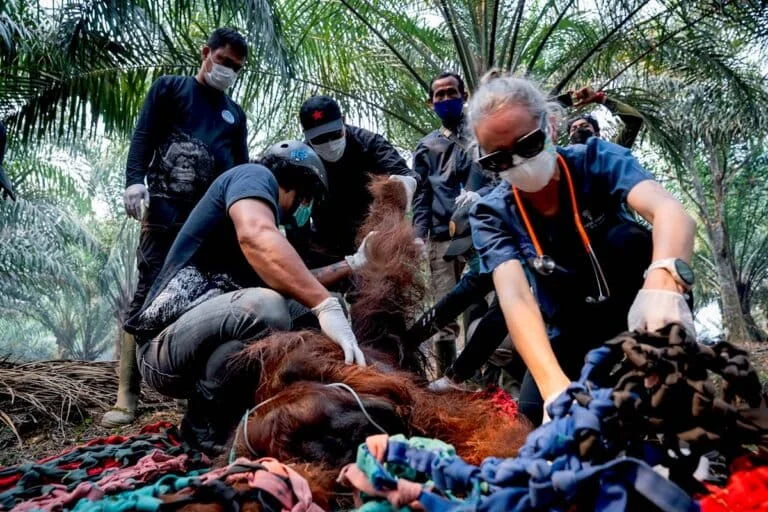
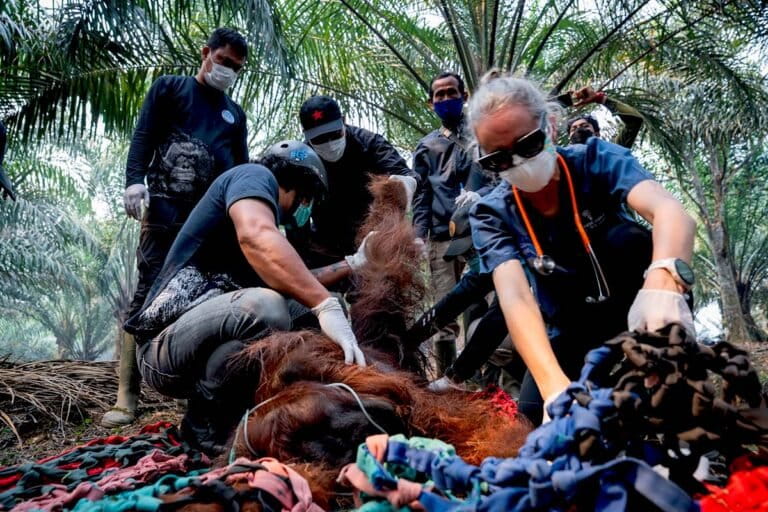
The rescue operations, coordinated by organizations such as YIARI, involve meticulous planning. Before a team enters the field, they must conduct exhaustive surveys to track the presence of individuals amidst the smoldering debris. The mission is physically and emotionally grueling, requiring rescuers to navigate dangerous, unstable terrain where the heat is often stifling.
During one particular operation, the team successfully rescued six orangutans from a single isolated pocket of forest. Among the most haunting memories for those on the ground is the vocal distress of a juvenile orangutan separated from its mother. Such moments serve as a visceral reminder that these creatures possess complex social structures and emotional depth, mirroring human bonds.
Beyond the immediate trauma of fire, medical assessments performed by the rescue teams tell a story of long-term suffering. Clinical examinations of the rescued individuals frequently reveal severe malnourishment. In some cases, nursing mothers were found with insufficient milk production, a direct result of their inability to access adequate water and high-nutrient food sources. These animals, which share 96-97% of their DNA with humans, often exhibit lethargy—a behavioral adaptation to the acute metabolic stress of starvation and dehydration.
Data and Scope: The 51 Saved and the Many Lost
According to Heribertus Suciadi, Senior Manager of Media and Communications at YIARI, the organization has successfully evacuated 51 orangutans from the fire-stricken regions of Ketapang and Kayong Utara. However, this number represents only a fraction of the total population affected.
The medical profiles of these rescued individuals are varied and alarming. While some exhibit only minor distress, many suffer from severe open wounds, deep burns on their extremities, chronic anemia, and debilitating upper respiratory tract infections caused by the dense, toxic haze. In the most tragic instances, rescued individuals have died within hours of extraction, their bodies unable to recover from the cumulative damage of the environmental collapse.
These figures align with broader national trends. The Ministry of Forestry has reported the rescue of 232 individual wild animals across six provinces in Indonesia that have been impacted by forest and land fires (karhutla). Of this total, 71 are confirmed to be orangutans. Yet, experts warn that these figures are merely a "tip of the iceberg." It is impossible to account for the thousands of animals that have perished in the flames, fled into hostile, unfamiliar territory, or remained hidden in the smoldering remnants of their habitat, dying slowly from starvation.
Chronology of the Crisis
The current crisis is not an isolated event but rather a recurring symptom of seasonal fire patterns exacerbated by human activity. The history of forest fires in Kalimantan, particularly between 2015 and 2019, provides a grim blueprint for the current situation. During those periods, massive tracts of peatland were drained and ignited, often to clear land for palm oil and pulpwood plantations.
- Early Stage (August 2026): Reports emerge of orangutans being found in weakened states on the periphery of industrial plantations, driven out of their core habitats by encroaching fires.
- Escalation (September 2026): Fires intensify due to prolonged dry spells, leading to the total loss of corridors that allowed wildlife to migrate safely.
- Emergency Response (October 2026): Rescue teams, including YIARI, scale up operations to address the surge in calls regarding displaced primates, culminating in the intensive seven-day operation documented by Victor Fidelis Sentosa.
The Long-Term Ecological Implications
The damage caused by these fires extends far beyond the immediate loss of tree cover. When a forest burns, it destroys the intricate architecture of the canopy that orangutans rely on for movement and nesting. Even when the forest begins to "regreen," it does not immediately recover its functionality as a habitat.
The loss of fruit-bearing trees means that even if a forest looks green from a satellite view, it may be a nutritional desert for an orangutan. This "ecological trap" forces primates to venture into human-dominated landscapes, such as oil palm plantations or residential areas, in search of food. This encroachment inevitably leads to human-wildlife conflict, where the orangutans are often viewed as pests and face hostility, further endangering their survival.
Heribertus Suciadi emphasizes that the restoration of these ecosystems is a multi-generational effort. "Forest recovery cannot be measured solely by the return of canopy cover," he explains. "A forest that has regrown is not necessarily capable of providing the specific food sources and nesting trees that orangutans require to thrive."
Addressing the Human Element
The emotional toll on rescue workers is immense. Witnessing the destruction of a species because of human ambition and industrial land-use practices creates a profound sense of disillusionment. For observers and activists, the sight of an orangutan clinging to a dead, leafless branch while surrounded by a haze of smoke and the industrial machinery of a nearby plantation is the ultimate indictment of current land management policies.
The government’s official response, while focused on the number of lives saved, is under pressure to address the root causes of the fires. The 232 animals rescued by the Ministry of Forestry represent a commitment to conservation, but environmentalists argue that without strict enforcement of laws prohibiting the clearing of land by fire and the restoration of peatland hydrology, these rescue efforts will remain a temporary palliative rather than a permanent solution.
A Future in the Balance
The survival of the Bornean orangutan is intrinsically linked to the integrity of the remaining forest blocks. Fragmentation—the process of breaking large forests into smaller, isolated patches—is arguably the greatest threat to their long-term viability. When populations are isolated, genetic diversity declines, and the species becomes more vulnerable to disease and environmental changes.
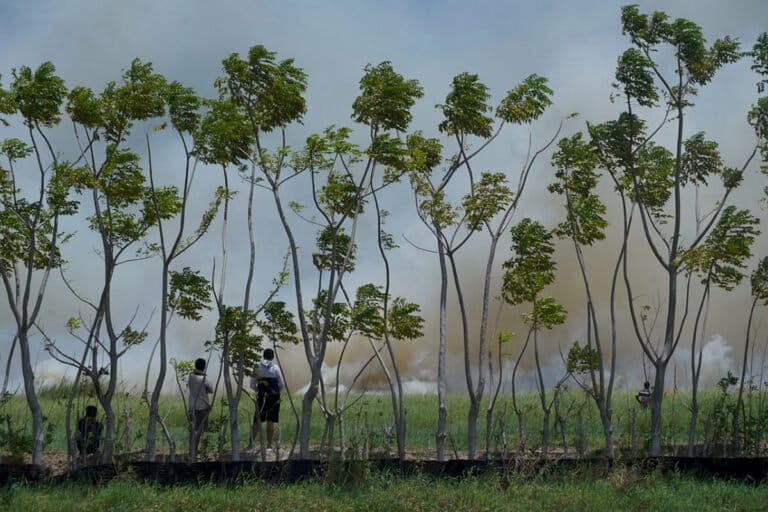
As the smoke eventually clears, the international community and local authorities must confront the reality that "saving" an individual animal is only the first step. The true challenge lies in landscape-level conservation: protecting the peat swamps, enforcing moratoriums on land clearing, and ensuring that corporations are held accountable for the fires that originate within their concessions.
For now, the work continues in the charred forests of Ketapang. Teams remain on high alert, ready to mobilize whenever a report comes in of a desperate creature trapped in the ruins of its home. The story of these orangutans is a poignant reminder that while we count the statistics of survival, we are witnessing the systematic unraveling of a biological heritage that, once lost, cannot be replaced. The image of a mother and child separated by fire is not just a photograph—it is a warning from the heart of the forest that the current path of industrial expansion is incompatible with the survival of one of our closest living relatives.