Nila Kartika Wati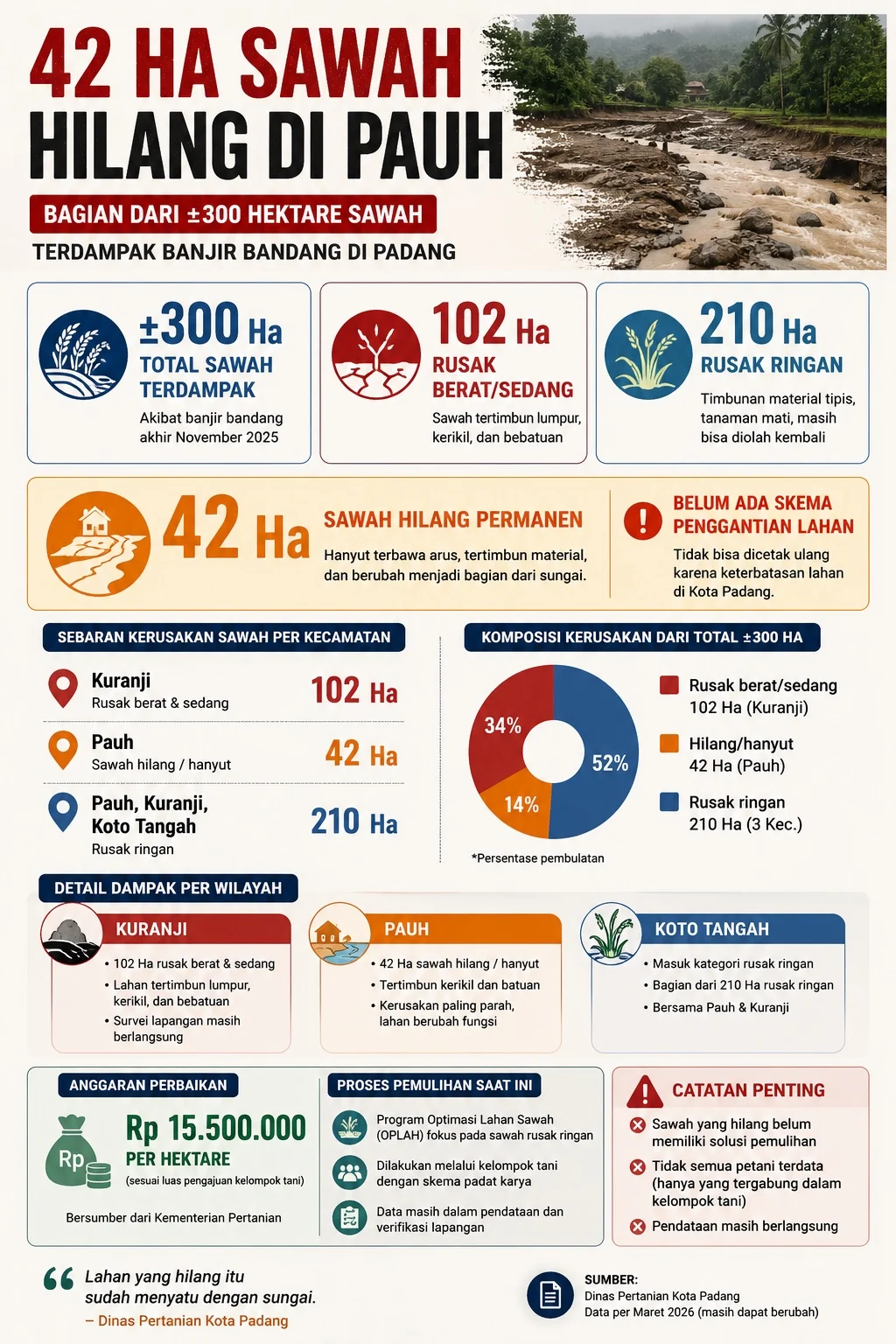
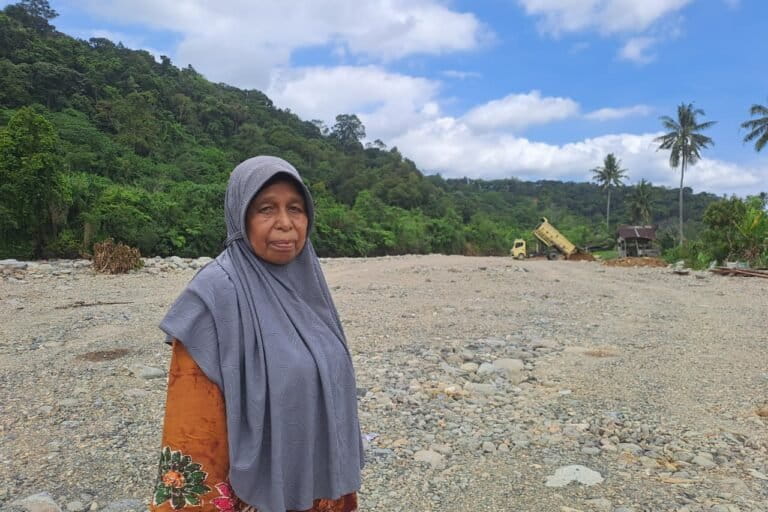
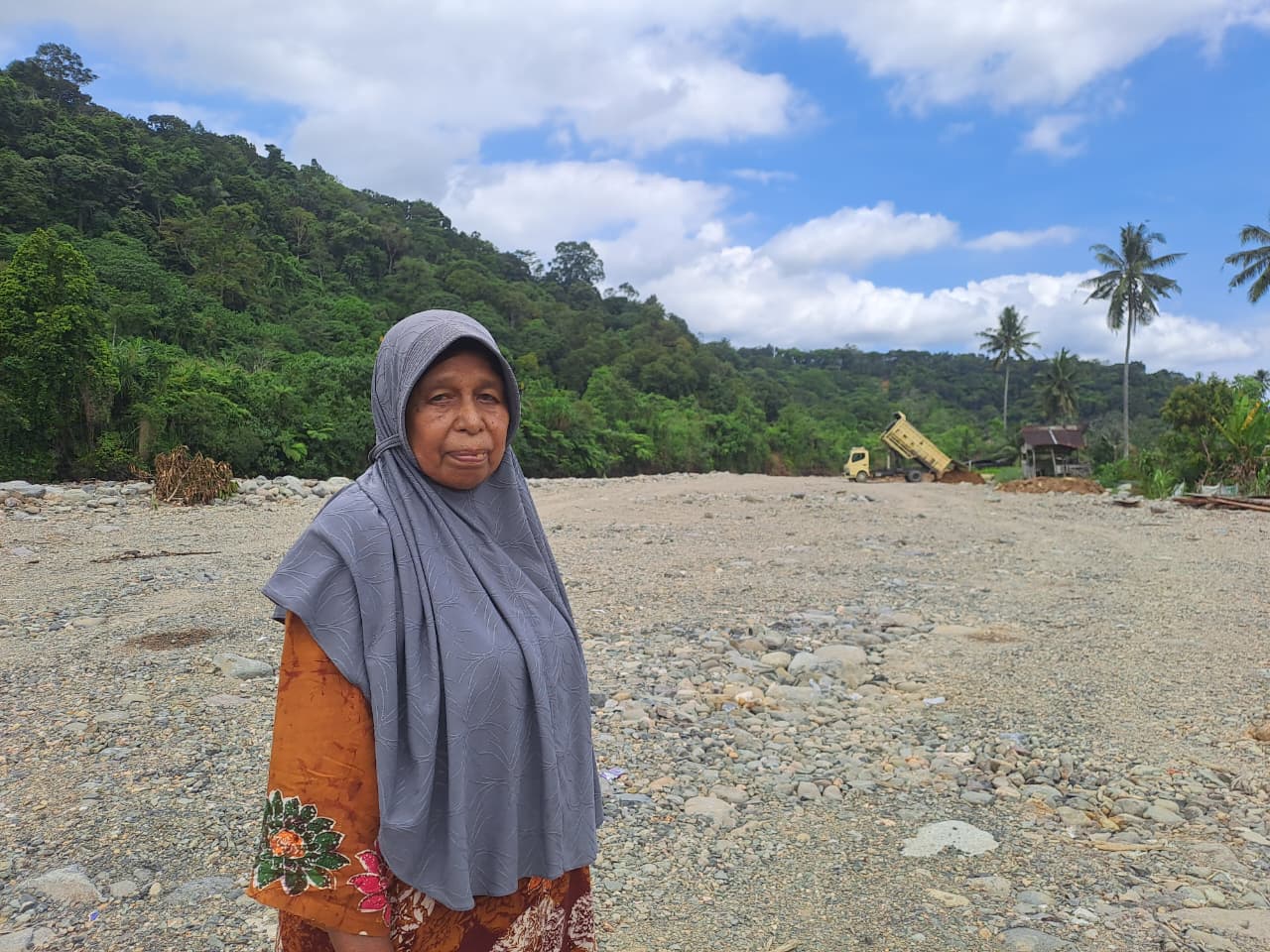
Balinar, a 73-year-old resident of Batu Busuak in the Lambuang Bukik sub-district of Padang, spent a humid Tuesday morning on May 5, 2026, meticulously tidying stacks of timber in her kitchen. The space is still undergoing repairs, a lingering project necessitated by the catastrophic flash floods that tore through the region in late November 2025. While her home still stands, the landscape behind it tells a far more tragic story. A neighboring house was entirely erased from the map, swallowed by the churning waters of the "galado"—the local term for a high-velocity debris flow. For Balinar, the survival of her physical dwelling is a hollow victory; the flood did not take her roof, but it took her life’s work and her only means of survival.
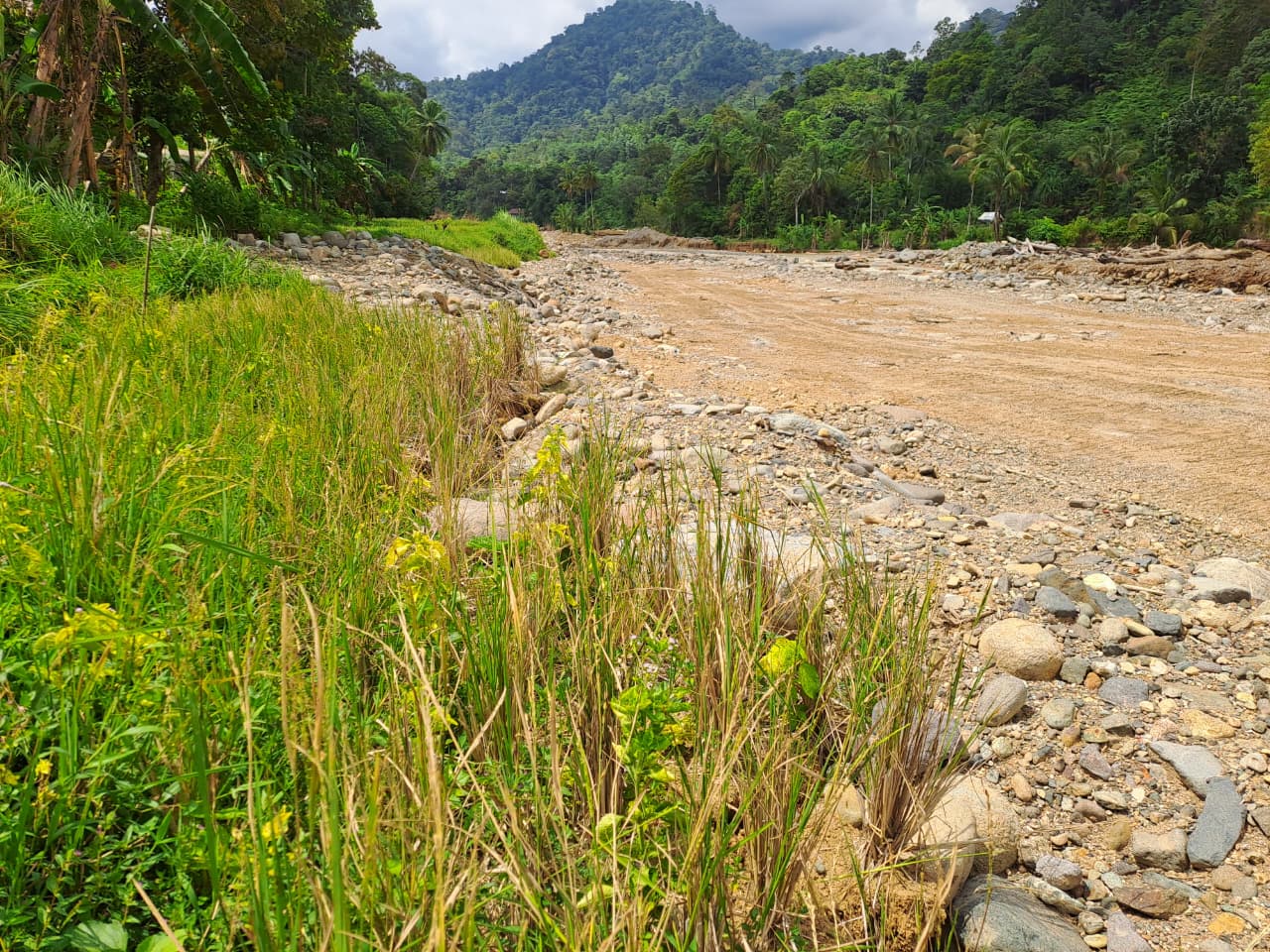
Before the disaster, Balinar’s life was defined by the rhythmic cycles of the agricultural calendar. She managed seven plots of rice fields, eight productive coconut trees, and dozens of cocoa plants. In a typical year, she could rely on two successful harvests, yielding an average of ten sacks of grain each time. With a market price of approximately Rp400,000 per sack of unhusked rice, her income was modest but sufficient for a dignified life in her senior years. Supplemental income from her coconuts, harvested every two months, provided a safety net. Today, that security has vanished. Her fields, once vibrant and green, are now indistinguishable from the rocky bed of the nearby river. Not a single plot remains.
The situation facing Balinar is mirrored across the Batu Busuak area, where the elderly population is particularly vulnerable to the permanent loss of productive assets. Ibrahim, another local farmer in his twilight years, finds himself in a similarly desperate position. Prior to the late 2025 disaster, Ibrahim’s land yielded up to 27 sacks of rice per season. This harvest was the lifeline not only for him and his wife but also for two grandchildren they have raised since the death of their father. The flash flood transformed his fertile soil into a wasteland of boulders, silt, and sand. The land is no longer merely "damaged"; it has been physically buried or washed away, leaving Ibrahim with no path back to his former life.
The Chronology of a Disaster and a Stalled Recovery
The flash floods of November 2025 were not an isolated incident but the result of a perfect storm of environmental degradation and extreme weather. For years, environmentalists have warned that the "carrying capacity" of West Sumatra’s highlands has been critically compromised. Data suggests that the province has been losing forest cover at a rate equivalent to 40 soccer fields per day. This massive deforestation reduces the soil’s ability to absorb rainwater, leading to the rapid runoff and debris flows that characterize a "galado."
In the immediate aftermath of the November floods, the provincial and city governments moved into emergency response mode. Search and rescue operations were prioritized, and temporary shelters were established. However, as the months turned into 2026, the transition from emergency relief to economic rehabilitation has been fraught with bureaucratic delays. Ahead of the Eid al-Fitr holidays in early 2026, government officials visited the affected communities, collecting bank account numbers and promising agricultural compensation. Yet, as of May 2026, those accounts remain empty.
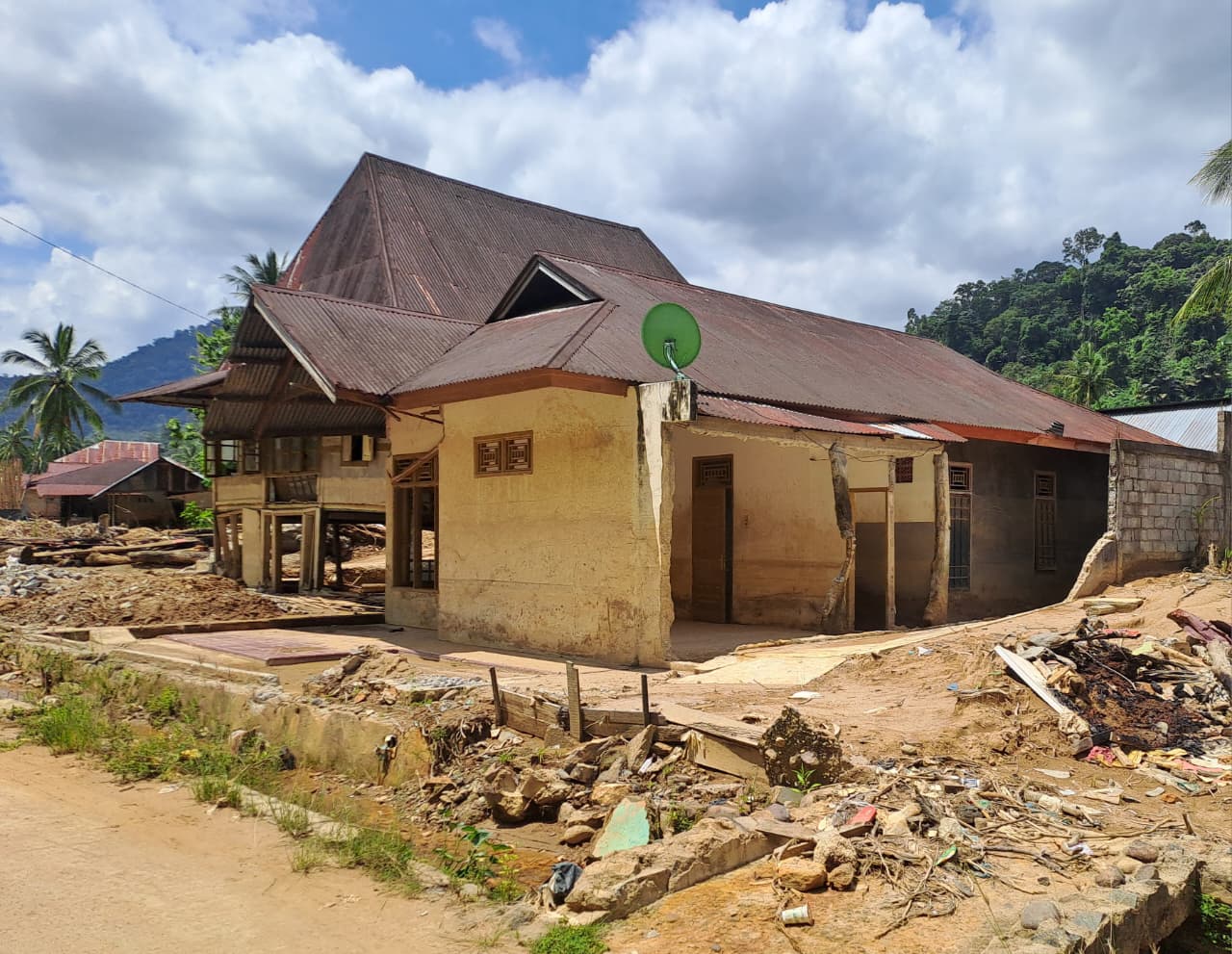
Balinar has made numerous trips to the local sub-district office (kelurahan) to report the loss of her livelihood. Each time, she is met with the same silence. While her husband was once offered coconut seedlings during a community meeting, the gesture felt like a bitter irony; they no longer have land on which to plant them. For these farmers, the government’s failure to provide a concrete solution for land replacement is a death knell for their economic independence.
Statistical Overview of Agricultural Destruction in Padang
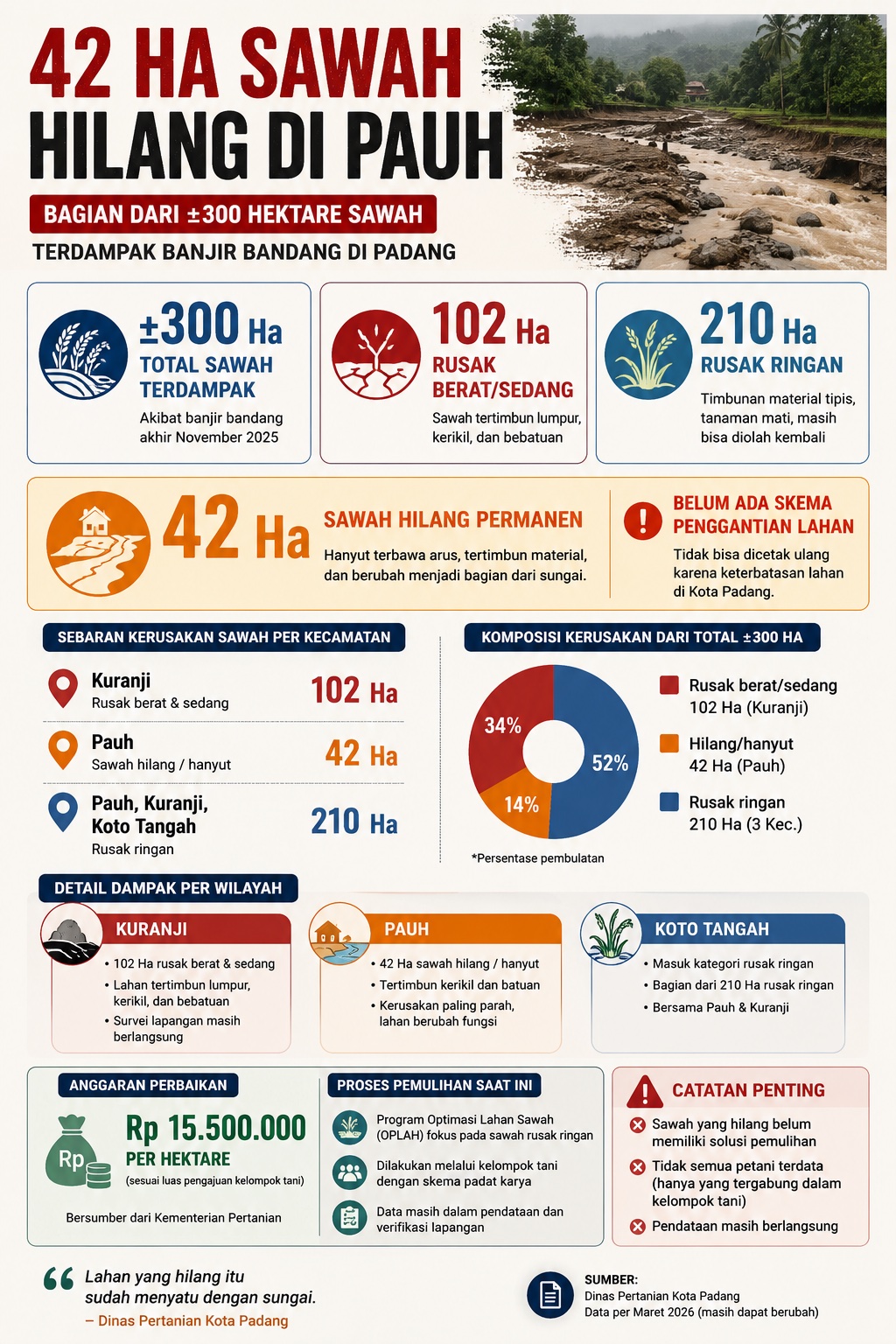
The scale of the agricultural crisis in Padang is significant, affecting multiple districts and hundreds of households. According to data from the Padang City Agriculture Department (Dispertan), the late 2025 floods impacted several hundred hectares of rice fields with varying degrees of severity.
- Pauh District (Including Batu Busuak): Approximately 42 hectares of rice fields have been classified as "lost." This means the land has either been washed away by the river or is now buried under such a thick layer of debris that traditional restoration is impossible.
- Kuranji District: About 102 hectares of farmland suffered "heavy to moderate" damage. While the land remains, the infrastructure—including irrigation channels and soil quality—has been severely compromised.
- Pauh and Koto Tangah Districts: An additional 210 hectares experienced "light damage." These areas are the focus of current restoration efforts, as they are deemed salvageable with the right intervention.
Yoice Yuliani, the Head of the Padang Agriculture Department, admitted that the city currently lacks a specific scheme to address the "lost" land. In other regions of Indonesia, the government might implement a "Cetak Sawah Baru" (New Rice Field Development) program. However, Padang faces a unique challenge: a lack of available space. As an urbanized coastal city backed by steep hills, there is simply no surplus land to convert into new farms. Consequently, the land that has merged with the river is being treated as a total loss rather than an asset to be recovered.
Economic Implications: Beyond Short-Term Aid
To address the immediate poverty of the affected farmers, the Padang City Government has proposed a one-time economic support payment of Rp1 million (approximately $63 USD) per family for those whose land was heavily damaged or lost. While the funds are currently in the "verification and validation" stage, experts argue that this amount is woefully inadequate.
Syafrudin Karimi, an economist from Andalas University in Padang, warns that the government is miscalculating the nature of the crisis. "A one-million-rupiah grant might cover basic consumption for a few weeks, but it does nothing to replace a productive asset or rebuild a lost income stream," Karimi noted. He emphasizes that for a farmer like Balinar or Ibrahim, a rice field is not just a patch of dirt; it is a multi-generational capital asset that provides food security, cash flow, and employment.
Karimi argues that the government must distinguish between "consumption aid" and "compensation for productive assets." When a farmer loses their land, they lose their autonomy. Without a strategic intervention, these families are at high risk of falling into a cycle of intergenerational poverty. The loss of income forces families to cut back on nutritious food, withdraw children from school, or sell off remaining household assets to pay for basic necessities.
The Risk of Social Catastrophe
The environmental disaster of late 2025 is rapidly evolving into a social disaster. Karimi points out that if the state does not provide a "new path to livelihood," the displaced farmers will be forced into the informal urban sector. For elderly farmers, this usually means low-wage manual labor or total dependence on charity.
"Relocating a family to a new house is only half the battle," Karimi explained. "A new house without a source of income is just a different place to be poor. We need an ‘economic relocation’ strategy." He suggests that since new land is unavailable in Padang, the government must pivot toward non-land-based economic programs. This could include:
- Intensive Vocational Training: Tailoring programs for younger members of farming families to enter the service or manufacturing sectors.
- Micro-Capital for Small Businesses: Providing low-interest loans and mentorship for farmers to start small retail or processing businesses.
- Labor-Intensive Public Works: Employing affected residents in the reconstruction of the city’s infrastructure to provide immediate cash flow.
- Comprehensive Insurance: Developing a future-proof agricultural insurance scheme that accounts for total land loss due to climate-related disasters.
A Precarious Future
As the sun sets over the scarred landscape of Batu Busuak, the urgency of the situation is palpable. For Balinar, the question is simple: "If the rice fields are gone, where will we plant?" It is a question that the current bureaucratic framework is not equipped to answer. The "galado" did more than move rocks and water; it shifted the economic foundation of an entire community.
The case of Padang serves as a stark warning for other regions in Indonesia facing the dual threats of deforestation and climate change. When the environment reaches its breaking point, the resulting disasters do not just damage property—they erase the very possibility of self-sufficiency for the most vulnerable citizens. Without a radical shift in how the government handles permanent asset loss, the farmers of Batu Busuak will remain symbols of a growing class of "climate refugees" within their own borders, waiting for a harvest that may never come again.