Tata Titiana
The development of Indonesia’s tourism industry is deeply intertwined with the colonial era of the Dutch East Indies. Following the opening of the Suez Canal in the 19th century, maritime trade routes expanded rapidly, drawing an increasing number of European commercial vessels and cruise liners toward the Indonesian archipelago. These ships regularly docked to unload Western travelers seeking leisure and exploration. To accommodate this influx of foreign visitors, the colonial administration and private investors initiated the construction of sophisticated Western-style lodging across Java and other key islands.
Centuries later, many of these architectural marvels have survived wars, independence struggles, and decades of modernization. Remarkably, a select few of these historic properties remain fully operational, serving contemporary travelers while preserving their profound historical significance. Below is a comprehensive examination of five historic hotels in Indonesia that bridge the gap between colonial heritage and modern hospitality.
1. Hotel Indonesia Kempinski Jakarta: A Monument of Independence and Modern Luxury
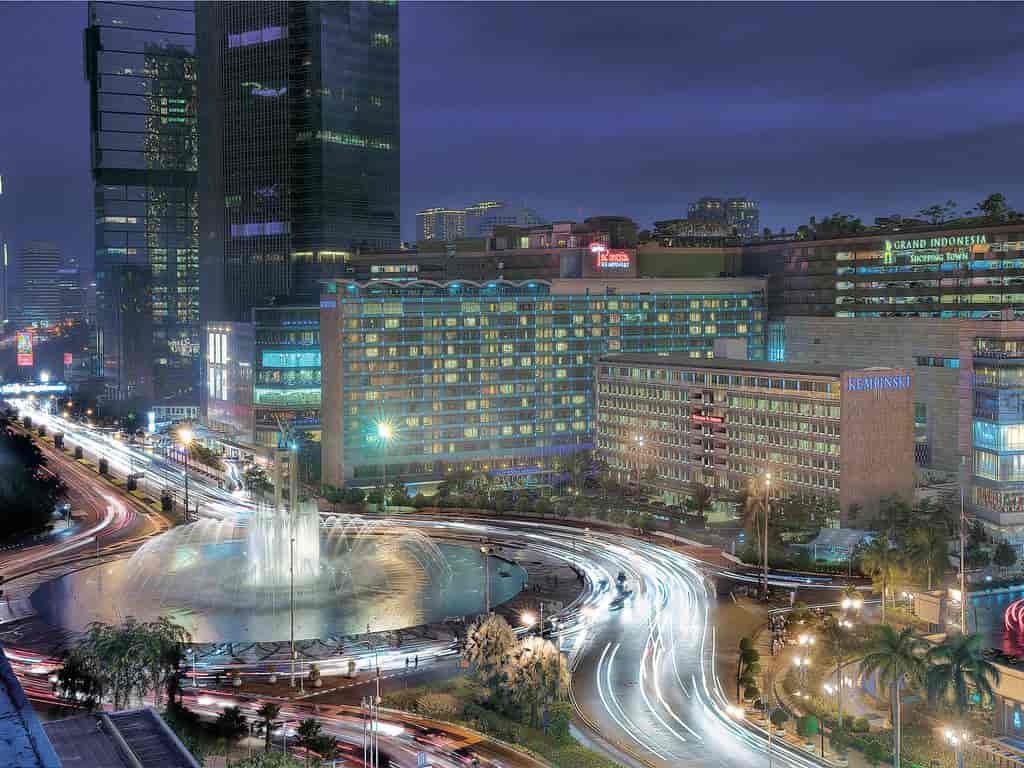
Situated in the heart of the capital city, Hotel Indonesia Kempinski stands as Indonesia’s first five-star luxury hotel and a historic landmark of Jakarta. The genesis of this grand property is tied to post-independence nation-building under President Sukarno. Funded partially by Japanese war reparations, the hotel was officially inaugurated in 1962 to host international athletes and delegates attending the Fourth Asian Games (Asian Games IV).
Over the decades, the hotel has hosted numerous world leaders, diplomats, and cultural icons. Its historic profile was further elevated in 2020 when King Willem-Alexander and Queen Máxima of the Netherlands chose the property as their official residence during their state visit to Indonesia. The royal couple stayed in the hotel’s premier suite, which is equipped with specialized security features, including bulletproof glass. Today, the property blends its rich mid-century legacy with contemporary European luxury management under the Kempinski group. Standard rates typically start around IDR 2.98 million per night, varying by seasonal demand and room category.
2. Hotel Majapahit Surabaya: The Cradle of Revolutionary History
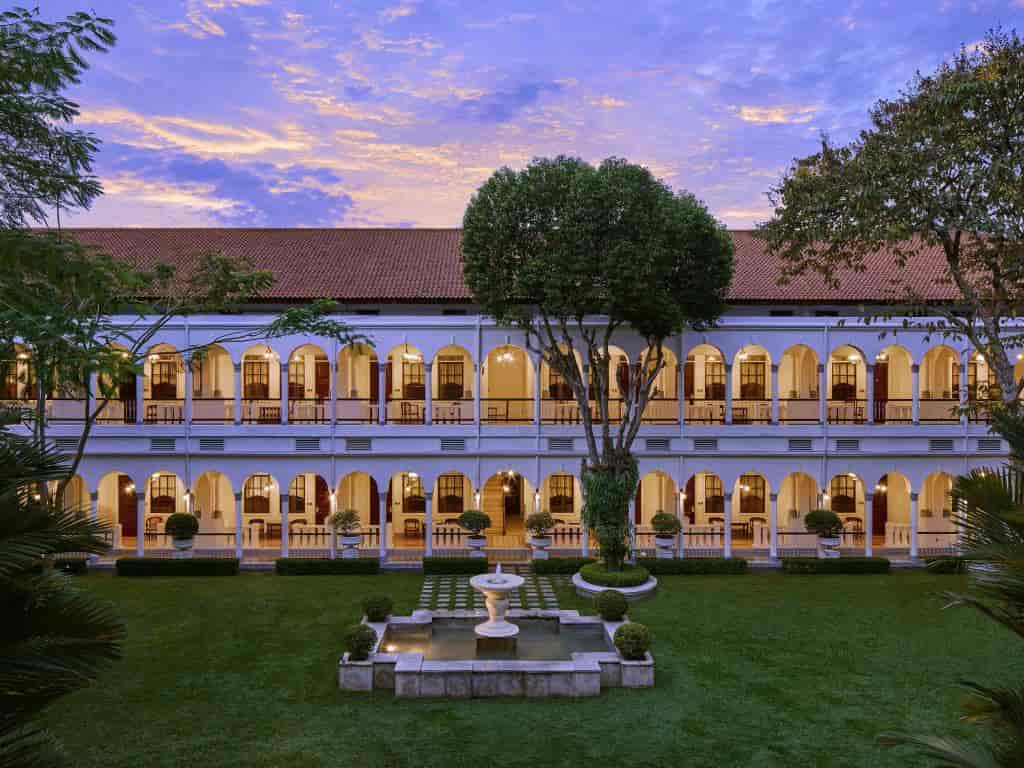
In the bustling port city of Surabaya, Hotel Majapahit—originally known as Hotel Oranje—remains a powerful symbol of Indonesia’s struggle for independence. Established in 1910 by the Sarkies Brothers, Armenian hoteliers who played a prominent role in Southeast Asia’s luxury hospitality sector during the colonial era, the hotel was later renamed Hotel Yamato during the Japanese occupation.
The property is internationally famous for a pivotal event in modern Indonesian history: the Yamato Hotel Incident of September 19, 1945. Following the failure of negotiations between Indonesian nationalist leaders and Dutch representatives led by W.V.Ch. Ploegman regarding the flying of the Dutch flag, enraged local youths stormed the roof of the hotel. They forcibly ripped the blue stripe off the Dutch red-white-blue tricolor flag, transforming it into the red-and-white Indonesian flag. This act of defiance catalyzed the revolutionary fervor that culminated in the Battle of Surabaya on November 10, 1945. Today, managed as part of the Accor group’s MGallery collection, the hotel preserves its 20th-century art deco and tropical architecture, offering guests a living museum experience with nightly rates starting from approximately IDR 985,000.
3. Royal Ambarrukmo Yogyakarta: Royal Heritage Meets Modern Elegance
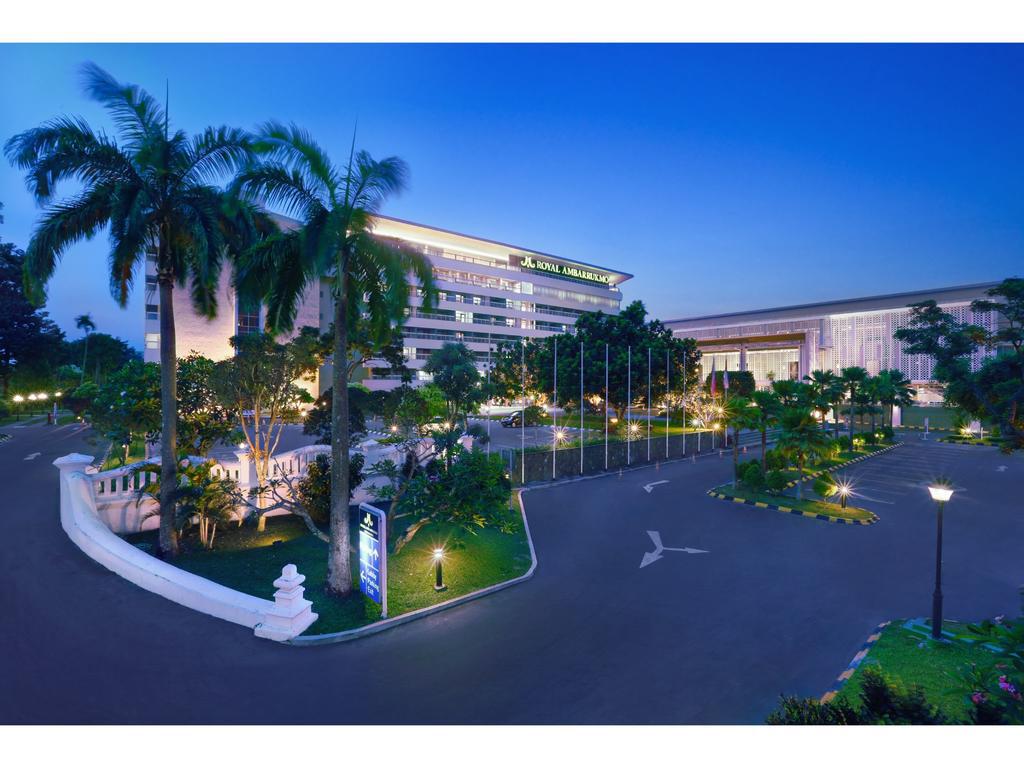
Located along the prominent thoroughfare of Jalan Laksda Adisucipto in Yogyakarta, Royal Ambarrukmo occupies land historically tied to the Mataram Sultanate. The site originally served as the royal palace complex and botanical garden of Sultan Hamengku Buwono V. Recognizing the potential for international tourism in the cultural capital of Java, President Sukarno initiated the development of modern accommodation on the grounds, making Royal Ambarrukmo one of the nation’s premier state-sponsored international hotels in 1966.
The property seamlessly integrates traditional Javanese royal aesthetics with high-end modern amenities. As a luxury five-star establishment, it features expansive landscaped gardens, traditional Javanese pavilions (pendopo) that date back centuries, and modern recreational facilities including swimming pools and wellness centers. The hotel offers visitors a unique intersection of royal Javanese heritage and contemporary hospitality, with room rates starting around IDR 911,000 per night.
4. Hotel Savoy Homann Bandung: An Art Deco Masterpiece and Celebrity Haven
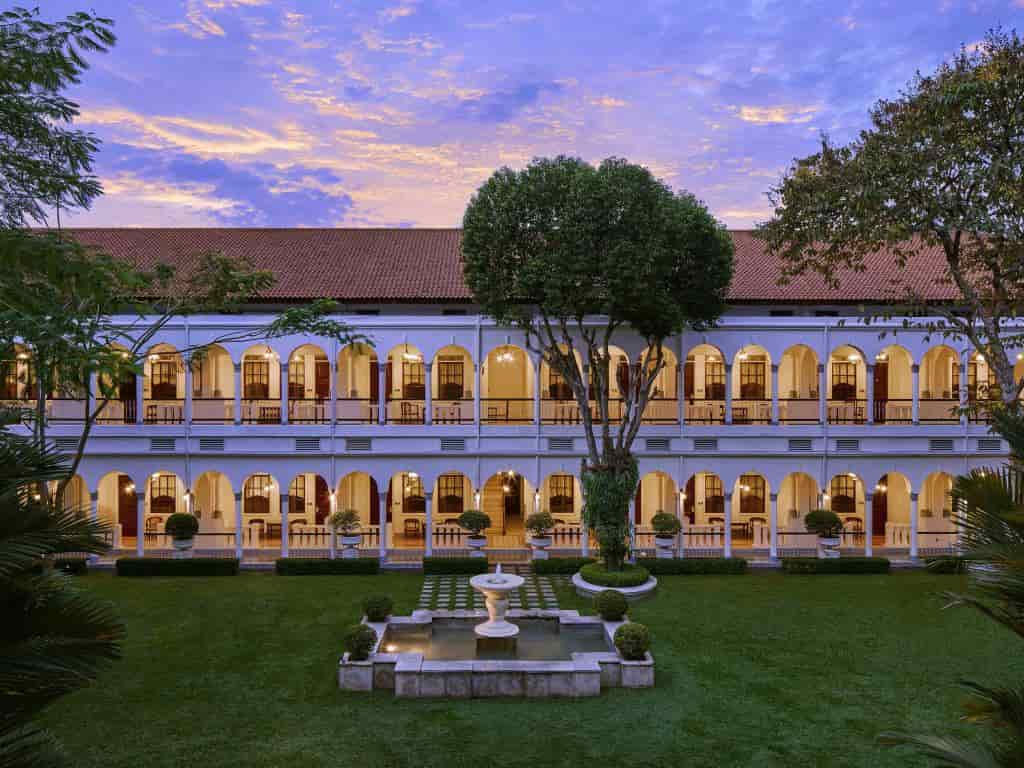
In the upland city of Bandung—historically dubbed the "Paris of Java" due to its European architecture and cool climate—Hotel Savoy Homann stands as a masterpiece of Art Deco design. The property traces its origins back to the mid-19th century when the Homann family established a modest accommodation famous for its traditional Dutch-Indonesian rijsttafel culinary offerings prepared by Madame Homann.
To accommodate the surging demand for luxury tourism in the 1930s, the original structure was entirely redesigned and rebuilt in 1939 by the renowned Dutch architect Albert Aalbers. Aalbers incorporated striking "ocean wave" nautical motifs and aerodynamic curves characteristic of the Late Art Deco movement. Formally renamed Savoy Homann in 1940 to reflect its elevated status, the hotel hosted numerous international celebrities and dignitaries, most notably Hollywood film icon Charlie Chaplin, who stayed during his visits to the Dutch East Indies in the 1930s. The hotel continues to welcome guests eager to experience interwar architectural grandeur, with rates beginning at approximately IDR 390,000 per night.
5. Inna Bali Heritage Hotel: Pioneering Luxury in Tropical Paradise
Marking the entry of international luxury hospitality into Bali, the Inna Bali Heritage Hotel opened its doors on August 22, 1927. Established during an era when foreign travelers arrived on the island via the steamships of the Royal Packet Navigation Company (Koninklijke Paketvaart-Maatschappij or KPM), the hotel was envisioned as a tranquil oasis for global explorers, artists, and anthropologists drawn to Balinese culture.
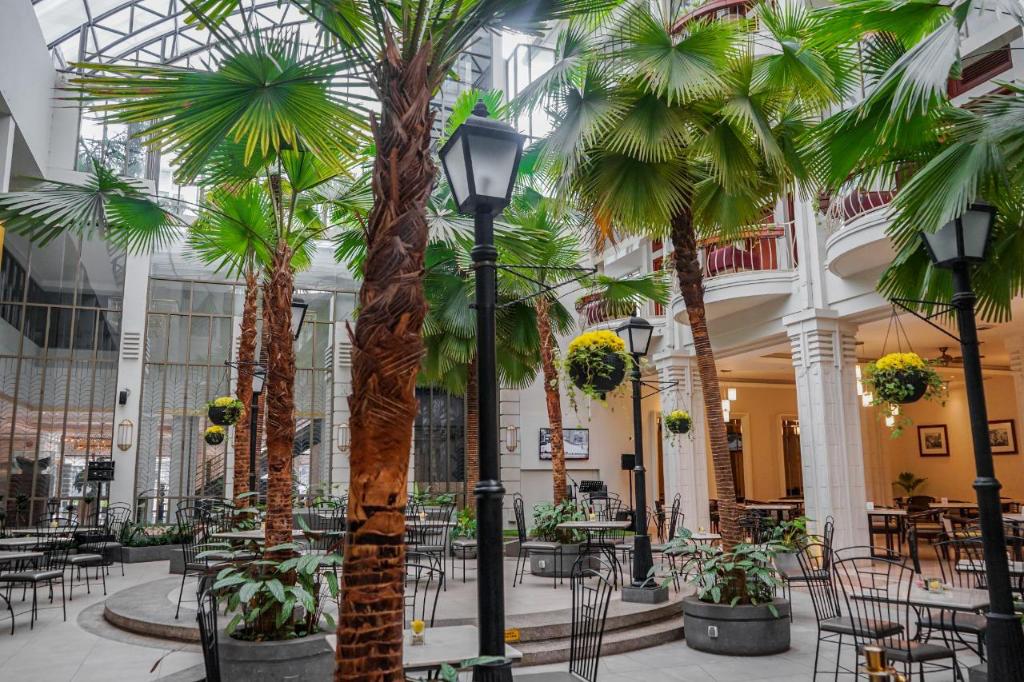
Located in the heart of Denpasar, the three-star heritage property has retained much of its colonial-era structural layout, characterized by open-air corridors, tropical courtyards, and classic architectural detailing. Over nearly a century of operation, it has hosted a myriad of international scholars, artists, and dignitaries who helped introduce Bali to the global tourism stage. Offering a budget-friendly window into the island’s early tourism history, rates at the Inna Bali Heritage Hotel start around IDR 270,000 per night.
Economic and Cultural Implications of Heritage Hospitality
The ongoing operation of these historic hotels carries significant economic and cultural implications for Indonesia’s modern tourism sector. From a heritage conservation standpoint, adaptive reuse allows historical buildings to generate the revenue necessary for their own physical upkeep, preventing the deterioration or demolition of critical architectural landmarks. Furthermore, these properties serve as tangible educational assets, offering domestic and international travelers immersive insights into the complex socio-political history of the colonial and post-independence periods.
However, operating heritage hotels presents unique challenges for modern management. Balancing strict historical preservation guidelines—often mandated by local cultural heritage laws—with the installation of modern fire safety systems, high-speed telecommunications, and energy-efficient climate control requires substantial capital investment and careful engineering. Despite these operational hurdles, consumer demand for authentic, story-driven travel experiences continues to rise. Industry analysts note that heritage properties often command strong brand loyalty among cultural tourists, positioning them as resilient assets within Indonesia’s broader hospitality market.
Travelers planning to book stays at these historic properties should note that room rates fluctuate based on seasonal demand, national holidays, local tax policies, and macroeconomic factors. Booking during off-peak periods generally yields more favorable rates, and guests are advised to verify final pricing directly through official booking channels prior to confirming reservations.