Tata Titiana
The tourism landscape of Bali has long transcended its world-famous coastline, evolving into a multifaceted destination that appeals to travelers seeking both tropical serenity and highland adventures. While the southern beaches continue to draw millions of international and domestic visitors annually, the mountainous interior of the island has experienced a significant tourism renaissance. Specifically, the Kintamani region in Bangli Regency has emerged as a premier hotspot for experiential culinary tourism, driven by the rapid development of architecturally striking cafes perched precariously along ancient caldera ridges.
For years, Kintamani was primarily known for its agricultural output—most notably Kintamani Arabica coffee—and viewpoint stops for transient tour buses gazing at Mount Batur. However, a structural shift in traveler behavior, accelerated by the demand for aesthetically driven yet nature-immersed leisure spaces, transformed the local economy. Entrepreneurs began capitalizing on the dramatic topography, establishing multi-story cafes featuring floor-to-ceiling glass windows and expansive rooftop terraces. These establishments offer unobstructed panoramas of the active Mount Batur volcano, the tranquil Lake Batur, and neighboring peaks such as Mount Abang and Mount Agung.
The appeal of these highland cafes extends beyond mere visual aesthetics. Situated at elevations that yield temperatures ranging between 17 and 18 degrees Celsius (62 to 64 degrees Fahrenheit), the area provides a much-needed meteorological escape from the tropical heat characteristic of Bali’s coastal plains. This microclimate, combined with the romantic allure of misty mornings and dramatic sunset vistas behind volcanic ridges, has cemented Kintamani as a top-tier destination for couples, photography enthusiasts, and social gatherings.
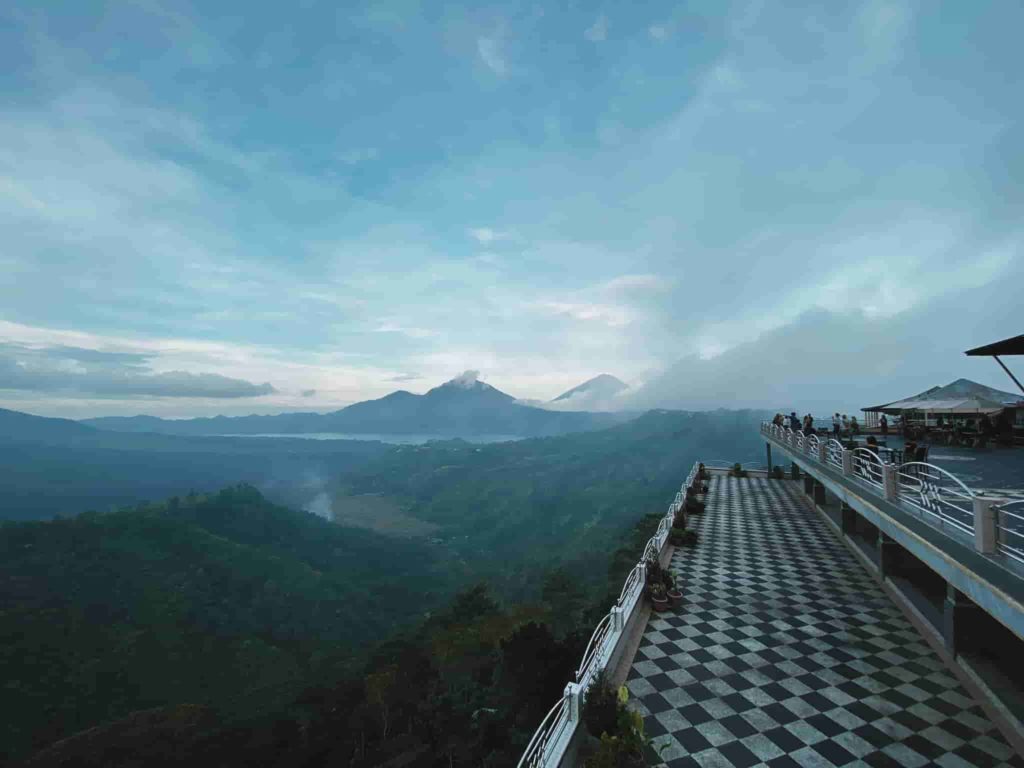
A chronological evolution of the region’s hospitality sector highlights a steady influx of modern establishments designed to harmonize with the rugged landscape. Below is an overview of five prominent cafes in Kintamani that define this highland trend, each offering distinct architectural features and panoramic perspectives.
1. Tegu Kopi: Pioneering Modern Highland Hospitality
Inaugurated in December 2019 along Jalan Raya Penelokan in the Bangli Regency, Tegu Kopi stands as one of the early catalysts for the modern cafe boom in Kintamani. Strategically positioned on an elevated ridge, the venue offers a sweeping vantage point encompassing the caldera complex, including Mount Batur, Mount Abang, Mount Agung, and the crescent-shaped Lake Batur.
Operationally, Tegu Kopi caters to visitors seeking refuge from the daytime heat, with ambient temperatures frequently dropping below 20 degrees Celsius. The establishment’s layout prioritizes open-air observation decks, allowing patrons to witness the transition from bright daylight to the dramatic evening twilight, where the sun sets directly behind the western mountain ranges. The cafe’s success helped validate the commercial viability of high-altitude hospitality ventures in the region, paving the way for subsequent developments along the crater rim.
2. Eco Bike Coffee: Integrating Agriculture and Architecture
Representing a more sprawling approach to highland commercial design, Eco Bike Coffee distinguishes itself through a unique three-tier structural model situated directly on the Kintamani cliffs. Rather than functioning solely as a beverage dispensary, the complex integrates agricultural tourism with modern leisure.
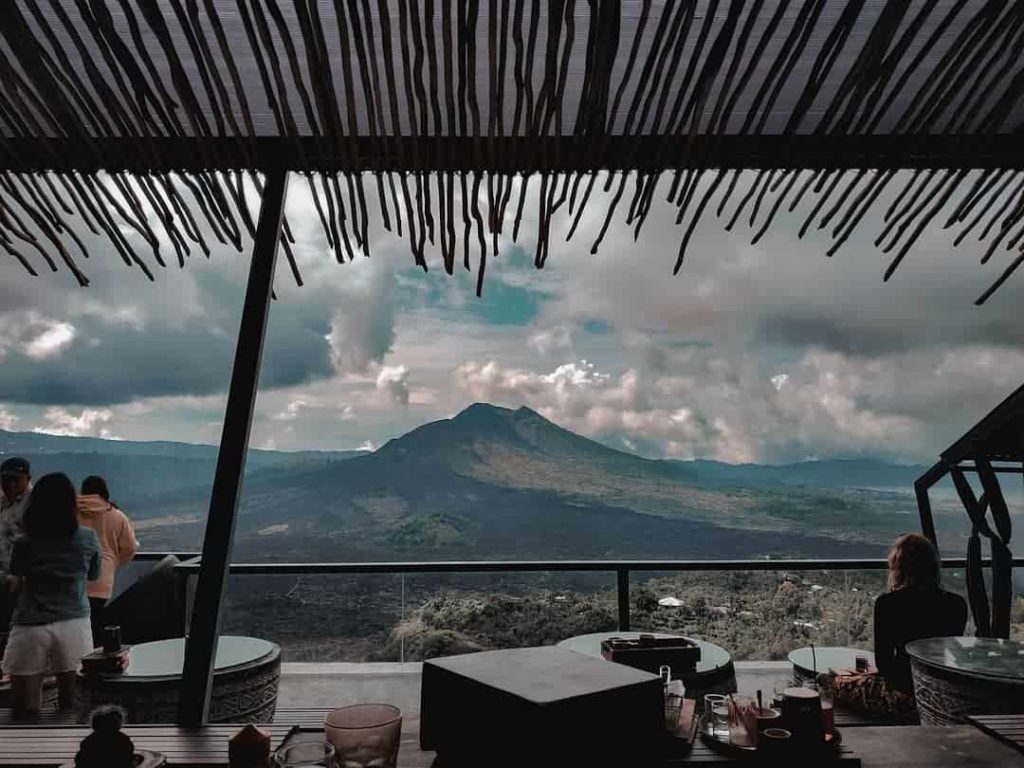
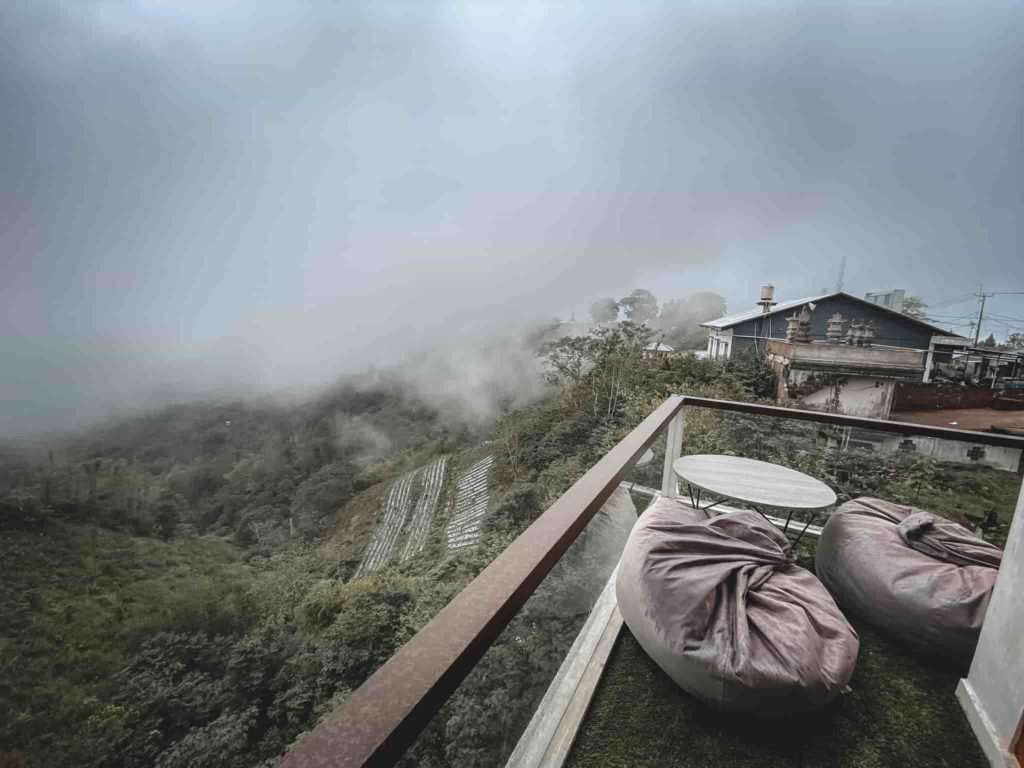
The foundational first tier of Eco Bike Coffee houses working coffee plantations and boutique on-site accommodations, anchoring the venue in the agricultural heritage of the region. Ascending to the third level reveals a spacious open-air rooftop that maximizes the surrounding views. However, the venue’s operational dynamics are heavily dictated by local weather patterns. Due to its high altitude, rapid cloud formations frequently envelop the ridge, reducing visibility and creating a dense, whiteout effect that obscures the panoramic mountain views. Consequently, industry observers recommend monitoring local meteorological forecasts prior to visiting to ensure optimal viewing conditions.
3. Akasa Coffee: Premium Elevation and Cultural Integration
Continuing along the Penelokan ridge, Akasa Coffee offers a refined hospitality experience tailored to visitors willing to invest in premium culinary offerings. Positioned at an exceptionally high vantage point, the venue delivers unobstructed vistas of Mount Batur alongside a crisp, alpine-like atmosphere that routinely prompts recommendations for warmer attire.
Akasa Coffee’s menu reflects a cosmopolitan approach to highland dining, featuring an array of specialty coffees, teas, international breakfast selections, and alcoholic beverages, with average expenditures hovering around IDR 150,000 per person. The architectural integration of natural wood elements and expansive glass panels ensures that the interior remains visually connected to the external landscape, even during peak operating hours when visitor density reaches its maximum.
4. Batur 1926: Embracing Sunrise Tourism
Capitalizing on the growing demand for early-morning tourism, Batur 1926 has positioned itself as a premier destination for sunrise chasers in Bali. Opening its doors well before dawn—frequently welcoming guests as early as 5:30 AM—the cafe offers a tranquil environment designed around the diurnal shift from night to day over the caldera.
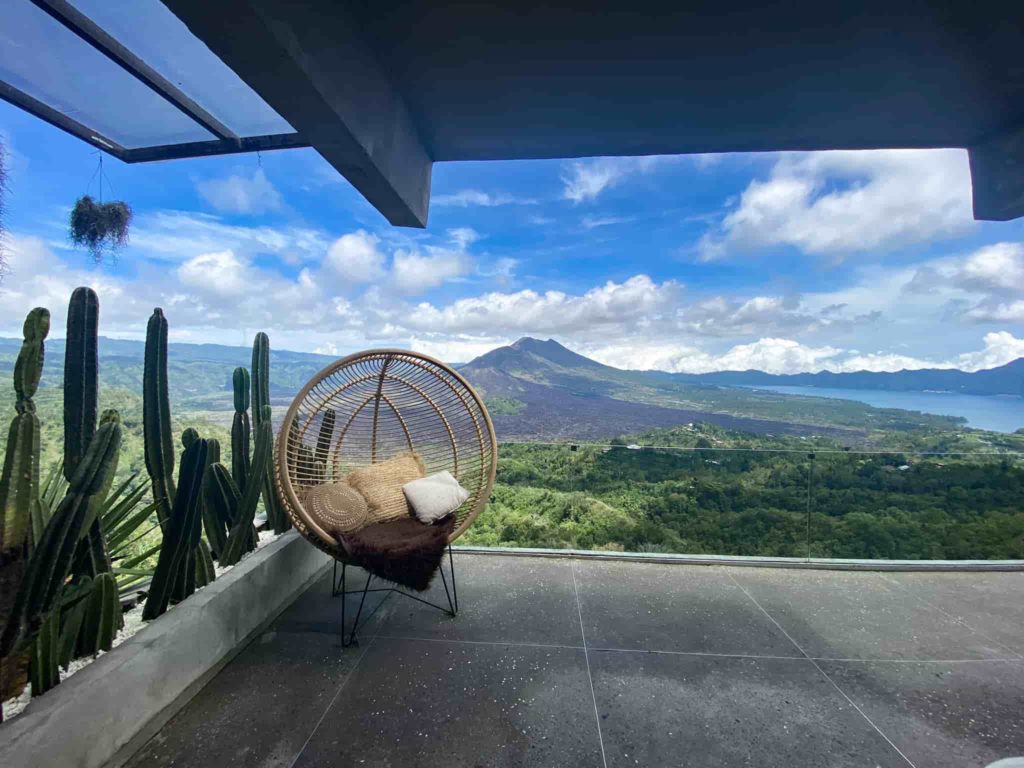
Architecturally, Batur 1926 incorporates distinct elements of traditional Balinese design, most notably through intricately carved gateways integrated into its rooftop terraces. When atmospheric conditions permit, guests seated on the upper levels are afforded a rare alignment view of three major peaks simultaneously: Mount Batur, Mount Abang, and Mount Agung. This blend of cultural aesthetics and natural topography has made the venue a frequent fixture across digital travel portfolios and social media platforms.
5. Kava Coffee: Seamless Indoor-Outdoor Integration
Concluding the spectrum of notable Kintamani establishments, Kava Coffee leverages its prime positioning along the shores of Lake Batur to offer a distinct aquatic and mountainous perspective. Unlike properties situated exclusively on the upper ridges, Kava Coffee bridges the vertical distance between the crater rim and the lake basin.
The interior design of Kava Coffee focuses on seamless spatial transition, utilizing extensive semi-outdoor seating arrangements anchored by long communal tables. Floor-to-ceiling glass facades ensure that inclement weather or chilly winds do not obstruct the sweeping views of the surrounding stratovolcanoes. This design philosophy allows patrons to experience the dramatic scale of the Kintamani caldera while maintaining physical comfort in a temperature-controlled or sheltered environment.
Economic and Environmental Implications of the Kintamani Cafe Boom
The rapid proliferation of design-forward cafes across Kintamani has catalyzed significant socioeconomic changes within Bangli Regency. Historically one of Bali’s economically lagging regions—despite its rich agricultural output—Bangli has witnessed a surge in local employment opportunities, infrastructure improvements, and land value appreciation driven by the tourism sector. Local farmers and coffee producers have found direct B2C channels through these establishments, reducing reliance on traditional supply chains.
However, rapid commercialization brings notable operational and environmental challenges. Urban planners and local authorities have increasingly raised concerns regarding waste management, sustainable water usage, and land-use regulations along fragile volcanic slopes. The construction of multi-story concrete structures on steep topography necessitates rigorous environmental impact assessments to mitigate risks associated with soil erosion and habitat fragmentation.
Furthermore, traffic congestion along the narrow arteries of Jalan Raya Penelokan has intensified, prompting calls from transportation authorities for improved traffic management systems and expanded public transit links from southern tourism hubs like Denpasar, Ubud, and Kuta.
As Bali’s tourism sector continues to diversify beyond its coastal identity, the highland cafes of Kintamani illustrate the delicate equilibrium required between commercial enterprise and environmental preservation. For travelers, these destinations offer a vital psychological and physical retreat, reaffirming the island’s capacity to surprise visitors with geographic and cultural variety.