Tata Titiana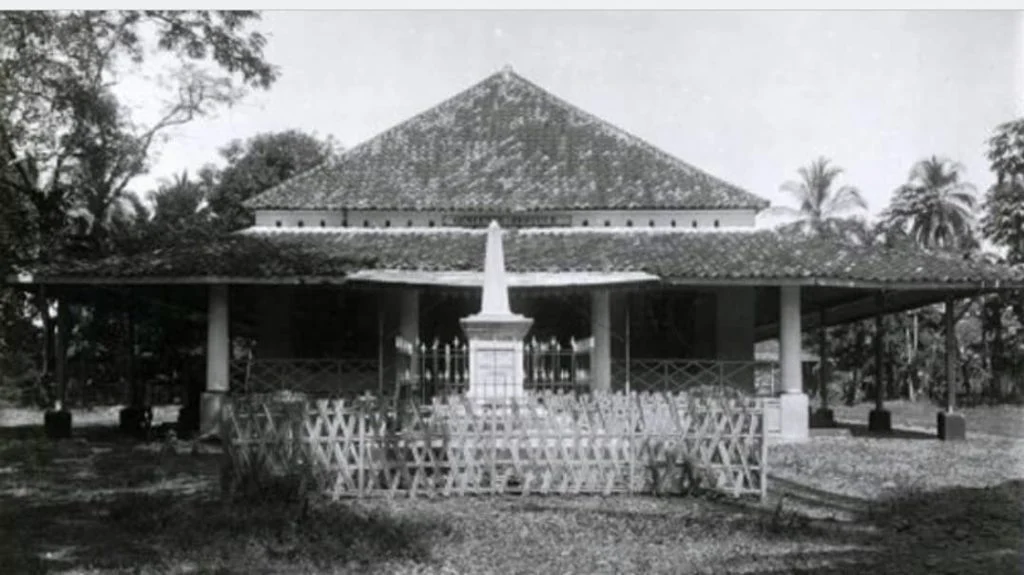
Long before it officially became an autonomous municipality in West Java on April 27, 1999—and decades prior to functioning merely as a district under the jurisdiction of Bogor Regency—Depok held a status unlike any other region in the Indonesian archipelago: it operated as an independent quasi-state, complete with its own constitution, administrative apparatus, and a democratically elected head of state holding the title of president. While modern travelers and residents recognize Depok as a bustling urban center flanking Indonesia’s capital, its origins trace back to a unique late-17th-century socio-legal experiment that carved out a self-governing jurisdiction outside the direct control of the Dutch East India Company (VOC) and later the Dutch colonial government.
Main Facts and the Vision of Cornelis Chastelein
The genesis of Depok as a distinct geopolitical entity began in the final decade of the 17th century. In 1696, a wealthy Dutch merchant and high-ranking VOC official named Cornelis Chastelein purchased an expansive tract of land totaling approximately 12.44 square kilometers for the sum of 2.4 million old guilders. Unlike neighboring territories administered directly by the colonial government, Chastelein’s newly acquired acreage held the legal status of particuliere landerijen (private land). This designation granted the landowner near-absolute feudal authority over the territory and its inhabitants, effectively creating a private estate governed by its proprietor.
At the time of purchase, the terrain was largely dense jungle and wilderness. To develop the land into productive agricultural plantations yielding commodities such as coffee, indigo, and fruit, Chastelein imported and employed a large workforce consisting of enslaved individuals brought from various islands and ethnic groups across the Indonesian archipelago, including Bali, Sulawesi, Timor, and the Moluccas.
Chastelein was known as a devout adherent of Protestantism and held theological views that eventually compelled him to alter his relationship with his labor force. Rather than perpetuating the harsh conditions typical of colonial plantations, he introduced progressive measures for his time, focusing on Christian education, basic literacy, and the gradual elevation of his workers’ social status. This ideological shift culminated in a monumental testamentary decision that would permanently alter the destiny of the region.

Chronology: From Testamentary Emancipation to Statehood
The historical trajectory of Depok unfolded across three distinct centuries, shifting from private property to an emancipated community, and ultimately to a self-administered republic:
- June 28, 1714: Cornelis Chastelein signs his last will and testament shortly before his death. In a radical departure from colonial norms, he bequeaths his vast Depok estate—comprising land, houses, livestock, and agricultural tools—to his emancipated enslaved workforce. Furthermore, he grants them unconditional freedom upon his passing. To manage the transition and prevent internal conflict among the newly freed community, he appoints a trusted administrator named Jarong van Bali to oversee the estate.
- 18th to 19th Century: The emancipated community, which eventually became known as the Mardijker or the "Depok Dutch" (Hollandsche Depokkers), establishes a tightly knit agrarian society. They adopt Dutch surnames, practice Reformed Christianity, and cultivate the land while maintaining a distinct cultural identity that blends European administrative frameworks with local customs.
- Early 20th Century (1913): Recognizing the need for a formalized, corruption-resistant governance structure to prevent power struggles, the community collaborates with Batavia-based lawyers to draft a formal municipal charter. On March 30, 1913, the region officially establishes Het Gemeente Bestuur van Het Particuliere Land Depok (The Municipal Government of the Private Land of Depok). This milestone marks the inception of Depok’s presidential system.
- 1913 – 1952: Four distinct presidents are democratically elected by the citizenry to serve fixed three-year terms. The administration operates from a designated center point marked by the Depok Kilometer Zero monument, with executive functions supported by a dedicated secretary.
- 1952: Following the formal dissolution of private estates (particuliere landerijen) by the newly independent Republic of Indonesia, the final president of Depok, Johannes Matjis Jonathans, officially hands over administrative control to the Indonesian government via an official deed of transfer, formally integrating the territory into the broader administrative grid of West Java.
Supporting Data and Administrative Structure
The geographic footprint of Chastelein’s original private estate vastly exceeded the borders of the modern municipality. Historical records indicate that the territory spanned from the southern boundaries of present-day Depok all the way northward to Pasar Minggu in South Jakarta and Gambir in Central Jakarta.
Within this expanse, the self-governing republic of Depok operated under a unique democratic framework. The administration did not incorporate the office of a vice president; instead, the executive branch relied on an appointed secretary to manage bureaucratic records, public works, and community affairs. Elections were held regularly every three years, and the voting franchise was extended to the resident landowners and community members.
The chronological list of individuals who held the presidential office includes:
- Gerrit Jonathans (Assumed office in 1913 as the inaugural president)
- Martinus Laurens (Assumed office in 1921)
- Leonardus Leander (Assumed office in 1930)
- Johannes Matjis Jonathans (Assumed office in 1952, serving as the final president who oversaw the transition of sovereignty to the Republic of Indonesia)
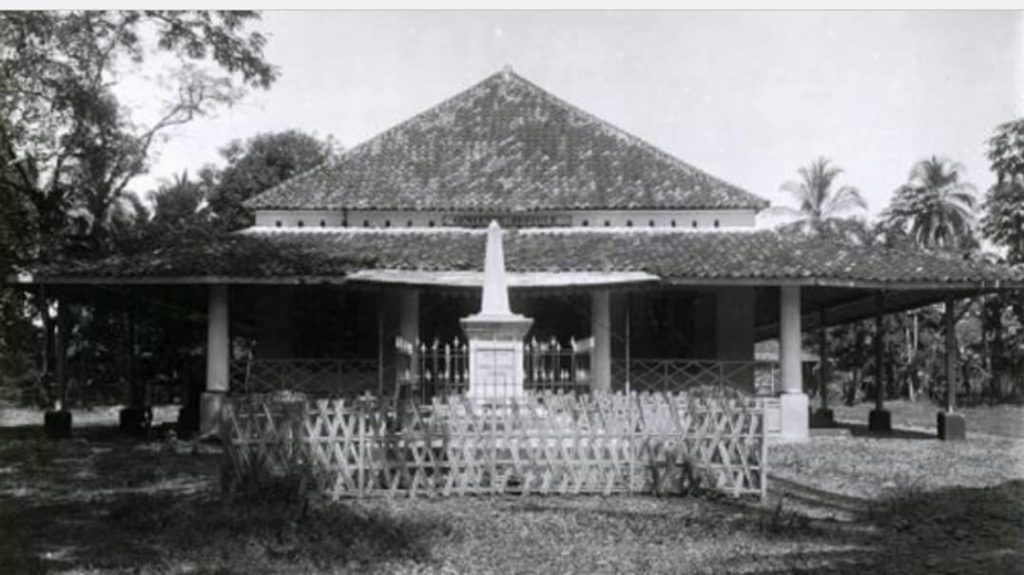
The physical seat of government was located near the Depok Kilometer Zero landmark. An adjacent building constructed during the colonial administrative era served as the official government office, a structure that has since been preserved and repurposed over the decades, eventually functioning as the Harapan Hospital.
Official Responses and Societal Context
Historians and cultural preservationists note that the phenomenon of Depok’s presidential era presents a fascinating anomaly within the historiography of the Dutch East Indies. While the colonial state exercised hegemony over most of the archipelago, the legal loophole of the particuliere landerijen permitted the existence of autonomous enclaves.
Legal experts and sociologists analyzing the period point out that the self-governing status of Depok was tolerated by the colonial administration precisely because it operated under a legal title granted prior to the centralization of colonial power. The community’s self-taxation, internal judicial mechanisms, and Christian education system created a micro-society that functioned almost entirely independently of the Batavia centralized government for nearly four decades of the 20th century.
However, the legacy of this era has also been a subject of complex historical discourse. The privileged status of the Hollandsche Depokkers—who enjoyed land ownership and specific social standing distinct from the surrounding indigenous population—created socio-economic stratification during the late colonial period. Following Indonesia’s declaration of independence in 1945, the existence of a semi-autonomous European-styled republic within the national territory posed administrative and political challenges that necessitated its peaceful dissolution.
Broader Impact and Implications
The integration of Depok into the Republic of Indonesia in 1952 effectively erased its formal status as an independent entity, reducing it first to a sub-district within the Bogor Regency before its elevation to an independent municipality (kotamadya) in 1999. Today, while the physical remnants of the colonial-era republic are largely obscured by rapid urbanization, modern infrastructure, and the massive influx of commuters associated with the Universitas Indonesia, the historical footprint remains embedded in local street names, family lineages, and architectural landmarks.
The history of Depok serves as a crucial case study in the complex legal and social structures of the colonial era. It demonstrates how private property rights, religious philanthropy, and localized democratic experiments intersected to create a brief yet remarkable chapter in Southeast Asian administrative history—a city that was, for all intents and purposes, a republic led by its own presidents long before the modern Indonesian state unified the archipelago.