Tata Titiana
Long before achieving its current status as a bustling municipality in West Java, Indonesia, Depok held a remarkably unique and little-known status in the annals of Southeast Asian history: it operated as a self-governing private territory that functioned akin to an independent republic, complete with its own constitution, administrative system, and democratically elected president. While modern residents and visitors recognize Depok primarily as a vibrant satellite city adjacent to Jakarta and Bogor, its historical trajectory defies conventional colonial narratives, reflecting a complex socio-political experiment born out of late-17th-century Dutch mercantile capitalism and deeply religious philanthropy.
Main Facts and the Genesis of De Onafhankelijke Republiek Depok
The origins of Depok’s extraordinary statehood trace back to the closing decades of the 17th century. In 1696, a wealthy Dutch East India Company (VOC) merchant and devout Catholic named Cornelis Chastelein purchased a vast tract of land spanning approximately 12.44 square kilometers in the southern hinterlands of Batavia for the sum of 2,400 Dutch guilders. Crucially, this land acquisition held the legal status of private property (particulier land), placing it largely outside the direct administrative reach and taxation framework of the centralized Dutch colonial government in Batavia.
At the time of purchase, the expanse was largely dense, untamed wilderness. Utilizing the labor of hundreds of enslaved people he had acquired from various islands across the Indonesian archipelago—including Bali, Sulawesi, Timor, and regions of Java—Chastelein embarked on an ambitious land-clearing project. His vast estate eventually stretched far beyond contemporary borders, encompassing not only modern-day Depok but also stretching northward into areas now known as Pasar Minggu in South Jakarta and Gambir in Central Jakarta.
Unlike many contemporary colonial landowners who subjected their labor force to brutal, exploitative regimes, Chastelein harbored distinct paternalistic and religious motivations. Influenced by his Christian faith, he sought to convert his enslaved laborers to Christianity, simultaneously providing them with education, housing, and structured community life. Upon his death on June 28, 1714, Chastelein instituted a groundbreaking and radical final will that would fundamentally alter the destiny of the land and its inhabitants.
Chronology of the Depok Republic
To fully comprehend how a swath of agricultural land evolved into a quasi-independent republic, historians trace a distinct chronological evolution spanning over two and a half centuries:

- 1696: Cornelis Chastelein purchases the 12.44-square-kilometer private estate of Depok for 2,400 guilders.
- 1714: Chastelein passes away, leaving behind a radical testament that frees his enslaved laborers, grants them collective ownership of the land, and provides them with homes, livestock, and agricultural tools. To prevent internal conflict, he appoints an administrator named Jarong van Bali to oversee the community.
- Late 18th to 19th Century: The freed community, often referred to locally as the Mardijker or "Depok Belanda" (Dutch Depok) due to their adoption of Dutch surnames, European dress, and Protestant faith, manage the estate as an autonomous agricultural collective under the loose oversight of the colonial authorities.
- 1913: The community formalizes its internal governance by establishing Het Gemeente Bestuur van Het Particuliere Land Depok (The Municipal Government of the Private Land of Depok). This system transitions the estate into a self-governing entity administered by a democratically elected president.
- 1913–1952: Four distinct presidents lead the quasi-state, each serving three-year terms.
- 1952: Following shifting geopolitical realities and the hard-won independence of the Republic of Indonesia in 1945, the final president formally hands over the private land administration to the Indonesian government, dissolving the autonomous enclave.
- 1999: Depok is officially inaugurated as an independent municipality (kotamadya) under the administrative province of West Java, severing its historic ties as a mere district within Bogor Regency.
The Democratic Experiment: Presidents of Depok
Perhaps the most astonishing aspect of Depok’s history is its governance structure during the early 20th century. Fearing that a power vacuum might emerge following the death of initial appointed leaders like Jarong van Bali, the community leaders consulted with Batavia-based attorneys to establish a formal, legally recognized municipal administration.
In 1913, the Gemeente Bestuur was inaugurated. Eschewing monarchical or autocratic models, the citizens of Depok instituted a democratic election process. Every three years, eligible landowners and community members cast their ballots to elect a president who would serve simultaneously as the head of state and head of government. Interestingly, the administrative structure deliberately omitted the position of a vice president; instead, executive duties were supported by a dedicated municipal secretary.
The center of this unique micro-state was established around the area designated as Kilometer 0, marked by the Depok Monument. Adjacent to this administrative hub stood the government offices, a structure that has since been preserved and repurposed into the Harapan Hospital.
Historical archives document four individuals who held the presidential office during this era:
- Gerrit Jonathans (Inaugurated in 1913)
- Martinus Laurens (Assumed office in 1921)
- Leonardus Leander (Assumed office in 1930)
- Johannes Matjis Jonathans (Assumed office in 1952)
Despite the fascinating nature of this governance model, detailed day-to-day administrative records from these presidential terms remain sparse, leaving historians to piece together the socio-political dynamics primarily through colonial-era land deeds, church registries, and legal archives.
Supporting Data and Societal Dynamics
The society that formed within the Depok enclave was culturally distinct. The freed slaves and their descendants, who inherited Chastelein’s estate, developed a hybrid cultural identity. They adopted Dutch culture, language, and the Protestant Christian faith, while retaining deep roots in the geographical and social landscape of the Indonesian archipelago. They were granted European civil rights status under Dutch colonial law—a rare legal distinction for non-Europeans at the time—which further set them apart from the surrounding indigenous population.
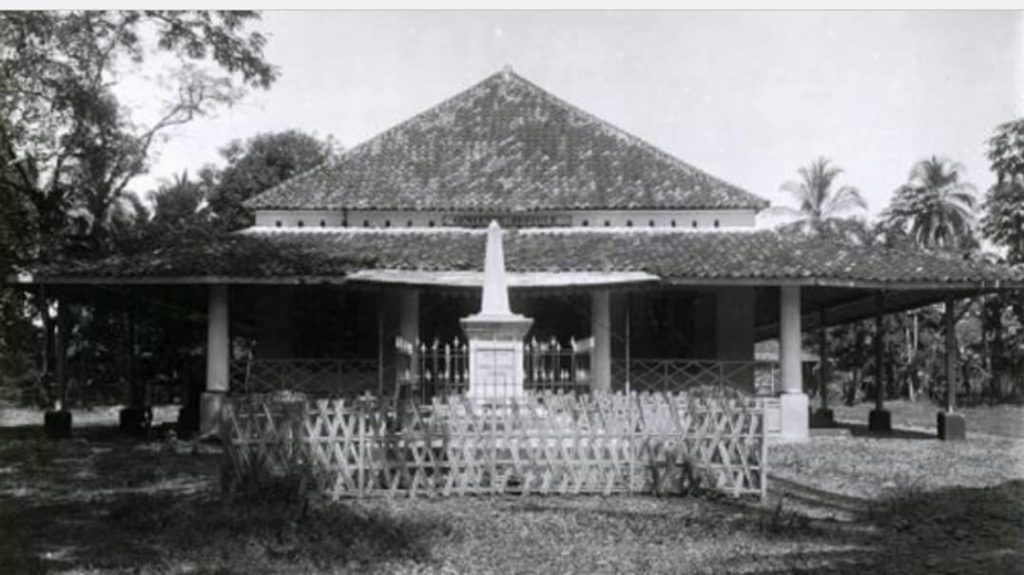
Economically, the territory functioned primarily as a fruit and agricultural producing region, supplying the markets of Batavia. The land was held collectively by the community families designated in Chastelein’s will, meaning that land ownership was restricted to descendants of the original freed families, creating a tightly knit, insular social structure that persisted well into the 20th century.
Official Responses and Geopolitical Implications
The existence of an autonomous entity bearing presidential leadership within the territorial boundaries of the Dutch East Indies presented a unique legal and political anomaly. While the colonial government recognized the property rights of the Depok landowners under the particulier land system—which granted owners extensive police and administrative powers over their tenants—the emergence of an elected "president" occasionally caused friction with Dutch colonial administrators who closely monitored any localized expressions of self-determination.
The culmination of this micro-state’s existence arrived in the wake of Indonesia’s independence struggle. As the newly born Republic of Indonesia consolidated its sovereignty over the entire archipelago, the anomalous status of private lands (particulier landen) became increasingly untenable. In 1952, facing intense socio-political pressures and the broader national integration movement led by the Indonesian central government, the final president of Depok, Johannes Matjis Jonathans, formally signed the deed of transfer. This legal act dissolved the Gemeente Bestuur, relinquishing administrative control of the land to the Indonesian state.
Broader Impact and Historical Legacy
Today, the legacy of the "Republic of Depok" serves as a fascinating case study in colonial-era legal pluralism, social engineering, and early democratic experimentation in Southeast Asia. While contemporary Depok has evolved into a densely populated, modern urban center housing major educational institutions like the University of Indonesia, physical and cultural reminders of its past endure.
Historical landmarks, such as the Cornelis Chastelein Foundation buildings, heritage houses reflecting 18th-century European-Indonesian architectural styles, and the original family archives, continue to attract historians, researchers, and cultural tourists. Ultimately, while modern municipal Depok celebrated its relatively young administrative age as a kotamadya, its historical roots stretch back over three centuries, recounting a time when a small community in the tropical lowlands of Java quietly experimented with the ideals of a republic.