Bambang Pamungkas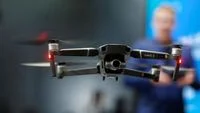
The strategic rivalry between the United States and China has intensified dramatically, extending deeply into the realm of military technology, with Beijing reportedly achieving a significant lead in drone dominance. This assertion, underscored by defense analysts and industry experts, posits that China has effectively "won World War III" in the drone sector, a development with profound implications for global security and the future of warfare. The stark reality of this technological disparity has been laid bare on battlefields from Eastern Europe to the Middle East, compelling Washington to initiate aggressive counter-measures to re-establish its competitive edge.
The revelation of Chinese components—ranging from batteries and motors to sophisticated microchips—in drones recovered from the Ukrainian conflict zones served as a critical wake-up call. This widespread presence indicated not only China’s robust manufacturing capabilities but also its deep integration into global supply chains for critical defense technologies, even those ostensibly used by adversaries or proxies. Furthermore, analysts have speculated on China’s potential indirect role in recent conflicts, such as the confrontations involving Iran, Israel, and the United States, suggesting that Iranian unmanned aerial vehicles (UAVs) may also incorporate significant Chinese-made parts. While the precise extent of China’s assistance to Iran’s drone program remains unconfirmed, defense experts suggest the control and supply chain dynamics are likely analogous to those observed in the Russia-Ukraine war, where commercially available Chinese drone technology has been adapted for military purposes.
"China has already won World War III because everything is in their hands. No one is able to change that in the short term, or even the long term," asserted Udav, a drone specialist from Bulava, in an interview with the Wall Street Journal on May 3, 2026. This stark pronouncement encapsulates the growing anxiety within Western defense circles regarding China’s pervasive influence over the drone industry. The sentiment reflects not just a recognition of China’s current lead but a deep-seated concern about the structural challenges the United States faces in reversing this trend. The implications extend beyond mere technological superiority, touching upon national security, economic resilience, and the very nature of future conflicts.
China’s Unrivaled Production Prowess and Dual-Use Strategy
China’s ascendancy in the drone sector is fundamentally rooted in its unparalleled manufacturing capacity and cost efficiency. The nation has cultivated an ecosystem where drone production can occur at massive scale and significantly lower prices compared to Western counterparts. This industrial advantage is largely driven by China’s extensive commercial drone market, dominated by giants like DJI, which manufactures drones for a diverse clientele including content creators, real estate agencies, factory inspectors, and even US police and fire departments. This dual-use strategy allows Chinese manufacturers to benefit from economies of scale derived from civilian demand, which in turn subsidizes and refines the technology that can be readily adapted for military applications.
The sheer volume of production means that Chinese companies can iterate designs faster, integrate new technologies more quickly, and flood the market with affordable options. For instance, a basic quadcopter manufactured in the United States can cost upwards of US$15,000, a price tag three times higher than a functionally equivalent drone produced in China. This vast cost differential is a critical factor in modern warfare, where attrition rates for drones are high, and the ability to deploy thousands of inexpensive, expendable systems can overwhelm a technologically superior but cost-prohibitive adversary. The global drone market, projected to reach over US$58 billion by 2026, with significant contributions from the Asia-Pacific region, further solidifies China’s entrenched position.
The Battlefield as a Proving Ground: Ukraine and Beyond
The conflict in Ukraine has served as an unprecedented proving ground for drone technology, highlighting the effectiveness of mass-produced, commercially derived UAVs in reconnaissance, targeting, and even direct attack roles. Both sides of the conflict have extensively utilized drones, from small, off-the-shelf quadcopters adapted for grenade drops to more sophisticated fixed-wing systems for long-range surveillance. The discovery of Chinese components in these drones, even those operated by non-Chinese entities, underscores the global reach of China’s supply chain and its pivotal role in enabling modern drone warfare. This reality has forced a re-evaluation of military doctrines and procurement strategies worldwide.
Beyond Ukraine, the specter of Chinese drone technology potentially influencing other geopolitical hotspots, particularly in the Middle East, adds another layer of complexity. The proliferation of affordable and relatively easy-to-operate drones has democratized air power, enabling non-state actors and smaller nations to project force in ways previously unimaginable. If, as analysts suggest, Chinese components are integral to drone fleets used by entities like Iran, it signifies China’s indirect but significant leverage in regional power dynamics, challenging the traditional technological superiority of Western nations.
Washington’s Counter-Offensive: The Drone Dominance Program
Recognizing the urgent need to address this strategic imbalance, the United States is determined not to concede the drone battle. Washington has initiated concerted efforts to break China’s dominance in the industry. Defense Secretary Pete Hegseth has spearheaded the "Drone Dominance" program, a substantial initiative backed by US$1.1 billion in funding. The primary objectives of this ambitious project are twofold: to significantly boost domestic drone production and to simultaneously drive down manufacturing costs through agreements to purchase a greater volume of drones from US-based suppliers. This program aims to cultivate a robust and resilient American drone industrial base, reducing reliance on foreign supply chains, particularly from potential adversaries.
The Drone Dominance program is not merely about producing more drones; it is a holistic strategy to foster innovation, streamline procurement, and create a sustainable ecosystem for drone development and manufacturing within the United States. It involves incentivizing research and development, supporting small and medium-sized enterprises, and establishing clear pathways for military adoption of domestically produced UAVs. The underlying philosophy is to replicate, in part, the commercial-to-military synergy that has propelled China’s drone industry, but within a secure, domestic framework.
Hurdles to American Resurgence: Cost, Scale, and Supply Chains
Despite the significant investment and strategic intent behind the Drone Dominance program, overcoming China’s entrenched lead presents formidable challenges. As the Wall Street Journal noted, China’s competitive advantage lies squarely in its ability to achieve immense production scale at remarkably low prices. This cost disparity is a persistent barrier. While the Pentagon can commit to large orders, matching the price points of Chinese manufacturers without compromising quality or domestic labor standards remains a complex economic puzzle.
A particularly critical challenge lies in breaking China’s dominance over key components, especially batteries and motors. China controls a substantial portion of the global supply chain for rare earth minerals, which are essential for high-performance magnets used in electric motors, and dominates the processing and manufacturing of lithium-ion batteries. The previous administration under Donald Trump initiated efforts to address this vulnerability, investing billions of dollars into local companies to stimulate domestic mineral extraction and processing. However, experts caution that building such complex industrial infrastructure from the ground up, capable of mass production, is a monumental undertaking that could take a decade or more to yield significant results. This long lead time exposes the US to continued reliance on external, potentially adversarial, supply chains in the interim.
Rebuilding the Industrial Base: A Decade-Long Endeavor?
The effort to re-establish a comprehensive domestic drone industrial base is not just about technology; it’s about industrial policy, infrastructure, and workforce development. The United States has largely outsourced its manufacturing capabilities over decades, leading to a diminished industrial capacity in many sectors, including critical components for advanced technologies. Reversing this trend requires sustained political will, significant financial investment, and a coordinated national strategy. It involves cultivating a new generation of engineers, technicians, and skilled laborers, as well as fostering innovation from academic institutions to private industry. The timeframe of "a decade or more" for meaningful self-sufficiency underscores the depth of the challenge and the long-term commitment required. This timeline also carries inherent risks, as geopolitical landscapes and technological paradigms can shift dramatically within such a period.
Beyond Military: The Commercial Ecosystem Gap
Another critical aspect contributing to China’s drone dominance is the stark contrast in market demand patterns between the two nations. While US drone companies primarily cater to military contracts, limiting their market size and production volumes, Chinese tech giants like DJI thrive on a vastly diversified commercial client base. DJI’s drones are ubiquitous, serving everyone from professional cinematographers and agricultural surveyors to real estate agents and infrastructure inspectors. This broad commercial adoption drives immense economies of scale, fosters rapid innovation cycles, and creates a robust talent pool. The continuous refinement and cost reduction achieved through mass commercial production can then be readily adapted and leveraged for military applications, often at a fraction of the cost and development time required for purely defense-focused programs.
The US military’s procurement process, often characterized by bespoke solutions, stringent requirements, and lengthy development cycles, inadvertently hinders the kind of rapid innovation and cost-efficiency seen in the commercial sector. To address this, the Pentagon’s Drone Dominance program is explicitly attempting to stimulate growth in the domestic supply chain by promising to purchase 340,000 FPV (First-Person View) drones. This commitment aims to provide US manufacturers with the guaranteed demand necessary to scale production, invest in R&D, and bring down per-unit costs, mimicking the commercial demand drivers that have benefited Chinese companies.
Expert Perspectives and the Pace of Change
Trent Emeneker, a former supply chain expert at the Pentagon’s Defense Innovation Unit, acknowledges that the efforts being undertaken are moving in the right direction. However, he candidly admits that the pace of change is "quite slow." His assessment highlights the inherent difficulty in this endeavor: "It’s difficult because you have to recreate an industry that already exists, with high quality and low cost." This statement encapsulates the core paradox facing the United States – not only must it rebuild capabilities, but it must do so in a manner that can compete with an already mature, efficient, and cost-effective global leader.
The challenge is multi-faceted, encompassing not just manufacturing prowess but also raw material sourcing, battery technology, software development, artificial intelligence integration, and skilled labor. Experts emphasize that a truly competitive domestic drone industry requires more than just military contracts; it needs a vibrant ecosystem of innovation, private investment, and a streamlined regulatory environment that allows for rapid development and deployment of new technologies. The current bureaucratic hurdles and fragmented approaches risk further widening the gap.
The Broader Geopolitical Chessboard
The drone rivalry is not an isolated competition but an integral part of the broader geopolitical and technological contest between the United States and China. This struggle encompasses critical areas such as artificial intelligence, advanced semiconductors, 5G technology, and quantum computing. China’s "Made in China 2025" initiative explicitly outlines its ambition to achieve self-sufficiency and global leadership in key high-tech sectors, including robotics and aerospace equipment, where drones play a significant role.
The implications of China’s drone dominance extend to national security, redefining future military strategies and potentially shifting the balance of power in contested regions. The ability to deploy vast numbers of autonomous or semi-autonomous drones, whether for surveillance, attack, or swarm tactics, fundamentally alters the calculus of conflict. For the United States and its allies, this necessitates not only technological catch-up but also the development of new doctrines for defending against such threats and integrating counter-drone capabilities into every aspect of military planning. Economically, this competition impacts industrial policy, trade relations, and the resilience of global supply chains.
Future Outlook and Policy Imperatives
As of 2026, the United States is at a critical juncture in its efforts to regain a competitive edge in the drone industry. The $1.1 billion Drone Dominance program represents a significant commitment, but its success will hinge on sustained political will, effective execution, and an adaptive strategy that can respond to China’s continuous advancements. The long-term outlook requires a comprehensive approach that transcends military procurement to foster a national ecosystem of innovation, from raw materials to finished products, and from commercial applications to cutting-edge defense systems.
Policy imperatives include diversifying rare earth and battery supply chains away from China, investing heavily in advanced manufacturing techniques, nurturing a skilled workforce, and streamlining the process by which innovative commercial technologies can be rapidly adopted for defense purposes. Furthermore, international collaboration with allies who share similar concerns about supply chain vulnerabilities and technological dependencies could prove crucial in building a resilient, collective defense industrial base. The drone competition is a marathon, not a sprint, and the ability of the United States to adapt and innovate will ultimately determine its standing in this pivotal dimension of modern power projection. The future of warfare, and indeed global stability, may well depend on the outcomes of this intense technological rivalry.