Nila Kartika Wati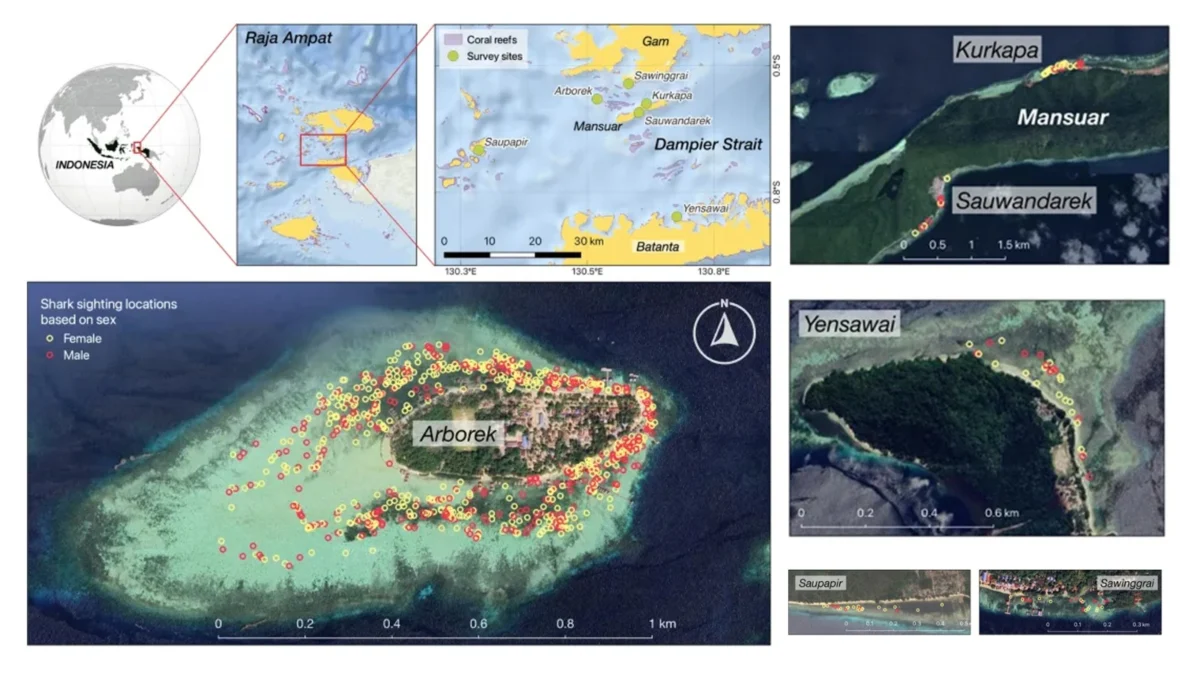
The Raja Ampat archipelago in West Papua, Indonesia, has long been celebrated as the global epicenter of marine biodiversity, but recent scientific findings have brought a specific, charismatic resident into the international spotlight. The walking shark species Hemiscyllium freycineti, an endemic elasmobranch found primarily in the waters of the Dampier Strait, has been recorded at a population density of 2,462 individuals per square kilometer. This figure, documented in the waters near Kampung Sawinggrai on Gam Island, represents the highest population density ever recorded for any species within the Hemiscyllium genus. Lead conservation scientist Edy Setyawan from the Elasmobranch Institute Indonesia confirmed that this discovery not only underscores the biological richness of the region but also serves as a critical indicator of the health of the local coral reef ecosystems.
The findings are the result of an exhaustive 14-month study published in the international peer-reviewed journal Frontiers in Fish Science. The research provides a comprehensive look into the biology, population structure, and spatial ecology of a species that, while fully protected under Indonesian law, has remained relatively mysterious to the scientific community until now. The study emphasizes the pivotal role of coral reefs as "nursery" habitats for the species, a discovery that carries significant implications for future conservation strategies in the Bird’s Head Seascape.
Methodology and Research Chronology
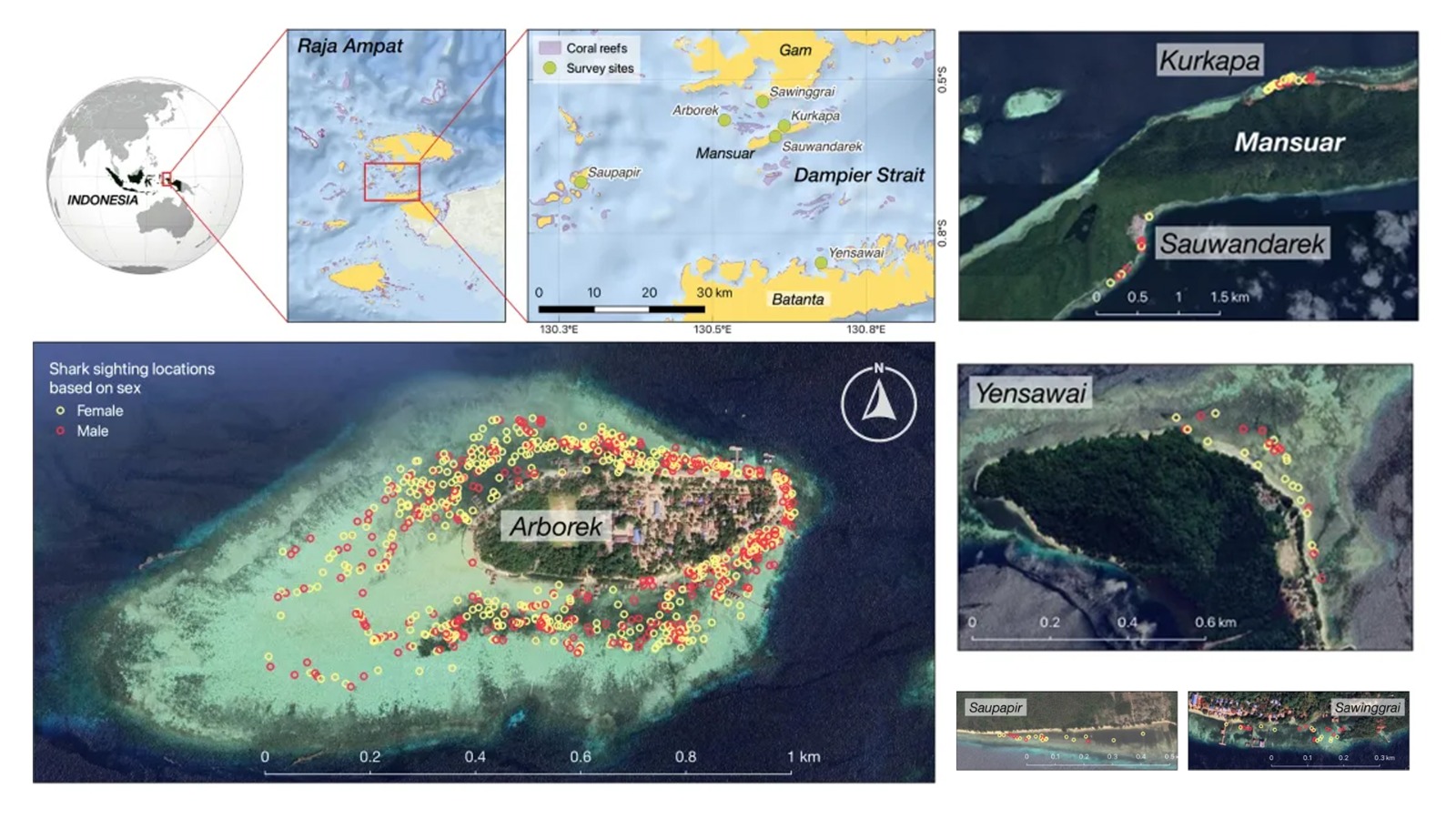
The research project was a collaborative effort involving the Elasmobranch Institute Indonesia, the Regional Technical Service Unit (BLUD UPTD) for the Management of Marine Protected Areas in Raja Ampat, Konservasi Indonesia, the local community of Arborek, and the international conservation organization Re:wild. To gather the necessary data, the research team conducted a total of 64 night surveys between February 2024 and April 2025. These surveys were strategically distributed across six key locations, including the islands of Arborek, Gam, Fam, Mansuar, and Batanta.
The team employed a combination of non-invasive and high-tech monitoring techniques. Using photo-identification and Passive Integrated Transponder (PIT) tagging—a method similar to microchipping domestic pets—the researchers were able to track individual sharks over time. Out of 1,191 total sightings during the study period, the team successfully identified 736 unique individuals. This granular level of data allowed the scientists to analyze the demographic makeup of the population with unprecedented accuracy.
The demographic data revealed a population dominated by females, with 415 unique female individuals identified. The sizes of the sharks observed ranged from 19.4 centimeters to 75 centimeters in length. This size distribution provided essential clues regarding the life stages present in the Dampier Strait and how different age groups utilize the marine environment.
The Life Cycle and Habitat Specialization
One of the most significant revelations of the study is the distinct habitat preference exhibited by Hemiscyllium freycineti at different stages of its life. The data indicates that approximately 69 percent of juvenile walking sharks reside exclusively within coral reef structures. These reefs provide essential protection from predators and a steady supply of small prey, acting as a vital nursery for the young sharks.

As the sharks transition into adulthood, their ecological footprint expands and shifts. Adult individuals were more frequently found in seagrass beds and sandy substrates. Interestingly, the study found that even as they mature, these sharks remain remarkably sedentary. The maximum recorded movement for an individual shark during the study was a mere 475 meters. Furthermore, the research team found no evidence of individuals migrating between islands.
This high degree of site fidelity makes the walking shark exceptionally vulnerable to localized environmental disturbances. Because they do not—or cannot—cross deep-water channels (typically avoiding depths between 50 and 100 meters), a population on one island cannot easily recolonize another if its local habitat is destroyed. This geographic isolation is a double-edged sword: it has driven the evolution of unique species across the Indonesian archipelago, but it also means that local extinction is a very real threat if specific reefs are degraded.
Evolutionary Context and Unique Biology
The Hemiscyllium freycineti, often referred to as the Indonesian speckled carpet shark or the Raja Ampat walking shark, is a testament to the rapid evolutionary processes occurring in the region. Scientific analysis suggests that this species is one of the most recently evolved sharks on the planet. It diverged from its closest relative, Hemiscyllium galei (the Cendrawasih walking shark found in Cendrawasih Bay), approximately two million years ago.
Unlike most sharks that rely on powerful tail movements to swim through the water column, the walking shark has adapted to life on the seafloor. It uses its muscular pectoral and pelvic fins to "walk" across the substrate, a movement that allows it to navigate tight crevices in the reef and shallow tidal pools where larger predators cannot reach. While they are capable of swimming, walking is their primary mode of locomotion, especially when hunting.
As nocturnal hunters, these sharks become active after sunset, scouring the reef and seagrass for their primary prey: small snails, crabs, and polychaete worms. Their presence in such high densities suggests a highly productive ecosystem capable of supporting a large number of low-level predators.
Legal Protection and Conservation Challenges
In response to the unique status of these animals, the Indonesian government enacted the Minister of Marine Affairs and Fisheries Decree No. 30 of 2023, which grants full protection to all species within the Hemiscyllium genus. This legal framework is a vital first step, but as Edy Setyawan notes, policy on paper must be matched by effective management on the ground.
In 2021, the International Union for Conservation of Nature (IUCN) listed Hemiscyllium freycineti as "Near Threatened." This classification was based on the species’ limited geographic range and the increasing pressure from anthropogenic activities. The recent study by Setyawan and his colleagues provides the baseline data needed to move from general protection to targeted, science-based conservation.
Mochamad Iqbal Herwata Putra, Focal Species Senior Manager at Konservasi Indonesia, emphasized that the goal is to ensure the species does not just survive but thrives alongside human activity. "With a scientific basis, we can create a roadmap where the walking shark can coexist with the burgeoning tourism industry and local development," he stated.
Threats: Tourism, Development, and Climate Change
Despite their protected status, walking sharks face a trifecta of modern threats. The first is the rapid and often unregulated expansion of tourism in Raja Ampat. The Dampier Strait is the heart of the region’s marine tourism industry, with Arborek and Sauwandarek serving as major hubs for homestays and diving resorts. While ecotourism provides economic benefits to local communities, the construction of jetties, coastal resorts, and increased boat traffic can lead to the direct degradation of the shallow-water habitats that walking sharks rely on.
Coastal development often leads to sedimentation and the physical destruction of seagrass beds and fringing reefs. For a species that rarely moves more than a few hundred meters in its lifetime, the loss of a single stretch of reef can be catastrophic for a local sub-population.
Beyond local development, the global threat of climate change looms large. The study warns that marine heatwaves—periods of abnormally high sea surface temperatures—are becoming more frequent and intense. For walking sharks, these temperature spikes are particularly dangerous. Elevated water temperatures can stunt growth rates and significantly increase mortality, particularly among juveniles in shallow nursery areas where water temperatures can fluctuate more wildly than in the deep ocean.
A Benchmark for Future Monitoring
The documentation of 2,462 individuals per square kilometer serves as a critical benchmark for marine biologists. It represents the "gold standard" for what a healthy walking shark population looks like in a pristine or well-managed environment. Moving forward, this data will be used to monitor the health of Raja Ampat’s marine ecosystems. A decline in these numbers would serve as an early warning sign of habitat degradation or broader ecological imbalance.
The success of the Hemiscyllium freycineti in Raja Ampat is inextricably linked to the continued health of its coral reefs. The study makes it clear that protecting the sharks requires protecting the reefs first. By focusing on the "nursery" habitats of the Dampier Strait, conservationists hope to secure the future of the world’s most unique "walking" inhabitants. As Raja Ampat continues to navigate the balance between economic development and environmental stewardship, the walking shark remains a symbol of both the region’s incredible biological heritage and its profound vulnerability.