Nila Kartika Wati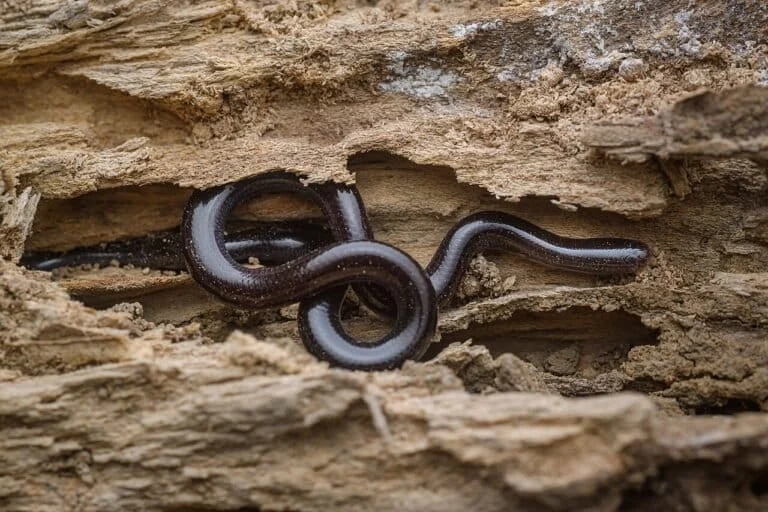
The Brahminy blind snake, scientifically known as Indotyphlops braminus, stands as a biological anomaly in a world where nearly 3,900 identified snake species rely on the traditional pairing of males and females to ensure the survival of their lineage. This diminutive serpent, often mistaken for a common earthworm by the untrained eye, has long intrigued the scientific community due to its status as the only known snake species comprised entirely of females. Recent advancements in genomic sequencing have provided a deeper look into the evolutionary mechanics of this creature, confirming that its existence is not merely a quirk of nature but a masterclass in reproductive efficiency and survival. While its appearance and subterranean lifestyle may seem unremarkable, the Brahminy blind snake represents a unique branch of vertebrate evolution, thriving through a process known as obligate parthenogenesis.
Despite its widespread distribution across the globe, the Brahminy blind snake remains largely harmless to humans. It possesses no venom and lacks the dental structure necessary to puncture human skin, often spending its entire life cycle beneath the soil or within the root systems of tropical plants. However, its innocuous nature belies a complex genetic history that has allowed it to become one of the most successful invasive species in the world. By bypassing the need for a mate, a single individual can establish a new colony in a foreign environment, a feat that has enabled the species to colonize nearly every continent except Antarctica.
The Genomic Breakthrough: Mapping the All-Female Lineage
The scientific understanding of Indotyphlops braminus reached a milestone with the publication of a comprehensive genome study in the journal Scientific Data, a subset of the Nature publishing group. Led by researcher T. Kadobe and a team of international scientists, the study provided the first draft genome sequence of the species. This mapping is particularly significant because the Brahminy blind snake belongs to the Scolecophidia group, an ancient and primitive lineage of snakes that has historically been underrepresented in genomic research.
The results of the study confirmed what herpetologists had long suspected: Indotyphlops braminus is the only snake species known to reproduce exclusively through obligate parthenogenesis. In this reproductive mode, adult females produce eggs that develop into offspring without the requirement of sperm for fertilization. Consequently, every hatchling is essentially a genetic clone of its mother. The research team noted that in decades of field observations and captive studies, a male Brahminy blind snake has never been documented. This absence of males is not a seasonal or environmental occurrence but a permanent characteristic of the species’ biology.
The genome mapping also shed light on the snake’s "allotriploid" nature. Unlike most animals, which are diploid (possessing two sets of chromosomes), the Brahminy blind snake possesses three sets. This triploidy is believed to have originated from a historical hybridization event between two different ancestral species. In many cases of vertebrate parthenogenesis, such as those found in certain whiptail lizards, the "accidental" merging of two species creates a lineage that can no longer produce viable male offspring but retains the ability to replicate its own genetic material through the female line.
Evolutionary Origins and the "Flowerpot" Phenomenon
The Brahminy blind snake is thought to be native to South Asia, particularly the Indian subcontinent, where it evolved to inhabit the humid, nutrient-rich soils of the tropics. However, its modern distribution is a testament to the unintended consequences of global trade. Because the snake frequently inhabits the soil within decorative plant pots and among the roots of nursery stock, it has earned the nickname "the flowerpot snake."
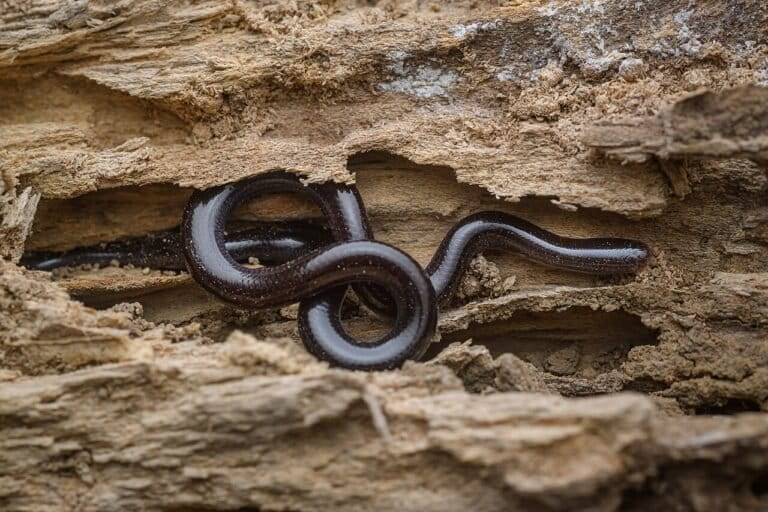
For centuries, as humans moved plants across oceans and borders, the Brahminy blind snake traveled as a stowaway. Its small size—generally ranging from 5 to 10 centimeters, with rare individuals reaching 15 centimeters—makes it easy to overlook. Furthermore, its ability to reproduce through a single individual means that a lone female accidentally transported in a shipment of hibiscus or palms can become the matriarch of an entire regional population.
Chronologically, the spread of the species followed major colonial trade routes. By the 19th and 20th centuries, it had established firm roots in Florida, Hawaii, Australia, and various parts of Africa and South America. In many of these regions, it is considered an invasive species, though it is rarely viewed as a threat to local ecosystems. Unlike larger invasive snakes, such as the Burmese python in the Everglades, the Brahminy blind snake occupies a niche that does not significantly disrupt the local food web.
Anatomical Adaptations to a Subterranean Life
To understand the Brahminy blind snake, one must look beyond its reproductive habits and examine its specialized anatomy. Belonging to the infraorder Scolecophidia, these snakes are often referred to as "primitive" because they retain features that more modern snakes have lost or modified over millions of years.
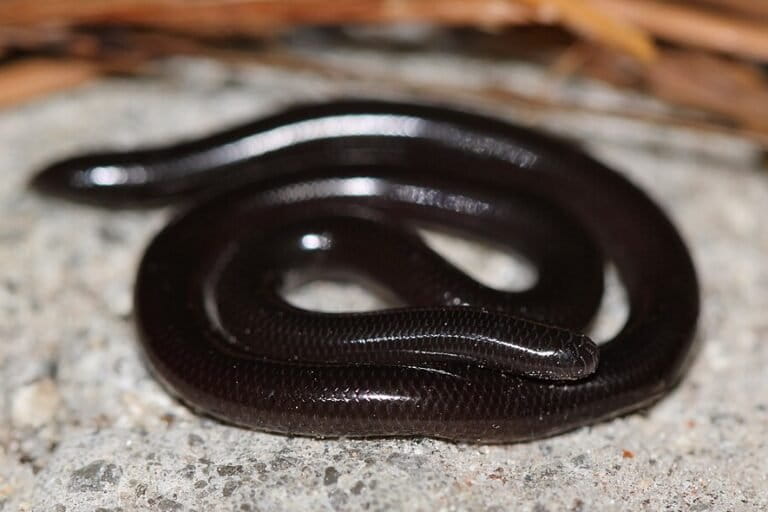
The most striking feature of Indotyphlops braminus is its eyes. Living a life almost entirely underground, the snake has little need for high-resolution vision. Its eyes are reduced to small, light-sensitive spots covered by protective translucent scales. This adaptation prevents soil and grit from damaging the eyes while the snake tunnels through the earth. Its scales are exceptionally smooth and shiny, a trait that reduces friction as it moves through tight spaces.
The snake’s head and tail are often difficult to distinguish at first glance, as both are rounded and blunt. This morphology is an adaptation for digging; the snake uses its reinforced skull to push through loose soil and leaf litter. Its diet consists almost exclusively of the eggs, larvae, and pupae of ants and termites. By following the pheromone trails of these insects, the snake can locate nests and consume vast quantities of prey, acting as a natural form of pest control in many gardens.
Scientific Implications and Ecological Analysis
The ability of the Brahminy blind snake to thrive as a clone-based population challenges several long-held theories in evolutionary biology. Traditionally, sexual reproduction is viewed as superior because it introduces genetic diversity, allowing a species to adapt to changing environments or resist new diseases. A population of clones is, in theory, highly vulnerable; if a single virus can kill one individual, it could potentially wipe out the entire genetically identical population.
However, the Brahminy blind snake has defied these odds for millennia. Some scientists suggest that its triploid genome may provide a "buffer" against harmful mutations. Others point to the snake’s incredibly stable environment—the underground world—as a reason for its success. In the relatively consistent temperature and humidity of the soil, the need for rapid genetic adaptation may be lower than it is for species living on the surface.
From an ecological perspective, the Brahminy blind snake is a fascinating case study in "benign" invasion. While most invasive species are associated with the extinction of native fauna, Indotyphlops braminus seems to coexist peacefully with local species. Its primary competitors are other small fossorial (burrowing) reptiles and amphibians, but because it feeds on such specific prey—ants and termites—it rarely creates a resource vacuum that harms other animals.
Expert Reactions and Future Research Directions
Herpetologists and evolutionary biologists continue to use the Brahminy blind snake as a model for studying the transition from sexual to asexual reproduction. Dr. Hiroshi Takahashi, a researcher involved in reptilian genetics, noted in a recent symposium that "the Brahminy blind snake is a living laboratory. It allows us to see the long-term viability of parthenogenesis in a vertebrate, something that was once thought to be an evolutionary dead end."
The 2022 Nature study has opened new doors for research. Now that the draft genome is available, scientists can begin to investigate the specific genes that trigger egg development without fertilization. This research has potential implications beyond herpetology, offering insights into the broader mechanics of cellular division and the genetic basis of sex determination in vertebrates.
Furthermore, conservationists are monitoring the species to see if its global spread will eventually lead to "speciation by isolation." Even though they are clones, subtle mutations over thousands of years in different geographic locations—such as the Florida population versus the Australian population—could eventually lead to the emergence of new, distinct species.
Conclusion: A Tiny Giant of the Reptile World
The Brahminy blind snake serves as a reminder that nature often finds unconventional paths to success. While it may lack the size of a python or the lethal strike of a cobra, its unique reproductive strategy and remarkable ability to colonize the globe make it one of the most successful reptiles on the planet. As urbanization and global trade continue to expand, the "flowerpot snake" is likely to continue its journey, quietly tunneling through the soils of new lands, a silent testament to the power of the female lineage.
Through the lens of modern science, Indotyphlops braminus is no longer just a "worm-like snake" but a significant biological marvel. The mapping of its genome is merely the beginning of a new chapter in understanding how life adapts, survives, and flourishes against the traditional odds of biology. As researchers delve deeper into its triploid DNA, the world’s only all-female snake species will undoubtedly continue to yield secrets that challenge our understanding of the natural world.