Nila Kartika Wati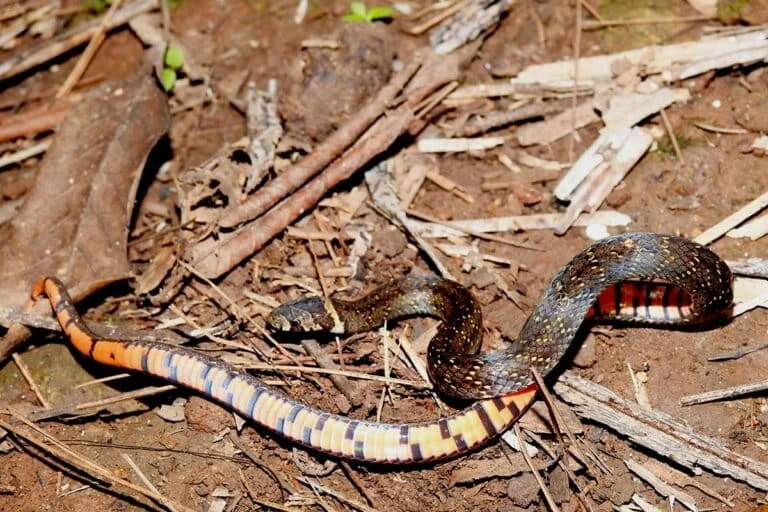
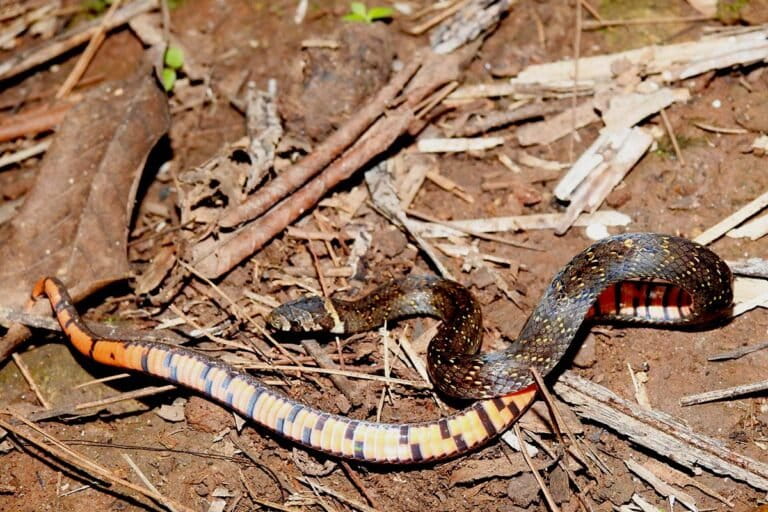
The discovery of the Javanese Mountain Kukri Snake (Oligodon bitorquatus) in the secondary forests of Wonosalam, situated on the slopes of Mount Anjasmoro in Jombang, East Java, has provided significant new data for Indonesian herpetology. This encounter, documented by Muhammad Asyraf Rijalullah, a biologist and independent researcher, marks a rare instance of this elusive species being recorded in a region increasingly pressured by agricultural expansion. While the Javanese Mountain Kukri Snake is not classified as an endangered species by global standards, its presence in the Wonosalam buffer zone serves as a critical indicator of the remaining ecological integrity of the Mount Anjasmoro slopes.
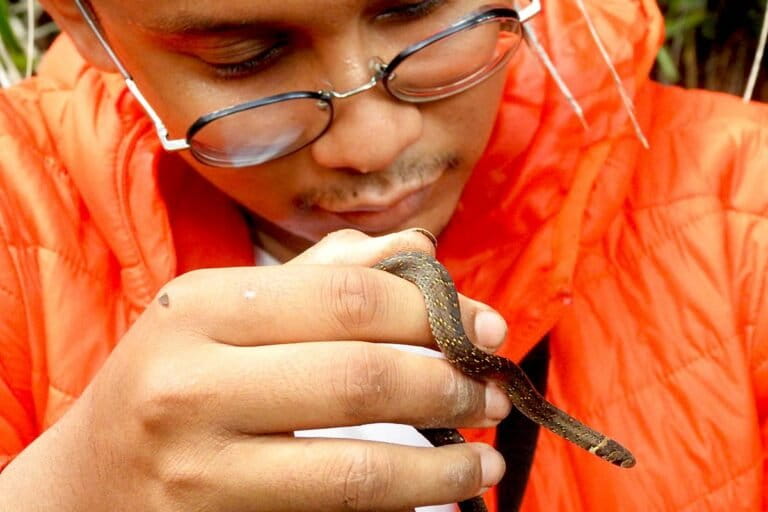
The documentation occurred during a field survey conducted on April 5 and 6, 2026. Asyraf, a Master of Biology graduate from Universitas Brawijaya who has previously collaborated with the Wildlife Conservation Society (WCS) Indonesia, was conducting an initial assessment of the local fauna when he encountered the specimen. The find was unexpected, as the primary goal of the excursion was a general biodiversity check rather than a targeted search for rare reptiles. The resulting data, shared in July 2026, offers a fresh perspective on the distribution and behavioral patterns of a species that remains largely mysterious to the scientific community and the general public alike.
Chronology of the Discovery in Mount Anjasmoro
The field survey began on April 5, 2026, in the rugged terrain of Wonosalam. The initial day of observation yielded standard results, with researchers noting the typical avian and insect life of a secondary forest. The environmental conditions were characterized by moderate humidity—distinct from the high moisture levels found in low-lying tropical rainforests but still conducive to diverse herpetofauna. The team focused on the leaf litter and undergrowth of the forest floor, which serves as the primary habitat for many of Java’s smaller terrestrial reptiles.
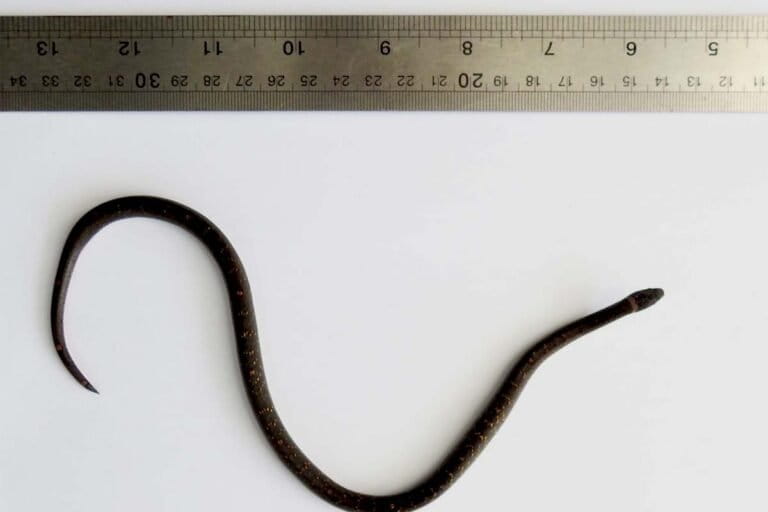
On the second day, April 6, the team prepared to return to their base camp after a morning of trekking through slippery, rain-soaked paths. At approximately 10:00 AM, while descending a slope, Asyraf noticed a slight movement near a piece of fallen timber at the edge of the trail. Upon lifting the wood, he discovered a small, slender snake camouflaged against the decaying organic matter.
Recognizing the potential importance of the find, the team employed professional safety protocols. Despite its small size, the snake’s physical characteristics—specifically its color patterns—initially suggested the possibility of it being a venomous species, such as a member of the coral snake family. Using a snake hook, Asyraf and his colleagues carefully examined the reptile’s head shape, scale patterns, and ventral markings. Once they confirmed it was an Oligodon bitorquatus, a non-venomous member of the Colubridae family, they proceeded with closer documentation and photography.
Biological Profile and the "Kukri" Anatomy
The Javanese Mountain Kukri Snake belongs to the genus Oligodon, a group of snakes found throughout South and Southeast Asia. The name "Kukri" is derived from the traditional, curved Nepalese knife of the same name. This nomenclature refers to the specialized anatomy of the snake’s posterior maxillary teeth. These teeth are broad, flattened, and curved, functioning much like a blade.
This evolutionary adaptation is specifically designed for the snake’s dietary habits. Kukri snakes are specialized egg-eaters, though they also consume small lizards and frogs. The blade-like teeth allow the snake to slit the shells of reptilian or avian eggs, enabling them to consume the contents efficiently. In the case of Oligodon bitorquatus, the species found in Wonosalam, the snake typically displays a modest coloration—usually shades of brown or reddish-grey—which allows it to blend seamlessly into the leaf litter of the forest floor.
One of the most significant aspects of the April discovery was the timing of the encounter. Scientific literature generally classifies the Javanese Mountain Kukri Snake as a crepuscular animal, meaning it is most active during the twilight hours of dawn and dusk. However, the Wonosalam specimen was found active in the mid-morning, around 10:00 AM. This suggests that the species may have more flexible activity patterns than previously recorded, or that local environmental factors, such as the previous night’s rainfall and the resulting temperature shifts, prompted unusual diurnal movement.
Ecological Significance of the Wonosalam Habitat
The location of the find is ecologically strategic. According to Agus Nurrofik, a researcher with the Research and Development division of Sahabat Alam Indonesia, the snake was found in a buffer zone that separates production forests from protected forest areas. This region sits adjacent to the Tahura (Grand Forest Park) Raden Soerjo, a major conservation area on the slopes of Mount Anjasmoro.
The vegetation in this specific sector of Wonosalam is a mix of natural and managed forest. Dominant species include the Sumatran pine (Pinus merkusii) and Eucalyptus, interspersed with native mountain trees that form a relatively dense canopy. This structure provides a cool, shaded environment with a thick layer of leaf litter, which is essential for the survival of terrestrial snakes like the Kukri. The presence of nearby streams further enhances the microclimate, supporting a food web that includes the various small animals and eggs that the Kukri snake relies on for sustenance.
The fact that a specialized predator like the Javanese Mountain Kukri Snake is still present in Wonosalam suggests that the ecosystem remains functional. However, researchers warn that this balance is fragile. The IUCN Red List currently classifies Oligodon bitorquatus as "Least Concern," but this status often masks the localized threats facing specific populations. In Java, where habitat fragmentation is extreme, the loss of even small pockets of secondary forest can lead to the local extinction of specialized species.
Threats from Land-Use Change and Agroforestry
Despite the positive news of the discovery, environmentalists are raising alarms regarding the rapid transformation of the Wonosalam landscape. In recent years, the region has seen a significant shift from natural secondary forest to agricultural use. The expansion of agroforestry—while economically beneficial for local communities—often results in the removal of the understory and leaf litter that reptiles require for nesting and hunting.
Agus Nurrofik noted that large swaths of the Anjasmoro slopes are being converted into coffee and citrus plantations. While coffee trees can provide some canopy cover, the intensive management of these lands often involves the removal of "pest" species and the use of chemical fertilizers or pesticides, which can decimate the insect and amphibian populations that form the base of the food chain.
"The expansion of agroforestry is the most visible threat at the moment," Nurrofik stated. He emphasized that as the forest floor is cleared for crops, the Javanese Mountain Kukri Snake loses its primary camouflage and hunting grounds. Furthermore, increased human-wildlife interaction in agricultural zones often leads to the unnecessary killing of snakes due to a lack of public knowledge regarding which species are actually dangerous.
Implications for Conservation and Local Engagement
The documentation of the Javanese Mountain Kukri Snake is being used as a catalyst for broader conservation efforts in Jombang. Researchers believe that by highlighting "charismatic" or unique small species, they can foster a sense of pride and stewardship among the local population. The goal is to move beyond purely academic data and integrate these findings into community-based education.
Sahabat Alam Indonesia and other local groups are advocating for a model of "nature-based ecotourism" and sustainable farming. By educating coffee farmers and local residents about the biodiversity in their backyards, conservationists hope to create a landscape where agriculture and wildlife can coexist. For instance, snakes like the Kukri play a role in controlling populations of small rodents and other animals that might otherwise become agricultural pests.
The data collected by Asyraf and the team will contribute to a comprehensive biodiversity profile of Wonosalam. This profile aims to map the presence of herpetofauna, butterflies, dragonflies, and other indicator species to provide a clearer picture of the region’s health. This information is vital for local government planning, potentially leading to more stringent protections for the remaining forest corridors that connect Mount Anjasmoro to the wider volcanic complex of East Java.
Conclusion: A Call for Continued Research
The encounter with the Javanese Mountain Kukri Snake in April 2026 serves as a reminder of how much remains to be learned about Indonesia’s endemic wildlife. Even on the island of Java, one of the most densely populated and thoroughly studied islands in the world, new behavioral data and distribution records continue to emerge.
For Muhammad Asyraf Rijalullah, the find was a professional milestone that underscores the importance of field-based research. "I always assume that every snake I encounter is potentially dangerous until its identity is confirmed," he reflected, highlighting the caution required in herpetological work. However, once the identity was established, the encounter became an opportunity to study a master of camouflage in its natural element.
The survival of the Javanese Mountain Kukri Snake in Wonosalam is inextricably linked to the preservation of the Mount Anjasmoro forests. As land-use pressures continue to mount, the documentation of such species provides the scientific evidence needed to argue for the protection of these vital ecosystems. Without a concerted effort to balance economic development with habitat preservation, the unique "blade-toothed" snake of Java’s mountains may find itself with nowhere left to hide.