Azin Asro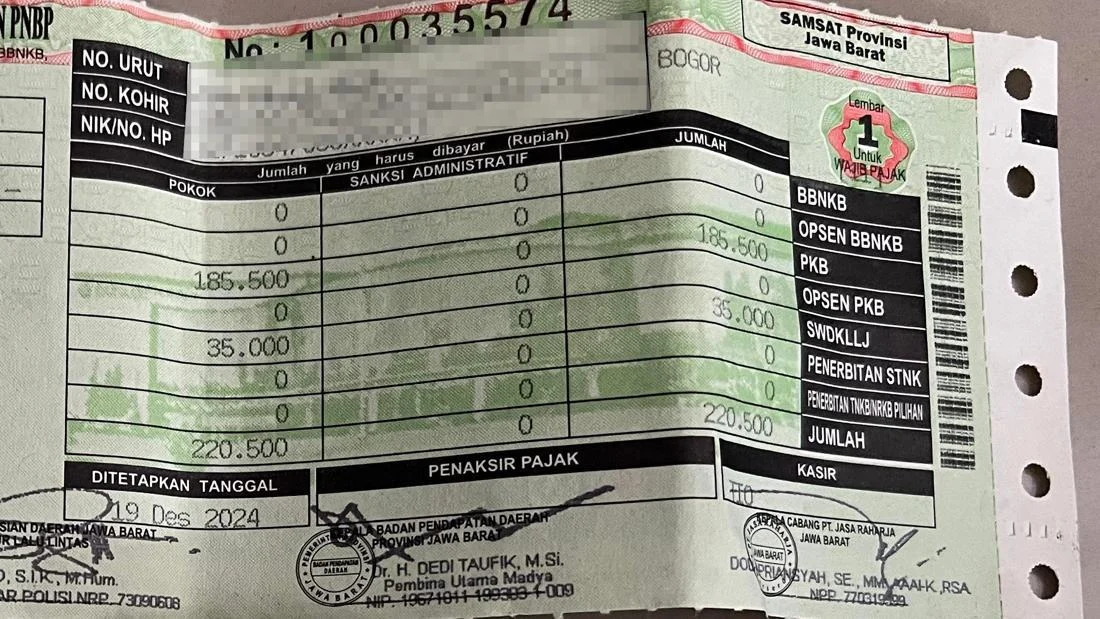
The annual obligation of paying Motor Vehicle Tax (Pajak Kendaraan Bermotor or PKB) has long been a significant financial milestone for vehicle owners across Indonesia, often requiring a substantial lump-sum payment that can strain household budgets. Recognizing this economic pressure, the West Java Regional Revenue Agency (Bapenda Jawa Barat), in a strategic partnership with Bank BJB, has introduced a transformative financial solution known as T-Samsat. This initiative represents a paradigm shift in public service delivery, allowing taxpayers to manage their obligations through a disciplined, periodic saving mechanism that utilizes an automated debit system. By integrating financial technology with tax administration, the provincial government aims to enhance tax compliance while providing a safety net for citizens’ cash flow management.
The T-Samsat service, short for "Tabungan Samsat" or Samsat Savings, is specifically designed to alleviate the "sticker shock" often associated with the expiration of vehicle registration. Under the traditional system, owners are required to pay the full amount of their annual tax at the time of their STNK (Surat Tanda Nomor Kendaraan) renewal. For many, especially those in the middle-to-lower income brackets or those managing multiple vehicles, this annual expense can coincide with other major costs, such as school fees or holiday expenditures. T-Samsat addresses this by allowing nasabah (customers) of Bank BJB to set aside funds gradually throughout the year. These funds are then automatically debited by the system exactly when the tax falls due, ensuring that the vehicle’s legal status remains current without the owner needing to visit a physical office for the payment process.
The Evolution of Samsat Services in Indonesia
To understand the significance of T-Samsat, one must look at the historical trajectory of vehicle registration services in Indonesia. The Samsat system, which stands for Sistem Administrasi Manunggal Satu Atap (One-Roof Integrated Administration System), was established to bring together three different institutions: the National Police (Polri) for registration, the Regional Revenue Agency (Bapenda) for tax collection, and PT Jasa Raharja for compulsory insurance. Historically, paying vehicle taxes was a cumbersome process involving long queues, multiple counters, and significant time investment.
Over the last decade, West Java has been a pioneer in digitalizing these services. The journey began with the introduction of "Samsat Keliling" (Mobile Samsat) vans, followed by the "E-Samsat" application, which allowed for ATM-based payments. Later, the "Sambara" app (Samsat Mobile Jawa Barat) further streamlined the process by providing digital tax assessments. T-Samsat represents the latest stage of this evolution—moving from "easier payment" to "planned payment." It transitions the responsibility of fund management from the individual to an automated system, reducing the risk of late fees and the psychological burden of debt.
Technical Mechanisms: Periodic vs. Lump-Sum Blocking
The T-Samsat service offers flexibility through two distinct payment mechanisms tailored to the varying financial capabilities of the public. The first option is "Periodic Blocking" (Blokir Secara Berkala). In this mode, the system functions as a dedicated savings plan. A predetermined amount is deducted from the customer’s Bank BJB account on a monthly or periodic basis. These funds are "blocked" or reserved specifically for the tax payment. By the time the tax due date arrives, the accumulated balance covers the total bill, and the system executes the payment automatically. This is particularly beneficial for salaried workers who prefer to treat their vehicle tax as a monthly utility bill rather than an annual debt.
The second option is "Lump-Sum Blocking" (Blokir Sekaligus). This is aimed at individuals who may already have the necessary funds but wish to ensure they are not accidentally spent before the tax deadline. The customer can authorize the bank to reserve the total tax amount in their account. Once the maturity date is reached, the system pulls the funds and processes the transaction with the Samsat database. Both methods are linked in real-time to the West Java Samsat servers, ensuring that the payment is recorded instantly and accurately.
Strategic Significance for West Java’s Economy
West Java is the most populous province in Indonesia, with a population exceeding 50 million people. Consequently, it boasts one of the highest densities of motor vehicles in the country. Data from the Central Statistics Agency (BPS) and regional reports indicate that there are millions of active vehicles in the province, ranging from motorcycles in rural areas to luxury cars in urban centers like Bandung and Bekasi. Motor Vehicle Tax (PKB) constitutes a vital pillar of the Regional Original Income (Pendapatan Asli Daerah or PAD), which funds infrastructure, healthcare, and education within the province.
However, tax non-compliance remains a challenge. Many vehicle owners fail to pay their taxes not out of a refusal to contribute, but due to a lack of immediate liquidity when the tax falls due. This leads to a backlog of "unidentified" or "delinquent" vehicles, which in turn necessitates "tax amnesty" programs (Pemutihan) that the government frequently holds to encourage late payers. T-Samsat acts as a preventative measure. By making the payment process "invisible" and gradual, the government can secure a more predictable and steady stream of revenue throughout the fiscal year, rather than relying on seasonal spikes in compliance.
Requirements and Accessibility
The inclusivity of the T-Samsat program is one of its strongest features. The service is not restricted solely to the account holder’s own vehicle. It can be utilized for vehicles registered under the names of family members or other parties, provided the account holder provides the necessary identification and vehicle details during the registration process. Furthermore, the service covers both "black plate" vehicles (private ownership) and "white plate" vehicles (which, under new regulations, represent the standard for new private vehicles in Indonesia).
To enroll in T-Samsat, residents typically need to fulfill a few basic requirements:
- Ownership of a Bank BJB savings account.
- Valid identification (KTP) matching the bank records.
- The vehicle’s registration details (STNK) and the engine/chassis numbers for verification.
- Completion of a mandate form authorizing the bank to perform the auto-debit.
Once registered, the customer receives a notification or a record within their banking app (BJB DIGI) regarding the status of their T-Samsat savings. This transparency is crucial for maintaining public trust in the digital system.
Broader Implications for Financial Inclusion
The collaboration between Bapenda Jabar and Bank BJB through T-Samsat is more than just a tax collection tool; it is a vehicle for financial inclusion. By requiring a bank account to access the installment plan, the government is incentivizing the unbanked or underbanked population to enter the formal financial system. This aligns with the Indonesian national government’s goal of increasing financial literacy and digital payment adoption.
Financial analysts suggest that such "nudge" tactics—using defaults and automation to encourage positive financial behavior—are highly effective. In the context of behavioral economics, T-Samsat removes the "friction" of manual payment. When a task is automated, the likelihood of completion increases exponentially. For the provincial government, this means a reduction in administrative costs associated with chasing delinquent taxpayers and a more efficient allocation of resources.
Official Responses and Public Sentiment
While official statements from Bapenda emphasize the "convenience and planning" aspects of the service, the reaction from the banking sector has been equally positive. Bank BJB representatives have noted that T-Samsat strengthens their "stickiness" with customers, as it provides a practical, everyday utility for their savings accounts. From a public perspective, initial feedback indicates that the "installment" nature of the service is its most praised feature. In online forums and social media, West Java residents have expressed that paying 100,000 IDR a month feels significantly more manageable than a sudden 1.2 million IDR bill.
There is also an environmental and urban planning implication. By ensuring vehicles are taxed and registered, the government maintains a more accurate database of the vehicles on the road. This data is essential for planning future infrastructure projects and managing traffic congestion in the rapidly growing metropolitan areas of West Java.
Conclusion: A Model for National Implementation
As Indonesia continues its journey toward a "Digital Indonesia," the T-Samsat initiative in West Java serves as a potential blueprint for other provinces. The success of this model relies on the seamless integration of three components: clear regulatory support from the regional government, robust technological infrastructure from a regional bank, and a user-centric design that addresses the actual financial pain points of the citizenry.
In the long term, the expansion of T-Samsat could include features such as integration with electronic parking payments or even carbon offset contributions, further modernizing the relationship between vehicle owners and the state. For now, the primary achievement remains the democratization of tax payments. By transforming a heavy annual burden into a manageable monthly habit, West Java is proving that digital governance is at its best when it prioritizes the economic well-being and convenience of its people. The "T-Samsat" era marks a significant step toward a more disciplined, transparent, and citizen-friendly fiscal environment in Indonesia’s most populous province.