 Tyo Susilo
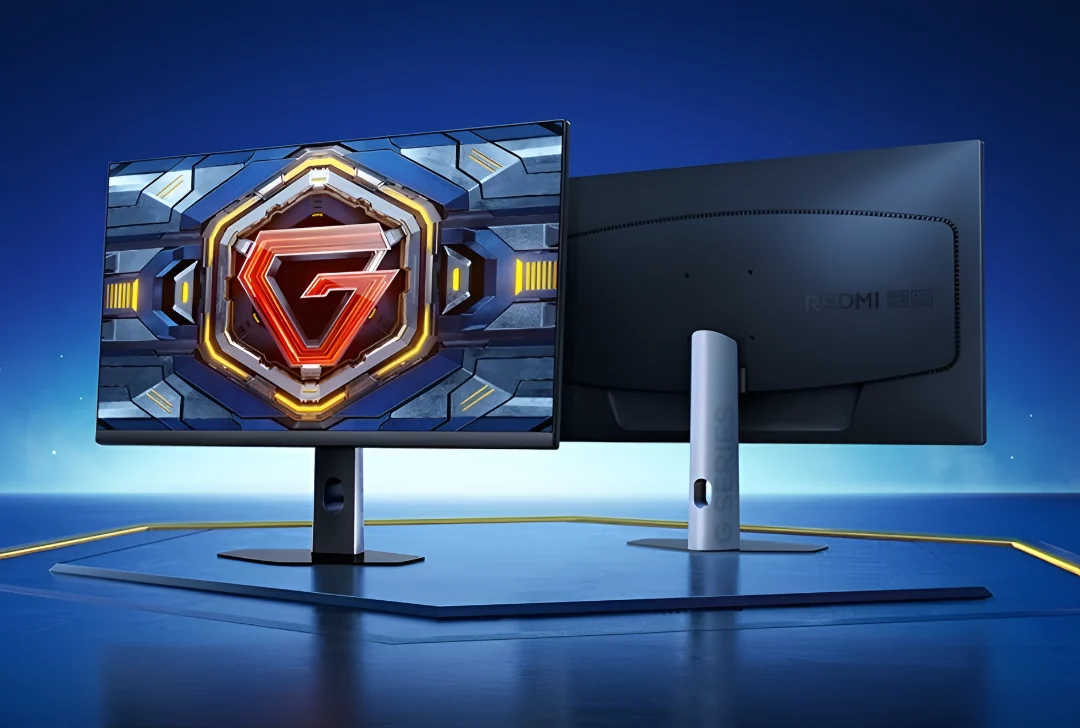
Xiaomi has officially expanded its hardware portfolio with the introduction of the Redmi G25 2027 gaming monitor in the Chinese market, signaling an aggressive push toward next-generation high-refresh-rate displays well ahead of the titular year. The newly unveiled monitor serves as a direct successor to the previous generation, introducing a substantial performance upgrade centered around a blistering 300Hz refresh rate, up from the 240Hz capability found in the 2026 iteration. While maintaining the core design language and foundational chassis architecture of its predecessor, the Redmi G25 2027 is engineered to meet the increasingly demanding performance requirements of competitive esports athletes and fast-paced gaming enthusiasts. Priced competitively at 799 yuan—approximately equivalent to Rp1.8 million—the monitor aims to redefine the entry-to-mid-range performance tier by delivering high-end visual specifications at an accessible price point, though details regarding global distribution and regional availability remain under wraps.
The trajectory of gaming monitor development has accelerated significantly over the past several years, driven by advancements in panel technology and the growing popularity of esports titles where frame rates and input latency directly impact competitive outcomes. Traditionally, monitors featuring refresh rates exceeding 240Hz were reserved for the premium high-end segment, commanding exorbitant price tags that limited adoption to professional players and affluent enthusiasts. However, component manufacturers have steadily optimized production yields, enabling brands like Xiaomi to democratize ultra-fast refresh rates. The evolution from the 2026 model’s 240Hz standard to the 300Hz capability of the Redmi G25 2027 reflects a broader industry trend toward marginal gains in motion clarity, where every millisecond and frame count matters in high-stakes competitive environments. Xiaomi’s strategy relies heavily on capturing market share in the budget-conscious gaming demographic by offering specifications that traditionally belonged to luxury tiers.
At the core of the Redmi G25 2027 is a 24.5-inch Fast IPS panel, a deliberate sizing choice optimized for competitive first-person shooter (FPS) and battle royale games where players must maintain a wide field of view without needing to physically turn their heads to scan screen corners. The display delivers a native Full HD resolution of 1920 by 1080 pixels, striking an optimal balance between visual fidelity and high frame rate performance that mid-range graphics processing units (GPUs) can easily sustain. Complementing the 300Hz refresh rate is a rapid 1-millisecond Gray-to-Gray (GTG) response time, which effectively mitigates motion blur, ghosting, and trailing artifacts during rapid camera movements. This combination ensures that fast-moving objects remain sharp and discernible, providing a tangible competitive edge in titles requiring pinpoint tracking and rapid target acquisition.
To further enhance the gaming experience, Xiaomi has integrated AMD FreeSync Premium technology into the display hardware. This adaptive synchronization feature dynamically matches the monitor’s refresh rate with the output frames of the connected graphics card, effectively eliminating screen tearing and stuttering caused by frame rate fluctuations. Additionally, the inclusion of Dynamic Overdrive allows the monitor to intelligently adjust pixel response behaviors in real-time based on the active frame rate, optimizing visual clarity across varying performance loads. For competitive players seeking specialized advantages, the monitor includes built-in software enhancements such as customizable hardware crosshairs, a night vision mode designed to brighten darkened in-game environments without washing out highlights, and optimized shadow boosting to expose hidden adversaries lurking in poorly lit corners of the map.

Beyond pure gaming performance, the Redmi G25 2027 incorporates specifications aimed at ensuring overall visual quality and prolonged viewing comfort. The display boasts a typical peak brightness of 400 nits, a static contrast ratio of 1,000:1, and official VESA DisplayHDR 400 certification, allowing it to render high dynamic range content with acceptable luminance peaks. Color reproduction is handled robustly, covering 100 percent of the sRGB color gamut and 93 percent of the wider DCI-P3 color space utilizing an 8-bit color depth, ensuring vibrant and accurate hues whether the user is gaming, consuming media, or performing casual color-sensitive tasks. Recognizing the strain associated with prolonged screen time, Xiaomi has also integrated TUV Rheinland-certified low blue light technology, which filters out harmful high-energy visible blue wavelengths without introducing significant yellow color distortion to the primary display output.
Connectivity options on the Redmi G25 2027 have also received a notable upgrade compared to the previous model. The rear I/O panel now features two DisplayPort 1.4 ports and two HDMI 2.0 ports, doubling the total port count from the single DisplayPort and single HDMI configuration found on the 2026 iteration. Industry observers and technical analysts have noted an important hardware caveat regarding these connections: to achieve the monitor’s maximum 300Hz refresh rate at Full HD resolution, users are required to utilize the DisplayPort 1.4 interface. Due to bandwidth limitations inherent to the HDMI 2.0 standard, connections routed through the HDMI ports are capped at a maximum refresh rate of 240Hz at 1080p, a technical nuance that prospective buyers utilizing multiple console and PC setups must take into consideration.
The launch of the Redmi G25 2027 in the domestic Chinese market at the aggressive price point of 799 yuan underscores Xiaomi’s aggressive pricing strategy within the peripheral segment. While direct comparisons can be drawn to previous regional releases—such as the Redmi G25i 2026, which launched in Indonesia retailing around Rp2.099,000—local pricing and release schedules for the newly announced 300Hz model remain unconfirmed by corporate representatives. Market analysts anticipate that if and when Xiaomi decides to introduce the monitor to international markets, including Southeast Asia and Europe, it will likely occupy a similarly disruptive price bracket, putting pressure on legacy monitor brands to lower prices or upgrade the feature sets of their entry-level gaming portfolios.
The broader implications of the Redmi G25 2027’s release point toward an ongoing commoditization of high-refresh-rate display technology. As 300Hz panels become economically viable for sub-$200 equivalent products, the barrier to entry for competitive gaming gear continues to dissolve. For casual gamers and budget-constrained esports hopefuls, the availability of professional-grade refresh rates combined with adaptive synchronization and color-accurate Fast IPS panels means that high-performance setups are no longer restricted to those willing to invest heavily in flagship hardware. As Xiaomi continues to evaluate international logistics and regional demand, the gaming community watches closely to see how competitors will respond to this escalating hardware race, cementing a new baseline expectation for what budget-friendly gaming monitors should deliver in the years leading up to 2027.