Nila Kartika Wati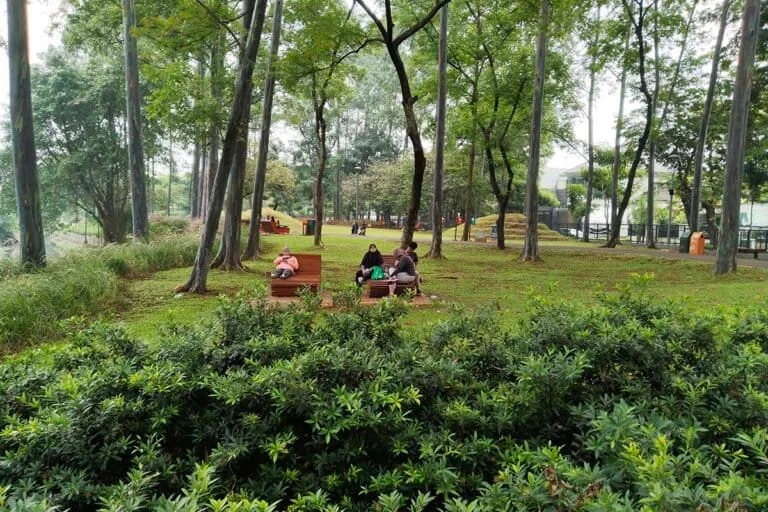
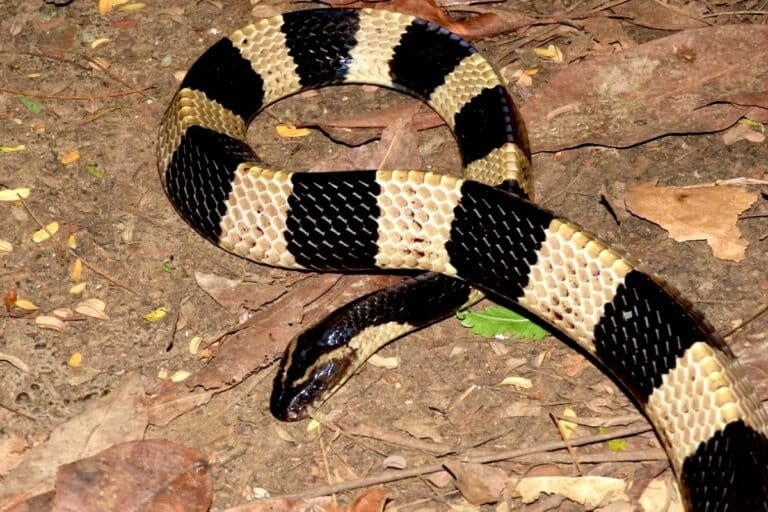
The documented sighting of a Banded Krait (Bungarus fasciatus) within the forest of the University of Indonesia (UI) has sparked a renewed dialogue regarding the preservation of urban biodiversity and the precarious state of green open spaces in the Jakarta metropolitan area. Muhammad Bilal Yogaswara, a 28-year-old citizen scientist and member of the Jakarta Birdwatcher Society, successfully captured photographic evidence of the highly venomous serpent during the Jakarta Naturalist Week, an event designed to catalog the flora and fauna remaining in the city’s shrinking natural corridors. The encounter, which occurred in the dense foliage of the UI forest in Depok, serves as a stark reminder that despite the relentless expansion of the "concrete jungle," several high-priority predatory species continue to persist in isolated pockets of greenery.
Bilal recounted the encounter with a mixture of professional caution and scientific curiosity, noting that he initially failed to perceive the snake as it crossed his path. The Banded Krait, recognizable by its alternating black and yellow crossbands and its distinctively triangular body cross-section, is a formidable member of the Elapidae family. While the species is known for its potent neurotoxic venom, Bilal observed that the individual he encountered exhibited the typical shy behavior of its kind, attempting to hide its head beneath a layer of leaf litter—a classic defensive posture intended to protect its most vulnerable part from perceived threats. This documentation is significant not only for its rarity in an urban setting but also because it highlights the role of citizen scientists in monitoring ecosystems that professional researchers may not always have the resources to survey continuously.
The Banded Krait is an apex predator within its niche, primarily preying on other snakes, lizards, and small mammals. Its presence in the UI forest indicates a functioning, albeit pressured, food web. According to the International Union for Conservation of Nature (IUCN), the species is currently listed as "Least Concern," yet its survival in urban environments is increasingly threatened by habitat fragmentation. Typically found in secondary forests, shrublands, and areas adjacent to water sources such as marshes or rice fields, the Krait’s adaptation to the UI campus—a site surrounded by heavy traffic and dense residential development—demonstrates the resilience of Southeast Asian herpetofauna when provided even a marginal sanctuary.
The Ecological Significance of the University of Indonesia Forest
The University of Indonesia forest has long been recognized as one of the last remaining bastions of biodiversity in the Greater Jakarta area. According to the UI Sustainable Development Goals (SDGs) Report of 2022, the 312-hectare campus serves as a critical habitat for a diverse array of reptilian species. Beyond the Banded Krait, the forest is home to the Javan Spitting Cobra (Naja sputatrix), the Oriental Whip Snake (Ahaetulla prasina), the Painted Bronzeback (Dendrelaphis pictus), and the Reticulated Python (Malayopython reticulatus). Data from a Visual Encounter Survey (VES) conducted in 2018 indicated that the diversity index for snakes in the UI forest was actually on an upward trend compared to previous years, suggesting that as surrounding lands are cleared for development, wildlife is being funneled into this protected academic enclave.
However, researchers warn that this "concentration" of wildlife is not necessarily a sign of a thriving environment, but rather a symptom of "ecological entrapment." When natural habitats are destroyed elsewhere, animals congregate in the remaining fragments. This leads to higher competition for resources and an increased likelihood of human-wildlife conflict. The UI forest, while robust, acts as a "green island" in a sea of asphalt, making it difficult for species to migrate or maintain genetic diversity through inter-breeding with populations from other regions.
Urbanization and the Shrinking Green Open Space (RTH)
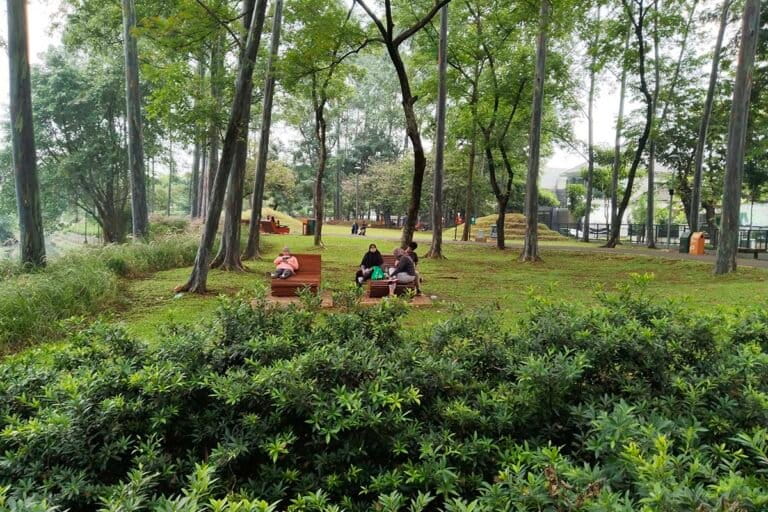
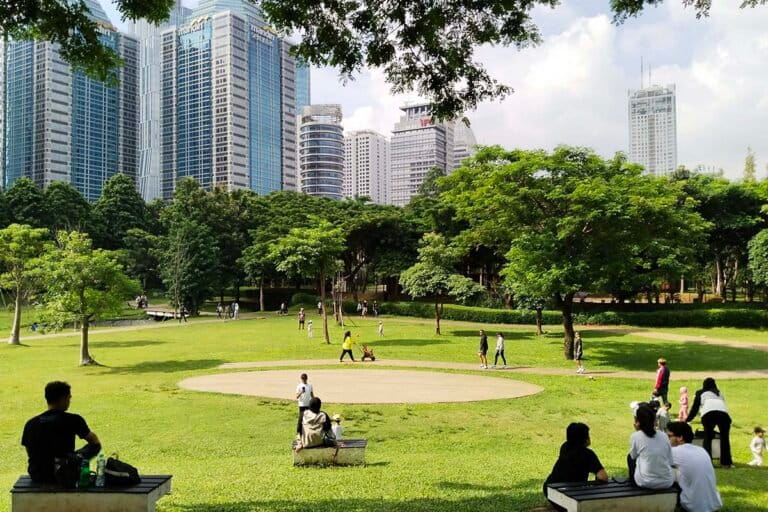
The discovery of the Banded Krait comes at a time when Jakarta’s environmental policies are under intense scrutiny. Under Indonesian Law No. 26 of 2007 concerning Spatial Planning, urban areas are mandated to maintain a minimum of 30 percent Green Open Space (Ruang Terbuka Hijau or RTH), consisting of 20 percent public space and 10 percent private space. However, data from the DKI Jakarta Provincial Government reveals that the city remains significantly below this target.
Agustiyara, a researcher specializing in Environmental Science and Policy at Eötvös Loránd University in Hungary, provides a sobering perspective on the state of Jakarta’s greenery. Through the analysis of satellite imagery, Agustiyara’s research indicates a drastic decline in green cover over the last quarter-century. In the late 1990s, Jakarta maintained approximately 45 percent green cover; today, that figure has plummeted to roughly 20 percent. Even more concerning is the fluctuation in dense urban greenery. In 2013, the RTH in Jakarta’s most crowded sectors was measured at a mere 4.65 percent. While there was a slight increase to 7.12 percent by 2022, recent 2024 data shows a slight regression to 7.02 percent.
"The problem is not just the total area or the percentage," Agustiyara explained. "The critical issue is connectivity and ecological quality." She noted that many of Jakarta’s current green spaces are small, isolated parks or aesthetic median strips that offer little to no value as wildlife habitats. For a city to be truly sustainable, green spaces must be interconnected, allowing for the movement of species and the natural regulation of the urban microclimate. Without these "green corridors," the appearance of a Banded Krait in a place like the UI forest is less a sign of ecological health and more a sign of a species running out of places to go.
Public Perception and the Myth of Snake Deterrents
The presence of highly venomous snakes in urban or semi-urban areas often triggers panic among the general public, leading to the indiscriminate killing of these animals. Muhammad Wildan Al Gifari, another citizen scientist involved in the documentation of the UI Krait, emphasized the need for increased ecological literacy among Jakarta’s residents. Wildan noted that the primary reason for human-snake conflict is a lack of understanding regarding snake behavior and the persistence of dangerous myths.
One of the most pervasive myths in Indonesian society is that snakes can be deterred by spreading salt around a home or campsite. "This is entirely ineffective," Wildan stated. "Snakes are not slugs; their scales are designed to protect them from various terrains, and salt does nothing to stop them." He explained that such myths provide a false sense of security, which can lead to dangerous encounters. Instead of relying on folklore, Wildan advocates for "snake-proofing" homes by maintaining cleanliness, removing piles of debris where rodents (and thus snakes) might hide, and using physical barriers.
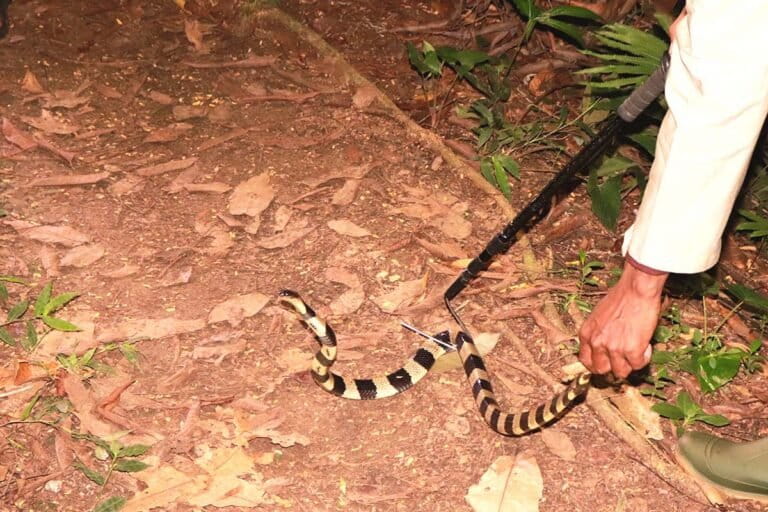
Furthermore, Wildan pointed out that snakes like the Banded Krait are generally non-aggressive toward humans unless provoked or stepped upon. In the case of the UI encounter, the snake was handled by a professional handler to ensure the safety of both the animal and the observers. "If you do not have the specific knowledge or equipment to handle a snake, the best course of action is to maintain a distance of at least two meters and call professional wildlife removers or local emergency services," Wildan advised.
Toward a Sustainable Urban Biodiversity Strategy
The intersection of wildlife conservation and urban planning is a core component of the United Nations’ Sustainable Development Goals (SDGs), specifically Goal 11: Sustainable Cities and Communities. This goal emphasizes the importance of providing universal access to safe, inclusive, and accessible green and public spaces. The United Nations Environment Programme (UNEP) has frequently stated that modern cities can coexist with wildlife if ecosystem connectivity is prioritized.
To mitigate conflicts and protect biodiversity, Agustiyara suggests that Jakarta look toward international models of urban planning. In Budapest, Hungary, for example, the city employs an integrated RTH system that includes "buffer zones." These zones serve as transition points between human activity and wildlife habitats, complete with signage that informs the public about the potential presence of wild animals. This approach fosters a culture of coexistence rather than one of fear and eradication.
"If we want Jakarta to be a sustainable city, we must stop viewing green spaces merely as aesthetic ornaments or recreational parks for humans," Agustiyara said. "They must be viewed as functional components of the city’s infrastructure—natural systems that manage stormwater, reduce heat, and provide a home for the biodiversity that keeps our environment in balance."

The discovery of the Banded Krait in the heart of one of the region’s most prestigious academic institutions serves as a powerful symbol of the hidden nature that still survives in Jakarta. It challenges policymakers to look beyond economic growth and consider the biological heritage that is at risk. As the city continues to grapple with the impacts of climate change and rapid urbanization, the preservation of the UI forest and the expansion of connected green corridors may be the only way to ensure that species like the Banded Krait—and the ecological services they provide—do not vanish from the landscape forever. The documentation by Bilal and Wildan is a call to action: to observe, to educate, and ultimately, to protect the fragile threads of nature that still weave through the urban fabric.