Lusiana Hamidun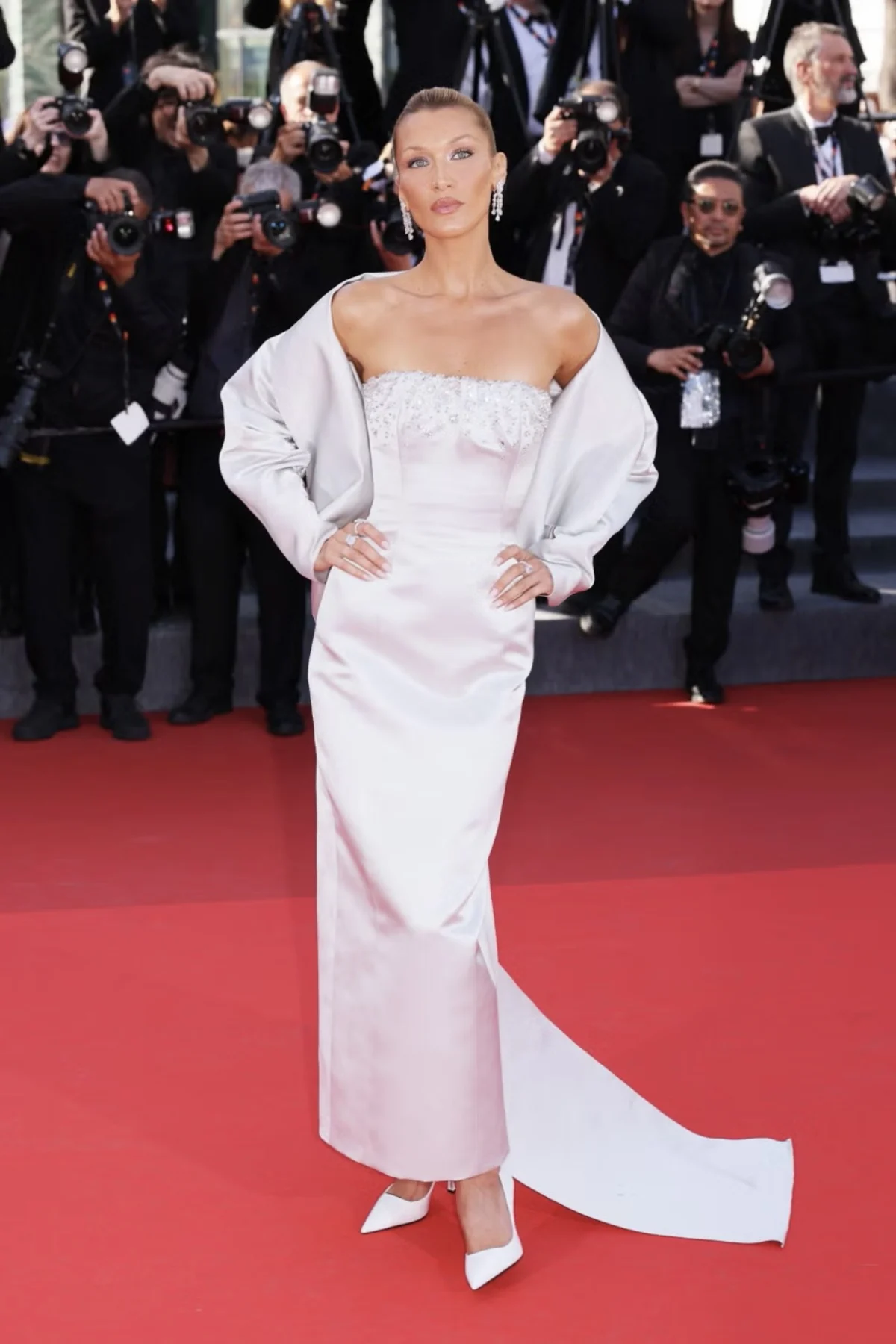
The Cannes Film Festival, a perennial beacon of cinematic artistry and high fashion, has once again captivated the global spotlight. Yet, as the illustrious event unfolds on the French Riviera, a striking sartorial trend has emerged, casting a long shadow of monochrome over the iconic red carpet. This year, a discernible shift towards an elegant, almost austere, palette of black, white, and shades of grey has taken hold, prompting a contemplative pause amidst the usual kaleidoscope of color. This phenomenon stands in stark contrast to the daring fashion narratives of previous years, particularly those championed by figures like Bella Hadid, whose decade-long reign as a Cannes style icon was often defined by bold, boundary-pushing choices.
A Decade of Daring: Bella Hadid’s Cannes Legacy
For the past ten years, Bella Hadid has been an undeniable force on the Cannes red carpet, frequently challenging conventions with her audacious style choices. Her 2016 appearance in a fiery red Alexandre Vauthier gown, featuring a gravity-defying hip-high slit, sent shockwaves across the internet and became an instant sartorial legend. More recently, in 2024, she sparked widespread discussion about the boundaries of public nudity amidst the festival’s stringent dress code with a sheer, pale brown Saint Laurent cocktail dress. Her sartorial commentary extended to a poignant tribute to her Palestinian heritage, manifested in a red and white gown ingeniously crafted from a keffiyeh. These moments, among others, cemented Hadid’s reputation as a fearless fashion innovator, consistently pushing the envelope and commanding attention with every step.
The 2026 Festival: A Shift Towards Restrained Sophistication
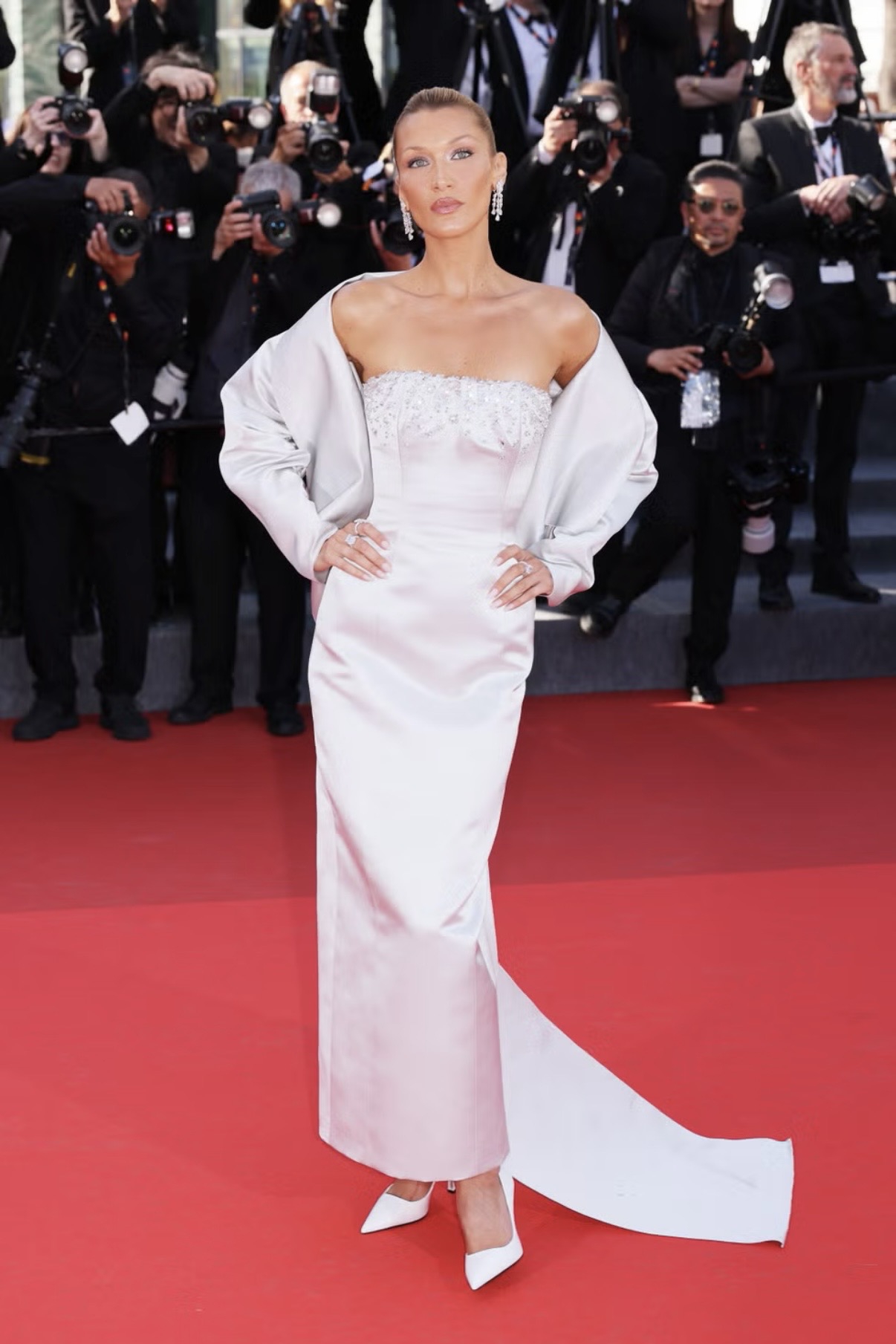
This year’s festival saw Hadid make her anticipated return to the Cannes red carpet, gracing the premiere of Garance with a custom Prada creation. The ensemble, a strapless sheath dress in silvery white silk satin, was elevated by intricate embellishments on the bustier. A matching jacket was artfully draped over her shoulders, and her hair was styled in a sleek updo. As an ambassador for Chopard, she accessorized with dazzling diamond jewelry. While undeniably stunning, this particular look, marked by its refined restraint, felt like a departure from her established persona as an unpredictable Cannes risk-taker.
A Sea of Neutrals: Notable Appearances
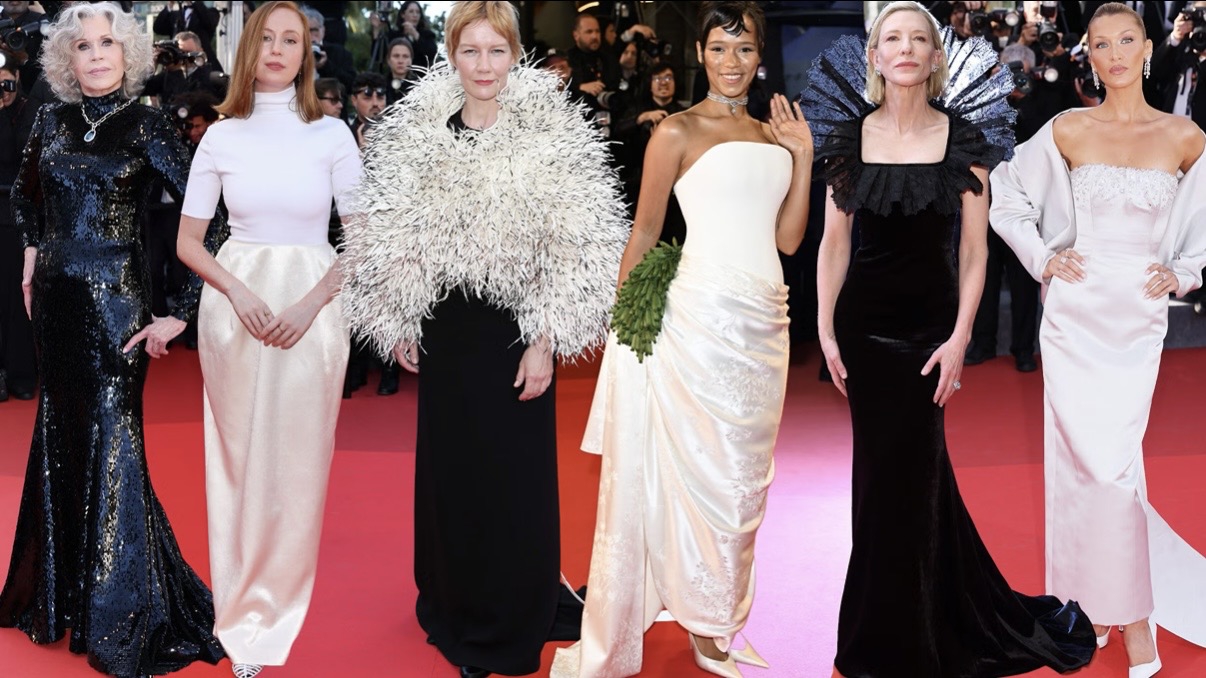
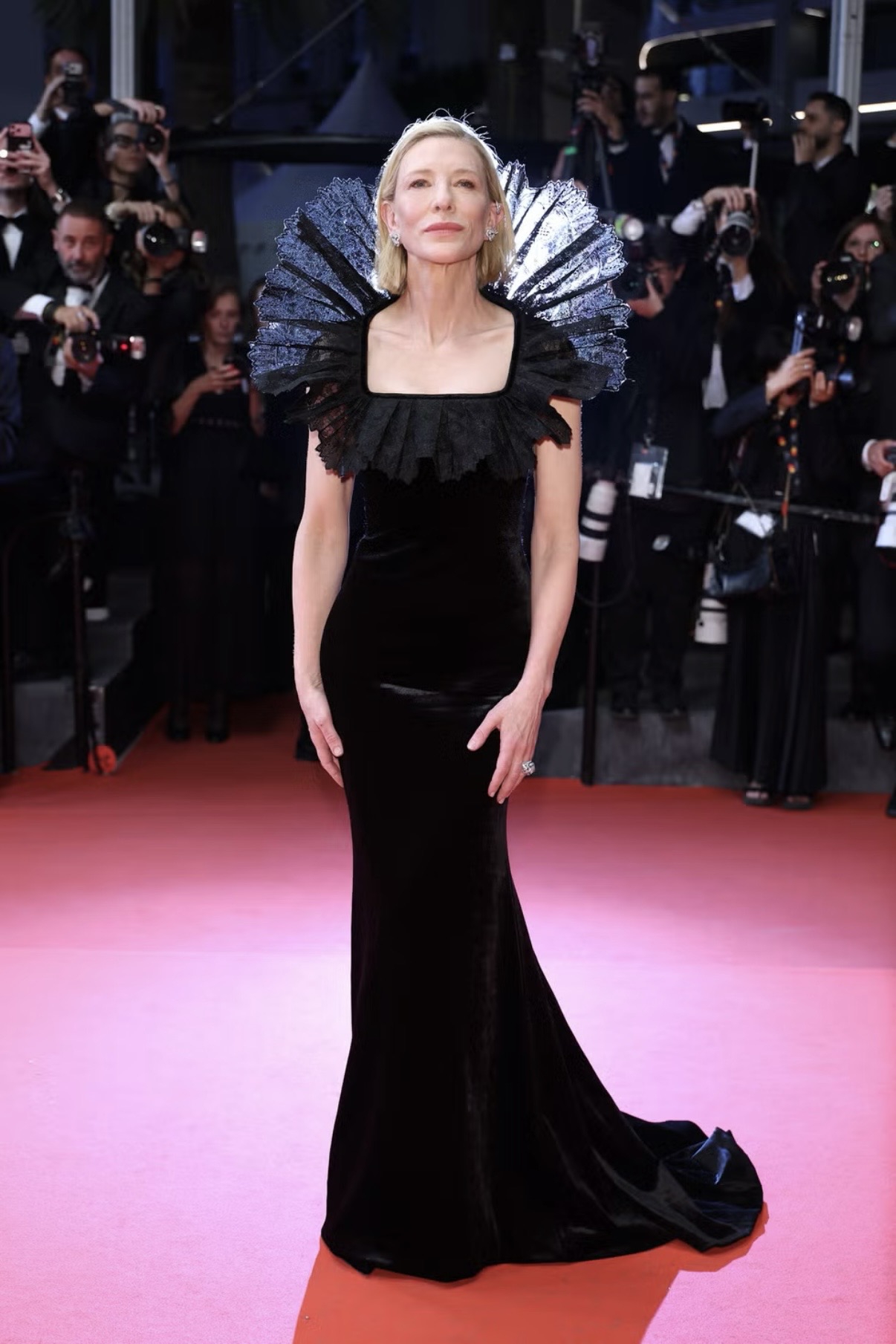
The trend of understated elegance was not confined to Hadid. Earlier in the weekend, Taylor Russell arrived for the premiere of Hope in a simple yet chic white silk Dior gown, featuring a strapless bodice and a gracefully draped embroidered skirt. Other notable appearances contributing to the dominant grayscale aesthetic included Cate Blanchett in a custom Louis Vuitton gown that offered a modern interpretation of an Elizabethan collar, Ruth Negga in a 1990s-inspired creamy white slip dress, and Dua Lipa in a striking black Jacquemus gown with a monochrome fringed skirt. The early days of the festival also witnessed Kelly Rutherford and Jane Fonda in nearly identical black sequined sheath dresses, and Kaia Gerber opted for a chic black crop top and skirt ensemble from Jacquemus’s Fall 2026 collection. This parade of sophisticated and refined looks inevitably led to a pressing question: "Where has all the color gone?"
The Dominance of Elegance and the Question of Sophistication
The prevailing theme on the Cannes red carpet this year appears to be an unwavering commitment to elegance. On the surface, this choice seems fitting for an event that serves as a premier gathering for the film industry, uniting A-list talent with emerging supermodels, brand ambassadors, and influencers. However, the persistent question arises: must sophistication invariably translate into a monochromatic spectrum of black and white?
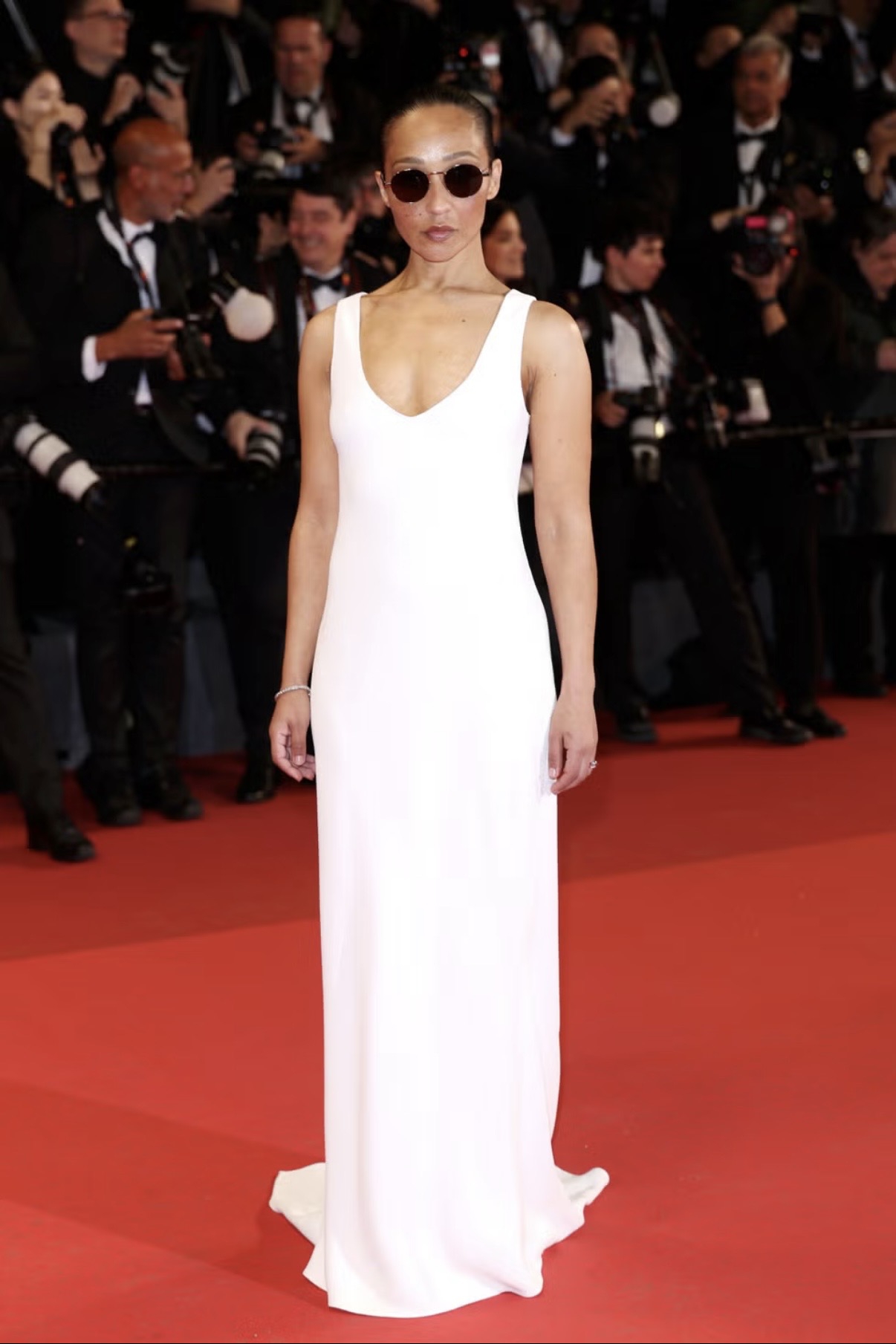
The history of the Cannes red carpet is also punctuated by moments of sartorial rebellion. Celebrities like Bella Hadid and Kristen Stewart have previously challenged the festival’s strict dress code, opting for sheer gowns or even eschewing high heels for a barefoot statement. Yet, this year, a significant portion of Hollywood’s most influential figures, dressed by the industry’s top stylists, have converged in a sea of black, white, and their various combinations. This raises a critical inquiry: is monochrome truly the sole gateway to chicness in contemporary fashion?
A Wider Red Carpet Phenomenon: Beyond Cannes
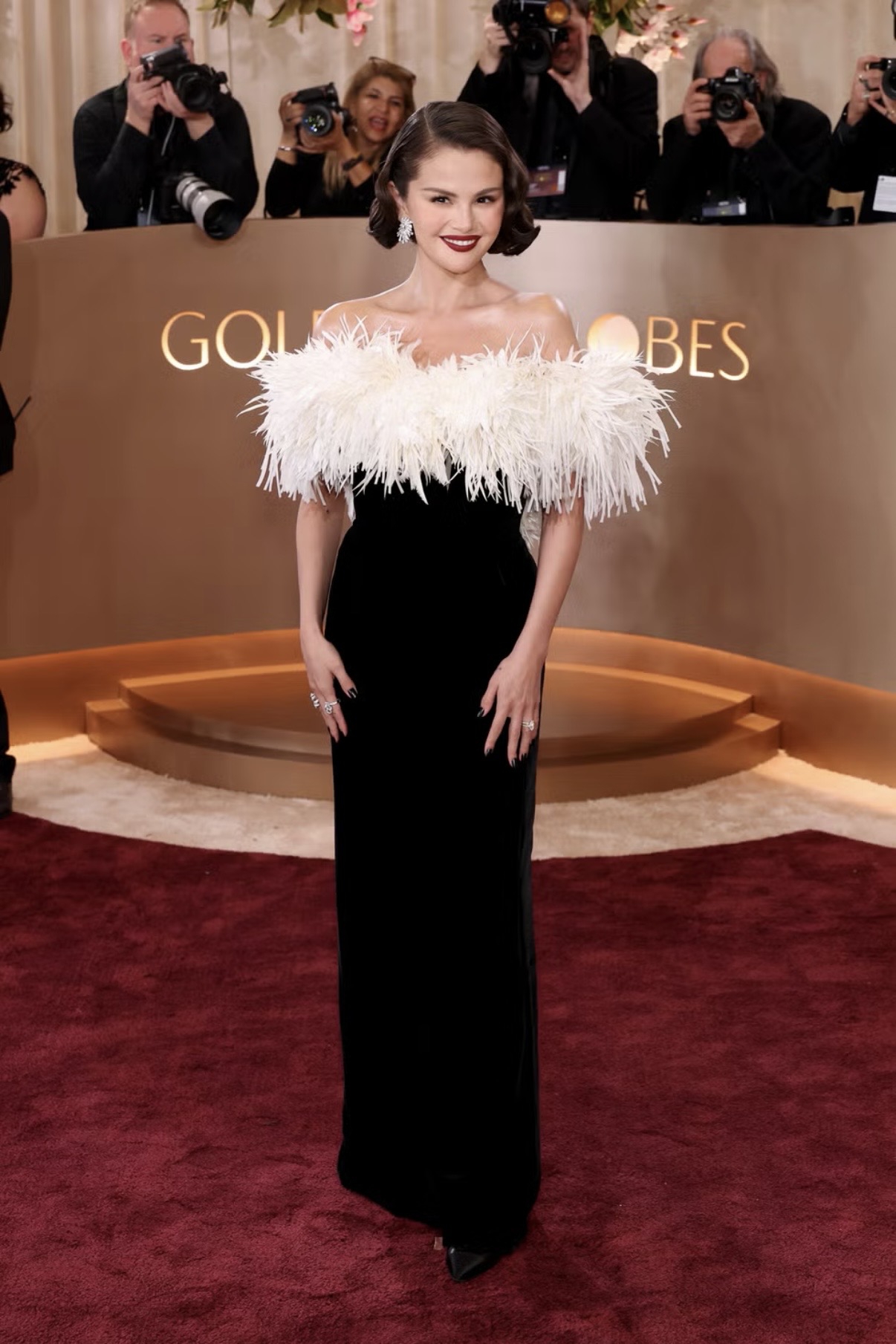
The monochrome trend is not an isolated incident confined to the French Riviera. Throughout the current red carpet season, black, white, and occasional touches of metallic or neutral hues have consistently dominated. At the Academy Awards, Teyana Taylor sported a feathered black and white Chanel gown, Emma Stone opted for a 1990s-inspired silver-white sheath dress, and Elle Fanning presented a vision in white with silver embroidery. The Golden Globe Awards saw Selena Gomez in a black Chanel gown with white feather accents, Amanda Seyfried in a sculpted white Versace creation, and Ayo Edebiri in a 1920s-inspired black Chanel slip dress. The Critics’ Choice Awards echoed this sentiment, with Renate Reinsve, Britt Lower, and Jessie Buckley all embracing palettes of white, black, or a combination thereof.
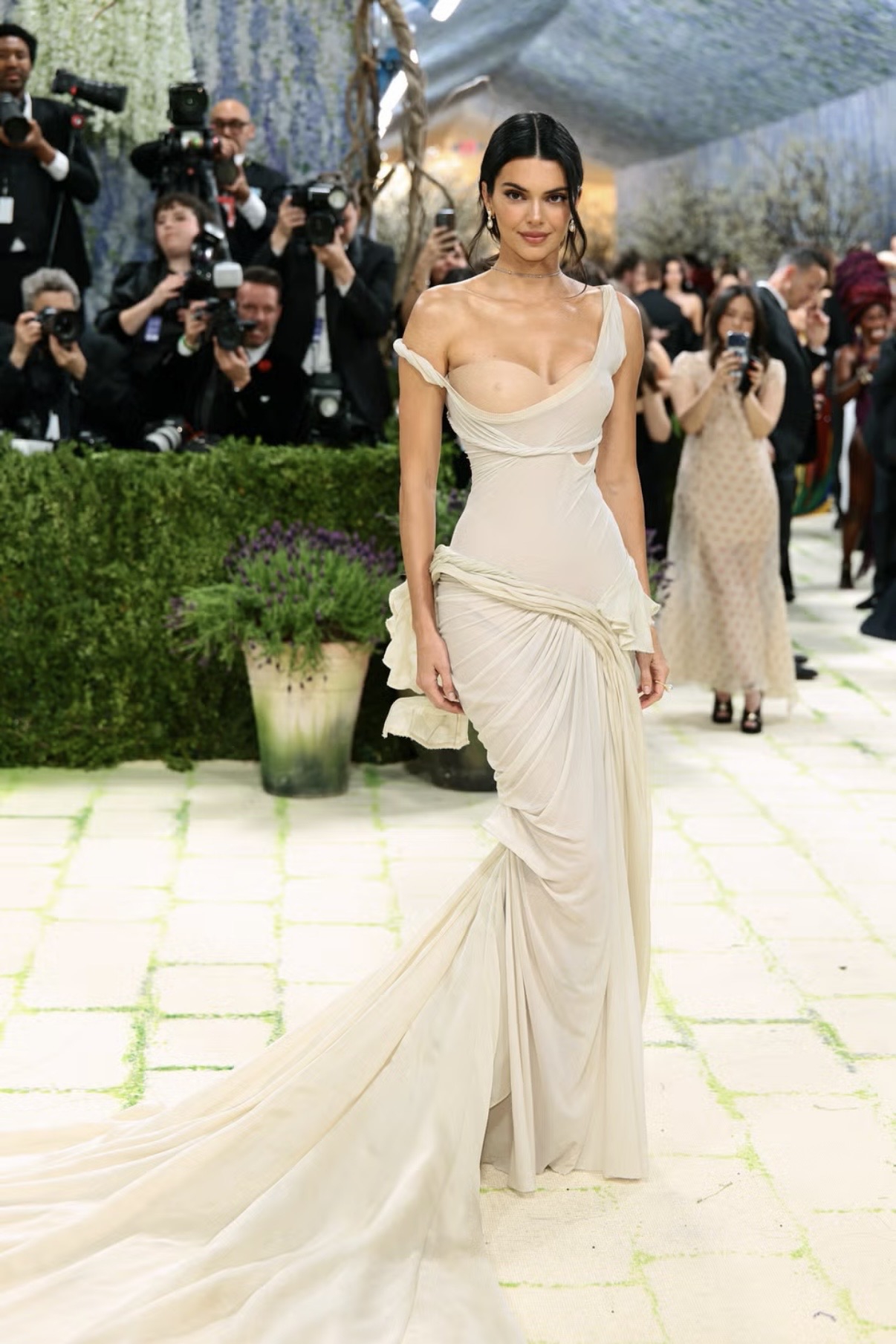
Even the Met Gala, typically a vibrant showcase for flamboyant fashion, embraced a more subdued aesthetic this year. With the theme "Fashion is Art," the red carpet felt notably calmer compared to the opulent displays of previous years. In many of the best-dressed lists, Kylie Jenner wore a sculpted nude bustier and cream skirt by Schiaparelli, Kendall Jenner donned a twisted cream gown from Gap Studio that revealed a sculpted nude bra, and Gigi Hadid chose a shimmering black metallic sheath dress from Miu Miu. While color was not entirely absent, its presence was significantly diminished.
The Underlying Currents: Pantone, Quiet Luxury, and the LBD
Could the dominance of monochrome have been foreshadowed? In the fall of the preceding year, Pantone declared "Cloud Dancer," a soft, almost colorless white, as its Color of the Year for 2026. The company described it as a "conscious statement of simplification." This sentiment resonates deeply with the prevailing era of "quiet luxury" and the resurgence of the Carolyn Bessette-Kennedy aesthetic, which championed the minimalism of the 1990s and the enduring power of the New York woman’s all-black uniform.
Matthieu Blazy, the creative director of Chanel, closed his Fall 2026 show with a black trouser suit, followed by a mid-thigh length black jersey dress. In a typical fashion show progression, daytime wear precedes formal attire. However, this finale offered a stark contrast to the feathered, colorful skirts that marked his debut just one season prior. This year also marks the 100th anniversary of Coco Chanel’s introduction of the Little Black Dress (LBD). The cut of Blazy’s design for Fall 2026 bears a striking resemblance to Chanel’s iconic LBD. In the 1920s, the LBD was revolutionary for its practicality. It was neither too casual nor too formal, flattering to the silhouette, understated, and chic – suitable for virtually any occasion. In a world saturated with an overwhelming array of choices, the LBD continues to offer an effortless and almost infallible option.
The Strategic Appeal of Black and White
The strategic advantage of black and white on the red carpet is undeniable. In an era of constant global scrutiny, amplified by social media and the influence of tech billionaires, every fashion decision is dissected, praised, and questioned. Black and white are colors that do not demand undue attention. They align seamlessly with terms like "timeless" and "classic." This strategic approach rarely fails to impress. Many of these monochromatic looks have been captivating, with their wearers exuding the popular "Old Hollywood glamour" that has permeated recent red carpet events. While creativity can undoubtedly thrive without color, the reliance on black and white often overlooks the profound emotional resonance that a vibrant scarlet, a flash of turquoise, or a bold stroke of fuchsia can evoke.
The Enduring Power of Color: Moments of Bold Expression
Paradoxically, some of the most memorable appearances of the season have been made by those who have unabashedly embraced color. Jessie Buckley’s Oscar acceptance speech in a Chanel color-block gown featuring baby pink and bright red reflected the sheer joy she felt. Wunmi Mosaku, attending the BAFTA Awards in a fringed cobalt blue sheath dress by Ahluwalia, radiated a serene yet potent energy. At the Met Gala, Chase Infiniti’s Thom Browne creation, adorned with a spectrum of rainbows, felt more artistic than many of the evening’s other ensembles. And more recently at Cannes, Demi Moore captivated in a neon pink ball gown by Ateliers Féricales, while Ruth Negga presented a surreal vision in a custom Dior silk slip dress in a murky green hue, embellished with tonal fringe and black lace, enveloping her in an aura of mystery.
These are the looks that linger long after their initial viewing. Each one serves as a testament to the fact that color is not merely a safe choice; it is inherently emotional and, as such, elicits powerful responses. In an era increasingly geared towards polished, perfect, and minimalist presentations, garments bursting with color offer a much-needed, albeit potentially polarizing, surprise. While the intricate details of a richly colored gown might fade from memory, the emotional impact it instigates is likely to endure. The true power of fashion, as demonstrated by these vibrant outliers, lies not just in its aesthetic appeal but in its capacity to stir the soul.