Azin Asro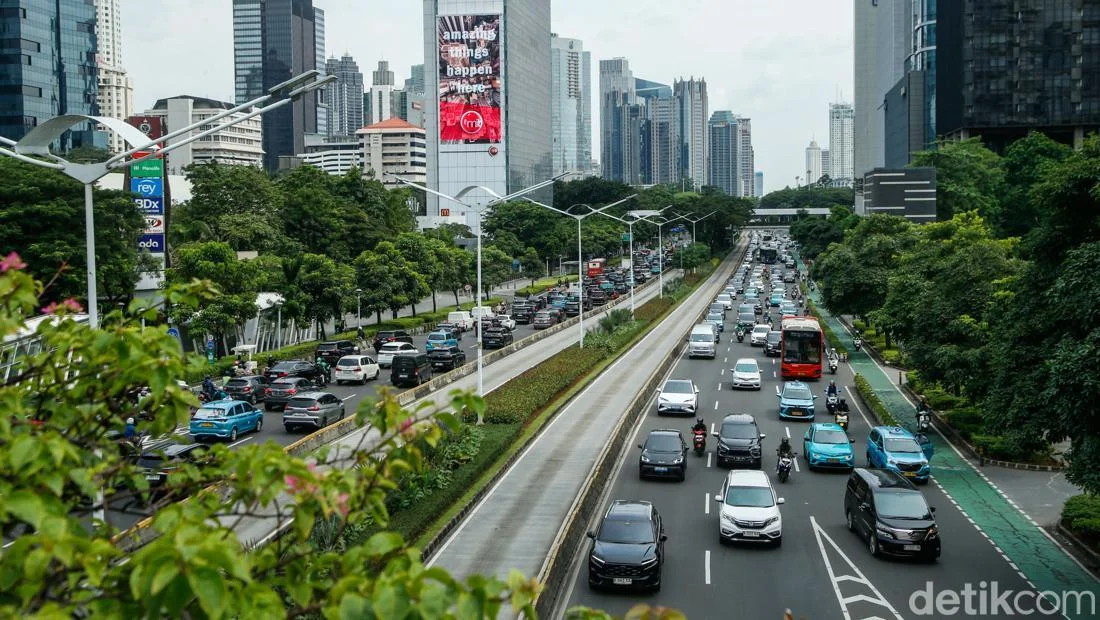
The Jakarta Provincial Government, through the Jakarta Transportation Agency (Dishub DKI Jakarta), has officially confirmed that the Odd-Even (Ganjil-Genap) traffic restriction policy will be temporarily lifted on Wednesday, May 27, and Thursday, May 28, 2026. This regulatory pause is implemented in observance of the national public holiday and the designated collective leave (cuti bersama) for Idul Adha 1447 Hijriah. Under this temporary adjustment, all private four-wheeled vehicles, regardless of their license plate numbers, will be permitted to traverse the 26 major road segments typically restricted by the policy without the risk of administrative sanctions or electronic ticketing.
This announcement was disseminated through the official communication channels of the Jakarta Transportation Agency, including its social media platforms, to ensure that the motoring public is well-informed ahead of the long holiday weekend. The agency clarified that the suspension of the policy is a standard procedural response to national holidays, aimed at facilitating the movement of citizens celebrating the religious occasion and those utilizing the holiday for travel within the metropolitan area. The suspension is rooted in a robust legal framework designed to balance urban mobility with the cultural and religious needs of the population.
Legal Foundation and Administrative Directives
The decision to suspend the Odd-Even policy is not an isolated administrative move but is grounded in several high-level government directives. Primarily, the suspension aligns with the Joint Ministerial Decree (Surat Keputusan Bersama or SKB) issued by the Minister of Religious Affairs, the Minister of Manpower, and the Minister of Administrative and Bureaucratic Reform. The specific decrees governing the 2026 calendar are SKB No. 1497 of 2025, No. 2 of 2025, and No. 5 of 2025. These documents collectively outline the schedule for National Holidays and Collective Leave for the year 2026, designating the period surrounding Idul Adha as a time of national observance.
Furthermore, the operational basis for lifting traffic restrictions is codified in Jakarta Governor Regulation (Pergub) No. 88 of 2019. Article 3, Paragraph (3) of this regulation explicitly states that traffic restrictions via the Odd-Even system are not applicable on Saturdays, Sundays, and National Holidays established by Presidential Decree. By categorizing the Idul Adha collective leave as part of the holiday framework, the Jakarta Transportation Agency ensures that its traffic management strategies remain consistent with provincial law.
Historical Context of the Ganjil-Genap Policy
To understand the impact of this suspension, one must consider the historical trajectory of Jakarta’s traffic management. The Odd-Even system was originally introduced as a transitional measure following the abolition of the "3-in-1" carpooling policy in 2016. Initially covering only a few major thoroughfares, the policy was significantly expanded to 26 road segments to combat Jakarta’s chronic congestion and deteriorating air quality.
The system operates on a simple premise: vehicles with odd-numbered plates may only use certain roads on odd-numbered dates, and vice versa for even-numbered plates. Under normal circumstances, the restrictions are active from Monday to Friday, divided into two windows: the morning peak from 06:00 to 10:00 WIB and the afternoon/evening peak from 16:00 to 21:00 WIB. While the policy has been credited with reducing traffic volume on primary arteries by approximately 20% to 25% during peak hours, it is routinely suspended during major religious festivals such as Idul Fitri and Idul Adha to accommodate the unique traffic patterns associated with these events.
Scope of the Suspension: The 26 Affected Road Segments
The suspension on May 27 and 28, 2026, applies to all 26 road segments that constitute the Ganjil-Genap network. These segments represent the backbone of Jakarta’s transportation infrastructure, connecting the central business districts with residential peripheries and satellite cities. The roads included in the suspension are:
- Jalan Pintu Besar Selatan
- Jalan Gajah Mada
- Jalan Hayam Wuruk
- Jalan Majapahit
- Jalan Medan Merdeka Barat
- Jalan MH Thamrin
- Jalan Jenderal Sudirman
- Jalan Sisingamangaraja
- Jalan Panglima Polim
- Jalan Fatmawati (from the intersection of Jalan Ketapang to Jalan Kebayoran Baru)
- Jalan Suryopranoto
- Jalan Balikpapan
- Jalan Kyai Caringin
- Jalan Tomang Raya
- Jalan Jenderal S. Parman (from the intersection of Jalan Tomang Raya to Jalan Gatot Subroto)
- Jalan Gatot Subroto
- Jalan MT Haryono
- Jalan HR Rasuna Said
- Jalan D.I. Pandjaitan
- Jalan Jenderal A. Yani (from the intersection of Jalan Bekasi Timur Raya to Jalan Perintis Kemerdekaan)
- Jalan Pramuka
- Jalan Salemba Raya (West side)
- Jalan Kramat Raya
- Jalan Stasiun Senen
- Jalan Gunung Sahari
- Jalan Kebon Sirih
By opening these routes to all vehicles, the city government anticipates a shift in traffic density from residential areas to these primary arteries, as residents travel to mosques for Eid prayers, visit relatives, or head toward tourist destinations and transportation hubs.
Chronology of the Holiday Period
The timeline for the traffic policy adjustment begins on Tuesday evening, May 26, 2026, as the city prepares for the "Takbiran" (night of celebration) preceding Idul Adha. While the Odd-Even policy remains in effect on Tuesday during its usual hours, the enforcement will cease starting Wednesday morning.
- Wednesday, May 27, 2026: Official National Holiday for Idul Adha 1447 H. The Odd-Even policy is inactive all day. Traffic is expected to be heavy around major mosques such as Istiqlal and Al-Azhar in the morning, followed by localized congestion near sacrificial ritual sites.
- Thursday, May 28, 2026: Designated Collective Leave (Cuti Bersama). The Odd-Even policy remains inactive. This day is traditionally characterized by family gatherings and recreational travel.
- Friday, May 29, 2026: The Odd-Even policy is expected to be reinstated. As this is a regular working day following the holiday, the Jakarta Transportation Agency and the Polda Metro Jaya Traffic Directorate will resume enforcement to manage the anticipated return of commuters to the city center.
Implications for Urban Mobility and Public Transport
The suspension of Ganjil-Genap presents a dual-edged sword for Jakarta’s urban mobility. On one hand, it provides significant convenience for private vehicle owners, allowing for more flexible travel planning during a period of high social activity. On the other hand, the absence of restrictions often leads to increased congestion on major roads, particularly those leading to popular shopping malls, parks (such as Ancol and Ragunan Zoo), and the city’s exits toward Puncak or Bandung.
Transportation experts suggest that while the policy is lifted, the public should remain mindful of potential bottlenecks. The Jakarta Transportation Agency usually compensates for the expected increase in private vehicle volume by maintaining, or in some cases increasing, the frequency of public transport services like the TransJakarta busway, the MRT, and the LRT. Even though the Odd-Even rule is suspended, authorities continue to encourage the use of public transit to prevent total gridlock in the city’s "Golden Triangle" business district.
Official Responses and Public Safety Measures
In addition to the Jakarta Transportation Agency, the Polda Metro Jaya (Greater Jakarta Metropolitan Regional Police) has indicated that traffic personnel will remain deployed across the city despite the policy suspension. Their primary focus will shift from enforcing plate-based restrictions to managing traffic flow at intersections and ensuring the safety of pedestrians and worshippers.
"While the Ganjil-Genap policy is not in force, our officers will be stationed at strategic points to anticipate surges in traffic volume," a representative from the Traffic Directorate noted in a preliminary briefing. "We urge the public to maintain discipline, follow traffic signals, and prioritize safety, especially in areas where sacrificial animals are being distributed, which can often cause temporary road narrowing."
Public reaction to the announcement has been largely positive, as is typical for holiday periods. For many residents, the two-day window offers a reprieve from the logistical challenges of navigating the city’s restricted zones, particularly for those who do not own multiple vehicles with alternating plate numbers.
Economic and Social Impact Analysis
The suspension of traffic restrictions during Idul Adha has notable economic implications. The ease of movement is expected to boost local consumption, as families find it easier to travel to dining and retail destinations. Jakarta’s hospitality and tourism sectors generally see an uptick in domestic visitors during these "long weekends," and the removal of the Odd-Even barrier facilitates this influx.
Socially, Idul Adha is a time of intense community interaction. The "Qurban" (sacrifice) rituals involve the distribution of meat to the underprivileged, requiring logistics that often involve private vehicles and small trucks. Lifting the Odd-Even policy ensures that these charitable activities can proceed without the hindrance of traffic fines, thereby supporting the social fabric of the city during the holy month of Dzulhijjah.
Future Outlook: Beyond the 2026 Holiday
As Jakarta continues to grapple with its status as one of the world’s most congested cities, the periodic suspension of the Odd-Even policy serves as a reminder of the ongoing debate regarding long-term traffic solutions. While the policy is a useful "band-aid" for daily congestion, the provincial government is moving toward more sophisticated systems.
Discussions regarding Electronic Road Pricing (ERP) continue to evolve, with proponents arguing that a fee-based system would be more effective and fairer than the plate-based Odd-Even system. However, until such a system is fully implemented and public transport coverage reaches its target density, the Ganjil-Genap policy remains the primary tool for the Jakarta Transportation Agency.
For the immediate future, motorists are advised to enjoy the two-day suspension on May 27-28, 2026, but to prepare for the resumption of standard restrictions on Friday, May 29. The Dishub DKI Jakarta will continue to monitor traffic patterns via the Jakarta Smart City platform and provide real-time updates to ensure that the 1447 H Idul Adha celebrations proceed smoothly for all residents and visitors in the capital.