Bambang Pamungkas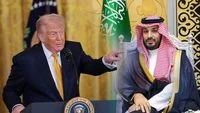
Former United States President Donald Trump has once again injected himself into the intricate geopolitics of West Asia, reportedly advocating for a swift expansion of the Abraham Accords. His recent high-level overtures to key Arab and Muslim leaders underscore a persistent diplomatic ambition to reshape the region’s alliances, even as the ongoing complexities of the Israeli-Palestinian conflict and the broader regional power dynamics continue to present formidable obstacles. This renewed diplomatic offensive, which comes amidst intensive, albeit unconfirmed, negotiations regarding the potential conclusion of a hypothetical "Iran war" – a term that in itself suggests a broader recalibration of regional security priorities – aims to solidify Israel’s integration into the broader Middle Eastern fabric.
According to a detailed report by Axios, Trump conveyed this significant message during a high-stakes conference call held over the past weekend. The call brought together an array of influential regional leaders, including representatives from Saudi Arabia, the United Arab Emirates (UAE), Qatar, Pakistan, Turkey, Egypt, Jordan, and Bahrain. During this crucial conversation, Trump reportedly emphasized his desire to see more Muslim-majority nations formally recognize Israel and join the Abraham Accords once the "Iran war" — interpreted broadly as a resolution or de-escalation of the pervasive regional tensions and proxy conflicts involving Iran, or even a hypothetical direct confrontation — concludes.
"After the Iran war ends, I hope that countries that have not yet recognized Israel will move toward normalization of relations," Trump was quoted as telling the regional leaders, as reported by Axios on Monday, May 25, 2026. This direct appeal, coming from a former president who remains a potent force in American politics and a likely contender for the upcoming presidential election, carries considerable weight and signals a potential blueprint for a future administration’s foreign policy in the region.
The immediate aftermath of Trump’s statement on the call was met with a notable and prolonged silence, particularly from the representatives of Saudi Arabia, Qatar, and Pakistan. These three nations currently maintain no official diplomatic ties with Israel, and their reticence highlighted the profound sensitivities and deep-seated political considerations involved in such a dramatic policy shift. An unnamed US official present on the call reportedly recounted Trump’s lighthearted interjection amidst the silence, asking, "Are they still on the line?" This anecdote, while seemingly trivial, underscores the stark reality of the diplomatic tightrope Trump was attempting to walk, and the immense political capital required to achieve such a realignment.
The Genesis of the Abraham Accords: A Paradigm Shift
To fully appreciate the significance of Trump’s current push, it is crucial to revisit the historical context and groundbreaking nature of the original Abraham Accords. Brokered by the Trump administration in 2020, these agreements represented a radical departure from decades of established Arab League policy, which had largely conditioned normalization with Israel on the resolution of the Israeli-Palestinian conflict and the establishment of an independent Palestinian state. The foundational principle of the Arab Peace Initiative, proposed by Saudi Arabia in 2002, offered full normalization with Israel in exchange for a complete Israeli withdrawal from occupied territories, a just solution for Palestinian refugees, and the establishment of a Palestinian state with East Jerusalem as its capital. The Abraham Accords bypassed this long-standing consensus, prioritizing shared strategic interests, particularly concerning Iran, and economic opportunities over the immediate resolution of the Palestinian issue.
The initial signatories to the Abraham Accords were the United Arab Emirates and Bahrain, followed shortly by Sudan and Morocco. These agreements facilitated full diplomatic relations, including the establishment of embassies, direct flights, and extensive cooperation across various sectors such as trade, tourism, technology, and security. For instance, trade between Israel and the UAE surged from virtually zero to over $2.5 billion in 2022, demonstrating the rapid economic dividends of normalization. Similarly, tourist exchanges have flourished, fostering a degree of people-to-people connection that was unimaginable just a few years prior. The accords were celebrated by their proponents as a pragmatic pathway to regional stability and prosperity, challenging the conventional wisdom that the Palestinian issue must be resolved first.
From the perspective of the signatory Arab states, the motivations were multifaceted. Primarily, there was a shared strategic imperative to counter what they perceived as Iran’s destabilizing influence in the region. Israel, with its advanced military and intelligence capabilities, presented a natural partner in this endeavor. Additionally, economic diversification and technological advancement played a significant role. Partnering with Israel, a "startup nation," offered opportunities for innovation and investment. For the US, the accords were a significant foreign policy achievement, demonstrating its ability to broker peace and shift geopolitical alignments in a critical region.
Trump’s Broader Vision: A New West Asian Order
Trump’s latest diplomatic maneuver is not merely an isolated effort to end a hypothetical "Iran war" or to secure additional normalization deals. Instead, it appears to be part of a grander strategic vision: to fundamentally reshape the geopolitical landscape of West Asia by integrating Israel into a new regional security and economic axis. This vision, which aligns with elements of his previous "Deal of the Century" peace plan, seeks to establish Israel as a central pillar of a new order, potentially creating a formidable bloc capable of confronting various regional challenges, most notably Iran’s expanding influence.
The "Deal of the Century," unveiled in early 2020, was largely rejected by the Palestinians and many Arab states due to its perceived bias towards Israeli interests and its failure to provide a viable path to an independent Palestinian state. However, its underlying premise—that Arab nations could move forward with Israel without fully resolving the Palestinian issue—found expression in the Abraham Accords. Trump’s current insistence on further normalization, even under the shadow of the ongoing Gaza conflict, suggests a belief that the momentum generated by the accords can overcome persistent diplomatic hurdles and public sentiment.
The Unyielding Obstacle: The Israeli-Palestinian Conflict and Arab Public Opinion
Despite the strategic and economic incentives, the most significant impediment to the widespread expansion of the Abraham Accords remains the unresolved Israeli-Palestinian conflict. For countries like Saudi Arabia, Qatar, and Pakistan, whose populations hold strong solidarity with the Palestinian cause, normalization with Israel without a clear pathway to Palestinian statehood is fraught with political peril.
Saudi Arabia’s Delicate Balance
The Kingdom of Saudi Arabia, often considered the biggest prize for Israel in terms of normalization, finds itself in a particularly delicate position. While Crown Prince Mohammed bin Salman (MBS) has previously signaled an openness to establishing ties with Israel, recognizing the strategic benefits and the shared threat from Iran, the ongoing conflict in Gaza has dramatically complicated matters. The widespread civilian casualties and humanitarian crisis in Gaza have ignited fervent anti-Israel sentiment across the Arab and Muslim world, making any overt move toward normalization politically unfeasible for Riyadh at this juncture. Saudi Arabia has consistently reiterated that full normalization with Israel is contingent upon a clear and irreversible path towards the establishment of an independent Palestinian state, with East Jerusalem as its capital, based on the 1967 borders. This condition, which the current Israeli government under Prime Minister Benjamin Netanyahu has explicitly rejected, creates an insurmountable diplomatic impasse. The Saudi leadership must balance its strategic imperatives with the deeply held religious and nationalistic sentiments of its populace and the wider Muslim world.
Qatar’s Complex Posture
Qatar, while a significant regional player and host to a major US military base, also maintains complex relations with various factions, including Hamas. Its foreign policy often involves mediating conflicts and engaging with diverse actors, which makes a direct, overt normalization with Israel without significant concessions on the Palestinian front highly unlikely. Like Saudi Arabia, Qatar is keenly aware of regional public opinion and the potential domestic backlash from such a move.
Pakistan’s Principled Stand
Pakistan, a nuclear-armed Muslim-majority nation, has historically been a staunch supporter of the Palestinian cause. Its constitutionally enshrined commitment to Islamic solidarity and its strong domestic pro-Palestinian lobby make any recognition of Israel a politically explosive issue. Islamabad has consistently refused to recognize Israel, aligning its stance with the broader Islamic world’s position on Palestinian rights. The prospect of Pakistan joining the Abraham Accords under current conditions is virtually nil, as any such move would likely trigger widespread public protests and severe political repercussions.
Turkey’s Rhetorical Opposition vs. Pragmatic Ties
Turkey, under President Recep Tayyip Erdoğan, has been a vocal critic of Israeli policies towards Palestinians. Erdoğan frequently uses strong rhetoric in support of the Palestinian cause, positioning Turkey as a leader in the Islamic world. However, despite the political tensions, Turkey and Israel maintain significant trade relations and some security cooperation. While full normalization under the Abraham Accords might be politically difficult for Erdoğan, especially given his public posturing, the underlying pragmatic ties demonstrate the complex nature of regional diplomacy. Any move towards explicit normalization would require a significant shift in Turkey’s domestic political calculus and its regional ambitions.
Egypt and Jordan: Existing Peace, Enduring Pressure
Egypt and Jordan are unique in this discussion as they were the first Arab nations to sign peace treaties with Israel (in 1979 and 1994, respectively). However, even these countries, which have long-standing diplomatic ties, face immense domestic pressure whenever the Israeli-Palestinian conflict escalates. The ongoing events in Gaza have undoubtedly strained their relations with Israel and amplified calls for stronger support for Palestinians from their own populations. Their experience highlights that even established peace can be fragile in the face of persistent regional conflict and public outrage.
Israel’s Stance: Security Over Statehood
From Israel’s perspective, broader normalization with Arab states offers significant strategic advantages, including enhanced security against Iran and greater regional legitimacy. However, the current Israeli government remains largely unwilling to concede to the Palestinian demands for statehood on the terms proposed by Arab nations. Prime Minister Netanyahu’s coalition includes hardline elements that oppose a two-state solution and advocate for continued Israeli control over the West Bank. This fundamental divergence in positions forms the core of the current diplomatic deadlock. While Israel seeks "peace for peace," many Arab nations insist on "land for peace."
The Shadow of the "Iran War" and Regional Security
Trump’s reference to the "Iran war" ending as a prerequisite for further normalization is highly significant. This phrase can be interpreted in several ways:
- A hypothetical direct military conflict: A scenario where the US and its allies engage in a direct military confrontation with Iran, leading to a decisive outcome.
- Resolution of proxy conflicts: A broader de-escalation or resolution of the numerous proxy conflicts across the region where Iran is involved (Yemen, Syria, Iraq, Lebanon).
- A comprehensive nuclear deal: A new, more robust agreement that definitively curtails Iran’s nuclear program and regional ballistic missile capabilities, reducing the perceived threat.
Regardless of the precise interpretation, Trump’s statement links the normalization drive to a broader strategy of neutralizing or containing Iran. The Abraham Accords were initially motivated in part by a shared concern among Israel and Gulf Arab states about Iran’s nuclear ambitions and its regional hegemonic aspirations. Should a future US administration, potentially led by Trump, achieve a significant breakthrough regarding Iran, it could indeed alter the strategic calculus for hesitant Arab nations. A perceived reduction in the Iranian threat might lower the political cost of normalizing with Israel, as the strategic benefits become even more compelling. However, such a scenario remains speculative and fraught with its own set of geopolitical challenges.
Trump’s Controversial Proposal: Iran in the Abraham Accords?
Adding another layer of complexity and controversy to his vision, Donald Trump also took to Truth Social, his social media platform, to float an even more audacious idea: the possibility of Iran itself joining the Abraham Accords.
"I want to thank all of the countries in the Middle East for their support and cooperation, which will be further strengthened by their joining the historic Abraham Accords Nations and, who knows, maybe the Islamic Republic of Iran would also like to join!" Trump posted.
This suggestion, while perhaps intended to be provocative or illustrative of an ultimate long-term peace goal, is widely regarded by analysts and policymakers as almost entirely unfeasible under the current Iranian regime. For decades, the Islamic Republic of Iran has maintained an unwavering ideological opposition to Israel, referring to it as the "Zionist entity" and a "regime of occupation." Iran’s foreign policy is deeply rooted in anti-Zionism, and its leadership views Israel as an illegitimate state.
Iranian officials have consistently reiterated this stance. As recently as 2025, former Iranian Foreign Minister Abbas Araghchi stated in a government television interview, "Iran will never recognize the occupation regime that has committed genocide and killed children." This sentiment reflects a deeply ingrained ideological position that transcends mere political differences. The idea of Iran, a state that actively supports groups like Hamas and Hezbollah, which are dedicated to Israel’s destruction, joining a peace accord with Israel is seen as a fantasy by most observers. It would require a fundamental, almost revolutionary, shift in Iran’s political and ideological framework, a scenario that appears highly improbable in the near to medium term.
Broader Implications and the Path Forward
The implications of Trump’s renewed push for expanded Abraham Accords are far-reaching, touching upon regional security, economic development, and the enduring quest for peace in the Middle East.
- Geopolitical Realignments: A successful expansion of the accords would signify a profound geopolitical realignment, creating a stronger anti-Iran axis and potentially marginalizing traditional Arab League consensus on the Palestinian issue. This could lead to a more polarized region, or, conversely, if the Palestinian issue is eventually addressed, a more integrated and stable one.
- Economic Opportunities: For nations joining the accords, the economic benefits are substantial. Increased trade, investment, tourism, and technological cooperation could unlock new avenues for growth and diversification, particularly for economies seeking to reduce reliance on hydrocarbons.
- US Influence: For the United States, a successful expansion would reassert its diplomatic leverage and ability to shape regional dynamics. It would also serve as a significant foreign policy achievement for a potential future Trump administration, building on his previous successes.
- The Palestinian Question: The central dilemma remains the fate of the Palestinians. If normalization proceeds without a viable path to statehood, it risks further isolating the Palestinians and undermining the two-state solution, potentially fueling further instability. However, some argue that integrating Israel into the region could eventually create new pressures for a Palestinian resolution from within a broader regional framework.
- Regional Stability vs. Instability: While proponents argue that normalization fosters stability by building bridges and shared interests, critics contend that bypassing the Palestinian issue could exacerbate grievances and lead to increased extremism. The ongoing conflict in Gaza vividly illustrates the volatility that can arise when core issues remain unaddressed.
Ultimately, the path to a comprehensive and lasting peace in West Asia is fraught with immense challenges. Donald Trump’s intensified push for an expanded Abraham Accords, while reflecting a bold and unconventional diplomatic approach, runs headlong into the deeply entrenched political realities of the region. The silence from key Arab leaders, the unwavering demand for Palestinian statehood as a precondition for normalization from Riyadh, and the ideological chasm with Tehran underscore the monumental task ahead. The success of this ambitious vision will depend not only on diplomatic maneuvering but also on fundamental shifts in policy from all key actors and a genuine commitment to addressing the root causes of conflict, particularly the unresolved plight of the Palestinian people. The coming years will reveal whether this latest chapter in Middle East diplomacy will indeed forge a new regional order or merely amplify existing tensions.