Lusiana Hamidun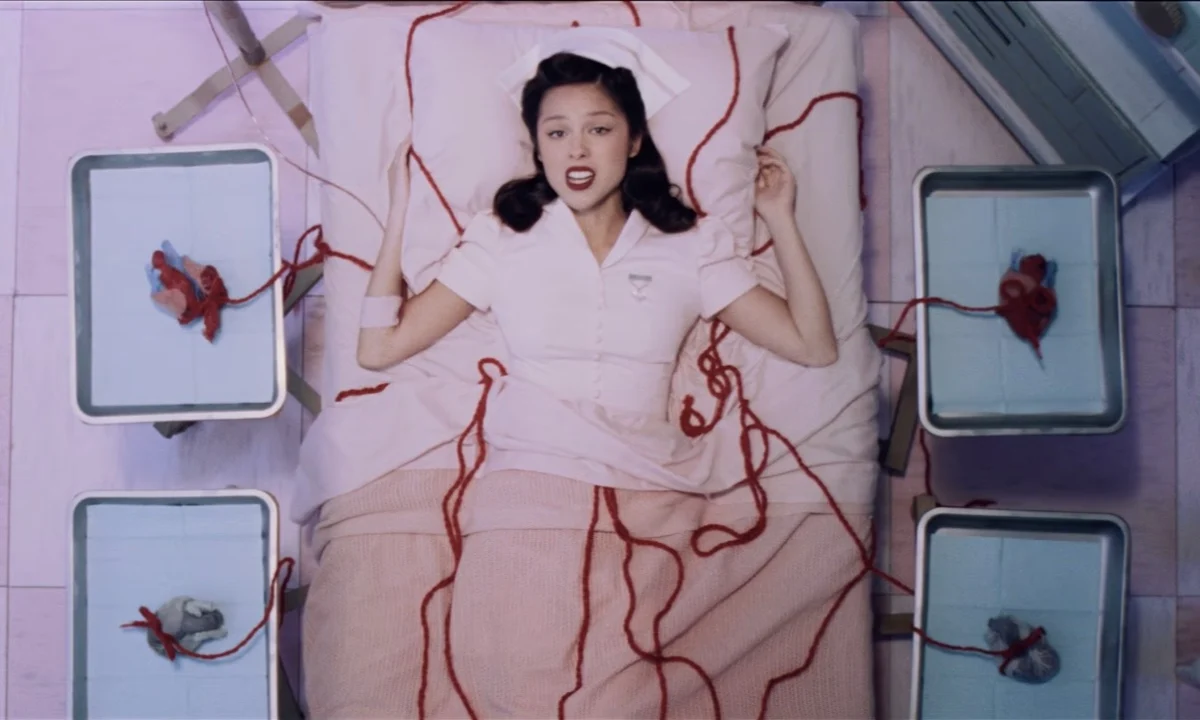
Olivia Rodrigo, the chart-topping artist known for her confessional songwriting and genre-bending artistry, has once again captivated audiences with the release of her latest single and accompanying music video, "the cure." This visually arresting piece, directed by Cat Solen and Jamie Gerin, marks a significant artistic evolution for the young pop sensation, delving into themes of heartbreak, bodily autonomy, and artistic legacy through a powerful surrealist lens. The video’s striking imagery, particularly its direct homage to Frida Kahlo’s seminal work, "Henry Ford Hospital," has sparked considerable discussion, cementing Rodrigo’s position as an artist unafraid to explore complex emotional and visual territories.
The narrative of "the cure" unfolds with Rodrigo portraying a nurse desperately seeking an antidote for a wilting, broken heart. However, the video quickly descends into a disquieting, almost body-horror aesthetic. Red threads, symbolic of a profound internal unraveling, begin to sprout from her fingertips and body, weaving a complex tapestry of her emotional turmoil. This visual language, characterized by its naive early 2000s sensibility reminiscent of Wes Anderson’s stop-motion techniques or Michel Gondry’s handcrafted sets, ultimately culminates in a powerful and undeniable reference to Surrealism.
A Vivid Homage to Frida Kahlo’s "Henry Ford Hospital"
The video’s climax sees Rodrigo lying in a hospital bed, the emanating threads transforming into blood-red arteries. These vascular connections extend from her heart to six other hearts encased in boxes surrounding her, each bound by the same crimson threads. This scene is an almost direct visual echo of Frida Kahlo’s deeply personal and harrowing 1932 masterpiece, "Henry Ford Hospital." Kahlo’s self-portrait depicts her in a hospital bed, bloodied and vulnerable, with six red ribbons extending from her naked body to various symbolic objects. These objects—a fetus, a snail, an orchid, surgical instruments, a pelvic bone, and a diagram of the female reproductive system—represent her profound grief and physical trauma following a devastating bus accident that severely damaged her pelvis and led to multiple miscarriages.
Rodrigo’s deliberate reinterpretation of this iconic artwork underscores the lyrical themes of "the cure." The song, a five-minute exploration of dashed hopes and the elusive nature of solace after heartbreak, articulates a profound sense of disillusionment. Rodrigo sings, "My head is full of poison / and my heart is full of doubt / I got toxins in my bloodstream / you tried hard to suck ’em out / And it feels like medication / and it’s good for me, I’m sure / But it don’t matter how your / love feels anymore / It will never be the cure." These lyrics resonate with the visceral imagery of the video, portraying a desperate, almost futile attempt to heal emotional wounds that feel as debilitating as physical ailments. The narrative of a nurse, in this context, becomes a metaphor for Rodrigo’s own internal struggle to find a remedy for her pain.
Exploring the Depth of Surrealist Expression
Kahlo’s "Henry Ford Hospital" is renowned for its raw emotional honesty, channeling the artist’s deep melancholy stemming from her reproductive struggles. The red ribbons, akin to blood vessels, symbolize her desperate attempt to maintain a connection to parts of herself that felt broken or lost. This motif of connecting vessels reappears in Kahlo’s later work, "The Two Fridas" (1939). In this double self-portrait, two Fridas are depicted, each connected by a thin artery to their respective hearts. The Frida in the Victorian dress suffers from a "diseased" heart, symbolizing her internal pain and divided identity, likely stemming from her complex heritage and tumultuous relationship with Diego Rivera. The arterial connections in both paintings serve as potent visual metaphors for pain, loss, and the persistent struggle to mend a fractured self, whether from physical trauma or emotional anguish.
Rodrigo’s choice to evoke Kahlo’s work is particularly significant given the latter’s exploration of female suffering, bodily integrity, and the psychological impact of physical trauma. By aligning her personal experience of heartbreak with Kahlo’s profound exploration of pain and loss, Rodrigo elevates "the cure" beyond a typical pop ballad into a commentary on enduring human struggles. This connection suggests a growing trend among contemporary artists to draw inspiration from the rich and often challenging narratives found within Surrealist art, particularly from female artists who used their work to process deeply personal and societal issues.
"The Cure" and its Place in Rodrigo’s Evolving Discography
"the cure" is the second heartbreak anthem released from Rodrigo’s forthcoming album, you seem pretty sad for a girl so in love. This single embraces a profound sense of melancholy, offering a stark contrast to the more vengeful tone of her debut single, "drop dead." In "drop dead," Rodrigo adopts a more confrontational stance towards a past lover, delivering biting lyrics such as "i hope you never finish that beer" while exuding a fierce, almost defiant energy in a stylized music video filmed at Versailles.
The music video for "drop dead," directed by Petra Collins, is itself a rich tapestry of references, drawing heavily from Sofia Coppola’s film Marie Antoinette and the iconic band The Cure. Rodrigo’s lyrical mention of "You know all the words to ‘Just Like Heaven’," a direct nod to The Cure’s hit song, is widely interpreted as an "Easter egg" foreshadowing the thematic direction of "the cure." This deliberate interweaving of artistic influences and subtle lyrical cues demonstrates Rodrigo’s meticulous approach to her visual and musical storytelling.
A Wider Artistic Trend: Surrealism’s Resurgence in Pop Culture
The artistic lineage invoked by Olivia Rodrigo in "the cure" is not an isolated incident. There appears to be a burgeoning resurgence of Surrealism as a significant source of inspiration for contemporary pop culture figures. Notably, global icon Madonna recently made a striking appearance at the Met Gala adorned in a gown that bore a striking resemblance to Leonora Carrington’s 1945 painting, "The Temptation of Saint Anthony." Carrington, a prominent figure in the Surrealist movement, was known for her fantastical and dreamlike imagery, often exploring themes of mythology, mysticism, and female power.
This trend suggests a broader cultural fascination with the evocative and often unsettling imagery of Surrealism, particularly as artists seek to express complex emotions and personal narratives in compelling visual ways. The movement, characterized by its exploration of the subconscious, irrationality, and unexpected juxtapositions, offers a rich vocabulary for artists grappling with themes of identity, mental health, and societal pressures. As Rodrigo’s "the cure" demonstrates, Surrealist art provides a powerful framework for artists to translate internal experiences into universally resonant visual metaphors. The question now remains: which other Surrealist masters will inspire the next wave of artistic expression in the mainstream?
The implications of Rodrigo’s artistic choices are far-reaching. By referencing Frida Kahlo, she not only pays homage to a pivotal female artist but also engages with themes of pain, resilience, and the female body that remain deeply relevant. Her ability to synthesize these complex artistic and thematic elements into a contemporary pop context speaks to her maturity as an artist and her capacity to connect with a global audience on a profound level. The success of "the cure" suggests that listeners are receptive to music that is both sonically compelling and intellectually stimulating, embracing art that challenges conventions and sparks meaningful dialogue. The continued exploration of Surrealist aesthetics in pop culture signals a desire for deeper, more nuanced forms of artistic expression that resonate with the complexities of the modern human experience.