Azin Asro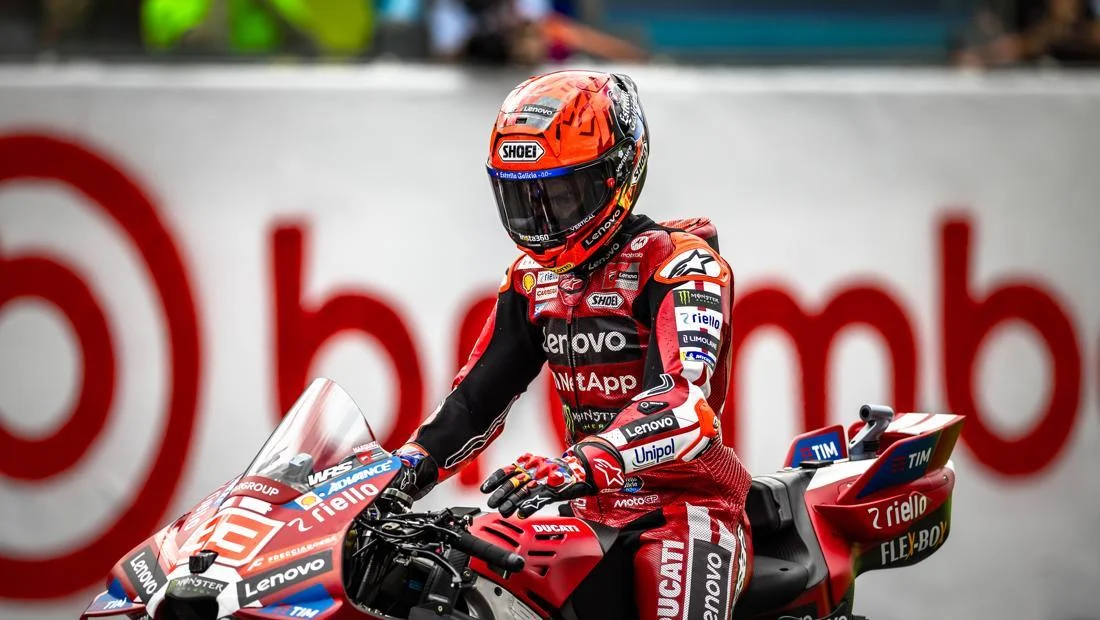
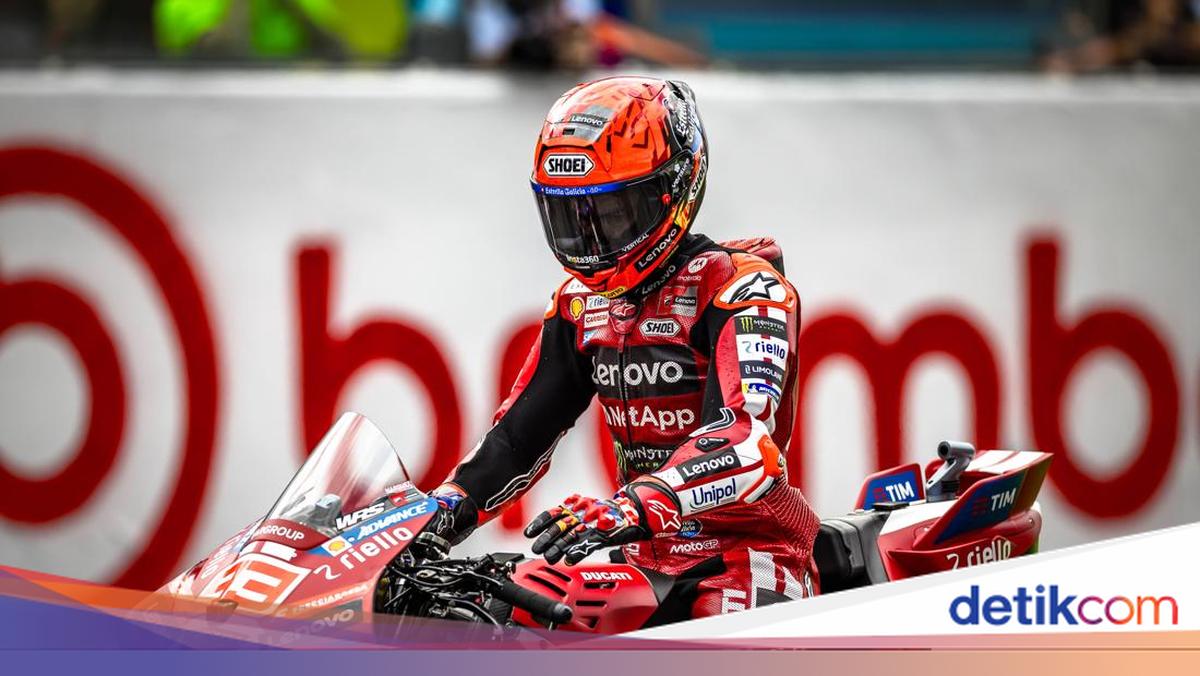
The 2026 MotoGP World Championship arrived at the iconic Autodromo Internazionale del Mugello this weekend, bringing with it the high-speed drama and technical complexity synonymous with the Italian Grand Prix. Among the most scrutinized performances of the Saturday Sprint Race was that of Marc Marquez, the seven-time premier class champion currently campaigning for the Ducati satellite program. Despite grappling with the lingering effects of a significant radial nerve injury and subsequent surgical intervention, Marquez delivered a calculated and tactically sound performance to finish in fifth position. This result, achieved under duress, highlights the veteran Spaniard’s evolving approach to racing as he prioritizes long-term physical rehabilitation over immediate, high-risk podium pursuits.
Tactical Restraint at the Tuscan Speed Bowl
The Sprint Race at Mugello is notoriously demanding, characterized by its long start-finish straight and the punishing "Arrabbiata" corners that subject riders to immense G-forces. For Marquez, who is still navigating the post-operative phase of a radial nerve repair, the eleven-lap dash served as a grueling litmus test for his physical endurance. While the 33-year-old showcased flashes of his legendary speed during the qualifying sessions, the reality of the race distance required a more conservative strategy.
Marquez entered the weekend acknowledging that his physical condition remained far from the 100 percent threshold required to battle at the very front of the grid for sustained periods. In the immediate aftermath of the Sprint, he revealed that his primary objective was not to chase the leading pack at all costs but to manage his energy levels and secure a respectable points finish. This pragmatic shift in mindset is a departure from the "all-or-nothing" style that defined his early career, signaling a more mature phase of his professional journey within the Ducati ranks.
The Physical Challenge: Managing Radial Nerve Recovery
The radial nerve is critical for a motorcycle racer, as it controls the extension of the wrist and fingers, as well as the stability of the forearm—essential components for managing the heavy braking and rapid direction changes required at a circuit like Mugello. Marquez’s surgery, which took place earlier in the season, was intended to address chronic weakness and numbness that had begun to impede his ability to control the Desmosedici at the limit.
During the post-race media debrief, Marquez provided a candid assessment of his current limitations. He noted that while he could still produce the "explosive" speed necessary for a single fast lap in qualifying, the repetitive strain of a multi-lap race caused a rapid decline in his muscular efficiency. "During qualifying, in a single fast lap, I can ride the bike well," Marquez explained. "But my biggest limitation is felt when I have to undergo a race or do many consecutive laps because my energy continues to decline."
This fatigue-induced drop in performance forced Marquez to adopt a "defensive" riding style during the latter half of the Sprint. By choosing not to overextend himself, he avoided the risk of a high-speed crash—a common occurrence when a rider loses the strength to properly brace against the bike’s decelerative forces.
Chronology of the Mugello Sprint Weekend
The weekend began with a focus on setup and ergonomics, as Marquez and his technical crew worked to adapt the Ducati’s controls to accommodate his reduced forearm strength.
- Friday Practice: Marquez focused on short runs, testing different braking configurations. He finished the day within the top ten, showing that the bike’s raw pace was competitive, even if the rider’s stamina was in question.
- Saturday Qualifying: In a display of pure talent, Marquez managed to secure a second-row start. His ability to manipulate the bike over a single lap remains world-class, allowing him to exploit the Ducati’s superior aerodynamic package and engine power.
- The Sprint Race: Starting from the second row, Marquez held his position during the chaotic opening lap. He initially challenged for the fourth spot but eventually settled into a rhythm that allowed him to maintain a gap over the chasing pack. He crossed the line in fifth place, exceeding his own pre-race expectation of a seventh-place finish.
This fifth-place finish is significant not just for the points earned, but for the psychological boost it provides. It confirms that even at a reduced physical capacity, Marquez remains a formidable top-five contender in the world’s most competitive motorcycle racing series.
Comparative Performance and Data Insights
Data from the Sprint Race suggests that Marquez’s lap times were remarkably consistent for the first six laps, hovering within two-tenths of the leaders. However, as the race progressed into the final third, telemetry showed a slight increase in his braking distances and a more conservative throttle application on the exits of the slower corners, such as the "Bucine."
Comparatively, the race winners and podium finishers—who in 2026 represent a mix of established Ducati stars and emerging talents—were able to maintain a more aggressive "attack" profile until the checkered flag. The gap between Marquez and the race winner at the end of the eleven laps was roughly 4.2 seconds. In the context of his recovery, this gap is considered a success by the Ducati management, who are focused on having Marquez at peak fitness for the latter half of the season.
Statements from the Paddock and Technical Analysis
While Marquez’s own words emphasized the "work-like" nature of his current riding experience, the paddock reaction has been one of respect for his resilience. Sources within the Ducati camp have indicated that the team is impressed by his feedback, which remains precise despite his physical discomfort.
"The speed is still there. I know how to ride the bike," Marquez stated, reaffirming his confidence in his fundamental skills. "But when you have speed without control, you cannot be consistent. That is what we have to improve in the next month."
The transition from Honda to Ducati has been a central theme of Marquez’s 2026 season. The Ducati Desmosedici is known for being a more physically demanding bike in terms of its power delivery, though it offers greater stability than the machines Marquez rode for the majority of his career. Engineers are currently looking at "ride-by-wire" mappings that might further assist Marquez in reducing the physical load on his right arm during long race distances.
Looking Ahead: The Road to Brno
With Mugello now in the rearview mirror, Marquez has set his sights on the Czech Grand Prix at Brno. The Brno circuit, while also challenging, offers a different layout that may be less punishing on the radial nerve than the stop-start nature of some sections of Mugello.
Marquez’s focus is now entirely on the "Brno timeline." He expressed a strong desire to see a tangible step forward in his recovery by the time the paddock arrives in the Czech Republic. "I hope that when racing in Brno my condition will be much better. I hope and I want everything to improve in Brno," he said.
However, he remains cautious about predicting a full return to his "100 percent" self. The nature of nerve regeneration is notoriously unpredictable, often involving a "two steps forward, one step back" progression. For Marquez, the definition of 100 percent has likely shifted following the multiple surgeries he has endured over the past several years.
Broader Implications for the 2026 Championship
The 2026 MotoGP season is shaping up to be a year of transition and grit. For Marc Marquez, the goal is no longer just about adding another trophy to his cabinet in the immediate term; it is about reclaiming the joy of racing. His admission that riding currently feels like "work" rather than a passion project is a rare moment of vulnerability from a rider known for his iron-clad psyche.
"At the moment, the way I ride the bike really feels like a job. I don’t enjoy riding the bike in the conditions I am in now," Marquez admitted. "But this is hard work to improve myself for the future, so that I can enjoy everything again later."
This long-game strategy has implications for the constructor’s championship as well. Ducati relies on Marquez’s ability to consistently score points to maintain their dominance over rivals like KTM and Aprilia. If Marquez can continue to secure top-five finishes while at 70 or 80 percent fitness, he remains one of the most valuable assets on the grid.
As the championship moves toward the mid-season break, the narrative surrounding Marc Marquez will continue to be one of medical science versus human will. His performance at Mugello serves as a reminder that while the body may be limited, the racing IQ of a seven-time champion can still bridge the gap to the front of the field. The journey to Brno will be watched closely by fans and rivals alike, as the world waits to see if one of the greatest of all time can once again find the "control" to match his undeniable "speed."