Nila Kartika Wati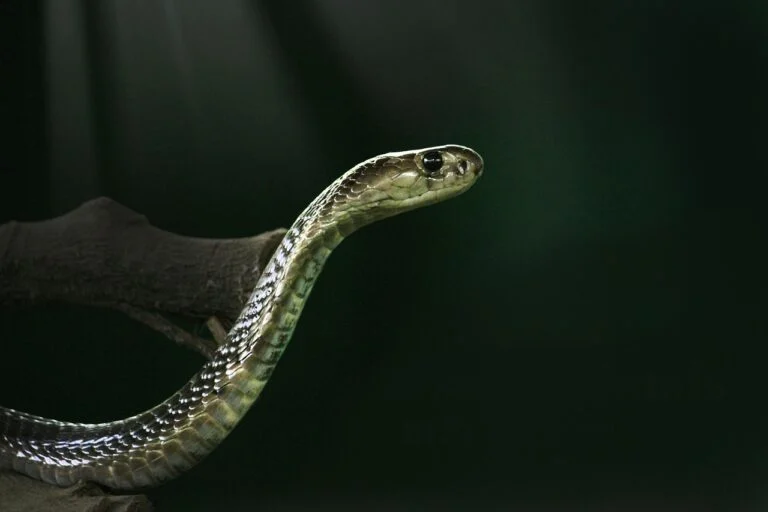
The king cobra, scientifically known as Ophiophagus hannah, represents one of nature’s most specialized and formidable evolutionary achievements. While thousands of snake species inhabit the Earth, the king cobra occupies a unique ecological niche that distinguishes it from all other reptiles. Measuring up to 5.5 meters (18 feet) in length, it holds the undisputed title of the world’s longest venomous snake. However, its physical stature is only a fraction of its significance. The king cobra is defined by a behavioral trait that is exceedingly rare in the animal kingdom: ophiophagy, the specialized practice of hunting and consuming other snakes, including some of the most lethal species on the planet.
Unlike most venomous snakes that prey on rodents, birds, or amphibians, the king cobra’s evolutionary trajectory has turned it into a "cannibal" of sorts, albeit one that targets different species within its suborder. This dietary specialization is reflected in its genus name, Ophiophagus, which is derived from Greek and literally translates to "snake-eater." Despite its common name, the king cobra is not a member of the genus Naja, which contains "true" cobras such as the Indian cobra or the Egyptian cobra. It is the sole member of its own genus, a solitary lineage that has adapted to become the apex predator of the tropical forests of South and Southeast Asia.
Taxonomic Distinction and Physical Characteristics
To understand the king cobra, one must first distinguish it from the more common cobra species. While true cobras (Naja) are known for their iconic hoods and neurotoxic venom, the king cobra belongs to a separate evolutionary branch. Morphologically, the king cobra is significantly larger and possesses a narrower hood. Its head is also more massive, featuring a pair of large scales known as occipitals at the back of the crown, a feature absent in true cobras.
The physical presence of a king cobra is designed for intimidation and efficiency. Its coloration varies depending on its geographical range—from the olive-green and black-banded individuals found in the rainforests of Southeast Asia to the more yellowish-brown specimens common in India. Its eyes are remarkably keen, capable of detecting movement from nearly 100 meters away, a trait that is relatively rare among snakes, which often rely more on chemical sensing than vision.
However, its most famous defensive display occurs when the snake feels cornered. A king cobra can lift up to one-third of its body off the ground—reaching the height of an average adult human—while expanding its hood and emitting a low-frequency hiss. Unlike the high-pitched hiss of most snakes, the king cobra’s sound is more akin to a guttural growl, a result of specialized tracheal diverticula that act as low-frequency resonance chambers.
The Mechanics of Ophiophagy: A Specialized Diet
The king cobra’s status as a specialist predator is its most defining characteristic. Its diet consists primarily of other snakes, ranging from harmless rat snakes to highly venomous species. Its preferred prey includes members of the Bungarus genus (kraits) and Naja genus (true cobras). In some regions, it is also known to hunt the Russell’s viper (Daboia russelii), a snake responsible for a significant portion of human snakebite fatalities in Asia.
Hunting such dangerous prey requires more than just size; it requires physiological immunity. Evolutionary biologists have discovered that king cobras have developed a degree of resistance to the neurotoxic venom of the snakes they hunt. This "evolutionary arms race" has allowed the king cobra to move through the jungle with relative impunity, feeding on predators that other animals avoid at all costs. When primary prey is scarce, the king cobra exhibits opportunistic behavior, consuming monitor lizards, birds, and small mammals, though these remain secondary to its serpentine diet.
The Lethality of Venom and Hunting Strategy
The king cobra’s hunting strategy is a masterclass in precision. It utilizes its forked tongue to pick up chemical particles from the air, which are then processed by the Jacobson’s organ in the roof of its mouth. This allows the snake to track the "scent" of its prey with surgical accuracy. Once the prey is located, the king cobra strikes with incredible speed, often biting the back of the head or the neck to minimize the risk of being bitten in return.
While the venom of a king cobra is not necessarily the most potent in the world on a drop-for-drop basis—ranking below that of the inland taipan or the sea snake—the sheer volume it can deliver in a single bite is catastrophic. A king cobra can inject up to 7 milliliters of venom in one strike. This cocktail of proteins and enzymes consists primarily of neurotoxins, which attack the central nervous system, and cardiotoxins, which affect the heart.
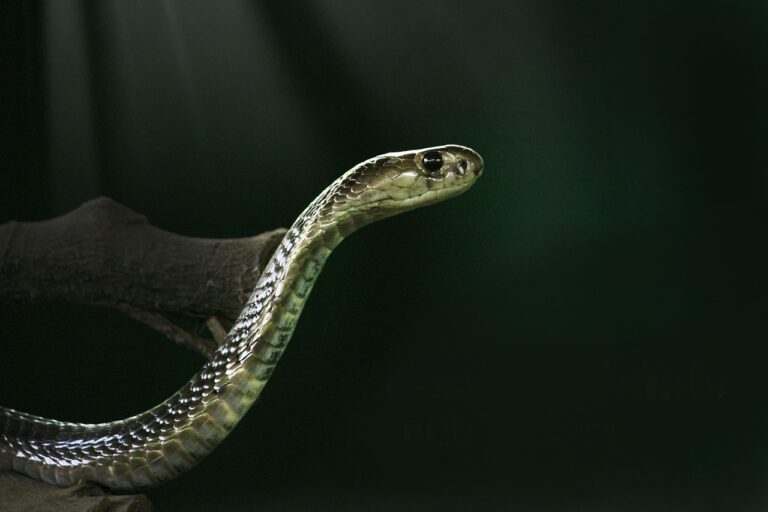
The volume of venom delivered is sufficient to kill an Asian elephant within hours if bitten in a vulnerable area like the trunk. For a human, the prognosis is equally grim; a single bite contains enough toxin to kill approximately 20 adults. Death typically results from respiratory failure as the venom paralyzes the muscles responsible for breathing. Despite this fearsome power, king cobras are generally shy and avoid human contact whenever possible, striking only when they feel they have no other path for escape.
Reproductive Excellence: The Nest Builders
One of the most extraordinary aspects of king cobra biology is its reproductive behavior. It is the only snake species in the world known to build a nest for its eggs. Using its body to loop and drag forest floor debris, the female king cobra constructs a mound of decaying leaves and vegetation. This nest serves a dual purpose: the heat generated by the decomposing organic matter incubates the eggs, and the physical structure provides protection.
The female remains with the nest for the duration of the 60-to-90-day incubation period, guarding it fiercely against predators like wild boars or mongooses. This level of maternal care is almost unheard of in the world of snakes. However, just before the young hatch, the mother typically leaves the nest. Experts believe this is an instinctual behavior to prevent her from accidentally consuming her own offspring, as the hatchlings emerge fully equipped with potent venom and the same ophiophagous instincts as their parents.
Conservation Status and the Human-Wildlife Conflict
Despite its status as a top-tier predator, the king cobra is increasingly vulnerable to the activities of man. The International Union for Conservation of Nature (IUCN) currently lists the king cobra as "Vulnerable." The primary driver of its decline is habitat destruction. As the tropical forests of South and Southeast Asia are cleared for palm oil plantations, agriculture, and urban expansion, the king cobra loses both its hunting grounds and its prey base.
Furthermore, the king cobra is a frequent victim of the illegal wildlife trade. It is hunted for its skin, which is used in the fashion industry, and its meat and gallbladders, which are used in traditional medicines. In some cultures, the consumption of king cobra blood is believed to provide strength or virility, though there is no scientific evidence to support these claims.
The narrowing of natural habitats has also led to an increase in human-wildlife conflict. King cobras frequently wander into villages or plantations in search of food or mates, leading to encounters that often end in the snake being killed out of fear. Conservationists argue that killing king cobras is counterproductive to human safety. Because king cobras hunt other venomous snakes, their presence in an ecosystem acts as a natural control mechanism. In areas where king cobras are removed, populations of monocled cobras and kraits—snakes that are much more likely to enter human dwellings and cause fatalities—often surge.
Ecological Implications and the Path Forward
The loss of the king cobra would have a cascading effect on the biodiversity of Asian tropical forests. As a "keystone species," its role in regulating the populations of other reptiles is vital for maintaining a balanced ecosystem. Without the king cobra, the delicate checks and balances of the forest floor would be disrupted, leading to overpopulation of certain species and the potential collapse of localized food webs.
Conservation efforts are currently focused on several fronts. In India, projects like the Agumbe Rainforest Research Station have pioneered king cobra telemetry studies, tracking the snakes to understand their movement patterns and habitat requirements. Education programs are also crucial; by teaching local communities how to safely relocate snakes rather than killing them, conservationists are fostering a culture of coexistence.
The story of the king cobra is one of evolutionary brilliance and ecological necessity. It is a creature that commands respect not just for its lethal capabilities, but for its complexity as a parent, a hunter, and a guardian of the forest. As humans continue to encroach upon the world’s remaining wild spaces, the survival of the king cobra remains a litmus test for our ability to preserve the planet’s most extraordinary inhabitants. Without proactive measures to protect their habitats and curb illegal trade, the "King" of snakes may eventually find itself with no kingdom left to rule.