Nila Kartika Wati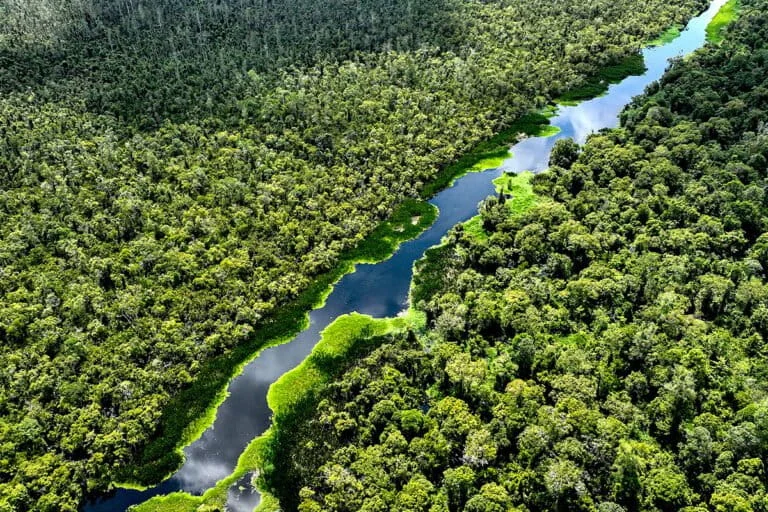
The World Meteorological Organization (WMO) has issued a sobering assessment of the planet’s immediate climatic future, revealing that there is a 91 percent probability that the period between 2026 and 2030 will witness the hottest years ever recorded in human history. This forecast follows a series of alarming temperature spikes, most notably in 2024, when global average temperatures consistently exceeded the 1.5°C threshold above pre-industrial levels (1850-1900) for the first time. As the world grapples with the accelerating effects of anthropogenic climate change, the WMO report underscores a critical juncture where extreme weather events are no longer anomalies but the new standard for the global climate system.
According to Leon Hermanson, the lead author of the WMO report, a significant driver of this projected heat surge is the predicted return of the El Niño phenomenon toward the end of 2026. This natural climate pattern, characterized by the warming of surface waters in the eastern Pacific Ocean, is expected to amplify the underlying warming trend caused by greenhouse gas emissions. Hermanson noted that 2027 is increasingly likely to emerge as a year of unprecedented thermal records, potentially pushing the global community into uncharted territory regarding heat stress, agricultural stability, and ecosystem resilience.
The implications of this continued warming are profound and multifaceted. The WMO warns that the rapid melting of Arctic sea ice is accelerating, which in turn alters global jet streams and disrupts traditional weather patterns. This leads to a cascade of environmental crises, including more severe and prolonged droughts in some regions and catastrophic flooding in others. Furthermore, the rate of climate change is currently outpacing the ability of many species to adapt, heightening the risk of mass extinction events and the permanent loss of biodiversity that underpins human survival.
A Historic Milestone in the Global Energy Transition
Despite the grim climate projections, the first half of 2026 has provided a beacon of hope in the form of a historic shift in global power generation. For the first time in history, the combined output of wind and solar energy surpassed natural gas in global electricity production. Data released in April 2026 by Ember, an independent energy think tank based in London, indicates that wind and solar generated a record 531 terawatt-hours (TWh) of electricity during that month. In contrast, natural gas-fired power plants produced 477 TWh.
This milestone is particularly significant when viewed against the backdrop of the last five years. In April 2021, natural gas production stood at approximately 476 TWh, nearly double the combined output of wind and solar at that time, which was only 245 TWh. The rapid ascension of renewables suggests that the global energy transition is not merely a theoretical goal but an active reality, even as analysts argue that the pace of adoption must still increase to meet the targets set by the Paris Agreement.
The Ember report highlights that this shift occurred during a period of intense global energy volatility, driven in part by renewed conflicts in the Middle East. These geopolitical tensions have historically led to spikes in fossil fuel prices, but the resilience of renewable infrastructure has allowed many nations to maintain power stability while reducing their reliance on volatile gas markets. The 54 TWh surplus of renewable energy over gas in April 2026 is equivalent to the electricity required to power millions of households for several months, illustrating the scale of the transition.
Regional Leadership in Decarbonization
The progress in renewable energy is not uniform across the globe, but several key players are demonstrating that decoupling economic growth from carbon emissions is possible. According to the United Nations Environment Programme (UNEP), greenhouse gas emissions have begun to decline in several major economies, including the European Union, Australia, Japan, South Korea, and China.
China, in particular, has emerged as a dominant force in the solar energy sector. In 2025, China was responsible for more than half of the global increase in solar capacity and generation. This massive expansion pushed the share of wind and solar in China’s total electricity mix to 22 percent, surpassing the average of the 38-member countries of the Organisation for Economic Co-operation and Development (OECD), which stands at 20 percent.
India has also shown remarkable acceleration in its clean energy journey. The country’s renewable energy generation has grown at double the rate of previous records, and for the first time, India’s newly installed solar capacity exceeded that of the United States. These developments suggest a shifting paradigm where emerging economies are increasingly viewing green energy as a cornerstone of national security and economic modernization rather than a secondary environmental concern.
World Environment Day 2026: Inspired by Nature
These milestones in climate data and energy transition serve as the backdrop for World Environment Day on June 5, 2026. This year, the global event is hosted by Azerbaijan, a nation situated along the historic Silk Road. Azerbaijan offers a unique setting for environmental discussions due to its diverse geography, encompassing eight distinct climate zones ranging from arid deserts to snow-capped mountains and maritime coasts.
The theme for 2026, "Inspired by Nature. For Climate. For Our Future," emphasizes the concept of nature-based solutions. The UNEP and host organizers argue that nature should not be viewed as an optional accessory to climate policy but as the core of human resilience. By mimicking the "intelligence" of natural ecosystems—which have survived various planetary crises over millions of years—humanity can find more sustainable ways to manage water, agriculture, and urban development.
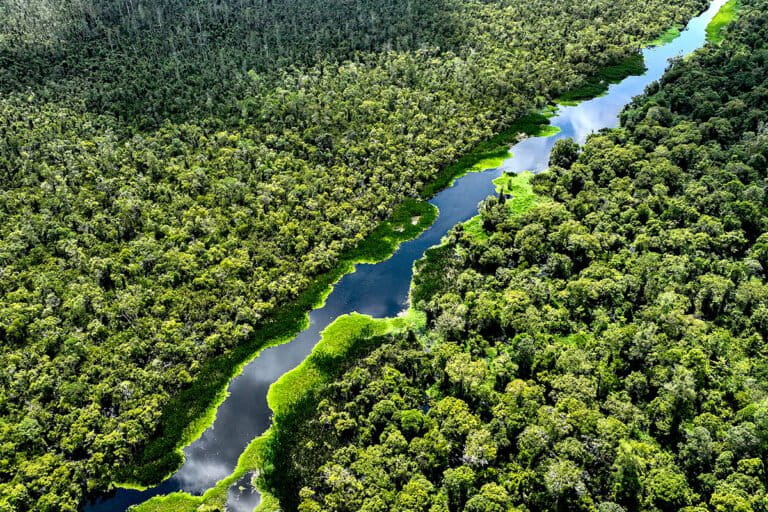
In Indonesia, this theme resonates deeply with the ongoing efforts to preserve tropical peatlands and rainforests. The Rawa Singkil Wildlife Reserve in Aceh, for instance, remains a vital carbon sink and a critical habitat for endangered species. Protecting such ecosystems is increasingly recognized as a primary solution to the climate crisis, as these forests regulate local climates and provide essential services to surrounding human populations.
Biodiversity Breakthrough: The Discovery of Solanum kalimantanense
While the global community focuses on macro-level climate trends, scientists continue to uncover the hidden biological wealth of the planet. In May 2026, a team of researchers from Indonesia’s National Research and Innovation Agency (BRIN) announced the discovery of a new plant species in Borneo, specifically in the provinces of East and South Kalimantan.
The new species, named Solanum kalimantanense, is a type of spiny eggplant. The formal description was published in the scientific journal Taprobanica by a team led by Esthi L. Agustiani, along with Siti Susiarti, Tutie Djarwaningsih, and Muhammad Rifqi Hariri. The discovery serves as a reminder that Indonesia’s biodiversity remains significantly under-documented, even among plant groups that are already utilized by local communities.
Solanum kalimantanense is a shrub that grows to a height of 0.8 to 1.5 meters, featuring stems covered in sharp thorns and large leaves nearly twice the size of a human palm. The fruit is round to oval, covered in fine hairs, and turns yellow when ripe. While it shares some similarities with its relative, Solanum lasiocarpum, it is distinguished by its unique leaf morphology, flower stalk length, and smoother fruit texture.
Traditional Knowledge and Conservation Status
The discovery of Solanum kalimantanense is a testament to the intersection of traditional ecological knowledge and modern science. For generations, the Dayak people of Kalimantan have cultivated and consumed this plant, referring to it as "terong dayak" or "terong asam." It is a staple in local markets, particularly the floating markets of Banjarmasin, where it is sold for use in traditional stews.
Beyond its culinary value, the plant holds medicinal significance. In the Kenohan District of Kutai Kartanegara, the leaves and flower buds are used in a traditional treatment known as "wikat" for cancer therapy. Despite its long history of local use, the species was only recently recognized by the global scientific community as a distinct taxon.
However, the scientific recognition of Solanum kalimantanense comes with a warning. Due to its limited distribution and the ongoing pressures of land-use change in Kalimantan, the species has been assessed as "Vulnerable" according to the criteria of the International Union for Conservation of Nature (IUCN). Researchers emphasize that endemic species like this are vital indicators of forest health. Furthermore, they represent a crucial genetic resource for future crop breeding, offering potential traits for resilience against pests and the extreme weather conditions predicted by the WMO.
The Path Forward: Integration of Energy and Ecology
The confluence of record-breaking heat projections, breakthroughs in renewable energy, and the discovery of new species highlights the complexity of the modern environmental landscape. The data suggests a race against time: while the "green" side of the global economy is growing faster than ever, the "brown" legacy of previous centuries continues to push the planet toward dangerous tipping points.
The transition to a post-fossil fuel world is no longer a distant dream but a measurable reality, as seen in the April 2026 electricity figures. However, the WMO’s 91 percent certainty regarding record heat serves as a reminder that the energy transition alone is insufficient. Holistic climate action must also include the aggressive protection of biodiversity and the restoration of natural ecosystems.
As the world observes World Environment Day 2026, the message from the scientific and policy communities is clear: the solutions to the climate crisis are already present in both human innovation—such as wind and solar technology—and in the ancient wisdom of the natural world. The survival of species like Solanum kalimantanense and the stabilization of the global climate are inextricably linked, requiring a unified approach to energy, ecology, and international cooperation.