Nila Kartika Wati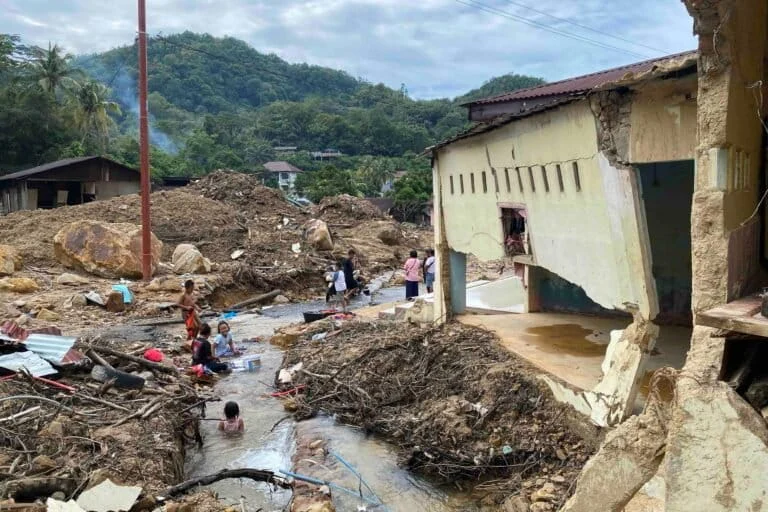
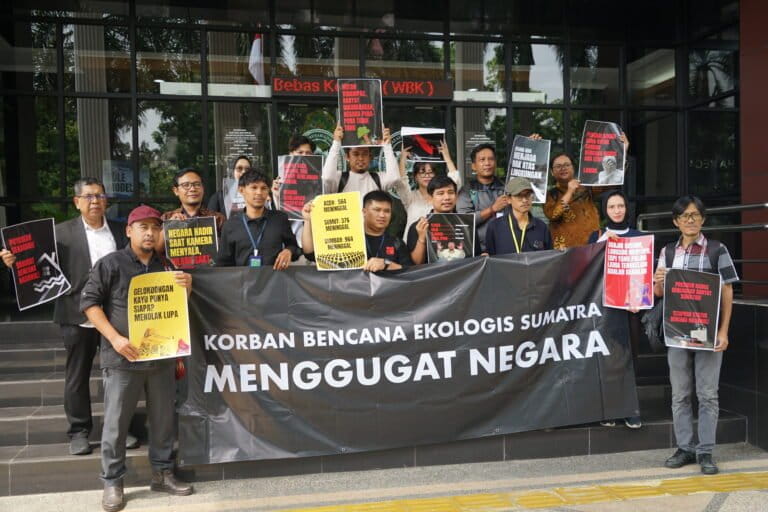
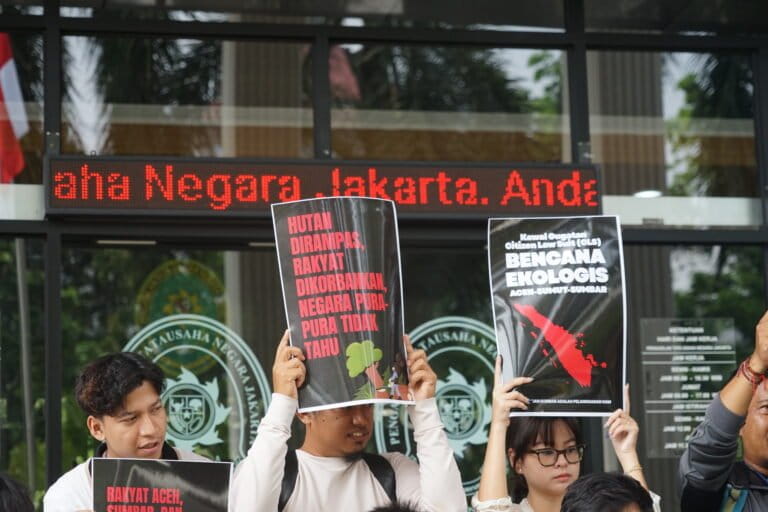
The legal action, filed at the Jakarta Administrative Court (PTUN) in early May 2026, represents a significant escalation in the tensions between the state and citizens affected by the devastating floods and landslides that struck Aceh, North Sumatra, and West Sumatra in late November 2025. More than five months after the initial disaster, a coalition of civil society organizations and affected residents are demanding accountability for what they describe as a systemic failure in disaster mitigation and post-disaster recovery. The lawsuit, spearheaded by the Justice Advocacy Team for Sumatra, utilizes the expanded scope of administrative dispute objects under Law No. 30 of 2014 on Government Administration, arguing that the government’s inaction constitutes a breach of its legal and constitutional obligations to protect its citizens.
The Scale of the Catastrophe and the Failure of State Intervention
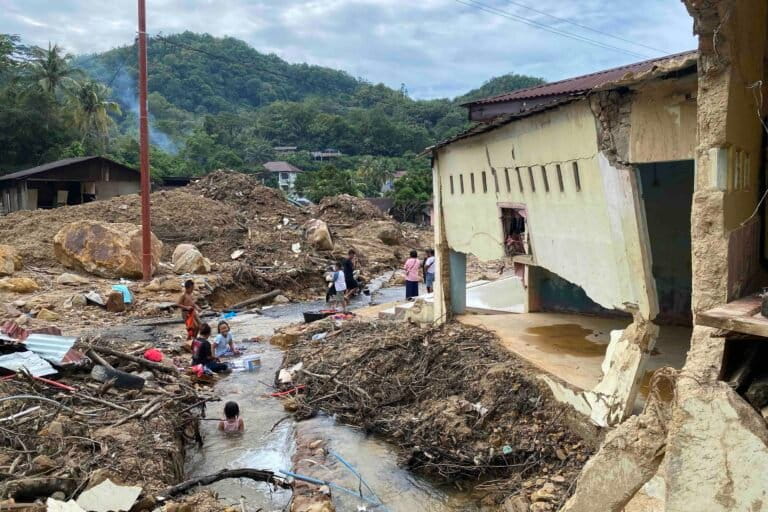
The disaster of late 2025 was one of the most lethal hydrometeorological events in recent Indonesian history. Triggered by Cyclone Senyar and exacerbated by decades of environmental degradation, the floods and landslides claimed 1,208 lives and left 127 people missing. According to data from the National Disaster Management Agency (BNPB), 2,578 families were forced into displacement, and 301,013 homes sustained varying degrees of damage. The destruction was not limited to residential areas; critical infrastructure, including roads, bridges, telecommunications, and power grids, was decimated, leaving dozens of districts in Sumatra isolated for weeks.
Despite the magnitude of the crisis, the central government’s response has been characterized by the plaintiffs as sluggish and dismissive. Edy Kurniawan, Vice Chair of Advocacy for Economic, Social, and Cultural Rights at the Indonesian Legal Aid Foundation (YLBHI), pointed out a stark disparity in government priorities. He noted that while the state claimed budget constraints prevented the declaration of a National Disaster Status, it simultaneously allocated astronomical sums to populist initiatives. Specifically, the "Free Nutritious Meal" (Makan Bergizi Gratis) program received a budget of Rp335 trillion, including Rp3.2 trillion for the purchase of 65,067 electric motorcycles and Rp622.3 billion for program-specific apparel. This allocation, along with "lighthouse projects" such as the Red and White Village Cooperatives (KDMP) and People’s Schools, stands in sharp contrast to the "terkatung-katung" (drifting/uncertain) fate of disaster survivors.
A Timeline of Neglect: From Crisis to Litigation
The chronology of the disaster and the subsequent legal battle highlights a growing divide between official narratives and the reality on the ground.
November 2025: Cyclone Senyar hits the western coast of Sumatra, triggering flash floods and landslides. Thousands of logs from deforested areas are washed down mountainsides, acting as battering rams against villages.
December 2025 – January 2026: Emergency response efforts are hampered by the refusal of the central government to declare a National Disaster Status. The Head of BNPB receives criticism for suggesting that the "haunting" situation reported on social media did not reflect the reality on the ground. The government also declines several offers of foreign assistance.
February – March 2026: Promises are made regarding the construction of Permanent Housing (Huntap) and Temporary Housing (Huntara). Victims are told they will be able to occupy these facilities before the Eid al-Fitr holidays.
April 2026: Auriga Nusantara releases a report showing a massive spike in deforestation in the affected provinces. In West Sumatra, deforestation increased by a staggering 1,034% in 2025 compared to the previous year.
May 2026: Displaced residents, still living in substandard conditions with poor sanitation and no clear timeline for recovery, join forces with LBH Banda Aceh, LBH Padang, and other NGOs to file a Citizen Lawsuit (CLS) against the President and relevant ministries.
Environmental Degradation: The "Planned" Disaster
A central argument of the lawsuit is that the floods were not merely "acts of God" or natural anomalies, but the result of "planned destruction" through decades of environmental mismanagement. Muhammad Qodrat, Director of LBH Banda Aceh, emphasized that the presence of thousands of logs in the floodwaters is a "smoking gun" for illegal logging and poorly managed land-use permits.
The ecological data supporting these claims is grim. Sekar Banjaran Aji, a forest campaigner for Greenpeace Indonesia, noted that forest cover in almost all watersheds (DAS) in Sumatra has fallen below the critical threshold of 25%. In the hardest-hit area of Aceh Tamiang, although forest cover remains at 67%, the region saw 114,000 hectares of deforestation between 1990 and 2022. The cumulative impact of these activities has weakened the environment’s carrying capacity, making it unable to absorb the rainfall brought by Cyclone Senyar.
Furthermore, Nur Syarifah from Auriga Nusantara highlighted that Aceh, North Sumatra, and West Sumatra have consistently ranked in the top ten for deforestation rates nationally over the past two years. The 2025 deforestation data revealed a 426% increase in Aceh and a 281% increase in North Sumatra. These figures suggest that the state failed in its supervisory role, allowing extractive industries to operate without adequate environmental safeguards.
Human Suffering and the Collapse of Livelihoods
The human cost of this negligence is best expressed through the testimonies of those living in the ruins. Erna, a resident of Gampong Meunasah Raya in Pidie Jaya, Aceh, recounted the horror of being swept away by floodwaters along with her husband and child, only surviving because they managed to cling to the roof of a neighbor’s house. Five months later, her village remains buried under a thick layer of mud that has now hardened into soil, entombing her home and possessions.
"We can no longer work," Erna said. "Our rice fields are buried in mud; they cannot be tilled. We have lost our livelihoods and are now entirely dependent on limited aid in temporary shelters."
The situation is equally dire in Nagan Raya and Gayo Lues. Rahmad Maulidin, a resident and co-plaintiff, reported that critical infrastructure like bridges has yet to be repaired. In Beutong Ateuh, school children and pregnant women are forced to cross rivers using makeshift boats or by sliding across steel cables (slings). Despite government claims of distributing Rp268 billion in aid and providing administrative relaxation for regional transfers, the physical reality in these remote areas tells a story of abandonment.
Legal Demands and Policy Implications
The lawsuit filed at the PTUN seeks several specific remedies. First and foremost, the plaintiffs are asking the court to order the government to officially declare the 2025 Sumatra floods a National Disaster. Such a declaration would trigger higher levels of central government funding, streamline the mobilization of national resources, and provide a clearer legal framework for long-term reconstruction.
Additionally, the lawsuit demands:
- A Comprehensive Audit: An evaluation of all extractive and land-use permits in the affected watersheds.
- Environmental Restoration: A systematic plan for forest and watershed recovery to prevent future disasters.
- Accountability for Negligence: A court acknowledgment that the government’s failure to prioritize disaster recovery over populist spending was an unlawful administrative act.
- Vulnerable Group Protection: Kristina Viri from the Indonesia Justice and Peace Foundation (YKPI) stressed that the recovery process must be redesigned to be sensitive to the needs of women, children, and people with disabilities, who have been disproportionately affected by the lack of sanitation and security in displacement camps.
Analysis of Broader Implications
This lawsuit represents a pivotal moment for Indonesian environmental jurisprudence. By using the Citizen Lawsuit (CLS) mechanism, the plaintiffs are testing the judiciary’s willingness to hold the executive branch accountable for "inaction" or "omission." If the court rules in favor of the citizens, it could set a precedent that forces the government to balance its political and populist agendas with its fundamental duty to ensure the "right to a good and healthy environment," as mandated by the Indonesian Constitution.
Ahmad Ashov Birry, Program Director at Trend Asia, warned that without a systemic shift in how the government handles the climate crisis and industrial activity, Sumatra will remain trapped in a cycle of "chronic poverty" and recurring disasters. The economic loss from destroyed agriculture and infrastructure is likely to widen regional inequality, as the costs of the disaster are borne primarily by the rural and coastal poor while the profits from deforestation are concentrated elsewhere.
As the case moves through the PTUN, it serves as a stark reminder that the "safety of the people" (salus populi suprema lex esto) must remain the highest law. For the victims in Aceh, North Sumatra, and West Sumatra, the legal battle is not just about financial compensation; it is a struggle for the recognition of their dignity and the restoration of their safety in a rapidly changing climate. The government’s defense—likely to rest on administrative boundaries and budget posturing—will be weighed against the visible scars on the Sumatran landscape and the enduring trauma of its people.