Nila Kartika Wati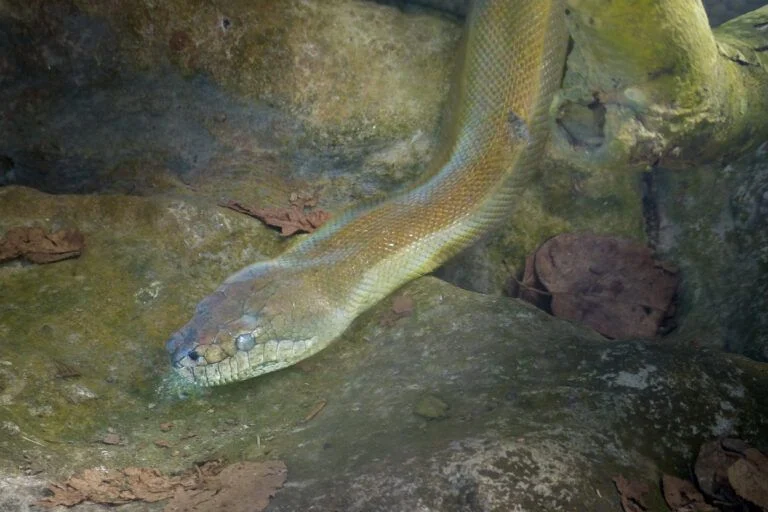
Deep within the primordial rainforests of the island of New Guinea, an evolutionary masterpiece navigates the damp leaf litter and twisted root systems with calculated precision. This apex predator, which can exceed four meters in length, possesses a thick, muscular frame that shimmers in shades of olive-gray, allowing it to vanish into the dappled shadows of the jungle floor. While its size might lead an observer to mistake it for a crocodile or a large monitor lizard from a distance, this creature is the Papuan olive python, scientifically known as Apodora papuana. As the sole representative of its genus, this snake occupies a unique and vital niche in one of the most biodiverse regions on Earth.
The Papuan olive python is far more than a mere predator; it is a biological marvel and an "ecosystem engineer" whose presence dictates the health of the surrounding environment. Despite its formidable size and ecological importance, the species remains relatively elusive, often overshadowed by more famous reptiles. However, as the landscapes of Papua and Papua New Guinea face unprecedented pressures from human activity, the story of Apodora papuana has become a critical focal point for herpetologists and conservationists alike.
A Biological Profile: The Master of Camouflage and Sensation
The nomenclature of the Papuan olive python is derived from its distinctive coloration, which ranges from a light olive-drab to a deep, brownish-green, reminiscent of the fruit or oil of the olive tree. However, the most striking physiological trait of Apodora papuana is its reported ability to undergo subtle but noticeable color changes. Observations suggest that the snake can shift its hue from olive-green to yellow or even dark black. In some instances, the snake may display a bicolor appearance simultaneously.
Biologists believe these shifts are not for active camouflage in the way a chameleon operates, but are instead physiological responses to stress, agitation, or environmental triggers. This "pigmentary language" serves as a visible indicator of the snake’s internal state. Underneath this shifting skin lies a powerhouse of sensory evolution. Like most members of the Boidae and Pythonidae families, the Papuan olive python is equipped with labial heat-sensing pits located along its mouth. These organs allow the snake to "see" infrared heat signatures, enabling it to hunt with lethal accuracy in the absolute darkness of the forest night. By detecting the minute temperature differences between a warm-blooded mammal and the cool night air, the python can strike and constrict its prey before the victim is even aware of a threat.
Taxonomy and Geographic Distribution
What sets the Papuan olive python apart from its relatives in the Liasis genus (to which it was formerly assigned) is its unique genetic and morphological lineage, leading to its classification in the monotypic genus Apodora. This means it has no close living relatives within its specific genus, making its preservation a high priority for maintaining genetic diversity within the python family.
According to Hari Suroto, a prominent researcher from the National Research and Innovation Agency’s (BRIN) Center for Environmental Archaeology Research, the species is endemic to the island of New Guinea, spanning both the Indonesian provinces of Papua and the nation of Papua New Guinea. Its habitat ranges from coastal lowlands to mid-elevation montane forests, reaching altitudes of approximately 700 meters above sea level.
Beyond the main island, the Papuan olive python has established populations on several satellite islands, including Misool, Biak, Yapen, and Numfor. These island populations are of particular interest to evolutionary biologists, as geographic isolation often leads to unique behavioral or physical adaptations. The tropical rainforest, characterized by high humidity, dense canopy cover, and a consistent temperature range, provides the ideal backdrop for this snake to thrive.
The Ecosystem Engineer: A Silent Contributor to Biodiversity
The ecological role of Apodora papuana extends far beyond its reputation as a hunter. In the complex web of the New Guinea rainforest, this python acts as a primary regulator of prey populations. Its diet consists largely of small to medium-sized mammals, including rodents and various species of marsupials such as cuscus and wallabies. By keeping these populations in check, the python prevents overgrazing and over-consumption of forest vegetation, which in turn supports the health of the entire botanical community.
Furthermore, recent scientific discourse has highlighted the role of snakes as "ecosystem engineers." Researchers Deepti Beri and Soumyadeep Bhaumik from The George Institute have pointed out that large snakes contribute significantly to seed dispersal—a process known as endozoochory. Because pythons have much larger home ranges than the small mammals they consume, the seeds contained within the digestive tracts of their prey are transported across vast distances. When the python eventually excretes, these seeds are deposited in new areas, often accompanied by natural fertilizer. This inadvertent "planting" of trees and shrubs is essential for the natural regeneration of the forest and the maintenance of its high biodiversity.

The python’s slow metabolism is another key aspect of its ecological footprint. Apodora papuana can survive for weeks or even months on a single large meal. This efficiency allows it to exist in a state of balance with its environment, never over-exploiting its resources, while remaining a constant, stabilizing presence in the food chain.
Human Interaction and the Exotic Pet Trade
Despite its intimidating size, the Papuan olive python is generally described as non-aggressive toward humans. Unless provoked, cornered, or startled, it tends to avoid human contact. In the local cultures of Papua, the snake is often respected as a natural part of the landscape, though it is sometimes misunderstood or feared due to its sheer mass.
However, the global fascination with "exotic" wildlife has placed a target on the species. The Papuan olive python is highly sought after in the international pet trade due to its unique coloration and its status as a monotypic genus. While international regulations like CITES (the Convention on International Trade in Endangered Species of Wild Fauna and Flora) govern the trade of pythons, illegal poaching and the "laundering" of wild-caught snakes as captive-bred specimens remain significant challenges. The removal of large, breeding-age adults from the wild can have devastating effects on local population densities, particularly because pythons take several years to reach sexual maturity.
Conservation Status: A Deceptive "Least Concern"
Currently, the International Union for Conservation of Nature (IUCN) lists Apodora papuana as a species of "Least Concern." This status suggests that the snake is not currently facing an immediate risk of extinction. However, conservationists warn that this label can be deceptive and may lead to a lack of urgency in protective measures.
The primary threat to the Papuan olive python is habitat loss. Papua is home to some of the last remaining pristine tropical rainforests in Asia, but these areas are increasingly under siege. Large-scale deforestation driven by palm oil plantations, logging, and mining operations is fragmenting the python’s habitat. When forests are cleared, the microclimates the snakes rely on—characterized by specific humidity and temperature levels—are destroyed.
Fragmentation also poses a secondary threat: road construction. As the Trans-Papua Highway and other infrastructure projects penetrate deeper into the wilderness, pythons are more frequently killed by vehicular traffic or encountered by humans who may kill them out of fear or for food. Furthermore, climate change is beginning to alter the rainfall patterns in New Guinea. Since the Papuan olive python depends on a humid environment for successful egg incubation and shedding, shifts in the hydrological cycle could lead to lower reproductive success over time.
Analysis of Implications and Future Outlook
The decline of the Papuan olive python would be a harbinger of broader ecological collapse in the New Guinea region. As an apex predator and a seed disperser, the python’s health is intrinsically linked to the health of the forest. If the python population dwindles, rodent populations could surge, leading to an imbalance that could damage the forest’s ability to sequester carbon and provide resources for indigenous communities.
Scientific groups and environmental advocates are calling for a multi-pronged approach to ensure the survival of the species. This includes:
- Strengthened Habitat Protection: Expanding protected areas and corridors in Papua to ensure that large snakes have the space they need to hunt and breed.
- Community-Based Conservation: Engaging local Papuan communities in monitoring and protecting the species, recognizing their role as the traditional stewards of the land.
- Stricter Trade Monitoring: Implementing more rigorous DNA testing and tracking for pythons in the commercial market to differentiate between legitimate captive-bred animals and illegally poached wild specimens.
- Further Research: Increasing funding for field studies to better understand the population dynamics and genetic health of Apodora papuana across its entire range.
The Papuan olive python is a symbol of the untamed beauty and complex functionality of the New Guinea rainforest. It serves as a reminder that every creature, no matter how feared or hidden, plays a role in the grand machinery of life. To lose the Papuan olive python would be to lose a vital piece of the world’s natural heritage—a silent guardian whose presence ensures that the "lungs of the Earth" continue to breathe. As the world watches the rapid transformation of the Papuan landscape, the fate of this emerald-hued predator remains a critical indicator of our success or failure in preserving the planet’s most vital ecosystems.