Lusiana Hamidun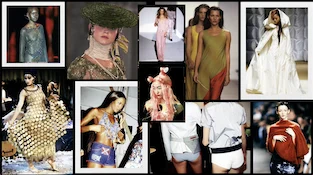
The year 1999 stands as a unique crossroads in history, a period marked by significant cultural shifts, technological leaps, and a palpable sense of anticipation for the turn of the millennium. It was a time when the New York Knicks last graced the NBA Finals, a moment that, in retrospect, serves as a poignant marker for the evolving landscape of popular culture, including the world of high fashion. The Knicks’ Eastern Conference Championship run in 1999, powered by stars like Patrick Ewing, Allan Houston, and Latrell Sprewell, captured the city’s imagination. The star-studded audience, a fixture of any major sporting event, included notable figures such as John F. Kennedy Jr., whose presence tragically became a somber premonition just a month before his untimely death in a plane crash. This era, teetering on the edge of a new century, was also defined by the widespread Y2K anxieties, the introduction of revolutionary technologies like the BlackBerry, the impeachment trial of President Bill Clinton, and the release of cinematic masterpieces that would go on to define a generation, such as "10 Things I Hate About You" and "The Matrix."
The fashion industry of 1999 operated under a vastly different paradigm compared to today’s hyper-connected, instantly accessible digital age. Runway shows, once the exclusive domain of industry insiders, were characterized by an air of mystery and exclusivity. Access to visual documentation of these collections was severely limited, a stark contrast to the digital floodgates that would open just a year later with the advent of Style.com, which began to upload fashion show photography online from New York, London, Milan, and Paris. The subsequent rise of social media and live streaming would further democratize access, making the exclusivity of 1999 fashion shows a relic of a bygone era.
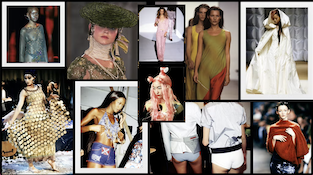
At the helm of the industry’s most influential houses were visionary designers pushing the boundaries of creativity. Lee Alexander McQueen, known for his audacious and often provocative designs, held the position of Creative Director at Givenchy, while John Galliano was in his third year leading the creative direction at Dior. The fashion media of the time heavily focused on these creative directors and the dominant models who walked their runways. However, for the broader public, understanding the nuances of seasonal collections remained a challenge, with information filtered through a limited number of glossy magazines. The year 1999, therefore, represented the final frontier of fashion’s digital inaccessibility, a period where the allure of couture and ready-to-wear was reserved for a select few, imbued with an exclusive charm that was about to be irrevocably altered by the impending digital revolution. This unique confluence of cultural events and the impending shift in fashion accessibility sets the stage for examining the collections that defined this pivotal year, offering a glimpse into the aesthetic sensibilities and creative currents that shaped the end of the 20th century.
Alexander McQueen: The Art of Transformation and Technology
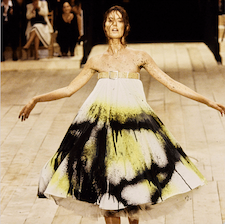
Alexander McQueen’s Spring 1999 collection, titled "No. 13," stands as a monumental testament to his artistic genius and his forward-thinking integration of technology with raw emotion. Presented to an intimate audience of friends, buyers, and press, the show notably eschewed celebrity attendees, a deliberate choice by McQueen to ensure the focus remained solely on the art of the collection. Rumors suggested that Victoria Beckham was denied entry, a move that underscored McQueen’s commitment to his vision. The collection drew profound inspiration from the Arts and Crafts movement’s emphasis on craftsmanship and natural materials, juxtaposed with the cutting-edge advancements in prosthetic technology that emerged in the post-World War I era. This fusion resulted in a collection that showcased a palette of neutral tones, organic fabrics, and silhouettes that evoked the protective, yet powerful, form of armor.
The show’s climax, however, etched itself into fashion history. As the finale unfolded, model Shalom Harlow stood upon a rotating platform. Two industrial robots, typically associated with manufacturing and precision, were programmed to spray-paint Harlow’s pristine white dress with bold strokes of black and yellow. This daring act of performance art transformed the garment in real-time, symbolizing a metamorphosis and a commentary on creation and destruction. After the robots completed their task, Harlow, now adorned with the paint-splattered gown, walked towards the audience with a gesture of surrender, a powerful and poignant moment. McQueen himself reportedly confessed that this particular collection was the only one that moved him to tears, a testament to its profound emotional resonance and artistic significance. The performance highlighted McQueen’s ability to blend high art, technology, and human vulnerability, creating an unforgettable spectacle that transcended mere clothing.
John Galliano’s Roman Reverie and Expressive Runways
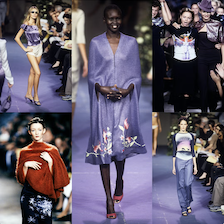
John Galliano’s Spring 1999 collection for Dior was a departure into opulent historical fantasy, inviting models to imbue their walks with an unprecedented level of theatricality and emotional expression. Against a backdrop where male models lay sparsely clad, female models emerged in a cascade of luxurious textiles and bias-cut silk gowns that drew direct inspiration from the grandeur of Ancient Rome and the romanticized visions of paintings by Lawrence Alma-Tadema. The collection was a rich tapestry of color, with deep hues juxtaposed against ethereal, diaphanous fabrics. Galliano masterfully combined the weight of historical influence with the lightness of contemporary design, creating garments that felt both timeless and breathtakingly modern.
The runway was transformed into a stage where emotion was paramount. Models were encouraged to dance, to emote, and to connect with the audience on a visceral level, a stark contrast to the more stoic presentations that often characterized fashion shows. The dramatic makeup and bare feet of the models further amplified the raw, expressive nature of the collection, allowing the audience to fully immerse themselves in the narrative Galliano was weaving. This approach to the runway show itself was a statement, emphasizing that fashion was not merely about the clothes but about the stories they told and the feelings they evoked.
Anna Sui: The Enduring Spirit of ’90s Grunge and Femininity
Anna Sui consistently championed a unique aesthetic that blended elements of grunge, vintage charm, and a distinctly youthful and feminine perspective, making her a defining voice of the 1990s. Her influence was so profound that, over two decades after the decade concluded, a book titled "The Nineties – Anna Sui" was published, dedicated to her enduring legacy. For her Spring 1999 collection, Sui brought together a stellar lineup of supermodels, including Naomi Campbell, Karen Elson, and Maggie Rizer. They graced the runway carrying whimsical picnic basket-shaped bags and sporting ensembles that epitomized her signature style: patchwork shorts and skirts, intricately embroidered denim, and graphic t-shirts that spoke to a generation’s eclectic sensibilities.
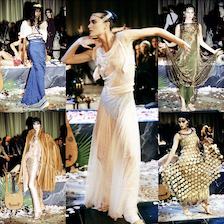
Sui’s ability to seamlessly weave together disparate influences—from the rebellious spirit of grunge to the delicate details of vintage pieces—created collections that resonated deeply with a young audience seeking individuality and self-expression. Her designs were not confined by trends; instead, they offered a timeless appeal that continues to inspire. The Spring 1999 collection, with its playful yet sophisticated approach, solidified her position as a designer who understood and celebrated the multifaceted nature of modern femininity.
Jean Paul Gaultier: A Global Tapestry of Cultural Fusion
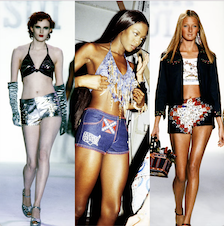
Jean Paul Gaultier’s Spring 1999 collection was a daring exploration of cultural cross-pollination, drawing inspiration from a rich global palette. The collection demonstrated Gaultier’s signature penchant for mixing and matching influences, this time with a focus on Japanese tailoring and the classical forms of Greco-Roman sculpture. The result was a collection that was both intellectually stimulating and visually arresting. He presented black and white silk sheath dresses adorned with trompe l’oeil motifs that mimicked classical statues, offering a playful yet sophisticated take on historical art.
However, the collection also ventured into more complex territory with its interpretations of the kimono. While visually striking, these designs sparked conversations about cultural appropriation, a theme that would become increasingly prominent in fashion discourse in the years that followed. Gaultier’s approach was theatrical and bold, challenging traditional notions of fashion and representation. The collection’s ability to provoke discussion and remain a topic of conversation decades later is a testament to its significant impact and Gaultier’s enduring legacy as a designer who consistently pushed boundaries and questioned conventions.
Tom Ford for Gucci: A Psychedelic Revival of the "Summer of Love"
Tom Ford’s Spring 1999 collection for Gucci was a vibrant and unashamed celebration of the "Summer of Love" ethos, reinterpreted through Gucci’s lens of opulent sensuality. Ford infused the collection with an infectious energy, presenting a bold, eclectic, and spirit-infused vision that captured the bohemian spirit of the late 1960s. The runway was ablaze with a riot of colors, featuring lively floral prints that exuded exuberance. Leather jackets added a touch of rebellious edge, while denim pieces were adorned with intricate decorative details, showcasing Ford’s meticulous craftsmanship. The collection also included daringly cut bikinis, embodying a carefree and liberated attitude.
This collection was a masterclass in taking a historical aesthetic and making it entirely contemporary and desirable. Ford’s ability to distill the essence of a cultural movement and translate it into covetable fashion cemented Gucci’s status as a powerhouse brand. The collection’s bold graphics, luxurious materials, and confident silhouettes offered a powerful statement of optimism and self-assuredness, perfectly encapsulating the spirit of an era on the cusp of a new millennium.
Prada: Irony and Deconstruction in the Hippie Era
Miuccia Prada’s Spring 1999 collection for Prada offered a brilliantly ironic and deconstructive commentary on the prevailing hippie trends of the time. Instead of embracing the movement wholeheartedly, Prada took its most recognizable clichés and subverted them in unexpected ways. The runway was dominated by elements such as shattered mirror appliqués and utilitarian fanny packs, recontextualized within Prada’s signature minimalist yet impactful aesthetic. A strong sense of sporty influence also permeated the collection, adding another layer of unexpectedness.
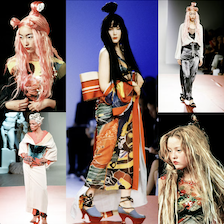
Prada herself later articulated the collection’s intent, stating, "At that time, there was a revival of the hippie style, so the whole collection was an ironic comment on this trend. My collection contained all the clichés of the hippie style like mirrors and flowers, but at the same time, it was destroying them. In fact, it was the least hippie collection imaginable." This statement highlights Prada’s intellectual approach to design, where fashion serves as a vehicle for critical observation and commentary. The collection’s ability to simultaneously engage with and critique a cultural phenomenon showcased Prada’s unique position as a designer who consistently challenged the status quo.
Stella McCartney for Chloé: High-Low Fusion and Playful Subversion
Stella McCartney, in her tenure as Creative Director for Chloé, consistently demonstrated a remarkable ability to blend high fashion sensibilities with an accessible, playful spirit. Her Spring 1999 collection was a prime example of this ethos, transforming seemingly casual motifs into luxurious statement pieces. McCartney elevated playful prints and airbrushed tourist t-shirts into sophisticated garments, artfully pairing them with opulent silks, structured corsets, and delicate lace. This juxtaposition of the everyday with the exquisite created a unique tension and desirability.
The subsequent Fall 1999 collection offered a transition into cooler tones and richer textures, incorporating plush velvet, cozy knits, and warm wools. McCartney continued her innovative approach by contrasting retro-inspired capes and hats with dazzling sequins and sheer tops, all punctuated by vibrant tiger prints embellished with crystals. This collection showcased McCartney’s talent for creating fashion that was both desirable and imbued with a sense of fun and modern rebellion, cementing her reputation as a designer who understood how to make fashion feel relevant and exciting.
Calvin Klein: Sensuality, Sophistication, and Enduring Iconography
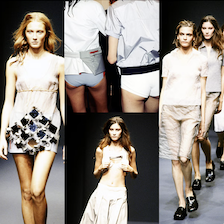
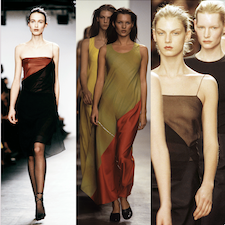
The Calvin Klein collections of 1999, for both Spring and Fall, embodied a modern, sensual, and sophisticated aesthetic that became synonymous with the brand. The Spring 1999 offerings featured fluid jersey dresses, sleek sporty ensembles, and daringly sheer tank tops, all presented with a minimalist purity. The color palette for this season was often bright and optimistic, reflecting the fashion of the time. As the seasons shifted to Fall, Klein embraced a more subdued, neutral palette, focusing on the luxurious feel of leather and the precision of impeccable tailoring.
The enduring association of Carolyn Bessette-Kennedy with the Calvin Klein brand, even three years after her departure from her role with the company, was a testament to the designer’s impact. Her personal style, which often mirrored the clean lines and understated sensuality of Klein’s designs, became an embodiment of the brand’s aesthetic. It was clear why she was so closely linked to Calvin Klein; her effortless elegance perfectly captured the essence of the brand’s sophisticated and modern vision.
Comme des Garçons: Punk Energy and Reimagined Femininity
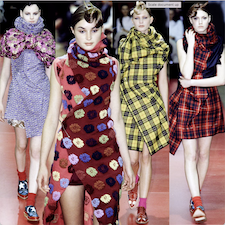
Rei Kawakubo’s Autumn 1999 collection for Comme des Garçons presented a powerful and unconventional vision of femininity, characterized by a strong punk-infused energy. The models walked the runway in an atmosphere of hushed reverence, allowing the avant-garde designs to command full attention. Kawakubo’s creations were a bold statement, featuring voluminous tartan layers draped over shoulders, oversized bows adorning dresses, and striking geometric patterns that contrasted with impeccably tailored grey ensembles.
This collection represented a radical reimagining of traditional feminine codes. Kawakubo infused the garments with a raw, untamed spirit, challenging conventional notions of beauty and design. The juxtaposition of structured tailoring with expansive, almost sculptural elements created a unique silhouette that was both powerful and provocative. The collection’s ability to convey a strong message through its design alone underscored Kawakubo’s mastery of conceptual fashion, offering a fresh perspective on what it meant to be feminine in the modern era.
Chanel Haute Couture: Karl Lagerfeld’s Modern Interpretations
In the Autumn 1999 Haute Couture season, Karl Lagerfeld, then midway through his illustrious 36-year tenure at Chanel, offered a fresh perspective on the house’s iconic codes. He masterfully reinterpreted the relaxed silhouette of the signature suit and the timeless appeal of the little black dress. The collection featured a voluminous quilted red gown worn by Karen Elson, a testament to Chanel’s enduring elegance. Naomi Campbell showcased a chic crochet knit set, demonstrating the versatility of Chanel’s creations. Devon Aoki closed the show in a striking white hooded cape, adding a touch of dramatic flair.
Lagerfeld’s approach was to honor Chanel’s heritage while infusing it with contemporary relevance. He understood the importance of both tradition and innovation, ensuring that the brand remained at the forefront of fashion. The Autumn 1999 Haute Couture collection was a sophisticated display of craftsmanship and design, reaffirming Chanel’s position as a paragon of luxury and timeless style.
Louis Vuitton: Marc Jacobs’ Bold Statement in Oversized Accessories
Marc Jacobs’ first collection for Louis Vuitton debuted in Autumn 1998, and by Autumn 1999, he had firmly established his distinctive vision for the heritage brand. His Autumn 1999 collection was a bold declaration, with a strong emphasis on oversized accessories, particularly handbags. Jacobs orchestrated a star-studded runway, featuring iconic supermodels of the era such as Naomi Campbell, Karen Elson, Gisele Bündchen, and Stella Tennant.
The models were styled in classic knitwear and complemented by vibrantly colored, exceptionally large accessories. This strategic focus on statement bags signaled a new direction for Louis Vuitton, emphasizing its evolution into a contemporary fashion powerhouse under Jacobs’ creative leadership. The collection was a powerful statement of intent, demonstrating Jacobs’ ability to inject youthful energy and modern relevance into a storied luxury house.
Dior Haute Couture: John Galliano’s Theatrical Fusion of Futurism and Fantasy
John Galliano’s Autumn 1999 Haute Couture collection for Dior was a spectacular and theatrical masterpiece, drawing inspiration from a diverse array of sources, including the burgeoning cultural phenomenon of "The Matrix," the romanticism of historical periods, and the darker allure of "evil." Presented within the opulent setting of Versailles, the collection featured models in warrior-like ensembles, adorned with avant-garde accessories such as animalistic headpieces and lavish strands of pearls.
The collection was a captivating blend of historical references and futuristic visions, creating an atmosphere that was both uncanny and fantastical. Galliano’s signature dramatic flair was on full display, delivering a collection that was quintessentially couture in its ambition and execution. Earlier that year, Galliano’s Spring 1999 Haute Couture collection for Dior had also garnered significant attention for its luxurious surrealism and playful, detailed costuming. Together, these collections solidified Galliano’s reputation as a visionary designer capable of transforming the runway into an unforgettable theatrical experience, pushing the boundaries of haute couture with his imaginative and extravagant creations.
The year 1999, therefore, was not just a transitionary period but a moment of profound cultural and creative effervescence. From the sporting arenas to the digital frontier, and most vividly on the fashion runways, it was a year that set the stage for the transformations that would define the 21st century, leaving an indelible mark on our collective memory and shaping the aesthetic landscape for years to come.