Azin Asro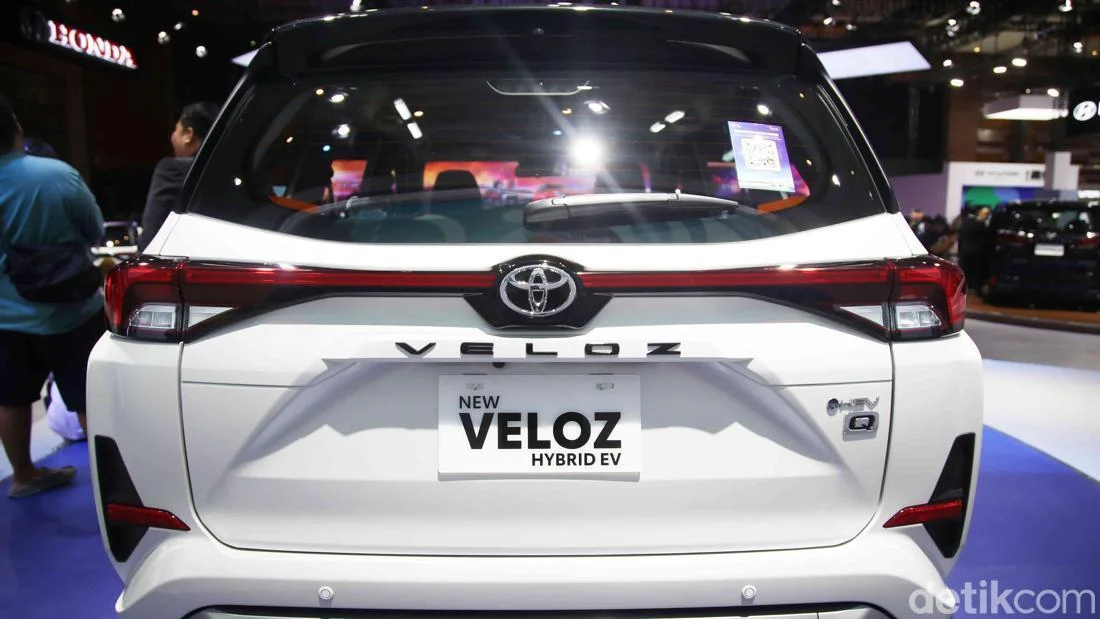
The Indonesian automotive market has reached a significant turning point with the official price announcement of the BYD M6 DM, which starts at an aggressive Rp 298 million. This strategic pricing places the Chinese-manufactured Plug-in Hybrid Electric Vehicle (PHEV) in direct competition with the long-standing market leader, Toyota, whose Veloz Hybrid is positioned at Rp 303 million. With a narrow price gap of only Rp 5 million between the entry-level variants of these two models, Indonesian consumers are now faced with a complex choice between two distinct approaches to sustainable mobility: the versatile Plug-in Hybrid (PHEV) technology of BYD and the established self-charging Hybrid Electric Vehicle (HEV) system of Toyota. This rivalry signifies more than just a price war; it represents a fundamental shift in the Multi-Purpose Vehicle (MPV) segment, which has historically been the backbone of the Indonesian automotive industry.
The Technological Divide: PHEV vs. HEV
At the core of the comparison between the BYD M6 DM and the Toyota Veloz Hybrid is the difference in their electrified powertrains. The BYD M6 DM utilizes "Dual Mode" (DM) technology, which categorizes it as a Plug-in Hybrid Electric Vehicle. This system allows the vehicle to operate in a purely electric mode for short distances—specifically up to 45 kilometers—before the internal combustion engine takes over or assists the motor. Crucially, the M6 DM features a charging port, allowing owners to replenish the battery via an external power source, such as a home wall-box or public charging station. This provides a bridge for consumers who are interested in the electric vehicle experience but are not yet ready to commit to a full Battery Electric Vehicle (BEV) due to range anxiety or infrastructure concerns.
In contrast, the Toyota Veloz Hybrid employs a traditional hybrid system that does not require external charging. The battery in the Veloz Hybrid is smaller and is automatically recharged through a combination of the gasoline engine and regenerative braking—a process that captures kinetic energy during deceleration and converts it into electricity. While this offers the convenience of traditional refueling without the need to find a charging station, it lacks the extended "EV-only" range offered by the BYD. The Veloz Hybrid is designed for maximum efficiency in stop-and-go urban traffic, where the electric motor can frequently assist the engine to reduce fuel consumption.
Pricing Strategy and Market Positioning
The decision by BYD to price the M6 DM at Rp 298 million for its base variant is seen by industry analysts as a disruptive move intended to capture the "Low MPV" and "Medium MPV" cross-section. By undercutting the Toyota Veloz Hybrid by Rp 5 million, BYD is challenging the perceived "premium" price tag usually associated with PHEV technology. Historically, PHEVs have been more expensive than standard hybrids due to their larger batteries and on-board charging hardware. BYD’s ability to offer this technology at a sub-Rp 300 million price point suggests a highly optimized supply chain and a clear intent to dominate the Indonesian electrified vehicle market.
Toyota, meanwhile, maintains its pricing for the Veloz Hybrid at Rp 303 million, relying on its vast service network, high resale value, and the established reputation of the Veloz nameplate. For many Indonesian families, the Veloz is a trusted brand, and the transition to a hybrid version is seen as a natural progression rather than a radical change. However, the slim price margin now forces buyers to weigh the brand prestige and reliability of Toyota against the advanced technology and larger dimensions offered by BYD.
Dimensional Analysis: Space and Ground Clearance
For the Indonesian consumer, the dimensions of an MPV are often as important as the engine specifications. The MPV is primarily a family vehicle, used for both daily commutes and "Mudik" (the annual holiday exodus). The BYD M6 DM offers a larger physical footprint, measuring 4,710 mm in length, 1,810 mm in width, and 1,690 mm in height. Its wheelbase of 2,800 mm suggests a more spacious cabin, particularly for third-row passengers. However, it sits lower to the ground with a clearance of 170 mm, which may be a consideration for drivers in areas prone to flooding or uneven rural roads.
The Toyota Veloz Hybrid is more compact, with a length of 4,512 mm, a width of 1,780 mm, and a height of 1,700 mm. While it is smaller than the BYD, it boasts a significantly higher ground clearance of 205 mm. This higher stance has long been a selling point for the Veloz and its sibling, the Avanza, as it provides better capability for navigating the varied terrains of the Indonesian archipelago. The Veloz’s wheelbase of 2,750 mm is slightly shorter than the BYD’s, but Toyota’s clever interior packaging, known as "Long Sofa Mode," remains a popular feature for families seeking versatility.
Performance and Fuel Efficiency Metrics
The performance data for these two vehicles reveals different priorities. The BYD M6 DM is equipped with a 1.5-liter plug-in hybrid engine with a displacement of 1,498 cc. The system delivers a combined maximum power of 120 kW (approximately 160 hp) and 210 Nm of torque. This makes the M6 DM considerably more powerful on paper than its Toyota rival. Perhaps the most striking figure provided by BYD is the theoretical fuel consumption of 65 km/liter, achieved when the battery is fully utilized. Furthermore, with a full tank of gas and a full charge, the M6 DM is claimed to have a total cruising range of 1,300 km, potentially making it one of the most efficient long-distance travelers in the Indonesian market.
The Toyota Veloz Hybrid utilizes the 2NR-VEX engine, a 1,496 cc four-cylinder unit specifically tuned for the hybrid cycle. The internal combustion engine produces 91 PS and 121 Nm of torque, while the electric motor adds 80 PS and 141 Nm. The total system output is rated at 111 PS. While these numbers are lower than the BYD’s, the Veloz Hybrid is optimized for fuel economy in real-world Indonesian driving conditions, with a rated consumption of 28.9 km/liter. While this is less than half of BYD’s claimed 65 km/liter, it represents a significant improvement over the standard gasoline Veloz and does not require the user to manage battery charging to achieve high efficiency.
Features and Interior Amenities
In their respective entry-level variants, both vehicles focus on essential safety and convenience features. The BYD M6 DM comes standard with Cruise Control and a Rear View Camera, which are increasingly becoming the baseline for modern MPVs. BYD is also known for its "Blade Battery" technology, which is touted for its safety and durability, as well as its large rotatable touchscreen infotainment systems that have become a signature of the brand.
The Toyota Veloz Hybrid entry variant similarly provides a reverse camera and essential safety suites. Higher trims of the Veloz usually include Toyota Safety Sense (TSS), which offers pre-collision systems and lane departure alerts. However, at the Rp 303 million price point, the focus is on providing the hybrid powertrain rather than an exhaustive list of luxury features. The battle in the feature department often comes down to the user interface: BYD offers a more "tech-forward," smartphone-like experience, while Toyota focuses on ergonomic familiarity and tactile controls.
Chronology of the Electrified MPV Surge in Indonesia
The arrival of the BYD M6 DM is the result of a rapid expansion strategy by Build Your Dreams (BYD) in Southeast Asia.
- Early 2024: BYD officially entered the Indonesian passenger car market with three pure electric models: the Dolphin, Atto 3, and Seal.
- Mid-2024: Recognizing the dominance of the MPV segment in Indonesia, BYD signaled its intent to introduce a family-oriented vehicle that could address the country’s unique infrastructure challenges.
- Launch Phase: The M6 was initially introduced as a pure EV, but the introduction of the "DM" (PHEV) variant was a strategic move to capture the massive segment of buyers who are not yet ready for full electrification.
- Toyota’s Preemptive Strike: Toyota, having dominated the Indonesian market for decades, accelerated its electrification roadmap by introducing hybrid versions of its most popular models, including the Kijang Innova Zenix and later the Veloz Hybrid, to maintain its market share against the "Chinese wave."
Official Responses and Industry Sentiment
While official statements from BYD Indonesia emphasize "technology democratization," suggesting that advanced PHEV tech should be accessible to the masses, Toyota Astra Motor (TAM) has focused on the "Multi-Pathway" strategy. Toyota executives have frequently stated that the best way to reduce carbon emissions in Indonesia is to provide various options—HEV, PHEV, and BEV—allowing consumers to choose what fits their lifestyle and the available infrastructure.
Industry observers from GAIKINDO (The Association of Indonesia Automotive Industries) note that the entry of BYD into the sub-Rp 300 million hybrid space will likely force other manufacturers to accelerate their electrification plans. "Competition is healthy for the consumer," noted one industry analyst. "For years, the MPV segment was stagnant in terms of powertrain innovation. Now, we are seeing a leapfrogging effect where high-tech hybrids are becoming the new standard for the Indonesian middle class."
Broader Impact and Market Implications
The rivalry between the BYD M6 DM and the Toyota Veloz Hybrid has broader implications for Indonesia’s national goals. The Indonesian government has set ambitious targets for carbon neutrality and is actively promoting the development of an EV ecosystem, including battery manufacturing utilizing the country’s vast nickel reserves.
- Infrastructure Pressure: The success of the BYD M6 DM could put pressure on the government and private sectors to accelerate the rollout of public charging stations (SPKLU). If more consumers opt for PHEVs, the demand for charging will move beyond major cities into rest areas and residential neighborhoods.
- Shifting Brand Loyalty: For decades, Indonesian consumers have shown immense loyalty to Japanese brands. However, the "Generation Z" and "Millennial" buyers are proving to be more open to new brands, especially those that offer superior technology and value for money. BYD’s aggressive pricing is a direct challenge to the "Japanese comfort zone."
- Resale Value Dynamics: One of the biggest hurdles for new brands in Indonesia is the resale value. Toyota’s Veloz benefits from a robust used-car market. BYD will need to prove the longevity of its batteries and the reliability of its after-sales service to convince long-term buyers that their investment is secure.
- The "Mudik" Factor: The BYD M6 DM’s 1,300 km range is a powerful marketing tool in Indonesia. The ability to drive from Jakarta to Surabaya and back on a single tank/charge (theoretically) addresses the primary concern of Indonesian drivers: long-distance reliability during the annual homecoming.
In conclusion, the BYD M6 DM and Toyota Veloz Hybrid represent two different visions of the future. The BYD offers more power, more space, and a path toward full electrification at a lower price point. The Toyota offers the security of a massive service network, proven reliability, and a higher ground clearance suited for Indonesian roads. As the price gap narrows to a mere Rp 5 million, the ultimate winner will be the Indonesian consumer, who now has access to some of the most efficient and advanced MPV technology in the world.