Bambang Pamungkas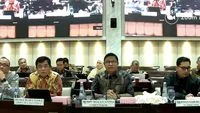
The Indonesian Ministry of Finance has recently found itself at the center of a significant administrative controversy following a sweeping wave of bureaucratic mutations implemented during the tenure of former Finance Minister Purbaya Yudhi Sadewa. The controversial personnel overhaul, which took place on September 10, 2026—just days before President Prabowo Subianto relieved Purbaya of his duties—sent immediate shockwaves through the ministry’s internal ranks. The decision to reshuffle hundreds of high-ranking officials without adhering to standardized meritocratic procedures caused widespread disillusionment among career bureaucrats, culminating in an unprecedented joint pushback by the leadership of the Directorate General of Taxes (DJP) and the Directorate General of Customs and Excise (DJBC).
The situation came to light when Director General of Taxes Bimo Wijayanto publicly addressed media representatives at his office in Jakarta. Accompanied by the broader implications of bureaucratic stability, Bimo detailed how the sudden and irregular assignment of certain individuals—whom he colloquially referred to as having "magic names"—undermined the integrity of the civil service. In response to the growing discontent within the ministry, Bimo, alongside Director General of Customs and Excise Djaka Budi Utama, formally petitioned the newly appointed Minister of Finance, Suahasil Nazara, to freeze, review, and ultimately cancel the mass mutations executed under the previous leadership.
The Chronology of the Controversy
The sequence of events leading up to the administrative standoff began in early September 2026, marking a turbulent period in the upper echelons of Indonesia’s fiscal governance. To understand the gravity of the intervention by current ministry leadership, it is essential to examine the precise timeline of decisions that destabilized institutional morale.
On September 10, 2026, the Ministry of Finance, then led by Purbaya Yudhi Sadewa, announced a massive restructuring and rotation of personnel. The decree affected hundreds of structural and functional officials across various key divisions, including tax offices and customs checkpoints nationwide. While routine rotations are a standard mechanism within the civil service to prevent conflicts of interest and encourage professional development, the September 10 decree bypassed established institutional safeguards.
Within days of the announcement, unease spread rapidly among mid-level and senior bureaucrats. Civil servants who had dedicated years to rigorous career development protocols—including mandatory competency assessments, psychological evaluations, and participation in the ministry’s formal talent management pool—realized that political or unscheduled appointments had bypassed these stringent filters.
The tipping point arrived mid-month. President Prabowo Subianto evaluated the cabinet’s performance and structural stability, resulting in the removal of Purbaya Yudhi Sadewa from his post as Minister of Finance, with Suahasil Nazara stepping in to steer the ministry. Seizing this transitional window, Bimo Wijayanto and Djaka Budi Utama approached the new minister. They argued that maintaining the contested assignments would severely demoralize the workforce. Acting swiftly on these recommendations, the leadership initiated measures to dismantle the controversial roster and restore adherence to standard governance frameworks.
Meritocracy Under Threat: The Issue of Irregular Appointments
At the core of the internal rebellion is the sanctity of the civil service merit system. Over the past decade, the Indonesian Ministry of Finance, particularly under successive reform-minded administrations, has heavily invested in modernizing its human resources architecture. Central to this modernization is the implementation of talent management systems designed to objectively measure competence, integrity, and performance before granting promotions or lateral transfers.
According to statements from the Directorate General of Taxes, the September 10 mutations violated these foundational principles. Bimo Wijayanto explicitly highlighted that several individuals included in the rotation list had not undergone the mandatory assessment processes or structural talent pool evaluations. The introduction of these anomalies into senior positions created a dual standard within the bureaucracy: one for career bureaucrats who clawed their way up through standardized testing and performance evaluations, and another for politically or informally connected appointees who secured placements outside traditional oversight mechanisms.
"That was our proposal—rotation—but indeed there were several magic names that did not participate in the assessment process or talent management. That is what led me and the Director General of Customs and Excise to ask for it to be postponed and canceled," Bimo stated during his press briefing.
The inclusion of these unchecked appointments threatened to dismantle years of institutional reforms aimed at insulating tax and customs collections from undue external influence. Both agencies represent the lifeblood of state revenues; therefore, maintaining professional, corruption-free, and competent leadership within their ranks is vital for national economic security.
Protecting Workforce Morale
Beyond institutional procedures, the leadership’s pushback was heavily motivated by the psychological impact the mutations had on the broader workforce. In large public sector organizations, morale functions as a critical determinant of institutional efficiency and compliance.
When hundreds of officials observed that adherence to merit-based career progression could be overridden by sudden administrative decrees, the psychological contract between the state and its civil servants was strained. Bimo emphasized that allowing the contested appointments to stand would send a profoundly negative signal to the thousands of honest, hardworking personnel who routinely subject themselves to rigorous performance audits and professional examinations.
"Because the signal is not good for the other troops who have struggled, participated in assessments, taken exams, and participated in talent management," Bimo explained.
In bureaucratic terms, "troops" refers to the tens of thousands of tax auditors, account representatives, and customs inspectors whose daily performance directly determines whether the government meets its annual state budget (APBN) revenue targets. Demoralizing this workforce risks triggering a decline in tax compliance enforcement, slower processing times at national ports, and an overall dip in institutional productivity. By stepping in to reverse the decree, the current leadership signaled to the rank-and-file that institutional rules still matter and that meritocracy remains the bedrock of career advancement within the financial sector.
The Role of the Ministry of Finance Leadership Transition
The swift intervention by Bimo Wijayanto and Djaka Budi Utama highlights the unique leverage provided by a ministerial leadership transition. When Suahasil Nazara assumed leadership of the Ministry of Finance under President Prabowo Subianto’s administration, he inherited an agency grappling with internal friction and administrative backlogs.
Suahasil Nazara, a seasoned economist and former Deputy Minister of Finance who possesses deep institutional familiarity with the ministry’s internal operations, was uniquely positioned to address the crisis. Unlike an incoming minister from an entirely external background who might require months to understand organizational nuances, Nazara understood the implications of the September 10 decree immediately.
The collaboration between the Directorate General of Taxes and the Directorate General of Customs and Excise also demonstrates a united front among the ministry’s primary revenue-generating pillars. Historically, DJP and DJBC operate as distinct entities with their own internal cultures and operational frameworks. However, facing a mutual threat to administrative integrity, their respective directors general coordinated their efforts to petition the minister, ensuring a synchronized approach to institutional repair.
Broader Economic and Governance Implications
While the controversy was framed primarily as an internal administrative dispute, its implications extend far into the broader landscape of Indonesian governance and economic stability.
First, the incident serves as a stress test for the bureaucratic reforms initiated under previous administrative eras. It underscores the perpetual vulnerability of civil service institutions to political interventions during ministerial transitions. Even in highly professionalized bodies like the Ministry of Finance, the sudden replacement of a cabinet minister can create a brief window of opportunity for vested interests to push through irregular appointments. The ability of current leaders to successfully push back demonstrates a growing institutional resilience, yet it simultaneously highlights the need for permanent legal and procedural safeguards to prevent similar occurrences in the future.
Second, the stability of state revenue collection is inextricably linked to the operational continuity of the tax and customs offices. Indonesia relies heavily on tax and non-tax state revenues to finance its national development agenda, infrastructure projects, and social assistance programs. Any prolonged internal instability, low morale, or leadership paralysis within the DJP and DJBC directly threatens the realization of these fiscal goals. By swiftly neutralizing the source of internal friction, the ministry has cleared the path for tax and customs officials to refocus their energies on meeting revenue collection targets without the distraction of administrative uncertainty.
Third, investor confidence and international perceptions of regulatory transparency depend heavily on the predictability of Indonesia’s economic institutions. Foreign and domestic investors monitor the Ministry of Finance closely for signs of stability, policy consistency, and bureaucratic competence. A transparent civil service governed by meritocracy reassures markets that fiscal policy and regulatory enforcement will be managed by competent professionals rather than politically favored appointees.
Looking Ahead: Restoring Stability and Reforming Talent Management
As the Ministry of Finance moves forward under the guidance of Minister Suahasil Nazara, the immediate priority remains the complete unwinding of the problematic appointments and the restoration of normalcy across all directorates. Ministry officials are reportedly reviewing the broader personnel database to ensure that future rotations strictly adhere to established talent management frameworks.
Furthermore, the episode has sparked internal discussions regarding the need to reinforce institutional checks and balances surrounding personnel mutations. Policymakers and internal oversight bodies are likely to examine ways to make the talent management system more robust, transparent, and immune to last-minute administrative overrides, even those initiated during ministerial transition phases.
Ultimately, the resolute stance taken by Dirjen Pajak Bimo Wijayanto and Dirjen Bea Cukai Djaka Budi Utama marks a critical turning point for the ministry. By prioritizing institutional integrity and workforce morale over political expediency, the leadership has reaffirmed its commitment to a professional, merit-based civil service capable of safeguarding Indonesia’s economic future.