Nila Kartika Wati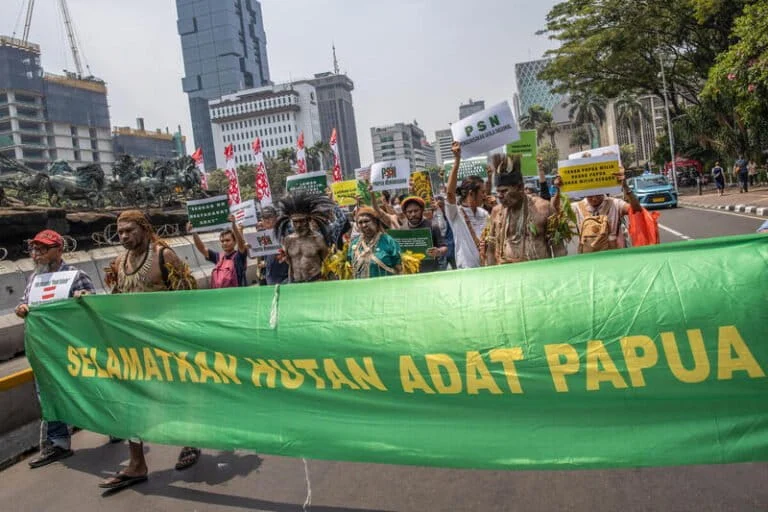
The documentary film Pesta Babi: Kolonialisme di Zaman Kita (Pig Feast: Colonialism in Our Time) has recently emerged as a focal point of intense public discourse, even as it navigates the looming threat of state censorship. The film provides a visceral documentation of what environmentalists describe as the largest scale of deforestation in modern history, framing the Indonesian government’s developmental push in Papua as a contemporary form of state colonialism. By capturing the systematic seizure of indigenous living spaces under the banner of national progress, the documentary highlights a sophisticated apparatus of paradigms, narratives, and legal instruments designed to facilitate large-scale land acquisition. Central to this process is a series of legislative maneuvers, most notably Presidential Instruction (Inpres) No. 14/2025 regarding the Acceleration of Development for National Food, Energy, and Water Self-Sufficiency, which critics argue serves as a blueprint for the displacement of Papuan communities.
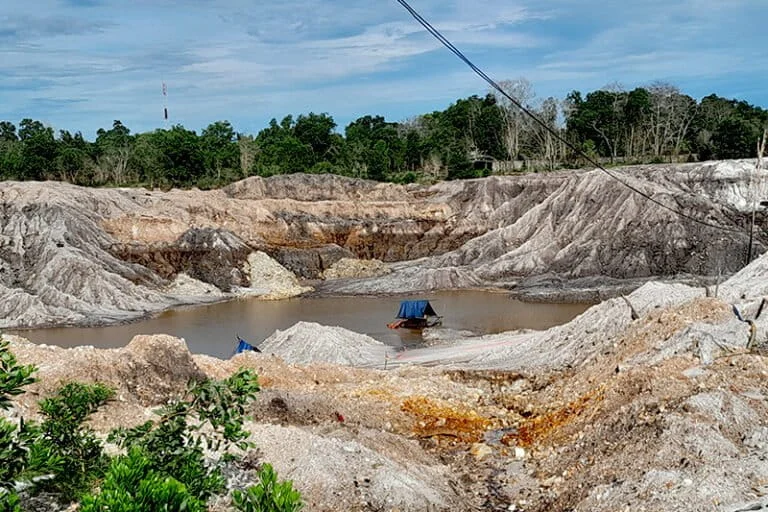
The current landscape of land management in Papua is defined by the designation of National Strategic Projects (PSN), a policy framework that has been meticulously tracked by advocacy groups such as Pusaka Bentala Rakyat. Under the dual pretexts of food security and the global energy transition, the government has authorized the clearing of approximately 2.5 million hectares of forest in southern Papua. This land is slated for conversion into industrial rice fields, palm oil plantations, and sugarcane estates. However, this massive environmental transformation comes at a steep human cost. For the indigenous Papuans who have inhabited these forests for generations, the loss of land is synonymous with the loss of their fundamental rights, including the right to food and the ability to maintain their cultural and physical survival. The tension between state-led industrialization and indigenous sovereignty raises a critical question: why does the Indonesian legal system fail to recognize the ancestral land claims of the Papuan people, and how has the state gained such uninhibited authority to reallocate these territories?
The Historical Roots of State Forest Territorialization
To understand the current crisis in Papua, one must trace the legal and political lineage of forest management in Indonesia back to the Dutch colonial era. The concept of state-controlled "political forests" is not a modern invention but a continuation of colonial territorialization. Historians and agrarian experts note that the formalization of state forest control began on May 26, 1808, with the establishment of the Dienst van het Boschwezen (Forestry Service). This marked the transition of forests from communal resources to managed state assets.
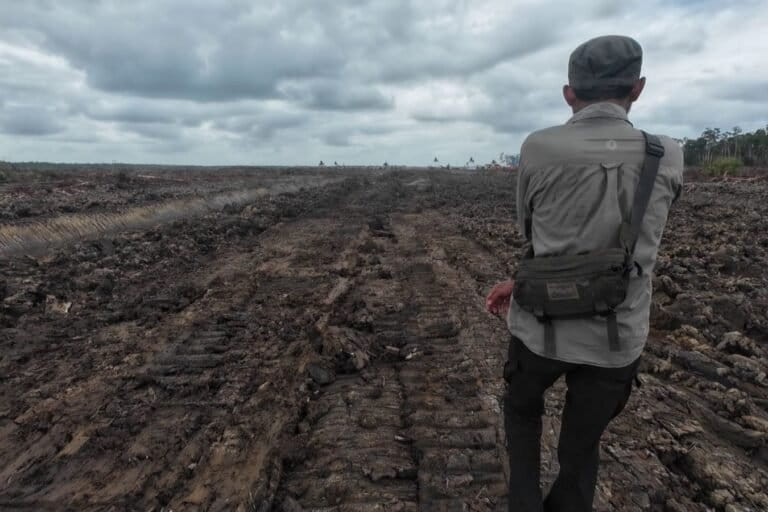
The legal foundation for this control was solidified in 1865 with the issuance of the Boschordonantie voor Java en Madoera, the first Forestry Law intended to regulate forest management in Java and Madura. This was followed by the Agrarische Wet of 1870, which introduced the controversial principle of domein verklaring (State Domain Declaration). This doctrine stipulated that all land for which ownership could not be proven through Western legal titles was automatically considered the property of the state. This legal fiction effectively erased indigenous land tenure systems, which were based on oral traditions and communal usage rather than paper deeds.
The post-independence Indonesian government did not dismantle this colonial framework; instead, it adapted and expanded it. The modern Forestry Law (UU Kehutanan) continues to treat the state as the primary owner of forest zones. Scholars Nancy Peluso and Peter Vandergeest describe this phenomenon as the creation of "political forests"—spaces where the state asserts authority based on maps and administrative decrees rather than the lived reality of the people on the ground. By defining these areas as "State Forest Zones," the government excludes local communities from decision-making processes, treating their ancestral homes as vacant land available for industrial exploitation.
The Mechanization of Land Grabs through PSN and Inpres 14/2025
The contemporary manifestation of this colonial legacy is visible in the rapid expansion of National Strategic Projects (PSN) in Merauke and other parts of Papua. The Indonesian House of Representatives (DPR) and the government are currently processing the fourth revision of the Forestry Law, a move that many observers fear will further consolidate state control over indigenous territories. This legislative momentum is complemented by Inpres 14/2025, which streamlines the conversion of forest land into industrial zones for food and energy production.
In Merauke, the implementation of the Forest Land Use Consensus (TGHK) has historically been a source of friction. Research by CIFOR-ICRAF indicates that the application of such zoning often occurs without field verification or the participation of local residents. Instead, boundaries are drawn in government offices, leading to "paper forests" that overlap with the "lived spaces" of indigenous tribes such as the Marind-Anim, Awyu, Muyu, and Yei.
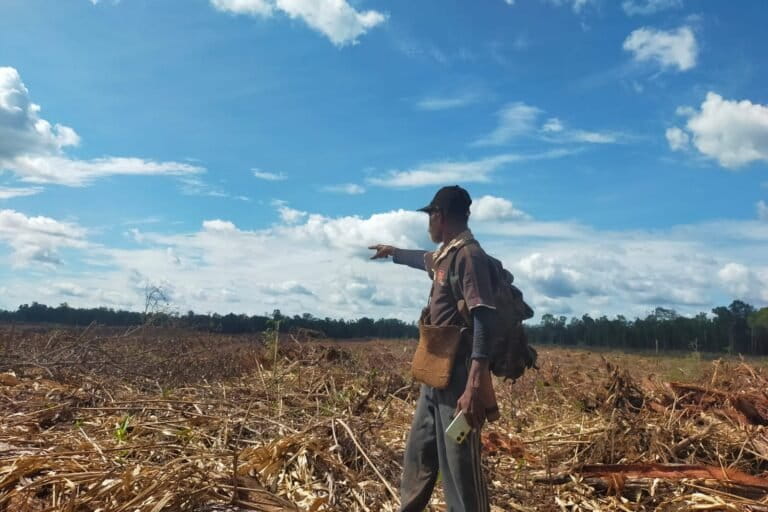
The documentary Pesta Babi illustrates this conflict through the lens of Henri Lefebvre’s spatial theory, highlighting the clash between "conceived space"—the state’s maps and development plans—and "lived space"—the spiritual and physical landscape of the Papuan people. Through Ministry of Forestry Decree No. 591/2025, the government has the authority to unilaterally change the status of a forest zone, effectively stripping indigenous communities of their authority over their environment. By failing to recognize indigenous groups as "rights-holders," the state facilitates a process of "natural colonialism," where the extraction of wealth takes precedence over the rights of the inhabitants.
Structural Impoverishment and the Myth of Development
One of the most persistent justifications for the expansion of PSNs in Papua is the promise of regional development and poverty alleviation. However, data suggests that the reality is quite the opposite. The state’s claim over forest zones has historically led to what sociologists call "structural impoverishment." When land is designated as a state forest, local governments are often prohibited from building essential infrastructure—such as schools, clinics, and roads—without complex and often unattainable permits from the Ministry of Forestry.
According to the 2010 Community Forestry Survey by the Indonesian Bureau of Statistics (BPS), the disparity in forest-dwelling communities is stark. Only 8.51% of residents in these areas have completed high school, and a staggering 40.08% have no formal education at all. Infrastructure is equally abysmal; only 8.89% of roads in these regions are paved with asphalt, while the majority of the population relies on dirt tracks, footpaths, or river transport.
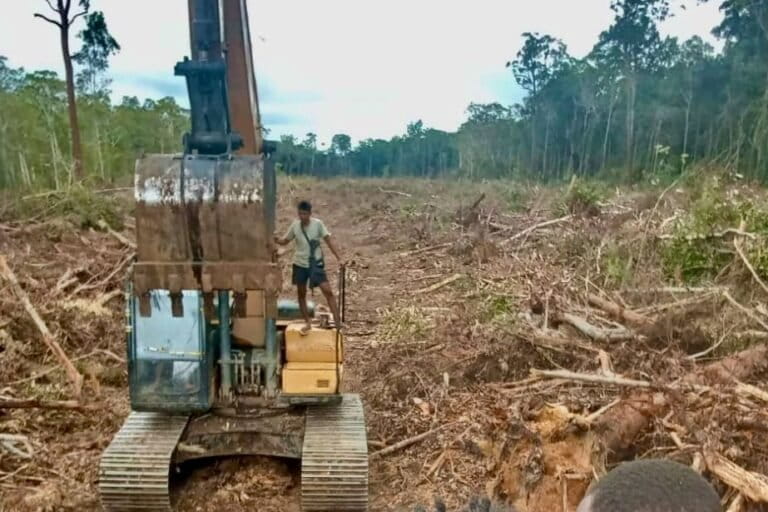
This lack of access is not an accidental byproduct of geography but a structural outcome of the "political forest" paradigm. As noted by researchers Spencer-Wood and Matthews, this is a process of "impoverishment"—the active creation of poverty through the denial of rights and resources. Ironically, infrastructure development often only occurs when a large-scale corporate project enters the area. In Merauke, the construction of the Wanam-Muting road—a central feature in the Pesta Babi documentary—was not designed to facilitate local trade or access to healthcare for the Marind-Anim and Yei people. Instead, the road was built specifically to serve the logistics of food estate projects and sugarcane plantations, often cutting through sacred indigenous lands and bypassing the traditional routes used by the community.
Broader Implications and the Need for Reform
The scale of the issue extends far beyond Papua. BPS data from 2025 indicates that out of 84,139 villages in Indonesia, approximately 3,038 are located within state-claimed forest zones, and another 20,732 are situated on the periphery. This affects an estimated 48.8 million people, 12 million of whom depend directly on the forest for their livelihoods. When the state reclassifies these forests for industrial use, it destabilizes the lives of tens of millions of citizens.
The ongoing revision of the Forestry Law presents a critical juncture for the Indonesian government. Advocates argue that the law must be fundamentally reimagined to dismantle the "political forest" paradigm. Rather than treating indigenous communities as obstacles to development or "encroachers" on state land, the law should recognize them as the primary rights-holders. A transition toward inclusive forest management is essential to resolve the long-standing land conflicts between the state, corporations, and local communities.
The "Pig Feast" depicted in the documentary serves as a powerful metaphor for the consumption of Papuan resources by outside interests. It challenges the narrative that monoculture plantations and industrial food estates are the only path to prosperity. If the current trajectory continues, the result will be the further alienation of indigenous Papuans from their ancestral lands, leading to a permanent state of social and ecological crisis.
Conclusion: A Call for Recognition
The situation in Papua, as highlighted by Pesta Babi: Kolonialisme di Zaman Kita, is a reminder that the tools of colonial governance are still very much in use. The use of Inpres 14/2025 and the PSN framework to bypass indigenous consent represents a failure of the state to protect its most vulnerable citizens. As the government pushes for food and energy self-sufficiency, it must ask at whose expense this security is being bought.
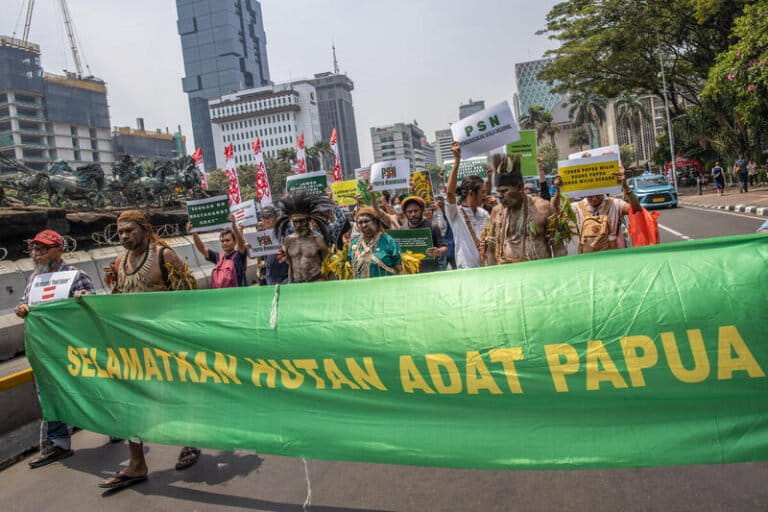
To prevent the total erasure of indigenous living spaces, there must be a rigorous review of all state forest claims. This involves moving beyond "paper-based" governance and engaging in genuine field-based consultations that respect the customary laws of the Papuan people. The international community and domestic civil society continue to watch closely, as the fate of Papua’s forests and its people will serve as a definitive test of Indonesia’s commitment to human rights and sustainable development in the 21st century. Without a radical shift in how the state perceives and manages land, the "shadow of censorship" and the "specter of colonialism" will continue to haunt the development of Indonesia’s easternmost provinces.