Nila Kartika Wati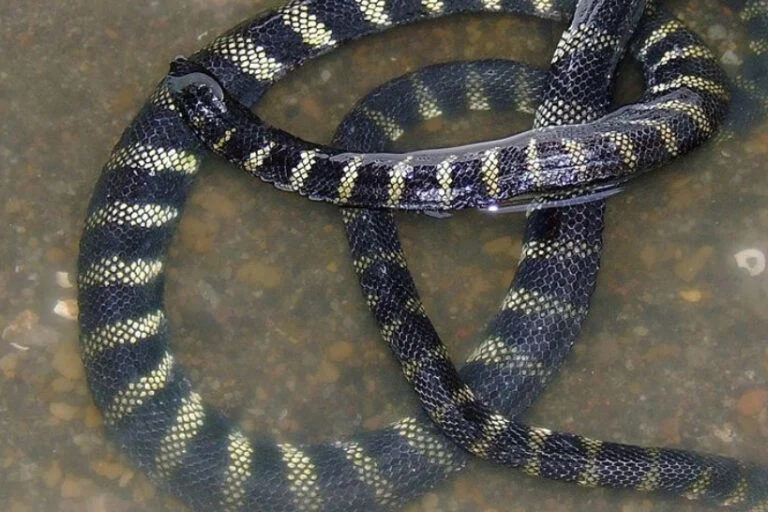
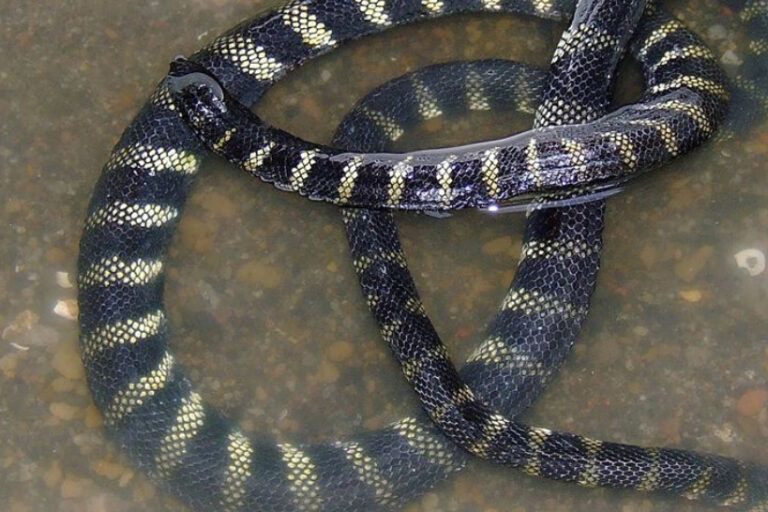
Located approximately 60 kilometers south of Manila in the province of Batangas, Lake Taal presents a serene and picturesque landscape that belies its volatile geological nature. Surrounded by lush green hills and containing a complex system of islands within islands, the lake is famous for its centerpiece, the Taal Volcano—one of the most active and dangerous volcanic systems in the Philippines. While the surface of the lake appears tranquil, the depths of its freshwater environment harbor a biological anomaly that defies the traditional laws of marine biology: the Garman’s sea snake, scientifically known as Hydrophis semperi. This species represents a profound evolutionary mystery, as it is a "true" sea snake that has completely abandoned the ocean, living its entire life cycle in a freshwater caldera.
The existence of Hydrophis semperi challenges the fundamental classification of sea snakes. Belonging to the family Elapidae—the same family that includes cobras and mambas—the Garman’s sea snake is a direct relative of the highly venomous marine snakes that inhabit the Indo-Pacific oceans. However, unlike its cousins who navigate the salty currents of the open sea, H. semperi never touches saltwater. From birth to death, it remains within the confines of Lake Taal, making it the only species of true sea snake in the world to be found exclusively in a freshwater habitat. This transition from a marine environment to a freshwater one is a rare physiological feat that requires significant evolutionary adjustments, making the species a subject of intense scientific interest.
A Geological Prison: The 1754 Eruption and the Birth of a Species
The presence of a sea snake in a landlocked freshwater lake is not a coincidence of migration but a consequence of catastrophic geological history. To understand how Hydrophis semperi came to be, one must look back to the mid-18th century. Before 1754, the area now known as Lake Taal was an arm of the sea, a deep-water bay connected to the South China Sea via the Balayan Bay. The waters were saline, and the marine life within the bay was typical of the Philippine archipelago’s rich coastal biodiversity.
In 1754, the Taal Volcano underwent a massive, 200-day eruption, one of the most violent in its recorded history. The eruption caused massive collapses in the volcanic structure and ejected vast quantities of tephra and debris. This geological upheaval effectively dammed the channel connecting the bay to the open ocean, creating a closed basin. As the connection to the sea was severed, the trapped marine life found itself in an isolating "geological prison." Over the subsequent decades and centuries, the massive influx of tropical rainfall diluted the trapped seawater. What was once a saltwater bay gradually transformed into a freshwater lake.
For most marine species caught in this transition, the change in salinity was a death sentence. The majority of the trapped fauna perished as their biological systems failed to cope with the lack of salt. However, a few resilient species, including the ancestors of the Garman’s sea snake, managed to survive. They underwent a rapid process of adaptation, evolving to thrive in an environment that should have been lethal to their kind. This period of isolation marks the divergence of H. semperi from its marine ancestors, a process that occurred in a remarkably short window of geological time.
Physiological Mastery and the Loss of Salt Glands
The primary challenge for any marine organism moving to freshwater is osmoregulation—the management of salt and water balance within the body. Marine sea snakes are hyperosmotic to their environment, meaning they have a lower salt concentration in their blood than the surrounding seawater. To prevent dehydration and salt poisoning, they possess specialized sublingual salt glands located under the tongue. These glands actively pump excess sodium and chloride out of the body, allowing the snake to maintain its internal chemistry while living in a saline environment.
In Hydrophis semperi, these salt glands serve as a biological record of their marine heritage. Scientific dissections and microscopic analyses have revealed that the glands are still present in the snake’s anatomy, but they are almost entirely vestigial and inactive. Because the water in Lake Taal is fresh, the snake no longer needs to expel salt; in fact, it must work to retain it. This physiological shift represents an extreme example of evolutionary "use it or lose it." Genetic research suggests that the regulatory genes controlling these glands were silenced or modified as the species adapted to the lake.
Furthermore, H. semperi is a "true" sea snake (subfamily Hydrophiinae), which means it is fully aquatic. Unlike "sea kraits" (genus Laticauda), which are amphibious and must return to land to lay eggs, H. semperi gives birth to live young in the water. This total dependence on the aquatic environment makes its isolation in Lake Taal even more significant. While the Crocker’s sea snake (Laticauda crockeri) of the Solomon Islands also lives in a non-marine environment, it inhabits brackish lagoons and retains the ability to move onto land. H. semperi stands alone as the only true sea snake to have completely severed its ties with the ocean and the land simultaneously.
The Fragile Ecosystem of Lake Taal
The survival of Hydrophis semperi is intrinsically linked to the health of the Lake Taal ecosystem. The lake is home to several other unique species that underwent similar evolutionary journeys, such as the Sardinella tawilis, the world’s only freshwater sardine. The sea snake occupies a high position in the local food chain, primarily preying on small freshwater fish, particularly gobies (Gobiidae) and eels (Anguillidae).
However, the very environment that fostered this unique evolution is now a source of extreme vulnerability. Lake Taal is a relatively small and closed ecosystem, meaning any change in water quality or biological balance has an immediate and magnified impact on its inhabitants. The International Union for Conservation of Nature (IUCN) has classified Hydrophis semperi as "Vulnerable" on its Red List of Threatened Species. This status is primarily due to the species’ extremely restricted geographic range; it exists nowhere else on Earth.
The most immediate natural threat is the Taal Volcano itself. As an active volcano, its eruptions can cause sudden changes in water temperature, acidity, and dissolved oxygen levels. The massive eruption in January 2020 served as a stark reminder of this volatility. Volcanic ash and toxic gases can lead to mass die-offs of the fish that the sea snake relies on for food, and extreme tectonic activity could theoretically alter the lake’s chemistry to a point where even the resilient H. semperi cannot survive.
Anthropogenic Pressures and Conservation Challenges
Beyond the natural threats of volcanism, human activity poses a sustained and growing risk to the Garman’s sea snake. For decades, Lake Taal has been the center of a massive aquaculture industry, specifically the farming of Tilapia and Milkfish in floating cages. While this industry provides a livelihood for thousands of local residents and contributes significantly to the regional food supply, it has come at a high environmental cost.
The proliferation of fish cages has led to severe eutrophication—a process where excess nutrients from fish feed and waste trigger massive algae blooms. These blooms deplete the water of oxygen, leading to "fish kills" that decimate local biodiversity. Furthermore, the use of antibiotics and chemicals in aquaculture, along with agricultural runoff from the surrounding hills and untreated sewage from the growing urban areas of Batangas, has significantly degraded the water quality.
Pollution is not the only human-driven threat. While H. semperi is not typically targeted by fishermen—due to its venomous nature and lack of commercial value—it often becomes "bycatch." Snakes frequently get tangled in gillnets or trapped in fish cages, where they are often killed out of fear or discarded. The lack of public awareness regarding the snake’s ecological importance and its unique status as a global natural heritage further complicates conservation efforts.
Scientific Significance and the Path Forward
The story of Hydrophis semperi is more than just a biological curiosity; it is a vital case study in evolutionary biology. It provides scientists with a rare opportunity to study how complex organisms adapt to radical environmental shifts over a short period. The genetic markers found in the Garman’s sea snake offer insights into the mechanisms of speciation and the limits of physiological plasticity.
To ensure the survival of this one-of-a-kind reptile, environmental advocates and government agencies in the Philippines have called for more stringent protections for Lake Taal. Inferred statements from local conservationists emphasize that protecting the snake requires a holistic approach to lake management. This includes regulating the density of aquaculture cages, improving waste management systems in the surrounding municipalities, and establishing protected zones within the lake where human activity is restricted.
Furthermore, there is a pressing need for more intensive field research. Because H. semperi is elusive and lives in a challenging environment, much of its life history—such as its population density, reproductive rate, and specific movement patterns—remains under-documented. Strengthening the status of Lake Taal as a Protected Landscape under Philippine law is a critical step, but enforcement remains a challenge in the face of economic pressure.
In the quiet, murky waters of Lake Taal, Hydrophis semperi continues to glide through an environment that is a ghost of its ancestral home. It is a living testament to the power of life to endure through catastrophe and change. However, the "peace" of its freshwater sanctuary is increasingly fragile. As the pressures of the modern world close in on the shores of the lake, the future of the world’s only freshwater sea snake hangs in a delicate balance, caught between the ancient fires of the volcano and the encroaching footprint of human progress. The loss of this species would not just be the loss of a snake, but the erasure of a unique chapter in the history of evolution on Earth.