Nasution Nanang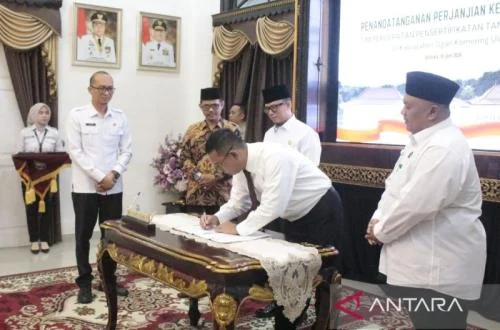
Baturaja, South Sumatra – The Ogan Komering Ulu (OKU) Regency Government has embarked on a significant collaborative initiative, partnering with the local Prosecutor’s Office (Kejaksaan Negeri or Kejari) and the National Land Agency (Badan Pertanahan Nasional or BPN) to accelerate the certification of waqf (Islamic endowment) lands across its jurisdiction. This strategic alliance aims to fortify the legal standing of these invaluable community assets, ensuring their protection from disputes and enabling their optimal utilization for public benefit. The move underscores a concerted effort to enshrine legal certainty for properties that serve as a cornerstone of religious and social infrastructure within the regency.
The Imperative of Legal Certainty: Safeguarding Waqf Assets
The collaboration, formally announced by OKU Regent Teddy Meilwansyah in Baturaja, is a direct response to the persistent challenges associated with uncertified waqf lands. Regent Meilwansyah emphasized that the primary objective is to streamline the certification process, making it more efficient, accurate, and accountable. He articulated the profound significance of waqf, not merely as tangible assets but as a sacred trust ("amanah umat") bestowed upon the community for religious devotion and social welfare.
"The existence of waqf land must possess clear legal certainty to minimize the occurrence of land disputes in the future," Regent Meilwansyah stated, highlighting the vulnerability of uncertified properties. He acknowledged that land disputes remain a prevalent issue in OKU Regency, often stemming from the absence of definitive legal titles. This initiative is therefore a proactive measure designed to preempt potential conflicts, safeguard community endowments, and ensure their sustained purpose. The Regent’s vision extends beyond mere bureaucratic process, aiming to foster an environment where these sacred assets can fulfill their intended purpose without the specter of legal contention.
Understanding Waqf: Its Significance and Challenges in Indonesia
Waqf, an Arabic term meaning "detention" or "confinement," refers to an irrevocable charitable endowment under Islamic law, typically made by a Muslim individual or a group for charitable or religious purposes. Once endowed, the asset becomes perpetually dedicated to the specific purpose, and its ownership is transferred to Allah (God). In Indonesia, waqf assets primarily comprise land and buildings used for mosques, mushollas (prayer rooms), madrasahs (Islamic schools), orphanages, cemeteries, and other social facilities. These endowments play a pivotal role in the socio-religious fabric of the nation, providing essential services and fostering community development.
The legal framework for waqf in Indonesia is primarily governed by Law No. 41 of 2004 on Waqf, which outlines the principles of waqf management, the roles of nazhir (waqf managers), and the procedures for waqf registration and certification. The Badan Wakaf Indonesia (BWI), or Indonesian Waqf Board, is the national body responsible for fostering, developing, and overseeing waqf assets across the archipelago. Despite these regulations and dedicated institutions, a significant portion of waqf land nationwide remains uncertified. BWI estimates have frequently indicated that millions of parcels of waqf land across Indonesia lack proper legal documentation, making them susceptible to encroachment, ownership disputes, and even illicit transfers. This lack of legal clarity hinders the productive utilization of these assets, preventing them from generating sustainable income to support their intended beneficiaries.
The challenges in waqf management are multifaceted, ranging from incomplete historical records, informal land transfers spanning generations, lack of awareness among nazhir regarding certification requirements, and the complex bureaucratic processes involved. In many cases, waqf lands were donated decades or even centuries ago, with only verbal agreements or rudimentary written records that do not meet modern legal standards for land titles. This historical context makes the certification process particularly intricate, requiring meticulous verification and often the resolution of pre-existing informal claims.
The Tripartite Collaboration: Roles and Responsibilities
The partnership in OKU Regency is a testament to the recognition that addressing these complex issues requires a multi-sectoral approach. Each collaborating agency brings distinct expertise and authority to the table:
-
Pemkab OKU (Local Government): As the initiator and primary facilitator, the Ogan Komering Ulu Regency Government plays a crucial coordinating role. It is responsible for identifying waqf lands within its administrative area, mobilizing resources, providing administrative support, and formulating local policies that support the accelerated certification process. Regent Teddy Meilwansyah’s direct involvement signals the high priority accorded to this initiative, ensuring top-level political commitment and oversight. The Pemkab also acts as the bridge between the technical agencies, the nazhir, and the community.
-
Kejaksaan Negeri OKU (Local Prosecutor’s Office): Headed by Rudhy Parhusip, the Kejari OKU’s involvement is critical for providing legal assistance and ensuring the integrity of the process. Parhusip underscored that the signing of this cooperation agreement is aimed at enhancing the effectiveness of handling and resolving legal issues in civil and administrative matters. The Prosecutor’s Office offers "pendampingan hukum" (legal accompaniment or assistance), ensuring that the certification process adheres strictly to legal norms, preventing potential abuses, and offering solutions to any legal ambiguities or disputes that may arise during verification. "With a certificate, waqf land can provide optimal benefits for the local community," Parhusip affirmed, highlighting the protective role of the law in maximizing the social utility of these assets. Their presence provides a layer of legal security and accountability, crucial for maintaining public trust.
-
Badan Pertanahan Nasional (BPN) OKU (National Land Agency): While not explicitly quoted in the original brief, the BPN’s role is indispensable. As the sole authority for land registration and certification in Indonesia, BPN OKU is responsible for the technical execution of the certification process. This includes land measurement, mapping, verification of physical boundaries, examination of historical land documents, and ultimately, the issuance of the waqf land certificates. Their technical expertise ensures that the certificates are legally robust and accurately reflect the physical reality of the land. A representative from BPN OKU would likely emphasize their commitment to facilitating the technical aspects efficiently, perhaps by deploying dedicated teams or leveraging existing programs like the Complete Systematic Land Registration (PTSL) to prioritize waqf assets.
Chronology of Initiative and Expected Process
The seeds of this collaborative effort were likely sown through a growing awareness within the OKU government of the vulnerability of its waqf assets and the recurring land disputes. Initial discussions would have involved identifying the scope of the problem – mapping out the number of uncertified waqf lands, understanding the common challenges faced by nazhir, and assessing the legal and administrative hurdles. These preliminary assessments would have highlighted the necessity of a multi-agency approach, leading to the conceptualization of the tripartite partnership.
The formalization of this cooperation, marked by a signing ceremony (as implied by the original report), signifies a critical milestone. Following this, the implementation phase is expected to unfold in several key stages:
- Data Collection and Identification: A comprehensive inventory of all waqf lands in OKU Regency, including their current status, historical documents, and designated nazhir.
- Legal Verification: The Kejari, in collaboration with Pemkab and BPN, will scrutinize the legal basis of each waqf, ensuring compliance with Law No. 41 of 2004 and resolving any immediate legal ambiguities.
- Community Engagement: Outreach programs to educate nazhir and local communities about the importance of certification and the steps involved, encouraging active participation.
- Technical Measurement and Mapping: BPN teams will conduct precise surveys and mapping of waqf land parcels, establishing clear boundaries.
- Documentation and Adjudication: Compilation of all necessary documents, followed by an adjudication process to formally recognize the waqf status and clear any conflicting claims.
- Certificate Issuance: The final step, where BPN issues the official waqf land certificates, providing immutable legal proof of ownership and dedicated purpose.
While a specific timeline for completion was not detailed, such an endeavor is typically a multi-year effort, often implemented in phases across different sub-districts or based on the complexity of individual cases. The commitment, however, indicates a sustained focus on this critical task.
Broader Implications and Benefits
The successful implementation of this initiative in OKU Regency carries profound implications and promises substantial benefits across various dimensions:
-
Enhanced Legal Protection and Security: The most immediate benefit is the significantly enhanced legal protection for waqf assets. Certified lands are shielded from illegal encroachment, fraudulent claims, and ownership disputes, ensuring that these properties remain dedicated to their intended charitable and religious purposes in perpetuity. This legal certainty prevents the dissipation of endowments, which has historically been a significant challenge for waqf institutions.
-
Optimized Utilization of Waqf Assets: With secure legal titles, nazhir can more confidently and effectively manage waqf assets. Certified lands can be developed productively, for example, through commercial ventures like agricultural projects, rental properties, or small businesses, with the generated income channeled back to support the core charitable objectives (e.g., funding schools, hospitals, or social programs). This transforms passive assets into dynamic instruments of socio-economic development, maximizing their impact on the community.
-
Increased Public Trust and Accountability: The transparent and legally sound certification process fosters greater trust among the Muslim community and the general public. It demonstrates the government’s commitment to upholding religious trusts and ensuring good governance in the management of community assets. This also enhances the accountability of nazhir, as certified assets are easier to monitor and audit, ensuring funds are used appropriately.
-
Good Governance and Inter-Agency Synergy: The tripartite collaboration serves as a commendable model for inter-agency cooperation. It illustrates how different governmental bodies, each with distinct mandates, can converge their efforts to address complex societal issues. This synergy reduces bureaucratic hurdles, improves efficiency, and sets a precedent for integrated governance approaches in other public service delivery areas.
-
Social Cohesion: By resolving potential land disputes before they escalate, the initiative contributes significantly to social harmony and peace within communities. Land conflicts can be deeply divisive, and securing the legal status of waqf lands helps to remove a common source of tension, fostering a more cohesive social environment.
-
Economic Impact: The ability to productively utilize certified waqf assets can stimulate local economic activity. New developments on waqf land can create jobs, provide services, and generate income that circulates within the local economy, contributing to overall regional prosperity. For example, a certified waqf land could be used to build a vocational training center or a community market, directly benefiting local residents.
National Context and Precedents: A Model for Other Regions?
The initiative in OKU Regency aligns seamlessly with broader national efforts to improve waqf management and accelerate land certification. The BWI, in collaboration with the Ministry of Religious Affairs and BPN, has consistently advocated for and implemented programs aimed at certifying waqf lands across Indonesia. Programs like PTSL (Pendaftaran Tanah Sistematis Lengkap – Complete Systematic Land Registration) have been leveraged to prioritize the certification of religious and social infrastructure, including waqf properties.
Similar partnerships between local governments, prosecutors, and land agencies have been explored or implemented in various regions facing analogous challenges. The success of the OKU model could serve as a blueprint for other regencies and municipalities grappling with the complexities of uncertified waqf assets. It highlights the efficacy of local leadership in adapting national policies to specific regional contexts, demonstrating how integrated local action can drive significant progress on issues of national importance. The collaborative framework employed by OKU Regency could be particularly attractive for replication due to its emphasis on legal security, efficiency, and accountability.
Challenges and Forward Path
Despite the robust framework established, the path to fully certified waqf lands in OKU Regency is not without its challenges. Potential hurdles include:
- Incomplete Historical Records: Many older waqf lands lack comprehensive, legally acceptable documentation, requiring extensive research and verification.
- Identification of Nazhir: In some cases, the designated waqf managers may be unknown, deceased, or lack a clear succession plan, complicating the administrative process.
- Community Awareness and Participation: Ensuring that all nazhir and relevant community members are aware of the program and actively participate in providing necessary information.
- Funding and Resources: The certification process can be resource-intensive, requiring sustained financial and human resources.
Regent Meilwansyah and Prosecutor Parhusip’s statements reflect a strong commitment to overcoming these challenges through sustained collaboration and dedicated effort. The initiative will likely require ongoing public awareness campaigns, targeted assistance for nazhir, and efficient coordination channels between the three partner agencies. The success will ultimately hinge on the sustained political will and the diligent execution of the agreed-upon processes.
Concluding Remarks: A Legacy of Security and Service
The Ogan Komering Ulu Regency’s proactive approach to waqf land certification represents a vital step towards securing a legacy of community service and legal integrity. By forging a powerful tripartite alliance with the Prosecutor’s Office and the National Land Agency, OKU is not merely processing documents; it is safeguarding an irreplaceable part of its cultural and religious heritage. This initiative promises to transform vulnerable, uncertified endowments into legally robust assets that can be optimally managed and utilized for the perpetual benefit of the community. It underscores a shared commitment to transparency, accountability, and the fundamental principle of ensuring legal certainty for all land assets, particularly those held in trust for the collective good of society. The vision is clear: a future where every waqf asset in OKU is legally secure, optimally utilized, and perpetually serves the noble purposes for which it was originally endowed.