Azin Asro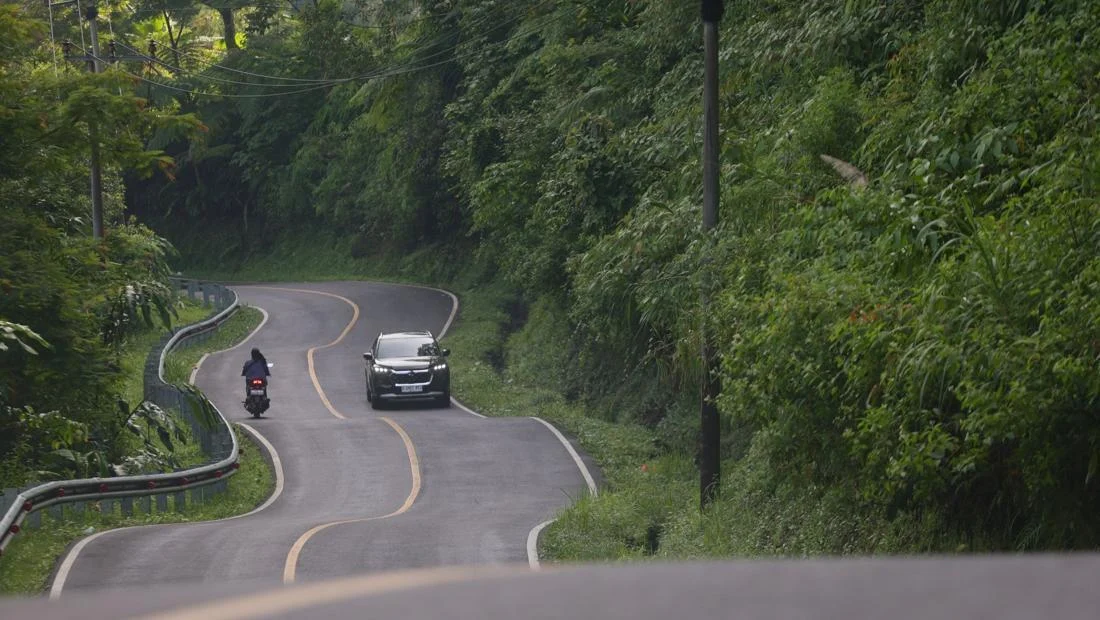
The automotive landscape in Indonesia is characterized by a diverse range of driving environments, from the congested urban corridors of Jakarta to the steep, winding inclines of the country’s many mountainous regions. For many drivers, the transition from flat city streets to the demanding gradients of the highlands presents a significant challenge, primarily due to the increased mechanical strain on the engine and the subsequent spike in fuel consumption. Traditionally, navigating steep ascents required heavy acceleration, forcing internal combustion engines to operate at high RPMs and reducing overall efficiency. However, the introduction of the latest Suzuki Grand Vitara has signaled a shift in how modern SUVs handle these topographical challenges, utilizing specialized hybrid technology to maintain fuel economy even when gravity is working against the vehicle.
During a recent long-distance performance assessment, the Suzuki Grand Vitara demonstrated that its efficiency is not merely a theoretical figure produced in a laboratory setting but a practical reality achievable in real-world conditions. Navigating a route from the capital city of Jakarta to the highland district of Ciwidey in West Java, the vehicle recorded a fuel consumption figure of 18.3 kilometers per liter. This achievement is particularly notable given that the route includes a combination of stop-and-go city traffic, high-speed toll roads, and the notoriously steep, winding roads of the Southern Bandung mountains. The primary catalyst for this performance is the Smart Hybrid Vehicle by Suzuki (SHVS) technology, a system designed to optimize engine load and energy recovery without the complexity or high price point of a full-plug-in hybrid system.
The Engineering Behind Smart Hybrid Vehicle by Suzuki (SHVS)
At the heart of the Grand Vitara’s efficiency is the SHVS system, which categorizes the vehicle as a "mild hybrid." Unlike full hybrid systems that can propel a car using only electric power for extended periods, SHVS is engineered to act as a sophisticated support mechanism for the internal combustion engine. The system is built around three core components: the K15C 1,462 cc four-cylinder petrol engine, an Integrated Starter Generator (ISG), and a dedicated lithium-ion battery.
The K15C engine itself is a refined powerplant, producing 103 PS of maximum power and 136.8 Nm of torque. While these figures are positioned competitively within the B-SUV segment, the "magic" happens through the intervention of the ISG. The ISG replaces the traditional alternator and serves multiple functions. Firstly, it acts as a motor that provides a "torque assist" during initial acceleration and when the vehicle is under heavy load, such as when climbing a steep hill. By providing this electric boost, the ISG reduces the amount of fuel the petrol engine needs to burn to reach the desired speed or to maintain momentum on an incline.
Furthermore, the SHVS system features an advanced Auto Start-Stop function. In the heavy traffic of Jakarta or while waiting at mountain intersections, the engine shuts down to conserve fuel. The ISG then ensures an almost instantaneous and vibration-free restart as soon as the driver releases the brake or engages the accelerator. During deceleration, the system employs regenerative braking, where the ISG converts the vehicle’s kinetic energy into electricity, which is then stored in the lithium-ion battery located under the front passenger seat. This stored energy is what later powers the torque assist and the vehicle’s electrical components when the engine is off.
Chronology of the Jakarta to Ciwidey Performance Test
The journey to validate the Grand Vitara’s capabilities began in the urban sprawl of Jakarta, a city known for its unpredictable traffic patterns. In this initial phase, the SHVS system worked frequently to manage the constant idling. The lithium-ion battery provided the necessary power to keep the air conditioning and infotainment systems running while the engine was deactivated at traffic lights, contributing to a strong baseline for fuel efficiency before the vehicle even reached the outskirts of the city.
Upon entering the Cipularang Toll Road, the Grand Vitara transitioned into a cruising phase. At constant speeds, the 1.5-liter K15C engine operated in its most efficient power band. The vehicle’s aerodynamics and the smooth delivery of the six-speed automatic transmission allowed it to maintain highway speeds with minimal throttle input. However, the true test began as the convoy exited the highway and headed toward Soreang, the gateway to the Ciwidey highlands.
The ascent to Ciwidey involves a dramatic change in elevation, with roads characterized by sharp "hairpin" turns and sustained gradients. In a traditional naturally aspirated vehicle, the driver would often feel a "hunting" sensation from the transmission or a lack of immediate response when exiting a tight turn on an uphill slope. In the Grand Vitara, the ISG provided a linear power delivery. As the driver applied pressure to the pedal to navigate the climb, the electric motor assist filled in the gaps in the torque curve, ensuring that the acceleration felt smooth and responsive. This prevented the "extra work" typically required from the driver and the engine, resulting in the impressive 18.3 km/l final reading despite the demanding terrain and the various stops made for documentation and photography.
Comparative Analysis and Market Context
The performance of the Grand Vitara is a strategic move by Suzuki to capture a specific segment of the Indonesian market: the environmentally conscious commuter who also enjoys weekend excursions. While the 103 PS output might seem modest compared to some turbocharged rivals in the SUV class, the focus of the Grand Vitara is clearly on balance and "total cost of ownership."
In the Indonesian SUV market, competition is fierce, with rivals offering various powertrain configurations. However, Suzuki’s decision to stick with a mild hybrid system offers several advantages. Firstly, it keeps the vehicle’s weight lower than a full hybrid or an electric vehicle (EV), which benefits handling and reduces wear on tires and brakes. Secondly, it avoids the "range anxiety" associated with EVs, as the vehicle relies on a standard petrol infrastructure while still offering a significant reduction in emissions and fuel costs.
Industry analysts suggest that the 18.3 km/l figure is a "disruptive" data point for the segment. Typically, SUVs operating in mountainous regions see their fuel efficiency drop into the 10-12 km/l range. By maintaining a figure closer to what one would expect from a small city hatchback, Suzuki is positioning the Grand Vitara as a versatile "all-rounder" that does not penalize the owner for choosing a larger, more capable vehicle body style.
Official Responses and Strategic Implications
While official statements from PT Suzuki Indomobil Sales (SIS) emphasize the technical synergy of the SHVS components, the broader implication for the brand is its commitment to the "Carbon Neutral" roadmap in Indonesia. By localizing and promoting SHVS technology, Suzuki is aligning itself with the Indonesian government’s push for more fuel-efficient transportation and reduced carbon footprints.
"The SHVS technology is our answer to the needs of the Indonesian public who want a vehicle that is not only tough for long-distance travel but also remains economical," a Suzuki representative noted during the testing phase. The feedback from drivers highlighted the "linear" nature of the power, noting that the transition between engine power and electric assistance is virtually imperceptible, which enhances the overall premium feel of the SUV.
The success of the Grand Vitara in these conditions also serves as a proof of concept for Suzuki’s other models. If the mild hybrid system can handle the high-altitude demands of West Java while maintaining high efficiency, it bodes well for the adoption of this technology across Suzuki’s wider lineup, including the Ertiga and XL7, which also utilize variations of the SHVS system.
Conclusion: A New Standard for the Modern SUV
The Suzuki Grand Vitara’s performance on the road to Ciwidey provides a clear look at the future of internal combustion engines in a transitional era. As the global automotive industry moves toward full electrification, the role of mild hybrids like the SHVS system becomes increasingly vital. They provide an accessible, reliable, and highly efficient bridge for consumers who are not yet ready to make the jump to fully electric vehicles but demand more from their cars than a standard petrol engine can provide.
With a recorded efficiency of 18.3 km/liter in less-than-ideal conditions, the Grand Vitara has proven that it is possible to meld the ruggedness of an SUV with the frugality of a compact car. For the Indonesian consumer, this represents a significant value proposition: the ability to explore the vast, mountainous beauty of the archipelago without the constant burden of high fuel costs or the mechanical stress of traditional mountain driving. As more drivers look to optimize their mobility, the integration of smart technology like SHVS is likely to become the benchmark for what constitutes a truly modern and capable vehicle.