Nila Kartika Wati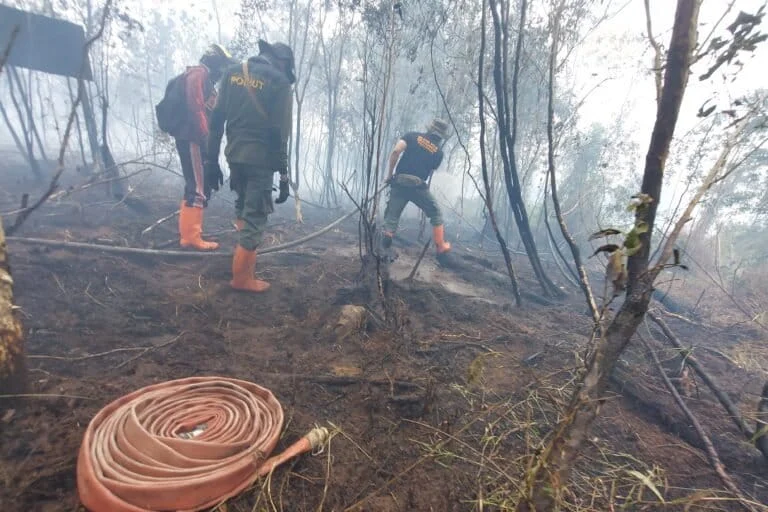
The emergence of the "El Niño Godzilla" phenomenon has transcended beyond a mere meteorological curiosity to become one of the most definitive indicators of the global climate crisis, with profound and direct implications for the Indonesian archipelago. Characterized by an unprecedented warming of sea surface temperatures in the central and eastern tropical Pacific Ocean, this "super" El Niño event represents a systemic threat to the nation’s ecological balance, economic stability, and social welfare. As Indonesia grapples with the intensifying frequency of extreme weather patterns, the focus has shifted toward the immediate dangers of massive forest and land fires (karhutla), severe agricultural droughts, and the cascading effects on the national supply chain. This crisis necessitates a paradigm shift in national policy, moving from reactive disaster management to proactive climate resilience through accelerated energy transitions and robust institutional preparedness.
Understanding the Magnitude of El Niño Godzilla
The term "El Niño Godzilla" was first popularized by NASA climatologists to describe the exceptionally strong 2015-2016 El Niño event, which saw ocean temperature anomalies exceeding 2.0 degrees Celsius above the historical average. Unlike standard El Niño cycles, which occur every two to seven years and bring moderate dry spells, a "Godzilla" variant indicates a maximum-intensity event capable of altering global atmospheric circulation. For Indonesia, located at the heart of the Maritime Continent, this translates to a precipitous decline in rainfall as the convective rain clouds are pulled eastward toward the central Pacific, leaving the archipelago under a dome of high pressure and scorching heat.
Meteorological data from the Meteorological, Climatological, and Geophysical Agency (BMKG) indicates that during such intense phases, the Indonesian monsoon is significantly delayed. The resulting moisture deficit creates a "tinderbox" effect across the vast peatlands of Sumatra and Kalimantan. Scientists warn that the current trajectory of global warming is making these "super" events more frequent. What was once a once-in-a-generation occurrence is now becoming a recurring nightmare, forcing the Indonesian government and its citizens to confront a reality where extreme heat is the new normal.
A Chronology of Climatic Disruption in the Archipelago
The history of El Niño in Indonesia is marked by periods of immense environmental and economic struggle. To understand the current urgency, one must look at the timeline of previous significant events. The 1997-1998 El Niño remains one of the most devastating on record, where approximately 8 million hectares of land burned, releasing a massive plume of carbon dioxide that contributed significantly to global emissions. This was followed by the 2015-2016 event, which saw the "Godzilla" moniker gain traction. During this period, the World Bank estimated that Indonesia suffered over $16 billion in economic losses—roughly 1.9% of its GDP—due to fires, health issues, and lost productivity.
In the 2023-2024 cycle, the symptoms of another strengthening El Niño began to manifest early. By mid-2023, BMKG began issuing warnings of a "triple-dip" La Niña ending and a rapid transition into a strong El Niño. By the third quarter, rainfall in many parts of Java, Bali, and Nusa Tenggara had dropped to less than 20% of normal levels. This chronology highlights a narrowing window of recovery between extreme weather events, leaving ecosystems and human systems with little time to regenerate before the next blow falls.
The Scourge of Karhutla: Forest Fires and Peatland Fragility
One of the most visible and dangerous consequences of El Niño Godzilla is the resurgence of forest and land fires, known locally as karhutla. Indonesia’s peatlands, which store vast amounts of carbon, are particularly vulnerable. Under normal conditions, these lands are waterlogged and fire-resistant. However, during an extreme El Niño, the water table drops, leaving the organic matter dry and highly flammable. Once ignited, peat fires are notoriously difficult to extinguish, often smoldering underground for weeks and releasing a thick, toxic haze.
The environmental impact is twofold: the immediate destruction of biodiversity and the long-term contribution to global warming. Data from the Ministry of Environment and Forestry (KLHK) through the Sipongi monitoring system shows a direct correlation between El Niño intensity and the number of "hotspots" detected via satellite. In high-risk provinces like Riau, Jambi, South Sumatra, and Central Kalimantan, the air quality index (AQI) frequently reaches "hazardous" levels during these periods, leading to widespread respiratory illnesses among the population. Furthermore, the transboundary haze often strains diplomatic relations with neighboring Malaysia and Singapore, underscoring the regional geopolitical stakes of Indonesia’s climate management.
Agricultural Disruptions and the Threat to Food Sovereignty
Beyond the smoke and flames, El Niño Godzilla poses a quiet but lethal threat to Indonesia’s food security. The agricultural sector, which employs nearly 30% of the Indonesian workforce, is highly dependent on predictable rainfall patterns. The delay of the rainy season means that the primary rice planting season is pushed back, often by two to three months. This leads to a significant "harvest gap," forcing the government to increase food imports to stabilize domestic prices.
In 2023 and early 2024, the impact on rice production was palpable. The Ministry of Agriculture reported that hundreds of thousands of hectares of paddy fields were affected by drought, with some areas experiencing total crop failure (puso). As supply dwindled, the price of medium-grade rice hit record highs, disproportionately affecting low-income households. This volatility in food prices is a primary driver of inflation, which can trigger social unrest and decrease the overall purchasing power of the population. To mitigate this, the State Logistics Agency (Bulog) has had to aggressively manage stocks, but the underlying vulnerability remains: Indonesia’s irrigation systems and crop varieties are not yet fully adapted to the prolonged droughts brought by a "Godzilla" El Niño.
Socio-Economic Stability and the Cost of Inaction
The socio-economic implications of extreme climate events extend far beyond the farm and the forest. Water scarcity becomes a critical issue in urban centers, where groundwater reserves are already depleted. In regions like East Java and East Nusa Tenggara, the government is often forced to deploy water tankers to villages that have seen their wells run dry for months. This creates an additional fiscal burden on local governments, diverting funds from development projects to emergency relief.
Moreover, the health costs associated with El Niño are staggering. Aside from the aforementioned respiratory issues from haze, higher temperatures are linked to an increase in vector-borne diseases like dengue fever and malaria. The economic productivity of the workforce declines as heat stress becomes a workplace hazard, particularly for those in construction and outdoor labor. Analysts argue that without a systemic shift in how the country manages these risks, the cumulative cost of repeated El Niño events could derail Indonesia’s "Golden Indonesia 2045" vision of becoming a top-five global economy.
Institutional Readiness and National Mitigation Strategies
In response to these escalating threats, there is a growing consensus among policymakers and environmental experts that Indonesia’s institutional framework must evolve. The National Disaster Management Agency (BNPB) has become more sophisticated in its early warning systems, utilizing "weather modification technology" (TMC) to induce rain over fire-prone areas before the peak of the dry season. However, institutional readiness is not just about emergency response; it is about long-term spatial planning and law enforcement.
Reactions from environmental NGOs and academic circles suggest that the enforcement of the "moratorium on primary forest and peatland clearing" is vital. There is a call for stricter sanctions against corporations that use "slash-and-burn" techniques, which are often exacerbated by the dry conditions of El Niño. On the institutional side, the integration of climate data into regional development plans (RPJMD) is seen as a necessary step to ensure that infrastructure—such as dams and reservoirs—is built with the capacity to handle multi-month droughts.
The Energy Transition as a Long-Term Climate Shield
While immediate mitigation focuses on fire-fighting and food aid, the root cause of the intensifying El Niño phenomenon is global climate change, driven by greenhouse gas emissions. For Indonesia, the transition to clean energy is no longer an optional environmental goal; it is a strategic necessity for national survival. The reliance on coal-fired power plants not only contributes to global warming but also consumes vast amounts of water for cooling—water that becomes scarce during El Niño.
The Indonesian government has committed to reaching Net Zero Emissions by 2060 or sooner, supported by initiatives like the Just Energy Transition Partnership (JETP). Accelerating the shift toward solar, wind, and geothermal energy would reduce the country’s carbon footprint and create a more resilient energy grid. Furthermore, decentralized renewable energy systems can provide power to remote areas that are most vulnerable to climate-induced logistics disruptions. Experts emphasize that the "El Niño Godzilla" serves as a stark reminder that the cost of transitioning to green energy is far lower than the cost of enduring the escalating damages of a warming planet.
Navigating an Uncertain Climatic Future
As the world watches the Pacific Ocean for signs of the next temperature spike, Indonesia stands at a crossroads. The phenomenon of El Niño Godzilla has exposed the fragility of the nation’s current environmental and economic systems. It has shown that the climate crisis is not a distant threat but a present reality that manifests in dry taps, empty granaries, and darkened skies.
The path forward requires a multi-pronged approach: strengthening the resilience of smallholder farmers through drought-resistant seeds and better irrigation, protecting the remaining peatlands as natural carbon sinks, and modernizing the national energy infrastructure. Above all, it requires a recognition that the "Godzilla" of the Pacific is a symptom of a larger imbalance. Indonesia’s ability to navigate this uncertainty will depend on its capacity to transform these recurring crises into a catalyst for systemic change, ensuring that the nation is not merely surviving the next El Niño, but building a foundation that can withstand the climate challenges of the 21st century.