Nila Kartika Wati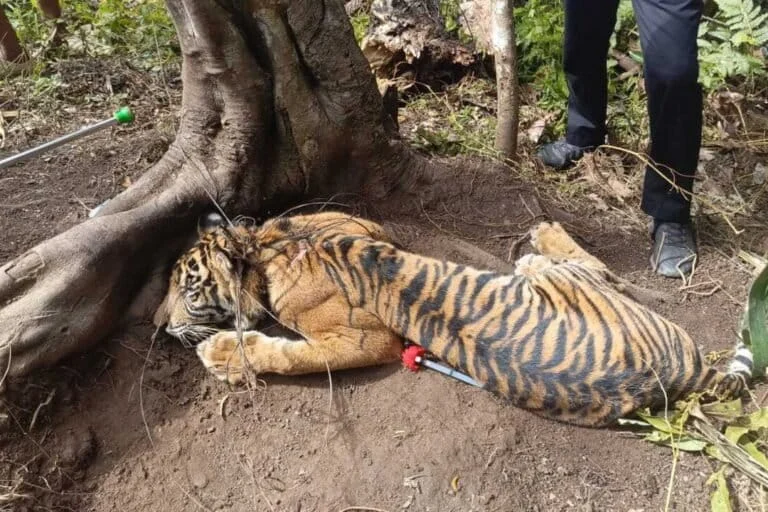
The critical state of the Sumatran tiger (Panthera tigris sumatrae) has reached a precarious tipping point in West Sumatra, where a surge in human-wildlife conflicts is directly linked to the rapid degradation of indigenous forest ecosystems. Throughout 2025 and into the first half of 2026, the province has recorded more than 20 significant conflict cases, concentrated primarily in the regencies of Agam, Pasaman, and South Solok. These incidents are not isolated occurrences but are symptomatic of a larger environmental crisis characterized by the fragmentation of tiger habitats and the encroachment of human industrial activity into protected conservation zones.
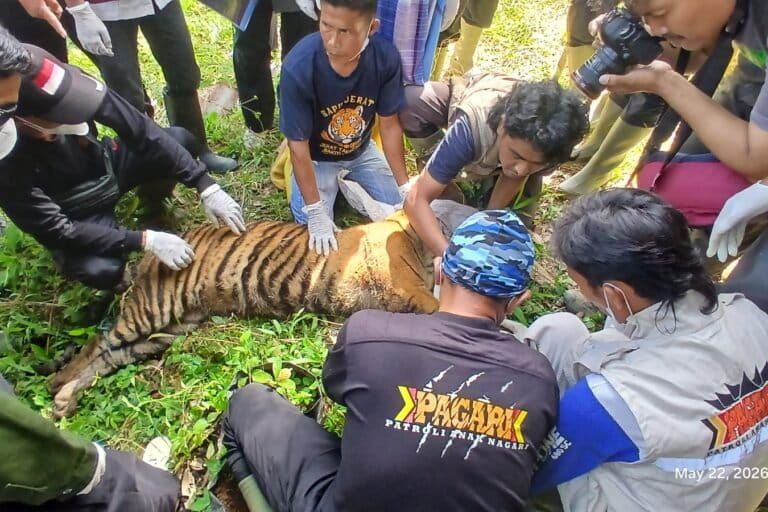
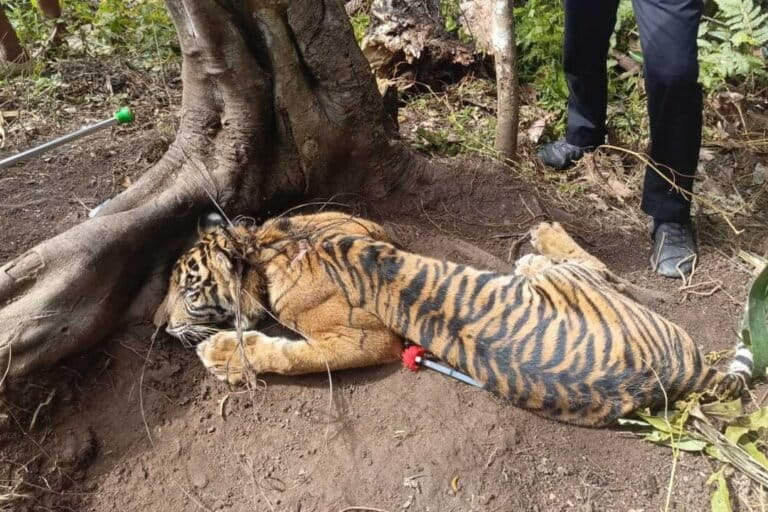
The most recent manifestations of this tension occurred in late May 2026. On May 21, a young Sumatran tiger cub was found severely injured after becoming ensnared in a trap intended for wild boars in Pasaman. Only a day later, another cub was captured in a box trap in Agam after wandering too close to human settlements. These events have sparked renewed urgency among conservationists, who argue that the tiger’s entry into human-occupied spaces is a desperate response to the destruction of their natural hunting grounds.
The Shrinking Wilderness: A Data-Driven Crisis
The root cause of these increasing interactions is the alarming rate of deforestation across the "Ranah Minang" landscape. According to a recent satellite imagery analysis conducted by the Indonesian Conservation Community (KKI) WARSI using Sentinel data, West Sumatra has lost approximately 20,000 hectares of forest cover in just two years, between 2023 and 2025. In 2023, the province’s total forest cover stood at 1,752,567 hectares; by 2025, that figure had plummeted to 1,731,672 hectares.
This loss is particularly devastating because it is not confined to production forests but has pierced the boundaries of strictly protected conservation areas. The West Sumatra Natural Resources Conservation Agency (BKSDA) has officially acknowledged significant damage within several key reserves, including the Malampah Nature Reserve (CA), the Barisan Nature Reserve, the Panti Nature Reserve, the Malampah Alahan Panjang Wildlife Sanctuary (SM), and the Maninjau Nature Reserve.
Antonius Vevri, the Head of Conservation Section Region I at BKSDA West Sumatra, noted that the damage ranges from moderate to severe. The drivers of this destruction are multifaceted, involving illegal logging, unauthorized mining operations, and the conversion of forest land into agricultural plantations. Vevri indicated that while some areas require immediate rehabilitation and reforestation, others are so compromised that they currently only require heightened security to prevent further encroachment.
Illegal Industry and Habitat Fragmentation
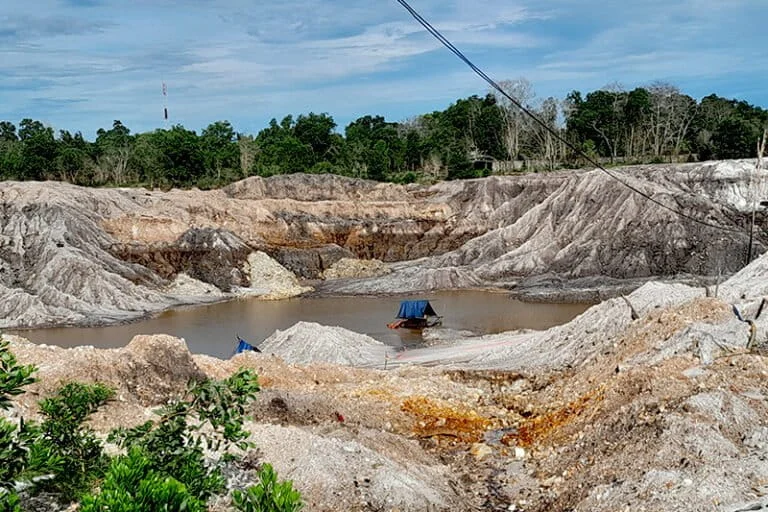
The spatial analysis of the conflict zones reveals a troubling pattern of industrial encroachment. Ade Putra, the Head of the Maninjau Resort for BKSDA West Sumatra, identified a suite of illegal activities—including poaching, encroachment for small-scale farming, and large-scale mining—as the primary catalysts for "negative interactions" between humans and tigers. When forests are converted to non-forest use, the natural boundaries that separate the apex predator from human populations vanish.
This sentiment is echoed by Walhi West Sumatra, a leading environmental advocacy group. Tommy Adam, the Executive Director of Walhi West Sumatra, has been a vocal critic of what he describes as "weak in-situ protection." Adam argues that tiger habitats are no longer cohesive landscapes but are instead fragmented "islands" of forest. He points to the contamination of river systems, which serve as vital water sources for tigers, as an overlooked factor in the degradation of these habitats.
A specific point of concern is the Malampah Wildlife Sanctuary, which Adam claims has seen its "core zone" transformed into an illegal gold mining hub. The presence of heavy machinery and the constant noise of industrial activity drive tigers out of the sanctuary’s interior. Similarly, in the Palembayan and Salareh Aia regions of Agam, the forest has been sliced apart by oil palm plantations. The fragmentation is so severe that tigers are forced to traverse agricultural land to move between patches of forest, making encounters with humans inevitable.
Chronology of Habitat Degradation in Key Watersheds
The ecological impact extends beyond the immediate forest floor to the regional watersheds (DAS). Walhi’s records indicate that over 10,000 hectares of forest serving as critical wildlife corridors have been damaged across several major river basins. This includes the upstream areas of the Batahan, Pasaman, Kampar, Indragiri, and Batanghari watersheds.
The timeline of this degradation suggests a systemic failure to move beyond "emergency response" conservation. While BKSDA is often praised for its rapid response in rescuing trapped tigers or relocating individuals, critics like Tommy Adam argue that these are "band-aid" solutions. The focus, he suggests, should be on the mitigation of conflict through the preservation of large, contiguous forest blocks, rather than merely reacting once a tiger has already entered a village.
The Biology of Conflict: Cubs and Territories
Understanding the biological needs of the Sumatran tiger is essential to interpreting the recent surge in conflicts. Fernando Dharma of the SINTAS Indonesia Foundation explains that the recent cases in Pasaman and Agam likely involve "resident" individuals. Specifically, the presence of cubs in these conflict zones suggests that mother tigers are attempting to teach their offspring how to hunt within a landscape that is increasingly dominated by humans.
Tiger biology dictates that while female cubs often remain near their mother’s territory, male cubs must seek out new, unclaimed territories once they are weaned. In a fragmented landscape, these young males often find themselves in human-dominated areas because there is no "wild" space left for them to occupy without fighting an established adult male.
The SINTAS Foundation’s 2025 monitoring of the Palupuh and Lima Puluh Kota landscapes confirmed that the mother tiger involved in the recent Agam conflict is a long-term resident of that specific forest block. This area is dangerously close to community farms and settlements, creating a "high-risk" zone for both the tigers and the local population. Wildlife ecologist Sunarto notes that tigers require a vast "home range" because their prey—primarily large mammals like deer and wild boar—is spread out. If the forest cannot support a healthy prey population due to poaching or habitat loss, tigers will naturally gravitate toward livestock in nearby villages.
The Trap Crisis: A Lethal Threat to Biodiversity
One of the most immediate threats to the Sumatran tiger in West Sumatra is the ubiquitous use of "pig traps" by local farmers. While these traps are intended to protect crops from wild boars, they are indiscriminate. A tiger cub caught in a wire snare faces not only physical trauma and potential limb loss but also the psychological stress of being separated from its mother.
Sunarto emphasizes that under normal conditions, a tiger would avoid human contact. However, when a mother tiger’s home range is usurped by a plantation or a mine, she has no choice but to hunt on the periphery. "The tiger does not recognize administrative boundaries or land-use permits," Sunarto explains. "They only recognize the need for food and safety. If the forest is destroyed, the tiger does not simply disappear; it moves into the only space left—the human space."
Strategic Implications and the Path Forward
The situation in West Sumatra serves as a microcosm of the broader challenges facing Sumatran tiger conservation across Indonesia. With fewer than 600 individuals estimated to remain in the wild, the loss of even a few cubs to snares or retaliatory killing is a significant blow to the genetic diversity and long-term viability of the species.
The analysis of the current crisis suggests that several key shifts in policy and practice are required:
- Transition from Reactive to Preventive Mitigation: Conservation agencies must prioritize the protection of core habitats and the restoration of corridors over the "rescue and relocate" model. Once a tiger is removed from the wild and placed in a rescue center, it is often difficult to reintroduce it successfully.
- Strict Enforcement Against Illegal Mining and Logging: The presence of heavy machinery in wildlife sanctuaries like SM Malampah indicates a failure of monitoring. Strengthening forest patrols and prosecuting the financial backers of illegal mining is essential.
- Community-Based Conflict Management: Since farmers will continue to protect their crops from boars, there must be a push for "tiger-friendly" agricultural practices. This includes the use of non-lethal deterrents and the phased-out use of wire snares in areas known to be tiger habitats.
- Landscape-Level Planning: The fragmentation of the Batahan and Kampar watersheds shows that conservation cannot happen in a vacuum. Land-use planning must account for the migratory needs of apex predators to prevent them from being "bottled up" in small, unsustainable forest patches.
The Sumatran tiger is more than just a national icon; it is an umbrella species whose survival ensures the health of the entire ecosystem, including the water sources and forests that millions of people in West Sumatra depend on. If the current trend of 10,000 hectares of forest loss per year continues, the "Grand Mane" of the Sumatran wilderness may soon vanish, leaving behind a landscape that is ecologically broken and increasingly prone to conflict. The fate of the cubs found in Pasaman and Agam is a stark reminder that time is running out for the world’s rarest tigers.