Nasution Nanang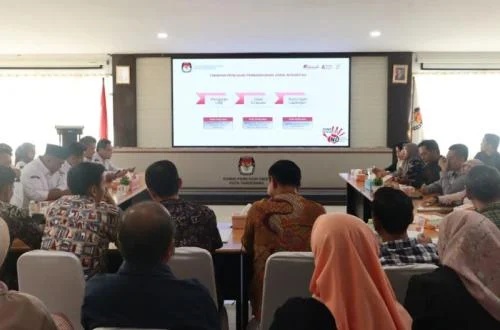
TANGERANG – The General Election Commission (KPU) of Tangerang City, Banten, recently served as a pivotal host for a comprehensive benchmarking visit, welcoming delegations from KPU East Jakarta and KPU South Tangerang. The high-level engagement was meticulously focused on the critical development of the Integrity Zone (ZI), a foundational initiative designed to pave the way for achieving the esteemed predicates of a Corruption-Free Zone (WBK) and a Clean and Serving Bureaucracy Zone (WBBM). This collaborative exchange underscores a nationwide commitment within Indonesia’s electoral bodies to foster institutional professionalism, enhance public trust, and champion a culture of unwavering integrity in governance.
The visit, which took place on a Friday in Tangerang, as confirmed by Fandu Dwiadma Oktavirawan, Secretary of KPU Tangerang City, was articulated as a vital platform for the mutual sharing of experiences and best practices among participating work units. Its overarching objective was to fortify institutional governance, ensuring it remains robustly professional and unequivocally committed to integrity. "Through this visit, we are able to mutually exchange experiences and innovations that each work unit has developed," Fandu stated in his official remarks, highlighting the intrinsic value of peer learning in the pursuit of administrative excellence and ethical conduct.
The National Imperative: Understanding Zona Integritas
The concept of Zona Integritas (ZI) is not merely an internal administrative goal but a cornerstone of Indonesia’s ambitious bureaucratic reform agenda. Initiated through Presidential Regulation No. 81/2010 concerning the Grand Design of Bureaucratic Reform 2010-2025, the ZI program aims to systematically transform government agencies into institutions that are clean, accountable, and highly responsive to public needs. The ultimate predicates, Wilayah Bebas dari Korupsi (WBK) – Corruption-Free Zone – and Wilayah Birokrasi Bersih dan Melayani (WBBM) – Clean and Serving Bureaucracy Zone – represent the highest echelons of achievement in this reform process.
For an agency to be designated WBK, it must demonstrate tangible results in preventing corruption and enhancing service quality. Moving further, the WBBM predicate signifies an agency’s ability to consistently deliver outstanding public services with zero tolerance for corruption, alongside a robust and transparent internal governance system. The KPU, as an independent body crucial to the democratic process, holds a unique and significant position in this national endeavor. The integrity of electoral commissions directly impacts the legitimacy and credibility of elections, making their adherence to ZI principles paramount for maintaining public confidence in democracy itself. The national KPU leadership has consistently championed the ZI initiative, encouraging all regional KPUs to actively participate and strive for these prestigious designations, understanding that a transparent and accountable electoral administration is fundamental to democratic health.
KPU Tangerang City: A Beacon of Innovation and Best Practice
KPU Tangerang City has distinguished itself through its proactive engagement with the ZI framework, developing several innovative approaches that position it as an exemplary model for other regional KPUs. Their commitment extends beyond mere administrative compliance, delving into creative solutions that enhance public engagement and transparency. The benchmarking visit provided an invaluable opportunity for the visiting delegations to witness these innovations firsthand.
A central highlight of the working visit was an immersive tour of the "Lorong Pemilu" (Election Alley). This innovative facility, a brainchild of KPU Tangerang City, serves as an interactive educational hub dedicated to electoral literacy. It stands as a concrete manifestation of the KPU’s commitment to making information and electoral education easily accessible to the wider community. Through the Lorong Pemilu, participants of the benchmarking visit, alongside the general public, can delve into the rich tapestry of Indonesia’s electoral history, tracing the evolution of democratic processes at both national and local levels, particularly within Tangerang City. The alley showcases various public information services and the array of innovations developed by KPU Tangerang City to streamline electoral administration and enhance voter engagement. This hands-on experience offered a tangible example of how an electoral body can translate its integrity commitments into practical, citizen-centric initiatives.
Fandu underscored that the development of the Integrity Zone is not merely about fulfilling administrative checkboxes. Instead, it is an ongoing, dynamic process that must be inextricably linked with a relentless pursuit of improved public service quality and unwavering transparency in information dissemination. "Through the various innovations we present, including Lorong Pemilu, we hope to strengthen a work culture that is integrated, transparent, and oriented towards public service," he elaborated, emphasizing the holistic nature of their approach. This philosophy aligns perfectly with the core tenets of WBK and WBBM, which demand both internal systemic changes and external service improvements.
Chronology and Context of the Visit
The journey towards achieving ZI predicates is a continuous one, typically involving multiple stages of assessment and improvement. While the precise timeline of KPU Tangerang City’s ZI journey was not detailed in the original report, the fact that it is now hosting benchmarking visits implies a significant level of progress and recognition within the KPU ecosystem. The national ZI program itself has been in effect for over a decade, with government agencies progressively adopting its principles. KPUs across Indonesia have been encouraged to formally initiate their ZI development, usually starting with internal self-assessments, followed by external evaluations by the Ministry of Administrative and Bureaucratic Reform (KemenPAN-RB) and often supported by independent bodies like the Corruption Eradication Commission (KPK).
The visit on Friday represents a critical phase in this journey for the visiting KPUs of East Jakarta and South Tangerang. For them, it marks a proactive step in gathering practical insights and actionable strategies from a peer institution that has demonstrated success. The decision to visit Tangerang City suggests that KPU Tangerang has likely either achieved or is very close to achieving a WBK or WBBM predicate, making it a valuable learning model. The informal exchange of ideas during the tour of Lorong Pemilu and subsequent discussions would have provided practical perspectives on overcoming challenges in ZI implementation, from internal resistance to resource constraints. This peer-to-peer learning model is increasingly recognized as an effective mechanism for disseminating best practices and accelerating reform efforts across diverse government entities.
Statements and Reactions from Related Parties (Inferred)
While the original article primarily quotes KPU Tangerang City’s Secretary, the nature of a benchmarking visit logically infers positive reactions and statements from the visiting delegations and broader support from national bodies.
Representatives from KPU East Jakarta and KPU South Tangerang would likely have expressed enthusiasm for the insights gained. For instance, an inferred statement from a KPU East Jakarta official might be: "We are incredibly impressed by the innovative spirit of KPU Tangerang City, particularly with the ‘Lorong Pemilu.’ It provides a clear roadmap for how we can enhance public engagement and transparency in our own region. We look forward to adapting these valuable lessons to accelerate our ZI development." Similarly, an official from KPU South Tangerang could have remarked, "The commitment to integrity and service excellence here is truly inspiring. Beyond the physical facilities, it’s the culture of transparency and professionalism that we aim to replicate. This visit has provided concrete examples and practical strategies for our journey towards WBK and WBBM."
From a national perspective, the KPU of Indonesia would likely commend such inter-regional collaborations. A hypothetical statement from a national KPU commissioner might emphasize: "These benchmarking visits are fundamental to strengthening the collective integrity of our electoral system. By sharing best practices and fostering a culture of continuous improvement, regional KPUs contribute significantly to the national agenda of bureaucratic reform and, more importantly, to building unwavering public trust in our democratic institutions." Independent anti-corruption bodies like the Corruption Eradication Commission (KPK) would also view such initiatives positively, often stressing that internal reforms and peer-learning are crucial for sustainable corruption prevention efforts within the public sector.
Data and Broader Impact on Bureaucratic Reform
The ZI program is a significant component of Indonesia’s broader bureaucratic reform, which aims to improve governance and combat corruption across all government levels. According to KemenPAN-RB data, as of late 2023, hundreds of government agencies across Indonesia had achieved WBK and WBBM predicates, demonstrating a growing commitment to the reform agenda. However, given the vast number of government entities, including hundreds of regional KPUs, there remains a substantial effort required to ensure universal adoption and achievement of these standards. Each KPU’s success in achieving ZI designations contributes directly to enhancing the overall integrity of Indonesia’s electoral administration, which is critical for a nation that regularly holds complex general and regional elections.
The implications of successful ZI implementation within the KPU framework are far-reaching. Firstly, it directly enhances public trust. In an era often marked by skepticism towards public institutions, a KPU certified as WBK or WBBM sends a powerful message about its commitment to fairness, transparency, and accountability. This trust is invaluable during election periods, helping to mitigate doubts about electoral processes and results. Secondly, ZI fosters internal efficiency and professionalism. By streamlining procedures, improving human resource management, and enhancing accountability mechanisms, KPUs can operate more effectively, ensuring smoother and more credible elections. Thirdly, it acts as a deterrent to corruption. The rigorous standards and continuous monitoring inherent in the ZI program create an environment where corrupt practices are less likely to occur and are more easily detected if they do.
Furthermore, these benchmarking activities underscore the importance of synergy among different electoral bodies. Indonesia’s decentralized governance structure means that while national policies are set, their implementation often varies at regional levels. By facilitating direct interaction and knowledge transfer between regional KPUs, the national KPU effectively cultivates a unified standard of excellence and integrity across the archipelago. This collective strengthening is vital for upholding the integrity of the entire electoral system, from voter registration to ballot counting.
Future Outlook and Sustained Commitment
The visit from KPU East Jakarta and KPU South Tangerang serves as a potent reminder of the ongoing nature of bureaucratic reform and the continuous commitment required to maintain and improve standards of integrity. Fandu reiterated that such benchmarking activities are instrumental in reinforcing a shared commitment across all levels of the KPU structure. The ultimate goal, he emphasized, is to realize institutional governance that is increasingly accountable, transparent, and optimally serves the public.
Moving forward, the lessons learned from KPU Tangerang City’s initiatives, such as the innovative Lorong Pemilu, are expected to inspire similar creative approaches in other regions. The emphasis on public education and accessible information, as demonstrated by Tangerang, is crucial for fostering an informed electorate, which in turn strengthens democratic participation and oversight. The long-term implication is a more resilient and trustworthy electoral system across Indonesia. This commitment to integrity and service excellence, driven by programs like Zona Integritas, is not merely about compliance but about embedding a culture of ethical governance that will serve as a bedrock for Indonesia’s democratic future. It reflects a national aspiration to build a bureaucracy that is not only free from corruption but also genuinely dedicated to serving its citizens with utmost professionalism and transparency.