Nasution Nanang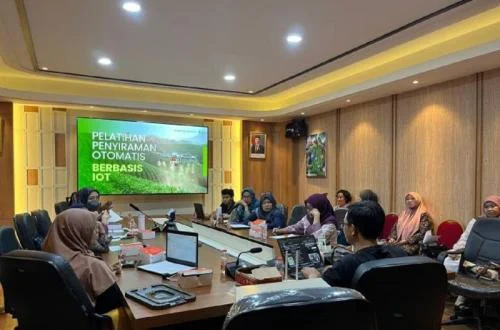
Tangerang City, Banten – In a strategic move to fortify its regional food security and embrace modern agricultural practices, the Tangerang City Food Security Agency (DKP) has launched a pioneering training program focused on Internet of Things (IoT)-based automatic irrigation systems. This initiative targets key stakeholders in the local agricultural ecosystem, including women farmer groups (Kelompok Wanita Tani or KWT), agricultural extension workers, and agricultural production teams, marking a significant step towards the digital transformation of urban farming within the metropolitan area. The program underscores the city’s commitment to leveraging cutting-edge technology to address contemporary challenges in food production, ensuring sustainability, efficiency, and resilience in its urban agricultural landscape, thereby establishing a new benchmark for urban agricultural development in Indonesia.
The introduction of IoT in agriculture, particularly in an urban context like Tangerang, is not merely an optional upgrade but a critical strategic imperative. Muhdorun, the Head of the Tangerang City Food Security Agency, articulated this vision, emphasizing that the adoption of modern technology is indispensable for cultivating a self-sufficient and sustainable regional food system. "Through this technology, we aim to equip participants with advanced skills in managing automatic irrigation systems, thereby fostering urban agriculture that is modern, efficient, and sustainable," Muhdorun stated in Tangerang on Friday, highlighting the immediate and long-term objectives of the ambitious program. This initiative is a testament to Tangerang City’s forward-thinking approach, recognizing that traditional farming methods often fall short in meeting the demands of a rapidly urbanizing environment, necessitating innovative solutions to optimize resource utilization and maximize yields.
The Imperative for Digital Transformation in Urban Farming
The context for this initiative is rooted in the escalating challenges faced by urban centers globally, including Tangerang, concerning food security. Rapid population growth, shrinking agricultural land, water scarcity, and the unpredictable impacts of climate change collectively exert immense pressure on conventional food supply chains. Tangerang City, a vibrant and rapidly developing urban hub situated within the greater Jakarta metropolitan area, experiences these pressures acutely. Its dense population and limited green spaces necessitate highly efficient and localized food production strategies. Urban farming emerges as a vital strategy to mitigate these pressures, bringing food production closer to consumers, reducing transportation costs and carbon footprints, and fostering community engagement. However, urban farming itself requires innovative tools to overcome inherent limitations, such as restricted space and the need for precision resource management.
IoT technology offers a transformative solution to these challenges. By integrating sensors, data analytics, and automated controls, IoT-based irrigation systems can precisely monitor soil moisture levels, ambient temperature, humidity, and even nutrient requirements. This real-time data allows for intelligent decision-making, enabling water and nutrients to be delivered only when and where they are needed, thereby minimizing waste and optimizing plant growth. For Tangerang City, the efficient use of resources like water is paramount. The DKP’s commitment to accelerating digital transformation in the urban farming sector through such programs is therefore a logical and essential step, aligning with broader national initiatives to enhance food resilience and promote sustainable agriculture.
Muhdorun further elaborated on the crucial role of IoT, particularly its capability to distribute water automatically and with pinpoint accuracy. This precision not only drastically minimizes the risk of water wastage, a critical concern in urban environments where water resources are often strained, but also ensures the continuity and stability of crop yields by providing plants with optimal hydration. "Armed with the knowledge acquired, we are committed to promptly implementing this smart irrigation technology in our respective environments to further modernize our urban agriculture," he added, reflecting a proactive and hands-on approach to technology adoption among the participants. The training modules are designed to be highly practical, covering aspects from the installation and calibration of sensors to the interpretation of data and the operation of smartphone-controlled irrigation schedules. Participants gain hands-on experience, ensuring they are not just theoretical learners but competent practitioners capable of deploying and managing these sophisticated systems independently. This comprehensive approach aims to foster a new generation of tech-savvy urban farmers.
Comprehensive Urban Farming Achievements and Future Trajectories
Tangerang City’s commitment to urban farming extends beyond just technology adoption; it is evidenced by a robust and expanding network of community-led agricultural initiatives. Ruta Ireng Wicaksono, the Assistant for Economy and Development of Tangerang City, provided an insightful overview of the significant progress achieved by the city’s urban farming program. The program has successfully mobilized 76 KWTs and 39 fish empowerment groups, demonstrating a broad-based community involvement that is crucial for the program’s sustainability and impact. These groups form the backbone of Tangerang’s urban food production efforts, transforming previously underutilized urban spaces—such as rooftops, vertical gardens, and vacant lots—into productive agricultural zones. This community-centric model not only increases food production but also enhances social cohesion and local empowerment.
The tangible results of these efforts are impressive, with the program recording substantial production figures throughout 2025, underscoring the effectiveness of a concerted urban farming strategy. Among the diverse commodities cultivated, the city produced 100,920 polybags of essential vegetables such as chili, tomatoes, and eggplants. These high-demand staples contribute directly to household food security and local market supply. In the aquaculture sector, a significant yield of 352,717 fish, predominantly tilapia and catfish, was achieved, contributing substantially to local protein sources. Furthermore, the program successfully cultivated 11,147 polybags of family medicinal plants (Toga), promoting traditional health remedies and biodiversity within urban settings, alongside the rearing of 45 goats and sheep, further diversifying the local food supply with livestock products. These figures underscore the multi-faceted approach of Tangerang’s urban farming strategy, addressing various nutritional needs and promoting self-sufficiency across different food categories.
Beyond community-based initiatives, Tangerang City also supports traditional agricultural sectors within its boundaries, recognizing the complementary role they play in overall food security. The city boasts 11 established farmer groups (poktan), comprising seven groups dedicated to staple food crops and four specializing in horticulture. The seven food crop groups collectively manage an impressive 98 hectares of rice fields, which yielded a remarkable 846 tons of rice throughout 2025. This substantial rice production highlights the city’s capacity to contribute significantly to its staple food requirements, even amidst urbanization pressures. Concurrently, the horticulture farmer groups achieved notable success, producing 4.7 tons of large chili and 4.9 tons of shallots, key ingredients in Indonesian cuisine, further solidifying the city’s diverse agricultural output and demonstrating the viability of commercial-scale farming alongside urban community efforts.
Ruta Ireng Wicaksono affirmed the city’s unwavering commitment to the future expansion of these programs. "Going forward, this program will continue to be developed so that its benefits are more widespread and directly felt by the people of Tangerang City," he stated, outlining a vision for continuous growth and increased community dividends. This forward-looking perspective emphasizes the dynamic nature of Tangerang’s food security strategy, which continuously seeks to innovate and adapt to meet evolving community needs and environmental conditions, ensuring that no segment of the population is left behind in the pursuit of food self-sufficiency.
Broader Implications: Economic, Environmental, and Social Impact
The implementation of IoT-based automatic irrigation systems and the broader urban farming initiatives in Tangerang carry profound implications across economic, environmental, and social dimensions, setting a precedent for sustainable urban development.
Economically, this program empowers KWTs and farmer groups by significantly increasing their productivity and reducing operational costs. Precision irrigation minimizes water usage, a direct cost saving, and reduces labor required for manual watering, freeing up participants’ time for other productive activities, such as value-added processing, marketing, or diversifying their agricultural outputs. Enhanced yields and consistent quality due to optimal growing conditions can lead to higher market prices and increased income for participating families. Moreover, the integration of technology could foster the emergence of new green jobs within the agricultural sector, such as technicians for IoT systems, data analysts for farm management, and specialized urban farm managers, thereby diversifying local economies and creating new skill sets. The creation of local food supply chains also reduces reliance on external markets, stabilizing food prices and protecting local producers from volatile market fluctuations, which is particularly beneficial during periods of economic uncertainty.
Environmentally, the benefits are equally significant and align with global sustainability goals. Water conservation is a primary advantage, especially critical in urban areas where water resources are often strained and climate change exacerbates water scarcity. By applying water precisely, runoff and evaporation are minimized, safeguarding precious water supplies and reducing strain on municipal water systems. The reduction in transportation distances for urban-grown produce lowers carbon emissions associated with food logistics, contributing directly to the city’s climate action goals and improving air quality. Healthier plants, nurtured by optimized irrigation and nutrient delivery, are often more resilient to pests and diseases, potentially reducing the need for chemical pesticides and promoting organic farming practices. Furthermore, the expansion of green spaces through urban farming initiatives contributes to urban biodiversity, provides natural habitats, and helps mitigate the urban heat island effect, making Tangerang a greener, cooler, and more livable city.
Socially, the program fosters community resilience and strengthens social cohesion. KWTs, predominantly composed of women, gain new skills and economic independence, elevating their status within their families and communities. This empowerment contributes significantly to gender equality and inclusive development, providing women with leadership roles and economic agency. The shared effort in cultivating urban farms builds stronger community bonds and a sense of collective ownership over local food systems, fostering a spirit of collaboration and mutual support. Access to fresh, locally grown produce improves dietary diversity and nutritional outcomes for urban residents, particularly vulnerable populations who might otherwise have limited access to healthy food options. Moreover, urban farming acts as an invaluable educational platform, reconnecting urban dwellers, especially children and youth, with the origins of their food and promoting environmental stewardship. This intergenerational knowledge transfer ensures that sustainable practices are passed down, creating a legacy of informed and engaged citizens who understand the importance of local food systems.
Challenges and the Path Forward
While the prospects are bright, the path to widespread adoption of smart urban farming technology is not without its challenges. Initial investment costs for IoT equipment, although becoming more affordable, can still be a barrier for smaller groups or individual farmers. Ensuring adequate technical support and maintenance services will be crucial for the longevity and effectiveness of the systems, requiring a robust infrastructure for troubleshooting and repairs. Bridging the digital divide, ensuring all participants have access to necessary digital literacy and connectivity, is another important consideration to ensure equitable access to these technological advancements.
Tangerang City’s DKP and its partners are actively addressing these challenges through multi-pronged strategies. This could include exploring grant opportunities from national and international bodies, facilitating access to micro-financing and subsidized loans for KWTs, establishing dedicated technical support hubs staffed by trained personnel, and developing user-friendly interfaces for the IoT systems that minimize complexity. The continued collaboration between government agencies, academic institutions, technology providers, and community groups will be vital for overcoming these hurdles and realizing the full potential of this transformative initiative. Public-private partnerships are expected to play a crucial role in scaling the technology and making it accessible to a broader segment of the population.
The vision for Tangerang City extends beyond simply adopting technology; it aims to cultivate a culture of innovation and sustainability in its food systems. By empowering its citizens with advanced agricultural skills and tools, Tangerang is not only securing its own food future but also setting a precedent for other urban centers grappling with similar challenges. The program serves as a tangible example of how local governments can proactively harness technological advancements to build more resilient, equitable, and environmentally conscious cities. The journey toward a truly modern, efficient, and sustainable urban agriculture in Tangerang City is well underway, promising a future where technology and community spirit converge to nourish its growing population, fostering a vibrant and self-sufficient urban ecosystem.
This strategic investment in human capital and technological infrastructure positions Tangerang City as a leader in urban food security, demonstrating that even within dense urban landscapes, robust and sustainable food production is achievable with foresight, innovation, and unwavering community engagement. The ongoing development and expansion of these programs, as envisioned by Ruta Ireng Wicaksono, will continue to solidify Tangerang’s status as a model for smart and sustainable urban development, ensuring that the benefits of modern agriculture are widely distributed and deeply rooted within the community for generations to come.