Nasution Nanang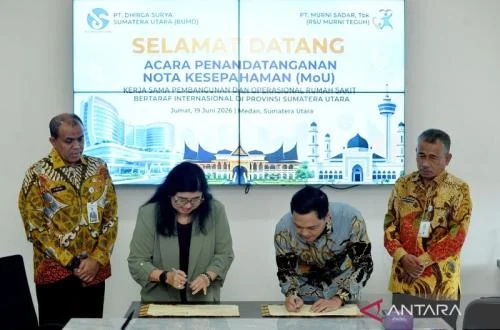
In a significant stride towards elevating domestic healthcare services and stemming the outflow of patients seeking treatment abroad, the North Sumatra Provincial Government (Pemprov Sumut) has officially announced its readiness to establish an international-standard healthcare facility through a strategic collaboration. The initiative centers around RS Murni Teguh, a prominent local hospital, which is poised to spearhead this ambitious transformation. A pivotal Memorandum of Understanding (MoU) formalizing this partnership was signed on Friday at the Governor’s Office in Medan, marking a crucial step in the province’s healthcare modernization agenda. This development is not merely about constructing a new facility; it represents a comprehensive commitment to upgrading medical expertise, technology, and patient care to global benchmarks, ultimately aiming to retain local patients and potentially attract medical tourists to North Sumatra.
Chronology and Formalization of the Partnership
The signing ceremony for the preliminary MoU served as the formal commencement of this strategic endeavor. The agreement was executed between PT Dhirga Surya Sumatera Utara, a regional state-owned enterprise (BUMD) under the North Sumatra Provincial Government, and PT Murni Sadar Tbk, the holding company overseeing RS Murni Teguh. Representing their respective organizations, Ari Wibowo, President Director of PT Dhirga Surya, and Dr. dr. Mutiara, MHA, MKT, President Director of PT Murni Sadar Tbk, affixed their signatures to the crucial document. This MoU is designed to be a foundational framework, valid for an initial period of six months. During this half-year window, both parties are tasked with meticulously drafting a detailed roadmap and a comprehensive Perjanjian Kerja Sama (PKS), or Cooperation Agreement, which will outline the concrete operational, financial, and strategic aspects of the partnership. This initial phase underscores the seriousness and expediency with which the provincial government and its private sector partner intend to move forward, highlighting the urgency to translate intent into tangible action. Basarin Yunus Tanjung, Assistant for Government and People’s Welfare at the North Sumatra Provincial Secretariat, emphasized the critical need for dedication during this preparatory phase, stating that the six-month period should ideally culminate in a full-fledged PKS rather than an extension of the MoU, reflecting the Governor’s keen interest in realizing an international-class hospital within the province expeditiously.
Addressing the Challenge of Outbound Medical Tourism
The primary catalyst for this ambitious project is the long-standing issue of outbound medical tourism, a phenomenon where a substantial number of Indonesian citizens, including those from North Sumatra, choose to seek medical treatment in foreign countries. This trend has significant economic ramifications, as it results in a substantial drain of national capital. Annually, millions of dollars are spent by Indonesians in neighboring countries like Malaysia, Singapore, and Thailand, which are perceived to offer superior healthcare infrastructure, advanced medical technology, specialized expertise, and sometimes, more efficient service delivery. Patients often cite reasons such as a lack of trust in domestic facilities, the unavailability of specific advanced treatments, shorter waiting times, and the allure of cutting-edge technology as motivations for their decision to travel abroad for medical care. This outward flow of patients not only depletes national resources but also hinders the development and advancement of the domestic healthcare sector by siphoning off potential investment and patient volume.
The North Sumatra Provincial Government, therefore, views the establishment of an international-standard hospital as a strategic imperative to reverse this trend. By offering world-class medical services locally, the province aims to provide its 15 million residents with high-quality healthcare options that can rival those found overseas, thereby reducing the need for costly and often inconvenient international travel for medical purposes. This initiative aligns with broader national efforts to bolster Indonesia’s healthcare ecosystem, making it more robust, competitive, and self-sufficient. The project is envisioned as a critical component in positioning North Sumatra not just as a provider of basic healthcare but as a regional hub for specialized and advanced medical treatments.
Government Support and Stakeholder Commitments
The North Sumatra Provincial Government has unequivocally committed to providing robust support for this initiative. Basarin Yunus Tanjung reiterated the government’s dedication to fostering an environment conducive to the project’s success. This includes a strong emphasis on enhancing the capacity of healthcare professionals through various training programs and skill development initiatives. The government also pledged support in facilitating the procurement of advanced medical equipment, exploring flexible mechanisms such as Kerja Sama Operasional (KSO) or Operational Cooperation schemes to ensure that the hospital is equipped with state-of-the-art technology. This multi-faceted approach underscores the government’s understanding that an international-standard hospital requires not only cutting-edge infrastructure but also a highly skilled workforce and access to the latest medical innovations.
PT Dhirga Surya Sumatera Utara, as the provincial BUMD, plays a crucial role as the government’s operational arm in this partnership. Ari Wibowo, its President Director, expressed profound optimism regarding the project’s potential, emphasizing its significance for the roughly 15 million inhabitants of North Sumatra. He highlighted that the collaboration is a tangible manifestation of the commitment to improving healthcare quality for the local populace. PT Dhirga Surya is prepared to engage in intensive coordination with all relevant stakeholders, including government agencies, medical associations, and community representatives, to accelerate the project’s realization. Wibowo articulated a vision where this project would not only fulfill a critical need but also instill a sense of pride among North Sumatra’s residents, transforming the region’s healthcare landscape and presenting a "new face" for the sector.
On the private sector front, PT Murni Sadar Tbk, through its President Director, Dr. dr. Mutiara, affirmed its full support and readiness to undertake the significant task of developing and managing the international-standard hospital. Dr. Mutiara articulated a strong belief that all planning stages could be effectively completed within the stipulated six-month MoU period, paving the way for a swift transition to the full cooperation agreement. A core tenet of Murni Sadar’s strategy will be the relentless strengthening of medical personnel competencies. This will be achieved through comprehensive training programs, continuous professional development, and strategic collaborations with international medical experts and institutions. Dr. Mutiara underscored the paramount goal: to ensure that the community receives healthcare services on par with global benchmarks, eliminating the necessity for outbound medical travel. She expressed confidence that through a synergistic combination of robust human resource development, adoption of advanced technology, and effective collaboration, this ambitious vision is entirely achievable.
Broader Impact and Implications
The establishment of an international-standard hospital in North Sumatra carries profound and far-reaching implications across economic, social, and systemic dimensions.
Economic Impact:
Firstly, the project is expected to significantly reduce the economic drain caused by outbound medical tourism. By retaining patients and their medical expenditures within the province, substantial capital will be recirculated into the local economy. This retained capital can then be invested in further healthcare infrastructure, research, and development. Secondly, the initiative will be a powerful engine for job creation. Beyond medical professionals (doctors, nurses, specialists), the hospital will require a vast support staff, including administrative personnel, technicians, therapists, pharmacists, and facility management teams. The construction phase itself will generate numerous employment opportunities in the building and related industries. Thirdly, it will stimulate local businesses, ranging from medical suppliers and pharmaceutical companies to hospitality services, transportation, and retail, all of which will benefit from increased economic activity around the hospital. Finally, if successful, the hospital could transform North Sumatra into a regional medical tourism destination, attracting patients from other parts of Indonesia and even neighboring countries, thereby generating new revenue streams and boosting the local economy further.
Social Impact:
From a social perspective, the most immediate benefit will be enhanced access to high-quality, specialized medical care for the residents of North Sumatra. This means patients will no longer face the logistical complexities, financial burdens, and emotional stress associated with traveling abroad for critical treatments. Families can remain closer to their loved ones during challenging medical journeys. The improved healthcare outcomes resulting from advanced diagnostics, treatments, and expert care will contribute to a healthier population overall, improving quality of life and productivity. The presence of a world-class facility will also instill greater public confidence in local healthcare services, fostering a sense of pride and trust within the community.
Healthcare System Advancement:
At a systemic level, this project is poised to elevate the entire healthcare ecosystem in North Sumatra. The new hospital will likely set a new benchmark for quality and service, compelling other existing medical facilities in the region to upgrade their own standards to remain competitive. This competitive environment can drive overall improvements in patient care, technology adoption, and staff training across the province. The focus on strengthening human resources through training and international collaborations will lead to a transfer of knowledge and expertise, enriching the local pool of medical talent. Attracting and retaining top medical professionals, who might otherwise seek opportunities abroad, will become more feasible. Moreover, this initiative aligns perfectly with Indonesia’s broader national agenda to transform its healthcare sector, making it more resilient, accessible, and globally competitive. It contributes to the national aspiration of reducing reliance on foreign medical services and, eventually, becoming a significant player in the global medical tourism market.
Challenges and Future Outlook
While the enthusiasm for this project is palpable, its successful realization will hinge on meticulous planning, robust execution, and sustained commitment from all parties. Key challenges include securing consistent funding, navigating regulatory complexities, and, perhaps most crucially, attracting and retaining a sufficient number of highly skilled medical professionals who meet international standards. The global competition for top medical talent is fierce, and ensuring that North Sumatra can offer competitive compensation, advanced facilities, and a stimulating professional environment will be paramount. Maintaining consistently high standards of patient care, safety, and technological innovation will also be an ongoing endeavor requiring continuous investment and oversight.
The "roadmap" that Basarin Yunus Tanjung mentioned will be critical in addressing these challenges systematically. It must detail not only the physical construction and equipment procurement but also a comprehensive strategy for human resource development, quality assurance protocols, financial sustainability, and marketing. The six-month timeframe for developing the full Cooperation Agreement (PKS) is ambitious but reflects the urgency and political will behind this initiative. If successful, this partnership between the North Sumatra Provincial Government and PT Murni Sadar Tbk could serve as a powerful model for other regions in Indonesia, demonstrating how strategic public-private collaborations can fundamentally transform the healthcare landscape, deliver world-class services, and position the nation as a formidable player in the global health arena. The eyes of the nation, and particularly North Sumatra, will be on this project as it endeavors to redefine healthcare excellence within the province.