Nila Kartika Wati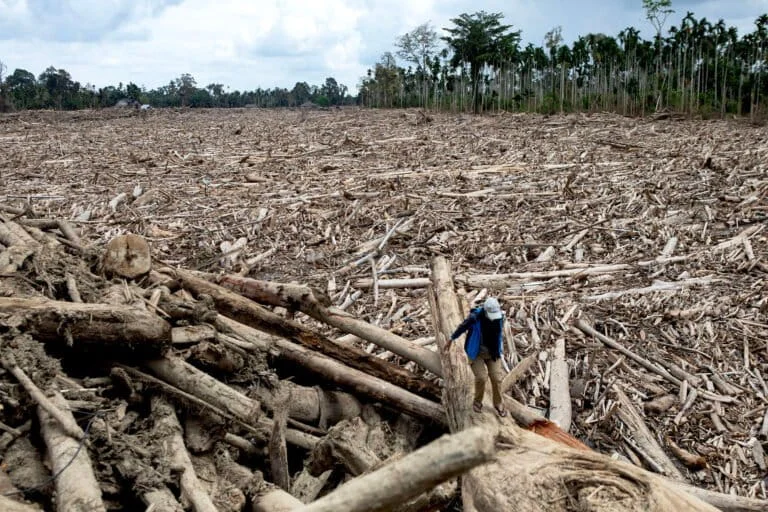
The Padang Legal Aid Institute (LBH Padang) has officially submitted a comprehensive special report to the United Nations Office of the High Commissioner for Human Rights (OHCHR) in early June, seeking international intervention over what it describes as state-engineered ecological catastrophes in Sumatra. The report, titled "Dismantling State-Engineered Eco-Catastrophes: The Sumatran Citizen Lawsuit (CLS) as Strategic Litigation Against Environmental Governance Failure," was timed to precede the UN Human Rights Council session. It presents a damning indictment of the Indonesian government’s role in the devastating floods and landslides that ravaged the provinces of Aceh, North Sumatra, and West Sumatra in late 2025.
According to the documentation provided by LBH Padang, the disasters resulted in a staggering loss of life and property, claiming 1,207 lives, leaving 137 people missing, and damaging or destroying more than 184,000 homes. While state officials have consistently pointed to extreme weather patterns and global climate change as the primary culprits, LBH Padang’s spatial analysis and field investigations suggest a far more systemic cause. The organization argues that these events were not merely "natural" disasters but were the direct consequence of "state omission"—a structured failure of environmental governance and the deliberate prioritization of extractive industries over ecological safety.
The Narrative of "State-Engineered" Catastrophe
Habieb Aulia Sufi, representing the Living Space and People’s Movement division at LBH Padang, emphasized that the government often uses the "climate change" narrative as a legal shield to absolve itself of responsibility for the impacts of these disasters. However, LBH Padang’s findings indicate that the crisis was "manufactured" through exploitative policies in upstream regions. The report asserts that the vulnerability of the Sumatran landscape was systematically increased by decades of land-use decisions that favored corporate expansion over the protection of vital watersheds.
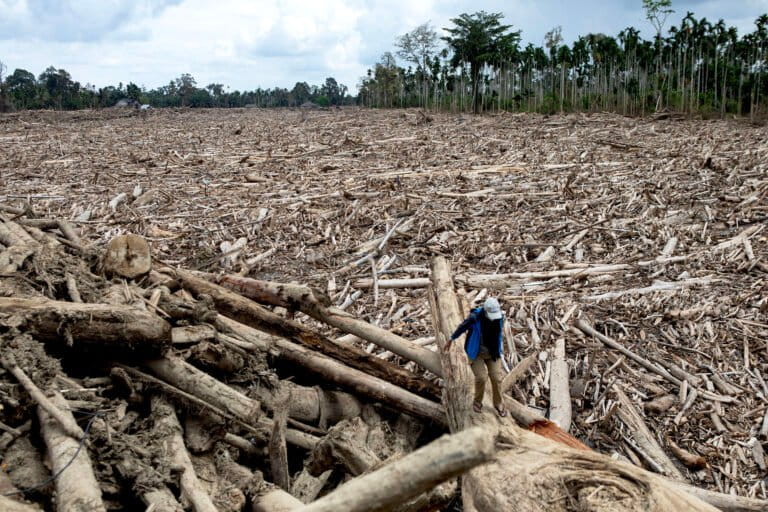
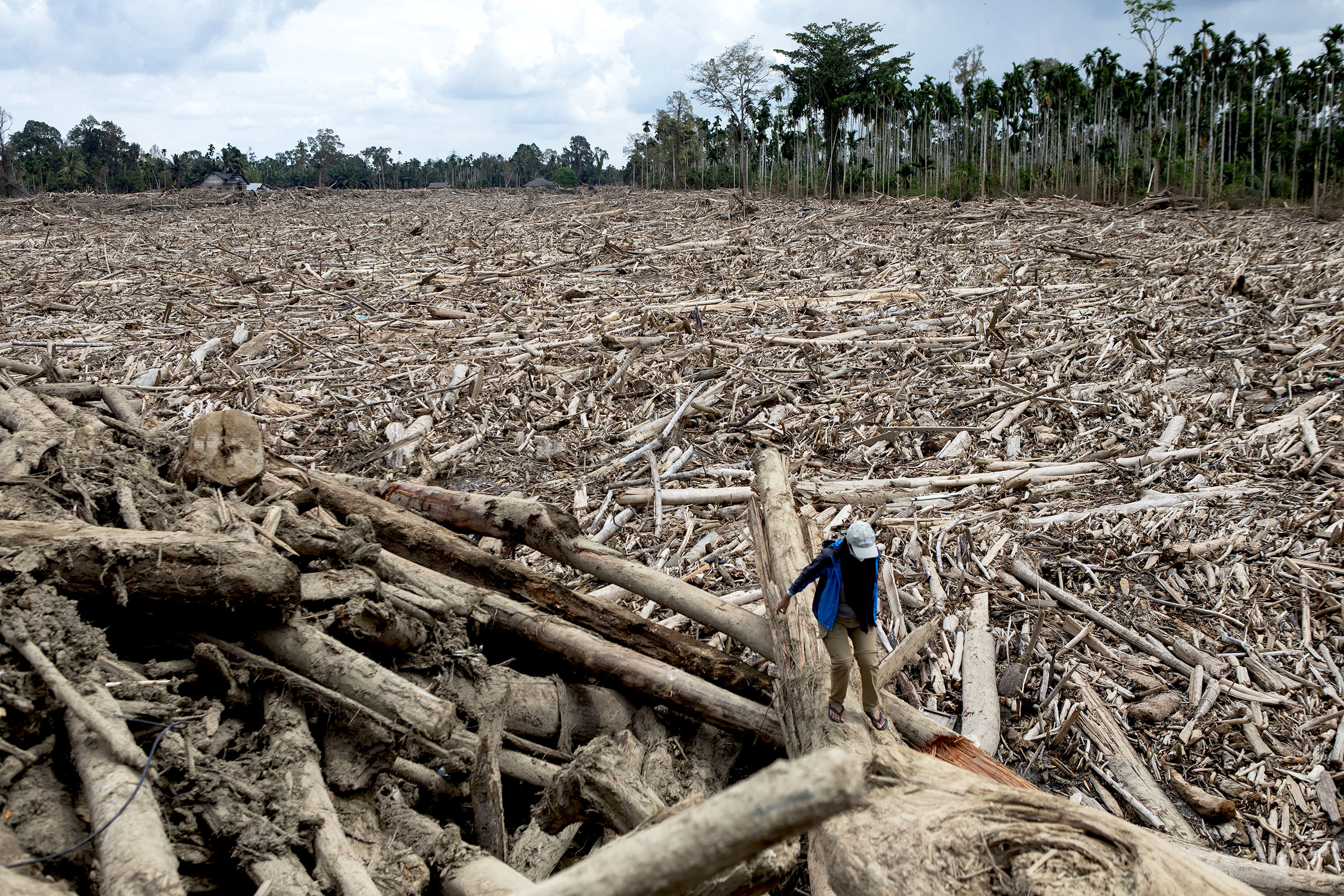
The document submitted to the UN outlines four primary pillars of evidence to support the allegation of state-engineered failure. First, it highlights massive deforestation conducted under the guise of state-sanctioned permits. Since 1990, the island of Sumatra has lost at least 9,190,618 hectares of natural forest cover. This loss is attributed to legal land conversion approved by various licensing authorities, effectively stripping the island of its natural flood defenses.
Second, the report points to the aggressive expansion of the corporate palm oil industry, which has seen a 480% increase in land occupation. In 1990, palm oil plantations covered approximately 1.06 million hectares; by 2024, this figure had ballooned to over 6.22 million hectares. This expansion has frequently occurred at the expense of primary forests and peatlands, significantly altering the region’s hydrology.
Upstream Exploitation and Agrarian Inequality
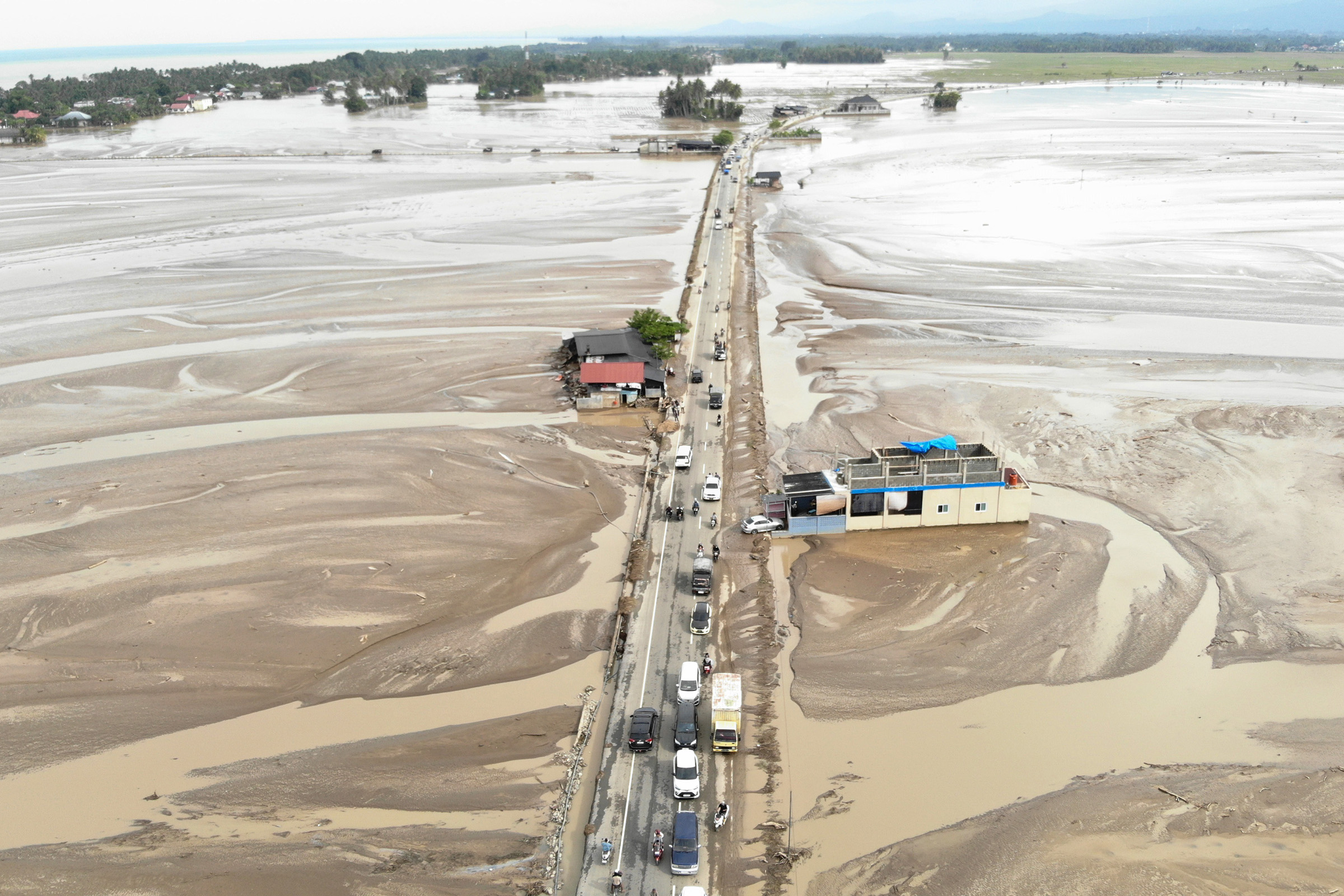
The third pillar of evidence focuses on the issuance of permits in critical upstream zones. LBH Padang found that the state granted Land Use Rights (HGU) and mining permits in sensitive water catchment areas along the Bukit Barisan mountain range, which serves as the "spine" of Sumatra. By allowing the destruction of forests that act as a biological "sponge" for rainwater, the state triggered simultaneous flooding that inundated 469,509 hectares of downstream territory and paralyzed 102 river basins (DAS) across three provinces.
The fourth pillar addresses extreme agrarian inequality. Data from the 2023 Agricultural Census reveals a stark disparity in land control. Small-scale or subsistence farmers constitute 99.98% of the agricultural population but are forced to survive on less than 21% of the remaining land, much of which is highly prone to disasters. Conversely, a tiny oligarchy consisting of just 96 corporate entities monopolizes more than 380,000 hectares of critical upstream land through HGU schemes.
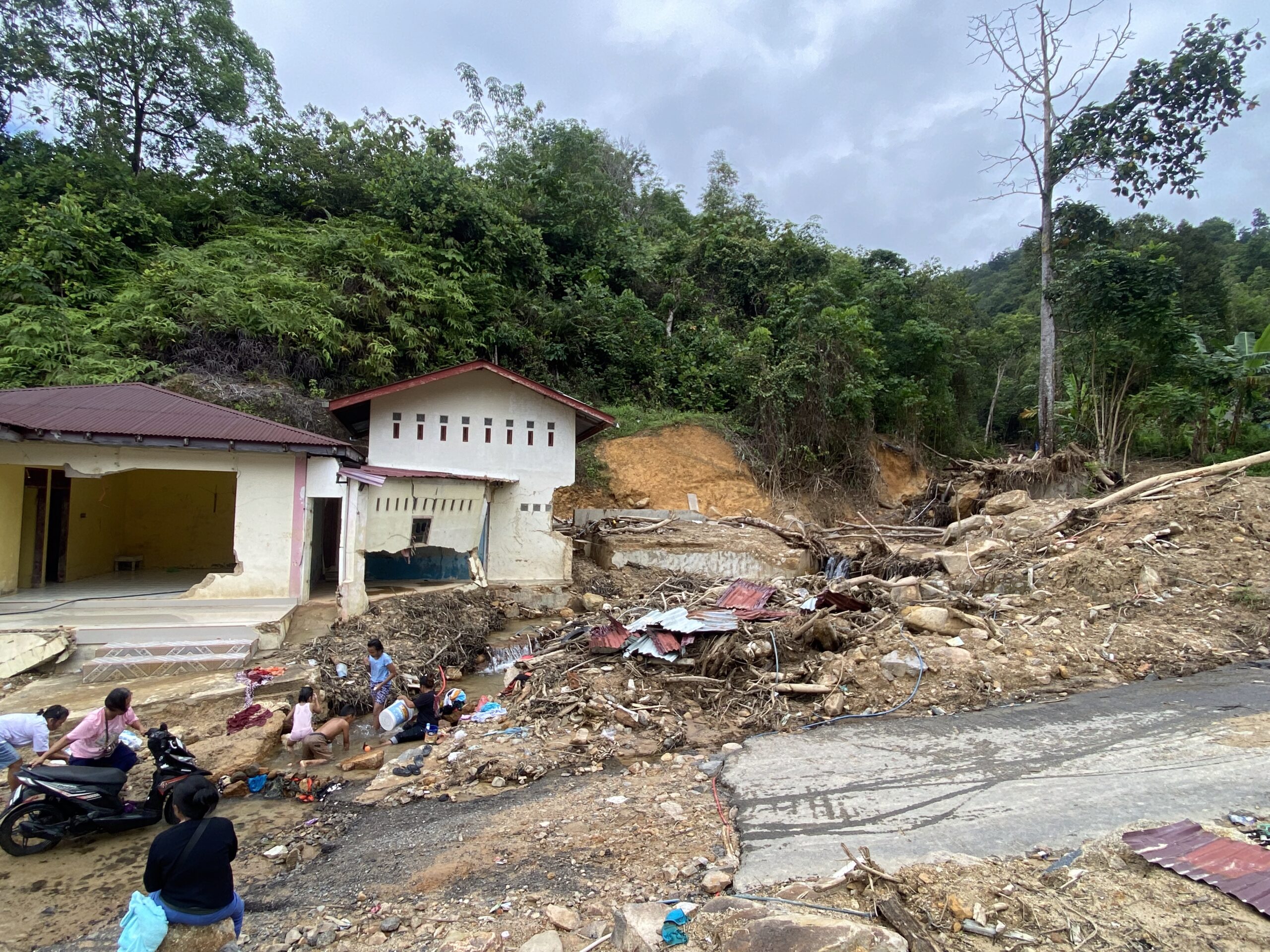
The economic toll of these disasters has been catastrophic. The floods of late 2025 caused material losses of approximately Rp2.2 trillion and triggered a contraction in the national GDP of Rp68.67 trillion. LBH Padang points out that these losses far outweigh the revenue generated by the extractive sectors. In Aceh, for example, the economic damage reached Rp2.04 trillion—more than double the province’s annual Non-Tax State Revenue (PNBP) from the mining sector, which stood at Rp929 billion.
The Citizen Lawsuit and Governmental Obstruction
The submission of the report to the UN is a strategic move to bolster a domestic Citizen Lawsuit (CLS) currently being heard at the Padang Administrative Court (PTUN). The lawsuit seeks to hold the government accountable for its perceived negligence in managing environmental risks. However, the legal process has faced significant hurdles due to a lack of cooperation from state officials.
In the first preparatory hearing held on May 18, 2026, 11 out of the 12 defendants failed to appear. The absentees included the highest levels of the Indonesian executive branch: the President of Indonesia, the Minister of Forestry, the Minister of Agrarian Affairs and Spatial Planning, the Minister of National Development Planning (Bappenas), the Head of the National Disaster Management Agency (BNPB), the West Sumatra Regional Police Chief, the Governor of West Sumatra, and the heads of the Padang, Agam, and Solok local governments. The only party to send a representative was the Tanah Datar Regency Government.
Adrizal, a representative of the Ecological Coalition to Save West Sumatra, condemned the mass absence of the defendants. He stated that the failure of 11 high-ranking officials to attend the hearing reflects a profound lack of commitment to the rule of law and a disregard for the rights of disaster victims. The preparatory hearing is a crucial stage intended to finalize administrative requirements and clarify the legal basis of the lawsuit to ensure it does not fail on procedural grounds.
Judicial Conduct and the Rights of Expression
The legal proceedings were further marred by controversial comments from the presiding judge, Aldilah Rahman. During the hearing, the judge suggested that the plaintiffs’ grievance was "too general" and lacked specific links between each defendant’s negligence and the resulting disaster. He urged the citizens to clarify the legal basis and supporting evidence rather than focusing on "huru-hara" (commotion), a reference to the large number of affected citizens who gathered to support the filing of the lawsuit.
Adrizal criticized the judge’s remarks, arguing that the court should focus on the substance of the case rather than the manner in which citizens express their grievances. He noted that the presence of the community at the court is a protected form of expression under Article 28E of the 1945 Constitution. Furthermore, Adrizal suggested that the judge’s comments might violate the Code of Ethics and Guidelines for Judicial Conduct established by the Supreme Court and the Judicial Commission, which prohibits judges from making statements that appear biased or belittling to the parties involved.
Alfi Syukri, a lawyer for the plaintiffs, argued that in environmental citizen lawsuits, the judiciary must play an active role. He contended that judges should not act as mere formalistic referees but as a proactive branch of government capable of digging deeper into the systemic failures that lead to ecological destruction.
International Advocacy and the "Just Transition"
Beyond the domestic court case and the UN report, LBH Padang has joined forces with a global coalition of human rights organizations to influence international climate policy. The coalition sent formal letters to key figures in global climate negotiations, including Turkish Environment Minister Murat Kurum (President-Designate of COP31), Australian Climate Change Minister Chris Bowen, and André Corrêa do Lago (President of Negotiations for COP30).
The coalition is demanding that the ongoing Subsidiary Body (SB64) negotiations in Bonn, Germany, integrate human rights and meaningful community participation into the "Just Transition Mechanism." Their demands are centered on four key points:
- Human Rights are Non-Negotiable: The transition from fossil fuels must not come at the expense of human rights. Protecting environmental defenders is a prerequisite for any climate policy.
- Social Inclusion: Climate policies must be gender-responsive, child-sensitive, and inclusive of indigenous peoples, small farmers, and persons with disabilities to avoid deepening existing inequalities.
- Meaningful Participation and FPIC: Governments must guarantee the right to self-determination and the principle of Free, Prior, and Informed Consent (FPIC) for indigenous communities affected by climate projects.
- Compliance with International Law: Climate mechanisms must align with international human rights obligations and the 1.5-degree Celsius temperature limit, as affirmed by the International Court of Justice (ICJ) and the UN General Assembly.
Implications for Future Environmental Governance
The actions taken by LBH Padang represent a significant escalation in environmental litigation in Indonesia. By bridging the gap between local disasters and international human rights mechanisms, the organization is challenging the traditional "disaster management" framework that focuses only on emergency response. Instead, they are demanding a shift toward "risk governance" that addresses the root causes of vulnerability: land-use corruption, corporate monopolies, and the marginalization of local communities.
The outcome of the Sumatran Citizen Lawsuit and the UN’s response to the special report will likely set a precedent for how ecological disasters are litigated in the era of the climate crisis. If successful, these efforts could force a radical restructuring of how Indonesia manages its natural resources, moving away from an extractive-heavy model toward one that prioritizes ecological integrity and the safety of its citizens. For now, the victims of the 2025 Sumatran disasters remain in a state of legal and economic limbo, waiting to see if either the domestic courts or the international community will hold the state accountable for the "engineered" catastrophes that upended their lives.