Nila Kartika Wati
The morning of Wednesday, November 12, 2025, began like any other for EZ, a 19-year-old woman living in the Mandailing Natal (Madina) Regency of North Sumatra. As a daily casual laborer for the palm oil plantation company PT Usaha Sawit Unggul (USU), her routine involved boarding a company transport vehicle to reach the sprawling estate in Tabuyung Village, Muara Batang Gadis District. EZ, a person with a hearing and speech disability, spent her hours performing the arduous task of spraying pesticides across the vast rows of oil palms. However, by 10:00 AM that morning, the relative isolation of the plantation—a characteristic feature of Indonesia’s palm oil industry—became the backdrop for a harrowing crime that has since sparked a national conversation about labor rights, disability justice, and corporate accountability.
According to reports, EZ was working alone in a remote section of the plantation when an unidentified individual approached her from behind. The assailant, wearing a blue shirt and a face covering, neutralized EZ by covering her face and seizing her spraying equipment. He then forced her to the ground, tying her hands behind her back. In this defenseless state, EZ was raped. The perpetrator subsequently fled the scene on a motorcycle, leaving the young woman incapacitated in the dirt. It was not until the lunch hour that colleagues discovered EZ sitting alone, weeping and physically weakened. Upon returning home, EZ managed to communicate the details of the assault to her mother through gestures, setting in motion a legal battle that has exposed deep-seated flaws in the Indonesian justice system.
A Chronology of Institutional Failure
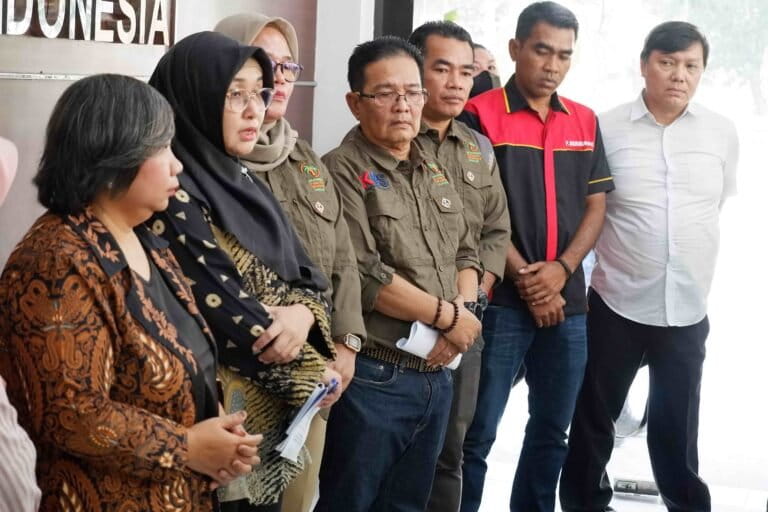
Two days after the assault, EZ, supported by the Federation of Indonesian Plantation Workers’ Unions (F-Serbundo), filed a formal report with the Mandailing Natal Police (Polres Madina). However, what should have been a straightforward criminal investigation quickly devolved into a series of procedural delays and systemic hurdles. Jhohan Kabera Hasibuan, a legal advocate from F-Serbundo, characterized the police response as profoundly insensitive to the victim’s specific needs. During a press conference at the National Commission on Human Rights (Komnas HAM) in Jakarta on June 17, 2026, Hasibuan noted that authorities claimed they could not name a suspect due to a lack of witnesses and "strong evidence," despite the victim’s testimony.

The legal team representing EZ, led by attorney Surya Tjandra, highlighted a critical violation of Indonesian law: the failure to provide a sign language interpreter during the investigation. Because EZ is deaf, mute, and illiterate, she communicates primarily through body language and facial expressions. By failing to facilitate a medium for her to testify effectively, the police effectively silenced her a second time. Seven months after the initial report, the case remains in a state of investigative limbo, with no suspect named or detained.
Tjandra argued that the Mandailing Natal Police have ignored the mandates of three distinct pieces of legislation: the Law on Sexual Violence Crimes (UU TPKS), the Law on Persons with Disabilities, and the Criminal Procedure Code (KUHAP). Under the UU TPKS, sexual violence reports are classified under "absolute criminal justice," meaning they must be processed by law regardless of attempts at private mediation or a lack of secondary witnesses. Furthermore, the updated KUHAP specifically requires law enforcement to facilitate the testimony of persons with disabilities to ensure their access to justice.
Allegations of Corporate Obstruction and Labor Vulnerability
The role of PT Usaha Sawit Unggul (USU) has also come under intense scrutiny. Legal advocates allege that the company not only failed to protect its worker but actively hindered the pursuit of justice. Shortly after the incident, a company foreman (mandor) allegedly pressured EZ and her family to refrain from reporting the crime to the police. Perhaps most distressingly, the foreman reportedly instructed EZ to bathe immediately after the assault—an action that likely destroyed crucial forensic evidence required for a medical examination (visum et repertum).
Further allegations suggest that the company facilitated the escape of the primary suspect, a fellow plantation worker. Advocates claim the suspect was allowed to resign and was even provided with a reference letter to seek employment in the neighboring province of Riau. "We suspect this was facilitated by the company," Tjandra stated, pointing to the acceptance of a resignation letter as a means to let the perpetrator slip away from local jurisdiction.

In response to these grave accusations, PT USU’s spokesperson, Jodi Yuda Pratama, issued a written rebuttal. He claimed that the company responded immediately to the report from EZ’s brother and organized a lineup of all male workers to help the victim identify her attacker. According to the company, when the identification failed, they were the ones who escorted EZ to the police station the following day. The company also denied allegations of intimidation or wrongful termination, asserting that the foreman had checked on EZ’s well-being and that her position remained open should she choose to return.
The Iceberg Phenomenon: Systematic Risks for Women in Palm Oil
The case of EZ is viewed by the Palm Oil Labor Coalition (KBS) as merely the "tip of the iceberg." Ernawati, an activist with the coalition, explains that the structural nature of palm oil work creates a high-risk environment for sexual violence. Female laborers are often assigned to spray pesticides or apply fertilizers, tasks that require them to cover three to five hectares of land daily. These areas are frequently isolated, far from supervisors or other workers, making women easy targets for predators.
Data from F-Serbundo indicates that cases of sexual harassment and violence are recurring themes in plantations across Riau, North Sumatra, and East and Central Kalimantan. However, the vast majority of these incidents never reach the courts. Lorent Aritonang, Secretary General of F-Serbundo, noted that many victims choose silence due to a "culture of shame" or direct pressure from employers to settle matters through "peaceful" mediation. This mediation often involves a small financial payout in exchange for the victim dropping all charges, a practice that UU TPKS was specifically designed to abolish.
Furthermore, the economic precariousness of these workers serves as a powerful deterrent. Most female plantation workers operate as daily casual laborers without formal contracts. They earn between Rp60,000 and Rp100,000 (approximately $4 to $7 USD) per day, contingent on meeting high productivity targets. For many, reporting an assault means risking their only source of income. In EZ’s case, Komnas HAM confirmed that she was effectively terminated from her position following her decision to seek legal recourse, leaving her without a livelihood or the psychological support needed to process her trauma.
Regulatory Standards and Global Implications
The failure to protect EZ also raises questions about the efficacy of international certification bodies like the Roundtable on Sustainable Palm Oil (RSPO). The RSPO’s 2024 standards explicitly mandate that certified companies must have standard operating procedures (SOPs) for the prevention and handling of sexual harassment. This includes the establishment of "Gender Committees" in every plantation unit to provide a safe space for reporting and education.
In the case of PT USU, F-Serbundo requested a copy of the company’s sexual violence prevention SOP, but the company was reportedly unable to produce such a document. This lack of internal policy not only endangers workers but also poses a reputational risk to the global palm oil supply chain. As international consumers and regulators in the EU and North America increasingly demand proof of ethical labor practices, the inability of Indonesian producers to guarantee the safety of disabled and female workers could lead to significant market disruptions.
The Path Toward Justice
On June 17, 2026, Anis Hidayah, a commissioner at Komnas HAM, officially received the complaint regarding EZ’s case. Hidayah emphasized that the "delay in justice" experienced by EZ is a violation of human rights in itself. The commission has pledged to summon both the Mandailing Natal Police and the management of PT USU to account for the procedural failures and the alleged obstruction of the investigation.
The case of EZ serves as a grim reminder of the intersections between disability, gender, and labor exploitation. For justice to be served, advocates argue that a multi-pronged approach is necessary:

- Legal Accountability: The North Sumatra Regional Police (Polda Sumut) must take over the investigation to ensure impartiality and provide the necessary forensic and linguistic resources.
- Corporate Reform: Companies must move beyond "paper compliance" and implement functional Gender Committees and safety protocols that account for the physical isolation of the workforce.
- Victim Support: The Regional Technical Implementation Unit for the Protection of Women and Children (UPTD PPA) must provide EZ with a safe house and clinical psychological services, which have been conspicuously absent for the past seven months.
As the investigation continues, the eyes of human rights organizations and labor unions remain fixed on Mandailing Natal. The outcome of EZ’s quest for justice will determine whether the "absolute criminal justice" promised by Indonesia’s new laws is a reality for its most vulnerable citizens or merely a set of aspirations written on paper. For EZ, who cannot speak for herself in the traditional sense, the actions of the state and the corporation in the coming months will speak volumes about the value of a human life in the heart of Indonesia’s palm oil frontier.