Nila Kartika Wati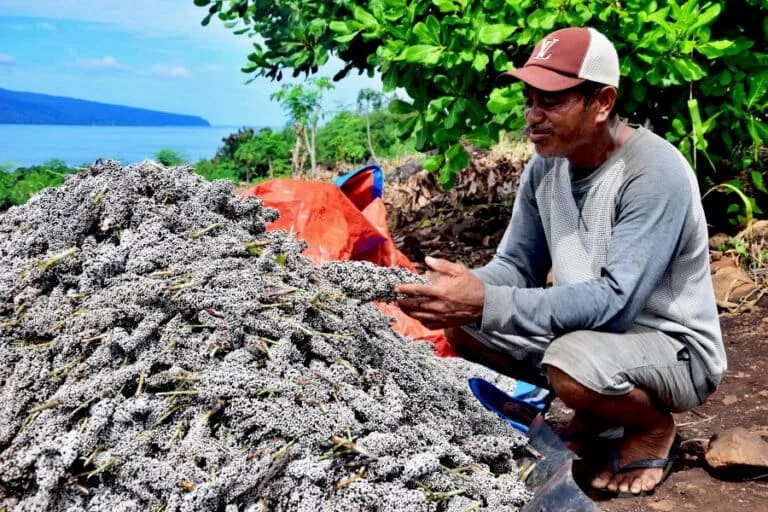
Siprianus Belawa Kolah stands amidst the swaying stalks of his sorghum field in Likotuden Hamlet, Kawalelo Village, located within the Demon Pagong District of East Flores, East Nusa Tenggara (NTT). His one-hectare plot, situated a mere 20 meters from the shoreline, serves as a testament to the hardiness of a crop that is increasingly being viewed as a cornerstone of regional food security. Despite the traditional expectations of the local climate, Siprianus notes an unusual shift in weather patterns. In May 2026, a month typically characterized by the onset of the dry season, heavy rains continue to fall over the volcanic soil of Flores, complicating the traditional agricultural calendar but highlighting the necessity for climate-adaptive crops.
Siprianus, who returned to his ancestral lands in 2017 after a period of working in Malaysia, has become a key figure in the local resurgence of sorghum. His journey reflects a broader movement within the NTT province to reclaim traditional agricultural wisdom in the face of modern climatic volatility. The planting process is meticulous; Siprianus explains that the timing must be precise. Because the rainy season arrived late this year, he only began planting in January. For optimal growth, he places a maximum of four seeds per hole, maintaining a strict 40×20 centimeter spacing. This precision is vital for the crop’s survival against local pests; if rain does not fall within two days of planting, the seeds are frequently consumed by ants and grasshoppers. Even if replanted, the subsequent yields often suffer from smaller grains, emphasizing the "one-shot" nature of the initial planting window.
The Economic and Agricultural Viability of Sorghum
The shift toward sorghum in Likotuden is not merely a cultural preference but a calculated economic decision. For Siprianus, the one-hectare plot serves as a diversified income stream. While he continues to grow maize and rice for daily consumption, the sorghum harvest provides a significant financial cushion, often yielding around Rp10 million per harvest cycle. This income is supplemented by fishing activities during the off-season, creating a resilient household economy that does not rely on a single commodity.
The community’s collective effort is organized under the Likotuden Herin Lela farmers’ group. Bonifasius Soge Kolah, a member of the group, indicates that the village-wide adoption of sorghum began in earnest in 2015. Currently, approximately 40 farmers manage 26 hectares of sorghum in Likotuden. The production data shows a steady upward trajectory: in 2025, the community harvested 32 tons, and projections for 2026 suggest a yield between 35 and 40 tons.
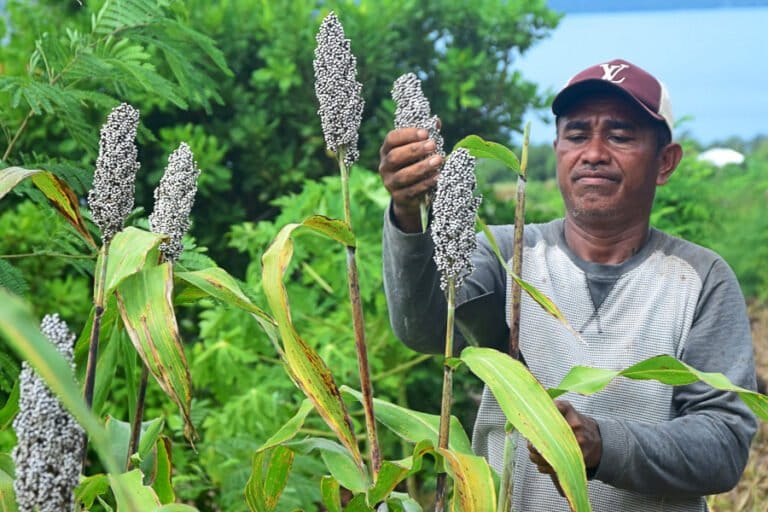
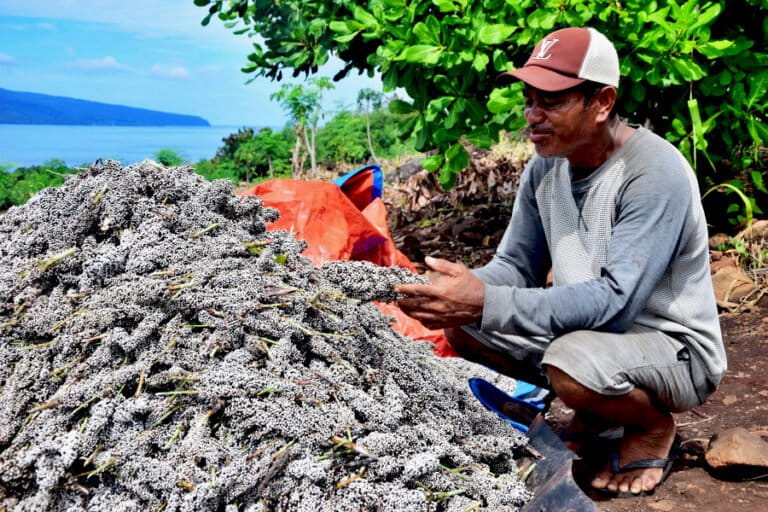
The financial incentives are becoming increasingly clear to local farmers. Sorghum sold in its raw, unhusked form (gelondongan) fetches approximately Rp9,000 per kilogram. Bonifasius reports that his own 1.8-ton harvest last year generated Rp16 million in just four months. Compared to maize, which is more susceptible to pests and requires more water, sorghum offers a higher profit margin with a significantly lower risk of total crop failure. Furthermore, sorghum possesses a unique biological advantage known as "ratun" or ratooning. After the primary harvest, the stalks are cut to about 15 centimeters from the base, allowing the plant to regrow. This second growth can be harvested in just 1.5 months, and if the rains persist through July, a third harvest is sometimes possible, though yields naturally decline with each subsequent cycle.
Historical Context: The Legacy of Cashew and "Berasnisasi"
To understand the current importance of sorghum, one must look at the agricultural history of East Flores. Bernadus Tukan, a prominent cultural figure and local food advocate, explains that the disappearance of sorghum from the landscape was the result of specific government policies enacted in the late 1970s. During this era, the Indonesian government pushed for the massive cultivation of cashew nuts (jambu mete). While intended to boost export earnings, the policy led to the conversion of productive food-producing lands into cashew monocultures.
"Mete (cashew) was planted on mountain slopes and arid lands, but to hit targets, it was also moved into productive fields," Tukan explains. This shift marked a transition from "ekonomi kebang"—a traditional granary-based economy focused on local subsistence—to a market-dependent economy. Cashew trees, while hardy, have high water absorption rates and can lead to soil infertility over time. This ecological shift was compounded by the national "berasnisasi" policy, which prioritized rice as the primary national staple. Farmers across the archipelago, including those in the dry islands of NTT, were incentivized or pressured to grow rice and maize, leading to the marginalization of indigenous, drought-resistant grains like sorghum.
This "rice-centric" policy created a cultural hierarchy where rice was viewed as a "modern" food, while sorghum and tubers were relegated to the status of "famine foods" or symbols of poverty. This shift in status has had long-lasting effects on the regional ecosystem and the nutritional health of the population, as rice is often less suited to the local climate than traditional crops.
Nutritional Value and Climate Adaptation
Sorghum (Sorghum bicolor) is naturally suited for the semi-arid conditions of East Flores. As a C4 plant, it is highly efficient at photosynthesis in high-temperature and low-moisture environments. Beyond its hardiness, the nutritional profile of sorghum is increasingly recognized by health experts. It is gluten-free, rich in antioxidants, and has a lower glycemic index than rice, making it an excellent option for managing diabetes and improving general metabolic health.
In NTT, where stunting and malnutrition remain significant challenges, the reintroduction of sorghum is a vital public health strategy. The grain contains higher levels of protein and minerals such as iron and phosphorus compared to polished white rice. By integrating sorghum back into the daily diet, local communities can reduce their dependence on expensive, imported rice while simultaneously improving their nutritional intake.
Addressing the Infrastructure and Processing Gap
Despite the clear benefits, the transition back to a sorghum-based economy faces significant "downstream" hurdles. One of the primary complaints from the Likotuden farmers is the lack of processing technology. Currently, most farmers sell their sorghum in a raw state because they lack access to threshing and polishing machines. This prevents them from capturing the higher value-added margins associated with processed sorghum flour or polished grain.
Bernadus Tukan emphasizes that for sorghum to truly regain its status as a staple, the government and stakeholders must look beyond just the "hulu" (upstream/planting) phase. "Sorghum must be processed into foods that appeal to the current generation. This is what I call cultural transformation," Tukan states. Without a robust system that includes efficient processing, marketing, and culinary innovation, sorghum risks remaining a niche crop grown only in "demonstration plots" rather than becoming a true market competitor to rice.
The potential for expansion is vast. In Kawalelo Village alone, there are approximately 100 hectares of "sleeping land"—idle plots that are currently uncultivated due to a lack of capital and equipment. If these lands were brought into production with the support of modern agricultural machinery, East Flores could become a significant hub for sorghum production in eastern Indonesia.
Broader Implications for National Food Security
The story of the Likotuden farmers is a microcosm of a larger national conversation regarding food sovereignty. As climate change makes rainfall patterns increasingly unpredictable, Indonesia’s heavy reliance on rice is becoming a strategic vulnerability. The government’s recent focus on "food estates" and crop diversification aligns with the grassroots efforts seen in Flores.
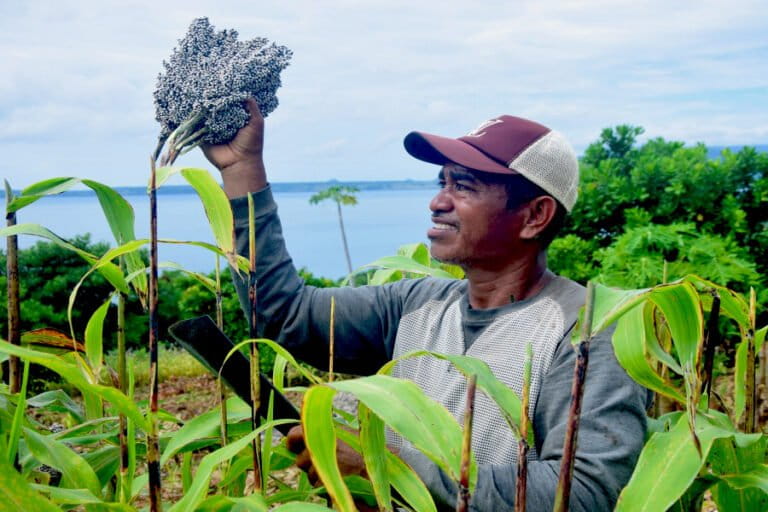
The success in Likotuden suggests that food security in dryland regions is best achieved not by imposing external staples, but by revitalizing indigenous crops that have evolved to thrive in specific local conditions. The resilience of sorghum against the "shifting Mays"—the erratic rains that now disrupt traditional planting seasons—proves its worth as a climate-smart crop.
However, the path forward requires a synchronized effort. As Bonifasius and Siprianus continue to monitor their fields, their hopes rest on two factors: the continued favorability of market prices and the arrival of processing technology that will allow their "ancient grain" to meet the needs of a modern market. The transformation of sorghum from a forgotten relic of the past into a pillar of the future is underway in the rocky, coastal soils of East Flores, providing a blueprint for sustainable agriculture in the face of a changing world.