Azin Asro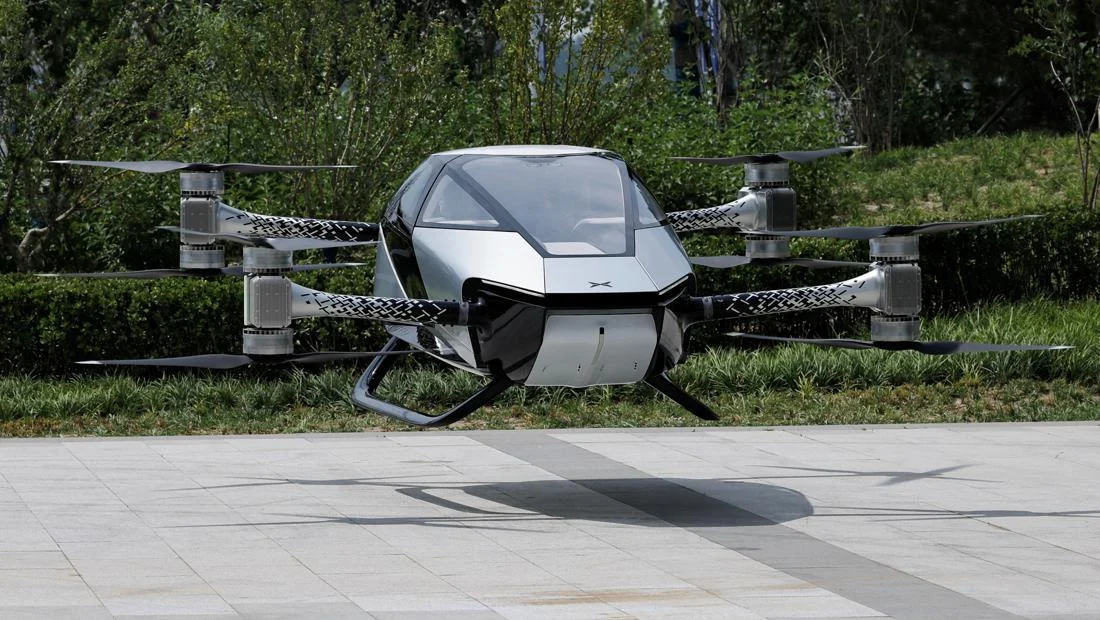
The long-held vision of flying cars navigating through the skylines of dense metropolitan areas, a staple of science fiction cinema for decades, is rapidly transitioning from a cinematic trope into a tangible technological reality. While the concept of urban air mobility (UAM) has often been dismissed as a distant fantasy, recent developments in the aerospace and automotive sectors suggest that the era of the personal flying vehicle is much closer than previously anticipated. In Jakarta, a city notorious for its grueling traffic congestion, the prospect of taking to the skies has moved beyond mere speculation. James Wu, the Vice President of Xpeng, a leading Chinese electric vehicle manufacturer, recently addressed the potential for this technology to transform the Indonesian transport landscape, asserting that the hardware is ready and the environmental conditions are favorable, leaving only regulatory frameworks as the final frontier.
The discussion surrounding flying cars in Indonesia gained significant momentum during a recent industry gathering in Senayan, Central Jakarta. Addressing inquiries regarding the feasibility of deploying these advanced vehicles in the archipelago, Wu emphasized that the desire for such technology is universal. The allure of flying cars lies not only in their futuristic aesthetic but in their practical promise of efficiency, speed, and the ability to bypass the traditional bottlenecks of ground-level infrastructure. According to Wu, Xpeng has moved past the experimental phase and is now actively planning for the mass production of its signature flying car models, marking a pivotal shift in the global transportation industry.
The Evolution of Xpeng AeroHT and the X2 Prototype
Xpeng’s foray into the skies is managed through its specialized subsidiary, AeroHT. Headquartered in Guangzhou, AeroHT has distinguished itself as the largest flying car company in Asia. The company’s flagship project, the Xpeng X2, represents the fifth generation of their flying car development. Unlike traditional aircraft, the X2 is categorized as an eVTOL (electric Vertical Take-Off and Landing) vehicle. It does not require a runway to operate, making it uniquely suited for urban environments where space is at a premium.
The Xpeng X2 is a two-seater vehicle featuring a sophisticated carbon-fiber structure designed to minimize weight while maintaining structural integrity. It is equipped with an enclosed cockpit and a series of eight rotors distributed across four arms. The technical specifications of the X2 are impressive: it is designed to cruise at altitudes of up to 1,000 meters, reaching speeds of approximately 130 kilometers per hour. With a flight endurance of roughly 35 minutes per charge, it is positioned as a solution for short-range urban commutes—the "last mile" of luxury air travel.
The vehicle has already undergone rigorous testing. In October 2022, the X2 completed its first public flight in Dubai, a city known for embracing cutting-edge technology. More recently, in June 2024, the vehicle conducted demonstration flights in Beijing, showcasing its stability and autonomous flight capabilities. These milestones serve as proof of concept for Xpeng’s claims that the technology is no longer in its infancy but is ready for commercial scaling.
Technical Readiness and Environmental Suitability in Indonesia
One of the most significant takeaways from James Wu’s address in Jakarta was his assessment of Indonesia’s physical and environmental readiness for UAM. He noted that the country’s weather patterns and general environment are highly compatible with the operational requirements of eVTOLs. Unlike regions with extreme cold or unpredictable high-altitude turbulence, the tropical climate of Indonesia provides a relatively stable medium for electric flight systems.
"I cannot give you an exact timeline, but everything is ready from a technical standpoint," Wu stated during the event. He highlighted that Xpeng has prioritized safety in its design, utilizing redundant systems for the rotors, batteries, and flight controllers to ensure that the vehicle can land safely even in the event of a component failure. For a country like Indonesia, which consists of thousands of islands and rapidly expanding urban centers, the ability to move vertically could revolutionize logistics and emergency services, in addition to personal transport.
The infrastructure required for these vehicles, often referred to as "vertiports," is also less invasive than the sprawling highways or massive airports required for current transit methods. Vertiports can be integrated into the rooftops of existing skyscrapers, parking garages, or dedicated hubs in residential areas. Wu suggested that the existing infrastructure in major Indonesian cities like Jakarta is already sufficient to begin the integration of these landing zones, provided the necessary planning is implemented.
The Regulatory Hurdle: Policies and Safety Standards
While the technology and the environment appear ready, the primary obstacle remains the lack of a comprehensive regulatory framework. The operation of flying cars in a crowded airspace requires a sophisticated Air Traffic Management (ATM) system that can coordinate between traditional aviation, commercial drones, and personal eVTOLs. James Wu acknowledged that bringing the X2 to Indonesia involves meeting a series of stringent "requirements" that go beyond the capabilities of the manufacturer.
In Indonesia, the Ministry of Transportation and the Directorate General of Civil Aviation (DGCA) would need to establish new classifications for these vehicles. They are too small to be treated like commercial airliners but too large and powerful to be treated like consumer drones. Safety certifications, pilot licensing (or the regulation of autonomous flight software), and noise pollution standards are all areas that require legislative attention.

Furthermore, the integration of flying cars into the national transport grid would require cooperation between the government and private sector players to ensure that flight paths do not interfere with restricted zones, such as government buildings, military installations, or commercial flight corridors. Wu’s comments suggest that Xpeng is ready to collaborate with Indonesian authorities to navigate these complexities, but the pace of adoption will ultimately depend on how quickly the government can draft and implement the necessary policies.
A Chronology of Progress: From Concept to Mass Production
The journey of Xpeng AeroHT provides a blueprint for the speed at which the UAM sector is moving. The timeline of their development highlights the transition from a niche startup project to a mass-production powerhouse:
- 2013: Initial research into flying vehicle technology begins under the vision of He Xiaopeng.
- 2021: Xpeng AeroHT secures over $500 million in Series A funding, the largest single investment in the Asian flying car sector at the time.
- 2022: The Xpeng X2 makes its international debut in Dubai, proving the vehicle’s capability in high-temperature environments.
- January 2023: The Xpeng X2 becomes the first crewed eVTOL to receive a special flight permit from the Civil Aviation Administration of China (CAAC), allowing for regulated testing in designated airspaces.
- 2024: Xpeng announces the transition toward mass production and begins exploring international markets, including Southeast Asia, for potential deployment.
This chronology demonstrates that the industry is moving out of the "trial" phase. The announcement that mass production plans are underway is a signal to global markets that the cost of these vehicles is expected to decrease as economies of scale are achieved, potentially making them accessible to more than just the ultra-wealthy.
The Broader Impact: Economic and Urban Transformation
The introduction of flying cars like the Xpeng X2 could have profound economic implications for Indonesia. As the country moves forward with the development of its new capital city, Nusantara (IKN), there is a unique opportunity to build a "smart city" from the ground up that incorporates UAM into its DNA. IKN is envisioned as a green, tech-forward metropolis, and eVTOLs align perfectly with the goal of zero-emission transport.
Beyond personal travel, the technology has the potential to impact various sectors:
- Emergency Services: Flying ambulances could reach accident sites in congested areas minutes faster than ground vehicles, potentially saving lives.
- Logistics: High-value or time-sensitive goods could be transported across the Indonesian archipelago without the delays associated with port congestion or poor road infrastructure.
- Tourism: Indonesia’s tourism industry could benefit from "aerial sightseeing" or easier transfers between islands, enhancing the luxury travel market.
However, the analysis of these implications also reveals challenges. Public acceptance is a major factor; the sound of multiple rotors buzzing over residential neighborhoods could lead to noise complaints. There is also the question of equity—whether flying cars will remain a luxury for the elite or if they can be integrated into public transit systems to benefit the broader population.
Competitive Landscape and Global Context
Xpeng is not alone in its pursuit of the Indonesian market. Other players, such as the Chinese firm EHang, have already conducted flight demonstrations in Bali and Jakarta with their EH216 model. Western companies like Joby Aviation and Archer Aviation are also making strides in the United States and Europe, backed by partnerships with major airlines and automotive giants like Toyota and Stellantis.
The competition in this space is fierce, but Xpeng’s advantage lies in its vertical integration with its automotive division. By leveraging its expertise in electric motors, battery management, and autonomous driving from its successful line of electric sedans and SUVs, Xpeng can produce flying cars that are more reliable and cheaper to manufacture than companies starting from scratch in the aerospace sector.
James Wu’s presence in Jakarta underscores Xpeng’s strategic interest in Southeast Asia. As the largest economy in the region, Indonesia serves as a critical litmus test for whether UAM can succeed in developing markets. If Xpeng can successfully navigate the regulatory and logistical hurdles in Indonesia, it could set a precedent for the rest of the ASEAN region.
Conclusion: A Skyward Trajectory
While the sight of flying cars over Jakarta’s Senayan or the skyscrapers of Sudirman remains a future prospect, the statements from Xpeng’s leadership indicate that the "future" is no longer a matter of decades, but perhaps years. The technical readiness of the Xpeng X2, combined with Indonesia’s suitable climate and the government’s push for digital and green transformation, creates a fertile ground for the birth of a new era in transportation.
The transition will not be instantaneous. It will require a meticulous balance of technological innovation, safety regulation, and infrastructure investment. As James Wu noted, the "requirements" are many, but the foundation is solid. For a nation that has long struggled with the limitations of its terrestrial roads, the sky may finally offer the ultimate shortcut. As mass production looms on the horizon, the question is no longer if flying cars will arrive in Indonesia, but how the nation will prepare for their landing.