Bambang Pamungkas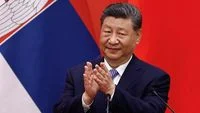
In a speech brimming with confidence and strategic foresight, President Xi declared China’s readiness to offer "Chinese wisdom," "Chinese solutions," and "Chinese strength" to tackle the pressing challenges confronting humanity. He emphasized the concept of building a "community with a shared future for mankind," a cornerstone of his foreign policy agenda, which aims to present an alternative development paradigm, particularly appealing to nations in the Global South grappling with the complexities of a shifting global landscape. This pronouncement from the Great Hall of the People in Beijing underscored China’s evolving self-perception from a participant in the global system to a principal shaper of its future direction.
A New Global Vision: "Chinese Wisdom" for a Changing World
President Xi’s call for "Chinese wisdom" and "Chinese solutions" is not merely rhetorical; it underpins a broader strategy to recalibrate global governance away from what Beijing perceives as a Western-centric framework. The "community with a shared future for mankind" initiative, first articulated by Xi in 2013, posits a multilateral system characterized by cooperation, shared prosperity, and mutual respect, rather than confrontation or hegemonic dominance. This vision is heavily promoted through diplomatic channels and state media, offering a counter-narrative to the prevailing liberal international order.
Central to this vision is the Belt and Road Initiative (BRI), a colossal infrastructure and investment project launched in 2013, which has seen China invest trillions of dollars in over 150 countries and international organizations across Asia, Africa, Europe, and Latin America. The BRI, often dubbed the "New Silk Road," aims to enhance connectivity, trade, and economic integration, but it also serves as a potent tool for extending China’s geopolitical influence. Critics, primarily from Western nations, have voiced concerns about potential "debt traps" for recipient countries, lack of transparency, and environmental impacts, yet many developing nations have welcomed the much-needed infrastructure development that Western lenders have been reluctant to provide.
Beyond the BRI, China has introduced other global initiatives, such as the Global Development Initiative (GDI) and the Global Security Initiative (GSI), further signaling its intent to contribute to and lead discussions on global challenges. The GDI, launched in 2021, focuses on accelerating the UN 2030 Agenda for Sustainable Development, emphasizing poverty reduction, food security, climate change, and digital economy cooperation. The GSI, unveiled in 2022, advocates for a new security architecture based on "common, comprehensive, cooperative and sustainable security," promoting dialogue over confrontation and rejecting bloc politics. These initiatives collectively demonstrate China’s ambition to offer its own frameworks for addressing global issues, often in parallel to, or as alternatives for, existing international mechanisms.
The "China Model" as a Development Blueprint
A key plank of Xi’s argument for China’s global leadership is the nation’s remarkable economic transformation. He highlighted China’s ability to achieve industrialization within mere decades, a feat that took Western industrialized nations centuries. This rapid ascent from an agrarian society to the world’s second-largest economy is frequently presented as tangible proof that the "China Model" of state-led development, centralized planning, and pragmatic market reforms offers a viable and potentially superior pathway to prosperity for other developing countries.
Historically, China’s economic miracle began with the "reform and opening-up" policies initiated by Deng Xiaoping in 1978. These reforms gradually dismantled collective farming, encouraged private enterprise, opened the country to foreign investment, and eventually led to China’s accession to the World Trade Organization (WTO) in 2001. This period unleashed unprecedented economic growth, often achieving double-digit GDP increases for decades, lifting hundreds of millions out of extreme poverty and creating a vast middle class. By 2026, China’s economy continues to demonstrate resilience, even amidst global headwinds, further bolstering Beijing’s confidence in its development paradigm.
For many developing nations, particularly in Africa, Southeast Asia, and Latin America, the "China Model" presents an attractive alternative to the often prescriptive and conditional development assistance offered by Western institutions. China’s approach often emphasizes infrastructure development, direct investment, and a "non-interference" policy regarding the internal politics of partner countries. This contrasts with Western aid, which is frequently tied to good governance, human rights, and democratic reforms. Consequently, China has forged robust economic ties with numerous developing nations, becoming a major trading partner and investor, further amplifying its diplomatic clout.
Geopolitical Undercurrents: Navigating U.S.-China Rivalry
President Xi’s assertions of China’s growing global influence are set against a backdrop of intensifying strategic competition with the United States and its allies. Beijing views the existing international system as largely dominated by Washington and other Western powers, a structure it believes no longer adequately reflects the multi-polar realities of the 21st century or the legitimate interests of developing nations. While Xi stressed that Beijing does not seek to "replace" the current global order, his emphasis on "reform" strongly implies a desire to reshape it to be more inclusive of non-Western voices and to reflect China’s own national interests and values.
The rivalry between the U.S. and China encompasses multiple domains, including trade, technology, military presence, and ideological competition. The past decade has seen escalating tensions over issues such as trade imbalances, intellectual property theft, cyber espionage, China’s militarization of the South China Sea, and human rights concerns in Xinjiang and Hong Kong. The U.S. has increasingly sought to counter China’s growing influence through alliances like the Quad (U.S., Japan, India, Australia) and AUKUS (Australia, UK, U.S.), as well as through initiatives aimed at diversifying supply chains away from China.
In response, China has actively sought to strengthen its partnerships with countries that share its vision for a more multi-polar world. Beijing has deepened cooperation within organizations like BRICS (Brazil, Russia, India, China, South Africa) and the Shanghai Cooperation Organization (SCO), aiming to foster economic and security cooperation outside the traditional Western-led blocs. The Asian Infrastructure Investment Bank (AIIB), a multilateral development bank initiated by China, serves as another example of Beijing’s efforts to create alternative financial architectures that better serve its strategic interests and those of its partners.
Domestic Imperatives: Military Modernization and Taiwan’s Future
Beyond its expansive global ambitions, President Xi’s speech reiterated key domestic priorities that remain central to his leadership, specifically the modernization of the People’s Liberation Army (PLA) and the eventual "reunification" with Taiwan.
Xi underscored the imperative for China’s military to achieve "world-class standards," a goal that has driven significant increases in defense spending and rapid advancements in military technology over the past two decades. China’s defense budget, second only to the U.S., has facilitated a massive expansion and modernization of its navy, including the development of aircraft carriers and advanced destroyers; a robust missile program capable of targeting regional and potentially global assets; and significant investments in emerging technologies like artificial intelligence, cyber warfare, and hypersonic weapons. This military build-up is viewed by Beijing as essential for protecting its growing global interests, projecting power, and deterring potential adversaries. Crucially, Xi re-emphasized that the absolute leadership of the Communist Party remains the bedrock of the armed forces, a principle that has been reinforced through ongoing anti-corruption campaigns that have purged numerous senior military officials, consolidating Xi’s control over the PLA.
The issue of Taiwan remains Beijing’s most sensitive and non-negotiable "core interest." Xi’s reaffirmation of the goal to bring Taiwan under mainland control echoes his powerful statements at the CCP’s 100th-anniversary celebration in 2021, signaling an unwavering commitment to what Beijing considers a sacred national mission. Taiwan, a self-governing democracy, views itself as distinct from mainland China, a stance that Beijing vehemently rejects, considering the island a breakaway province that must be reunified, by force if necessary. The "One China" principle is a fundamental tenet of Beijing’s foreign policy, demanding that other nations acknowledge its claim over Taiwan.
The prospect of a forced reunification of Taiwan carries immense geopolitical risks, potentially triggering a regional or even global conflict, given the U.S.’s "strategic ambiguity" regarding its defense of Taiwan and its robust arms sales to the island. In recent years, China has intensified military exercises near Taiwan, including naval and air force maneuvers, signaling its capabilities and resolve. The international community watches these developments with apprehension, understanding that the future of Taiwan is a flashpoint with profound implications for global stability and the international order.
Chronology of Influence: From Revolution to Global Power
The CCP, founded on July 1, 1921, initially as a small revolutionary party, has overseen a century of profound transformation in China.
- 1921: Establishment of the Chinese Communist Party.
- 1949: Founding of the People’s Republic of China under Mao Zedong, marking the end of the civil war and the beginning of Communist rule.
- 1978: Deng Xiaoping initiates the "reform and opening-up" policies, shifting China towards a market-oriented economy.
- 2001: China joins the World Trade Organization (WTO), accelerating its integration into the global economy.
- 2012: Xi Jinping becomes General Secretary of the CCP, ushering in the "new era" and promoting the "China Dream" of national rejuvenation.
- 2013: Launch of the Belt and Road Initiative (BRI), a signature foreign policy and economic project.
- 2021: On the CCP’s 100th anniversary, Xi Jinping declares China has achieved the goal of building a moderately prosperous society and warns against external interference, particularly regarding Taiwan.
- 22026: Xi Jinping’s 105th-anniversary speech, solidifying China’s assertive global vision and domestic priorities.
Implications for the International Order
President Xi’s 105th-anniversary address solidifies China’s position as a confident and increasingly assertive global actor. The speech signals Beijing’s unwavering commitment to fostering a multipolar world where its influence is commensurate with its economic and military might. The implications for the international order are profound:
- Challenge to Hegemony: China’s explicit offer of "Chinese solutions" represents a direct challenge to the post-Cold War U.S.-led liberal international order, pushing for reforms that dilute Western dominance and empower non-Western states.
- Ideological Competition: The promotion of the "China Model" as an alternative development path intensifies the ideological competition between authoritarian state capitalism and liberal democratic systems, particularly in the developing world.
- Increased Geopolitical Competition: The U.S. and its allies are likely to continue strengthening their alliances and counter-balancing strategies to mitigate China’s expanding influence, leading to increased competition for strategic resources, markets, and diplomatic allegiances.
- Regional Instability: The unwavering commitment to military modernization and the reunification of Taiwan heightens the risk of conflict in the Indo-Pacific, creating significant uncertainty for regional security.
- Reshaping Multilateralism: China will continue to selectively engage with and reform existing international institutions while also investing in and promoting alternative multilateral platforms where its influence is greater.
In essence, President Xi Jinping’s address was a powerful declaration of China’s readiness to play a leading role in shaping global governance. It underscored a nation increasingly confident in its own trajectory and its ability to offer a compelling, albeit alternative, vision for the future of international relations, all while keeping a firm grip on its core domestic interests and strategic imperatives. The world is at a crossroads, as Xi himself stated, and China is determined to chart a significant part of the new path forward.